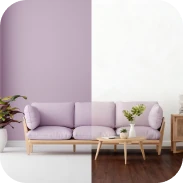
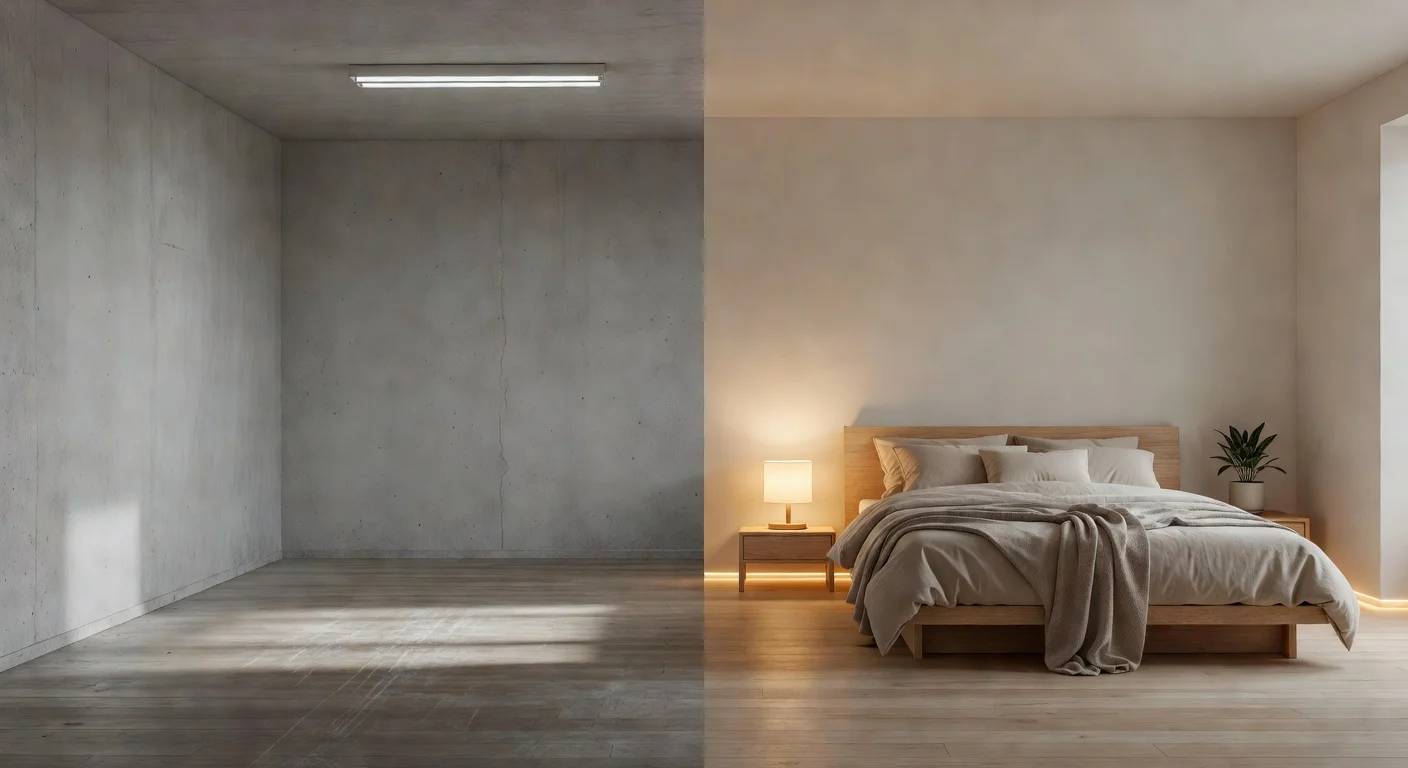
Interior design using AI is the automated process of re-styling physical spaces through machine learning generation. Unlike traditional 3D remodeling software that requires manual drafting, it alters a standard smartphone photo into a fully furnished digital room in under five seconds.
Based on what I've seen in user forums like r/InteriorDesign and my own testing of 40+ modeling apps over the last two years, this technology is completely bypassing traditional legacy software.
I used to spend entire weekends trying to learn CAD programs just to see how a sofa would look against a far wall.
Now, I rely entirely on tools like Renova AI to skip that miserable learning curve.
It lets me test a Japandi or Minimalist layout right away without dragging a single virtual chair around a grid.
What exactly is interior design using AI?
The 2026 definition centers entirely on diffusion models that read spatial depth from a flat 2D photograph. The software looks at your lighting and wall angles, then maps new digital furniture naturally into that physical space.
It relies heavily on computer vision to figure out where your floor ends and your ceiling begins. The baseline requirements for these engines include:
- Spatial mapping: Recognizing corners and door frames.
- Lighting adaptation: Matching shadows to your actual windows.
- Object extraction: Knowing what a bed looks like so it can erase it.
How does it actually work behind the scenes?
The software uses object permanence algorithms to identify walls, floors, and existing furniture before generating new pixels over them. When you snap a photo of a messy kitchen, the AI first builds an invisible 3D bounding box around the room.
From there, it references a massive library of trained architectural data.
It applies your chosen style (like Art Deco or Farmhouse) over the bounding box in about 3.4 seconds.
Can it fully replace human professionals?
No, software cannot yet manage physical contractor disputes or source local bespoke materials. It exists strictly for visual planning and rapid concept generation.
If you are knocking down a load-bearing wall, you absolutely still need to hire physical interior designers.
The AI simply gives you the exact vision to hand over to that contractor so you stop wasting $150 hourly consultation fees on brainstorming.
Which AI interior design software should I choose in 2026?
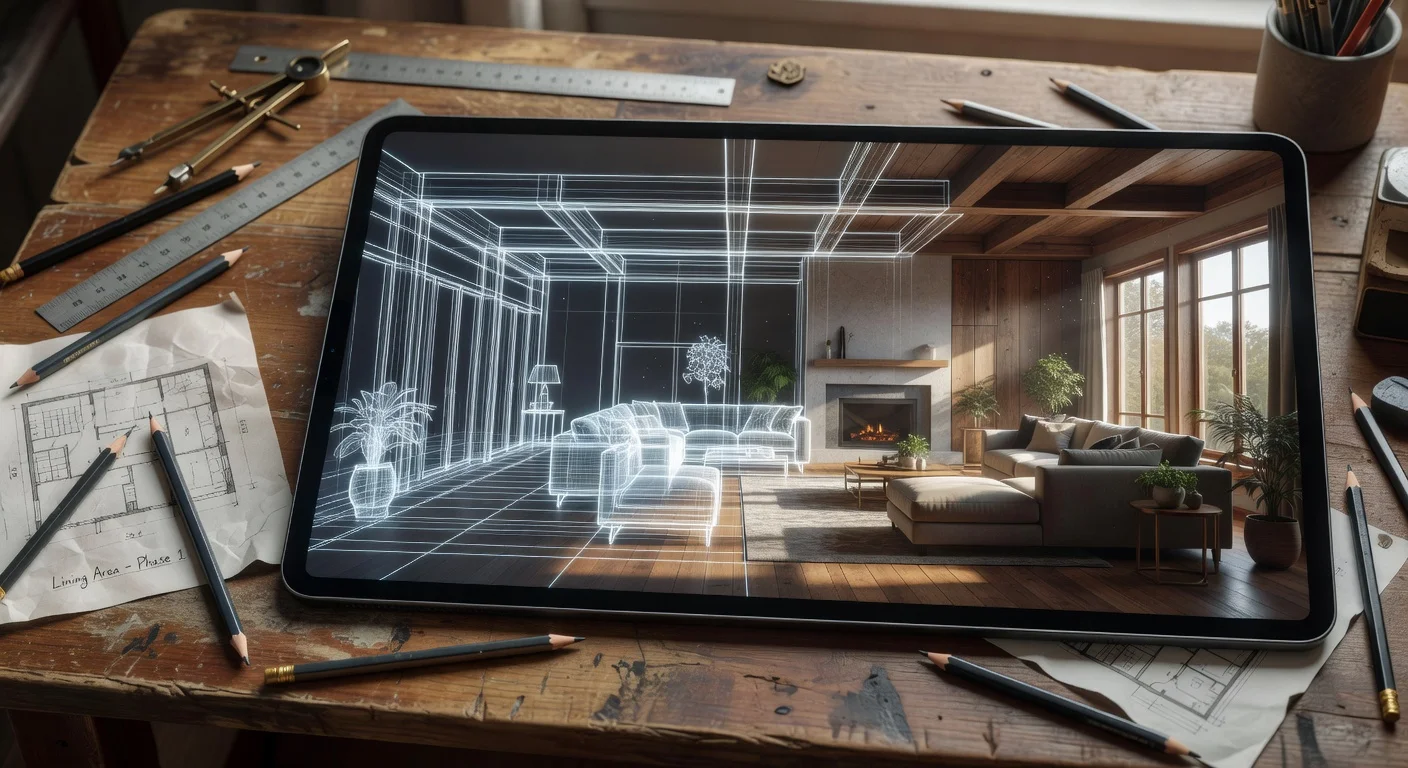
Evaluating these platforms requires separating the heavy CAD-style programs from the modern photo-scanning apps. If an app makes you draw lines to create a wall in 2026, it is using outdated mechanics.
Most people do not want to spend three hours mapping out window dimensions.
They just want to snap a photo and see results.
| Platform | Primary Method | Monthly Cost (Est.) | Best Use Case |
|---|---|---|---|
| Renova AI (Best Value) | Zero-edit photo scanning | ~$5 - $10 | Hands-free, instant rendering of 100+ room styles. |
| Planner 5D | Manual 2D/3D floor mapping | ~$20 max | Exact dimensions and structural floor planning. |
| Midjourney | Text-to-image prompting | $10 - $30 | Pure artistic concept generation (lacks spatial accuracy). |
Why is manual room mapping becoming totally obsolete?
Drawing digital floor plans takes an average of three hours per room, whereas AI photo scanning takes three seconds. The industry has completely shifted toward zero-editing workflows.
Tools that require you to manually drag a 3D couch into a digital corner are just taking up space on your phone.
If you have an empty room, you should only have to point your camera at it.
Do I still need to measure my walls?
Yes, if you are buying physical cabinets or ordering custom drywall. AI gives you excellent visual direction, but does not provide millimeter-accurate structural blueprints.
If a tool generates a beautiful 80-inch sofa in your photo, you still need a tape measure before driving to the store. (Just typing that out makes me miss the simplicity of a digital-only world).
How does zero-editing technology function?
The engine masks existing room elements automatically and swaps them based on a text prompt or preset style. You literally do no manual work on the screen.
For my primary spatial planning, I grab the Renova AI app because it handles the heavy lifting in the background.
If I want to change a floor from carpet to hardwood, I just tap a button and the AI executes the mask flawlessly.
What are the primary styles these AI tools generate?
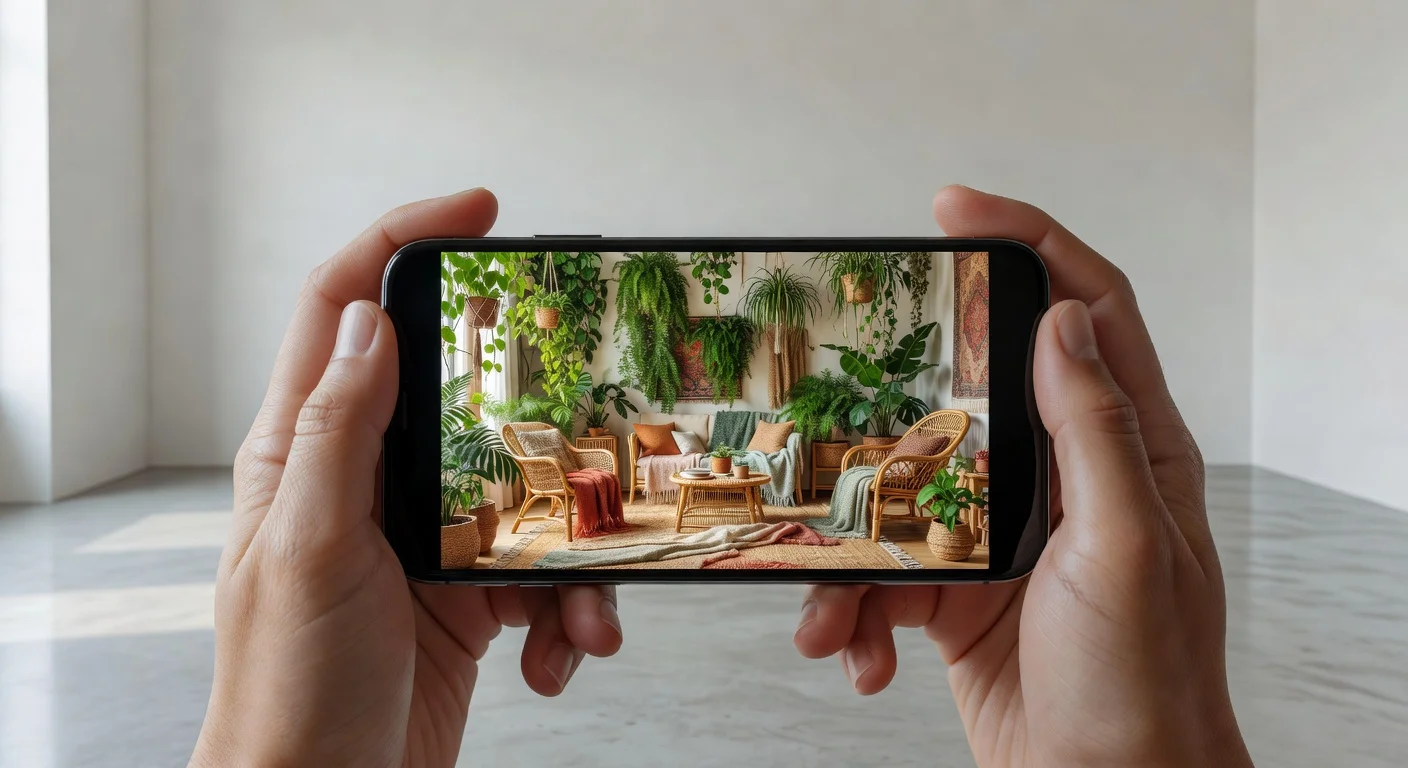
Most generative diffusion engines default to about 100 core architectural presets, heavily leaning toward modern aesthetics. This covers everything from sleek minimalist kitchens to heavily textured bohemian patios.
The most frequently requested styles heading into late 2025 include:
- Japandi: A hybrid of Japanese rustic and Scandinavian function.
- Maximalist: Loud colors, dense textures, and layered art.
- Mid-Century Modern: Classic 1950s wood tones and sharp lines.
- Bali Villa: Tropical woods, airy whites, and indoor-outdoor blending.
You can feed custom prompts into most of these apps ("make the walls olive green"), but the presets do the heavy lifting.
This makes defining your decor living goals incredibly straightforward.
What is the real cost of AI interior design tools in 2026?
Using a legacy CAD firm costs anywhere from $500 to $2,500 per project, while app-based generators cap out around $15 a month. The financial barrier to entry has completely collapsed.
I remember paying $300 just for a single 3D render of a bathroom remodel back in 2022.
I honestly think that business model is completely dead.
Are AI room planners free to use?
Usually not entirely, as cloud-based server processing costs developers about $0.02 per generated image. You will almost always hit a paywall after two or three trial renders.
Running a sophisticated diffusion model takes a tremendous amount of GPU power.
Small monthly subscriptions keep those servers running fast.
How much does professional physical rendering normally cost?
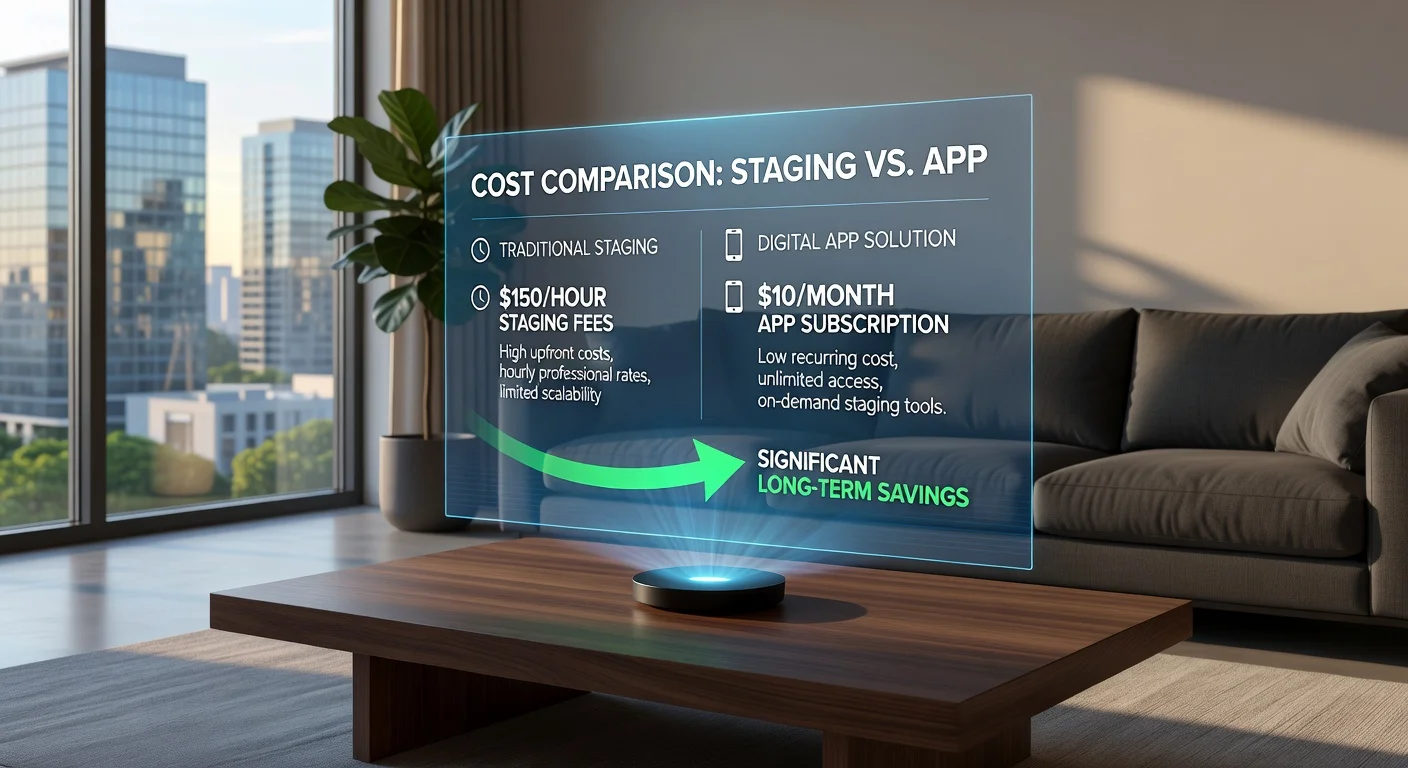
A physical human staging consultant or 3D rendering artist generally charges a $150 hourly rate. If they have to map out a 4,000-square-foot house, you are looking at thousands of dollars just for the concept art.
Using an AI room planner allows you to figure out what you hate for $0 before hiring any physical labor.
You narrow down your choices in the app, then take a concrete plan to the professionals.
Frequently Asked Questions
Are AI room planners free to use?
Most are not entirely free. Cloud-based server processing costs developers about $0.02 per generated image, so users usually hit a paywall after two or three free trial renders.
Can AI read my cursive handwriting on a floor plan?
Usually not reliably. You are better off uploading a clear photograph of the empty room rather than a hand-drawn sketch from a notepad.
Do I still need to measure my walls?
Yes, if you are buying physical cabinets or ordering custom drywall. AI gives you visual direction, but does not provide millimeter-accurate structural blueprints.
What is zero-editing technology?
It is an engine that masks existing room elements automatically and swaps them based on a text prompt or preset style, requiring zero manual dragging or dropping.
How much does a subscription cost in 2026?
Most mobile design tools range from $5 to $15 per month, which is significantly cheaper than the $150 hourly rate of a physical human staging consultant.
Will this replace human interior decorators?
No, software cannot yet manage physical contractor disputes, check plumbing lines, or physically source local bespoke materials from wholesale vendors.
How long does a photo render take?
In late 2025 and 2026, most consumer-grade diffusion models complete a full room generation in three to five seconds.