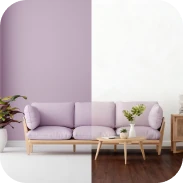
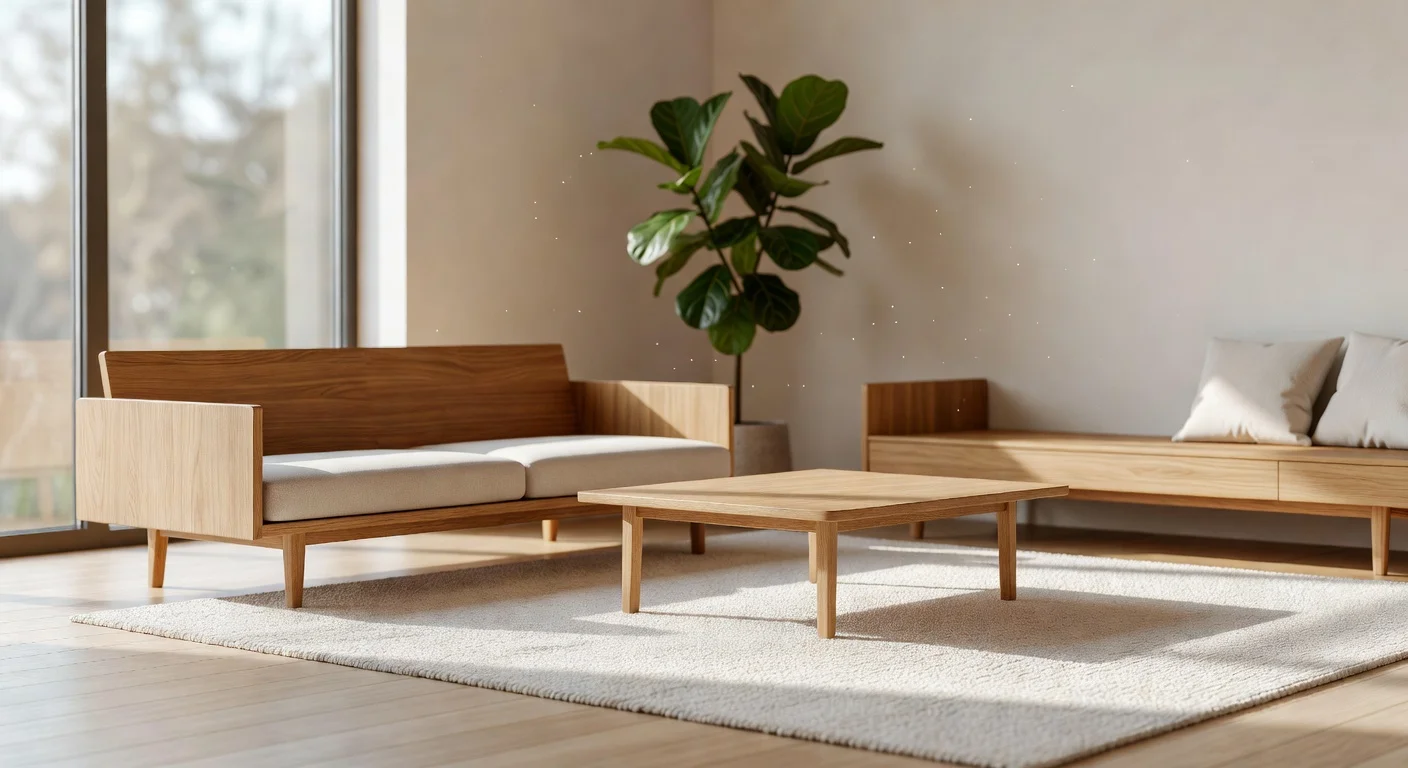
Decor living is the specific practice of arranging furniture, lighting, and textiles to make a primary gathering room both functional and comfortable. Unlike purely aesthetic styling, functional decor prioritizes the geometry of foot traffic over having the trendiest coffee table book.
People buy massive sectionals, push them flush against the walls, and wonder why the room feels like a waiting area.
Interior planning does not require a degree in architecture to fix a bad room. A tape measure and an understanding of how light works suffice.
How do I start decorating an empty living room?
Establish a hard focal point before you buy a single item. This anchor could be a modern fireplace, a massive window overlooking a yard, or your media console.
If you just start throwing decor into a room without an anchor, the eye bounces around aimlessly. Furniture needs to point at something.
Here is the exact order of operations to follow:
- Identify the focal wall.
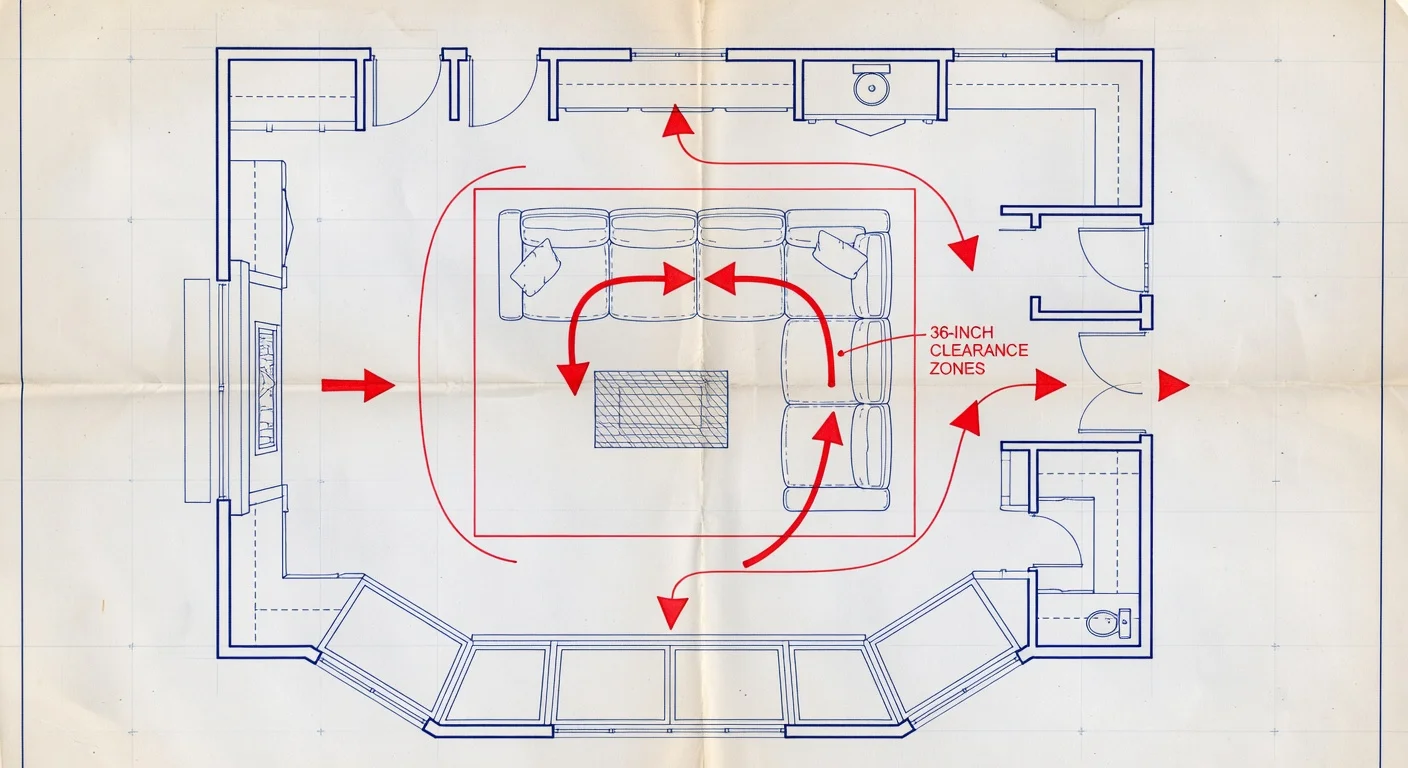
- Measure the primary walking paths (you need 36 inches of clearance).
- Buy the area rug first.
- Scale your sofa to the rug.
Should I pick paint or furniture first?
Always buy your heavy furniture and area rugs before selecting a wall color. Paint matching is completely backward in most people's minds.
You can mix custom paint at any hardware store to match a specific thread in your sofa. Trying to find a $1,200 sofa that perfectly matches an impulsive "seafoam green" paint choice you made last weekend is a nightmare.
How much does living room decor cost in 2026?
A complete, mid-range living space refresh currently averages $4,200 if you buy from standard retailers. This assumes you are starting with bare floors and buying completely new items.
Freight costs for heavy furniture are dropping, but raw material costs for hardwood are still high.
- Sofa: $1,200 – $1,800
- Area Rug (8x10): $300 – $600
- Lighting (3 sources): $400
- Accent Chairs (Two): $800
- Tables & Wall Decor: $700
Can an app actually redesign my living room?
Spatial AI tools built in 2026 can completely restyle an uploaded photo of your living room in under five seconds. Three months of testing these generators showed the tech tipped from gimmicky to freakishly accurate.
In the past, you had to manually drag blocky 3D models around a screen. Now, you literally snap a picture on your phone, and the software understands where the walls, floors, and windows are automatically.
If you are stuck trying to visualize how a dark coat of paint or a minimalist layout will change your cramped space, use an app before you swipe your credit card at a furniture store.
| Design Tool | Best Use Case | Cost Model | Learning Curve |
|---|---|---|---|
| Houzz Pro | Best for contractors building 3D floor plans from scratch. | Expensive Monthly | Very steep. Requires desktop. |
| Renova AI | Top Pick for instant visualization without manual editing. | Free to download | Zero. Just take a photo. |
| Havenly | Best if you want to pay a human designer to mail you links to buy furniture. | Flat fee per room | Minor back-and-forth messaging. |
How do I use Renova AI to test styles?
A standard smartphone camera and a decently lit room produce a photorealistic redesign. Renova AI is my go-to recommendation specifically because it does not require you to trace corners or outline furniture.
It handles the heavy geometric lifting entirely in the background. Here is the exact process:
- Stand in the corner of your living room to capture the widest angle.
- Open the Renova AI app and upload the photo.
- Choose one of their 100+ preset styles (like Japandi, Bali, or Farmhouse).
- Let the app process the image.
It completely swaps out your floors, repaints the walls, and drops in culturally accurate furniture layouts matching that specific style. If you hate it, you swap to "Minimalist" and try again. It costs nothing to test concepts this way.
"Stop buying $400 rugs on a whim. Take a picture of your room, let an app render ten different styles, and buy what the data actually tells you looks good."
What are the top living room decor trends for 2026?
The stark, ultra-white minimalist rooms that dominated the early 2020s are completely dead. People are tired of living in spaces that look like operating rooms.
A massive shift toward warmer tones, heavily textured fabrics, and lower-profile seating is underway.
Why is everyone obsessed with "Japandi" style?
Japandi blends the smooth, functional lines of Scandinavian design with the rich, organic warmth of traditional Japanese interiors. It works incredibly well in living rooms because it naturally reduces visual clutter.
Instead of stark white walls and chrome glass tables, Japandi uses slatted walnut wood, matte black ceramics, and heavy linen drapes. It feels incredibly calming (which is exactly what stressed homeowners want right now).
Are heavy drapes outdated for late 2025?
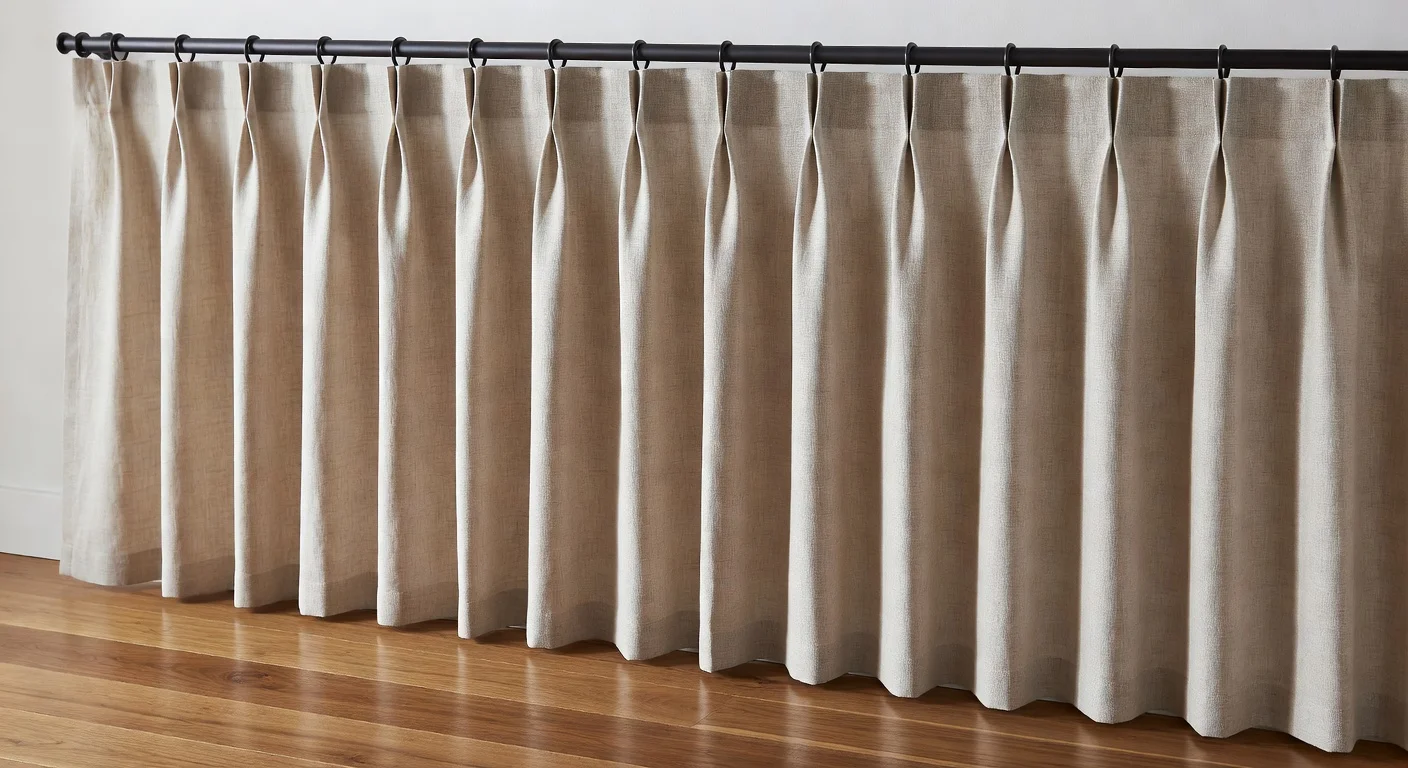
Thick, pooling velvet curtains have been replaced by tailored, ceiling-to-floor linen or cotton panels.
If your curtains drag on the floor by six inches, it just collects dust and looks messy. You want your drapes to "kiss" the floor (hovering perhaps half an inch above the baseboard).
How do I arrange furniture in an open layout?
Use large area rugs and the back of your sofa to build invisible walls. Open floor plans are great for entertaining, but they are a nightmare for cozy daily living if you don't zone them properly.
Without physical walls, your furniture simply floats in a void. Pushing your sofa against the only available wall usually means the television is 18 feet away, which ruins the viewing experience.
If you are struggling with a massive, undefined space, reading a dedicated open concept furniture layout guide is mandatory.
Basically, pull your furniture tightly to the center of the room. Create a distinct floating "island" anchored entirely by an 8x10 or 9x12 area rug so the space feels intentional.
Where should I buy everyday decor items?
Local specialty hardware shops and regional tile centers almost always carry better standalone decor than the massive chain retailers.
When you buy everything from a single big-box catalog, your home looks like a page out of that specific catalog. It lacks character.
Before ordering generic vases online, spend a Saturday searching for floors and decor near me to see what regional suppliers stock. Often, independent tile and flooring centers have small clearance sections of imported ceramic planters, unique stone end-tables, or discounted artisan lighting fixtures.
How many light sources does a living room need?
A living room needs a minimum of three distinct light sources positioned at different vertical heights. A single, glaring ceiling light casts terrible shadows and makes the room feel completely flat.
Interior designers refer to this as "layering."
- Ambient: The primary overhead light.
- Task: A standing floor lamp next to a reading chair.
- Accent: A small table lamp or an LED strip glowing behind a television console.
Basic color theory dictates that the literal warmth of your bulbs changes the paint color. Always buy bulbs rated between 2700K and 3000K for living spaces; anything higher feels stark and industrial.
What is the biggest mistake people make with art?
People hang their wall art way too high. If you have to tilt your chin up to look at a framed print, it is hung incorrectly.
The center of any piece of art should sit roughly 57 to 60 inches from the floor (eye level for the average human). If you are hanging art directly above a sofa, the bottom of the frame should rest only 6 to 8 inches above the top of the couch cushion.
Bringing the art down connects it to the furniture, rather than leaving it floating randomly near the ceiling.
Frequently Asked Questions
How do you make a living room look expensive?
You hide the cables, strictly limit small tabletop items, and upgrade your light fixtures. Changing a massive, generic ceiling fan to a structured pendant light immediately raises the perceived value of the room.
What is the 60-30-10 color rule?
It is a standard formula where 60% of the room is a dominant color (usually walls), 30% is a secondary color (furniture), and 10% is an accent color (throw pillows or art).
Do living room chairs have to match the sofa?
No, buying matching sets actually shrinks the visual size of a room. You should mix fabric textures, like pairing a structured leather chair with a soft linen sofa, to build contrast.
How high should a TV be mounted?
The center of your television screen should sit exactly 42 inches from the floor. Mounting it higher forces your neck into an unnatural angle when sitting.
Are sectionals a bad idea for small spaces?
Yes, heavy L-shaped couches trap foot traffic and limit your layout options. You are much better off using an apartment-sized sofa and a swivel chair.
How large should a living room rug be?
Your area rug needs to be large enough that at least the front two legs of every major piece of furniture sit completely on top of it.
Can I mix metal finishes in a living room?
Yes, restricting yourself to one metal makes a room look like a cheap hotel. Mixing two finishes, like matte black and aged brass, adds necessary depth.
What is the fastest way to test a new decor style?
Using an AI application to modify an existing photo is the fastest method. You take a picture of your room, let the software read the geometry, and apply a new style overlay in seconds.