An open concept furniture layout is a strategic arrangement of sofas, rugs, and tables to create distinct living zones within a single, wall-less room. Unlike traditional enclosed spaces, it relies on visual boundaries and floating furniture to prevent your home from looking like a disorganized warehouse.
After testing over 40 different room configurations over the last five years, I noticed a huge shift in how we handle these massive rooms.
Managing a 600-square-foot combined kitchen and living area is completely different now than it was just a few years ago.
In fact, as we look at home design in 2026, the biggest mistake people make is buying heavy furniture before plotting out their floor space.
It used to take me an entire weekend of physical labor to figure out if an 84-inch sofa worked next to my kitchen island.
Now, I use digital tools to map it out.
What is the rule of thirds in open concept layouts?
The rule of thirds divides your large, empty room into three specific functions: lounging, dining, and cooking. You visually chop the floor plan into three equal squares, treating each square as its own miniature room with a dedicated purpose.
A standard three-zone room usually requires at least 400 square feet to avoid feeling aggressively cramped.
If your room is smaller than that, you might have to combine the dining and kitchen areas into a single island-seating setup.
Here is how you assign the zones:
- Zone 1 (Lounging): Centered around a focal point like a TV, fireplace, or large window.
- Zone 2 (Dining): Placed in the transitional center space, usually anchored by an overhead light.
- Zone 3 (Utility/Cooking): The hard-surface area near the plumbing and major appliances.
How do I divide my living and dining space without walls?
You create visual borders using oversized area rugs, dropped lighting fixtures, and the strategic placement of floating furniture. You do not push your furniture against the outer drywall in an open plan home.
Instead, pull everything toward the center.
This is called "floating" your furniture, and it immediately establishes walkways around the perimeter.
However, physically moving a 250-pound sectional just to test a layout is a massive headache.
I actually stopped doing this manually.
Instead, I use Renova AI to visualize the room first.
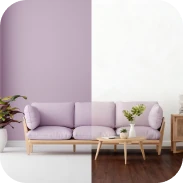
You just snap a photo of your empty (or cluttered) room, and the app remodels the kitchen and living room layout securely on your phone.
It requires zero manual editing on your part.
You can try different layouts—like Japandi or Modern styles—in seconds before you even touch a measuring tape.
You can grab it directly from the App Store if you want to skip the heavy lifting.
Best Digital Tools for Open Concept Layouts in 2026
Virtual planning saves you from buying a $1,200 couch that blocks your kitchen traffic flow. Before you buy anything, you should test the arrangement digitally.
| Tool | Best For | Standout Feature | Learning Curve |
|---|---|---|---|
| Renova AI | Instant photo-to-layout visualization | No manual editing required; AI snaps 100+ styles instantly. | None |
| SketchUp | Architectural precision | Extremely accurate 3D modeling for custom furniture building. | High |
| Planner 5D | 2D technical floor plans | Switch between flat blueprints and 3D rendering modes. | Medium |
Does the back of my sofa matter?
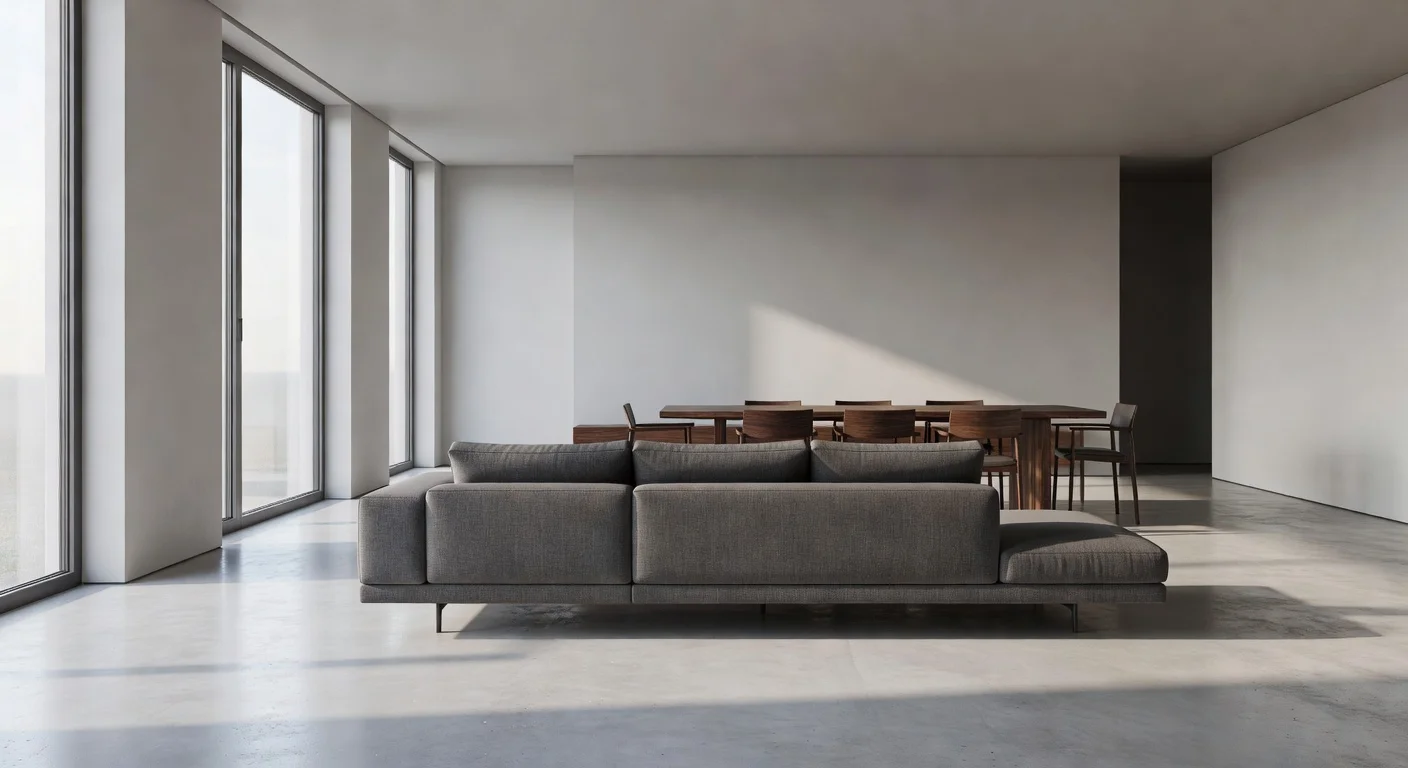
Yes, a low-profile sofa back acts as a physical half-wall between your living and dining areas. When you float a sofa in the middle of a room, the back becomes highly visible to anyone sitting at the dining table or standing in the kitchen.
You want a sofa back that is no taller than 32 inches.
Anything higher than that will block your line of sight and isolate the living room, defeating the entire purpose of an open concept space.
If your sofa back is visually unappealing, place a narrow 12-inch deep console table behind it to hide the fabric and hold lamps or books.
What size rugs do I need for zoning?
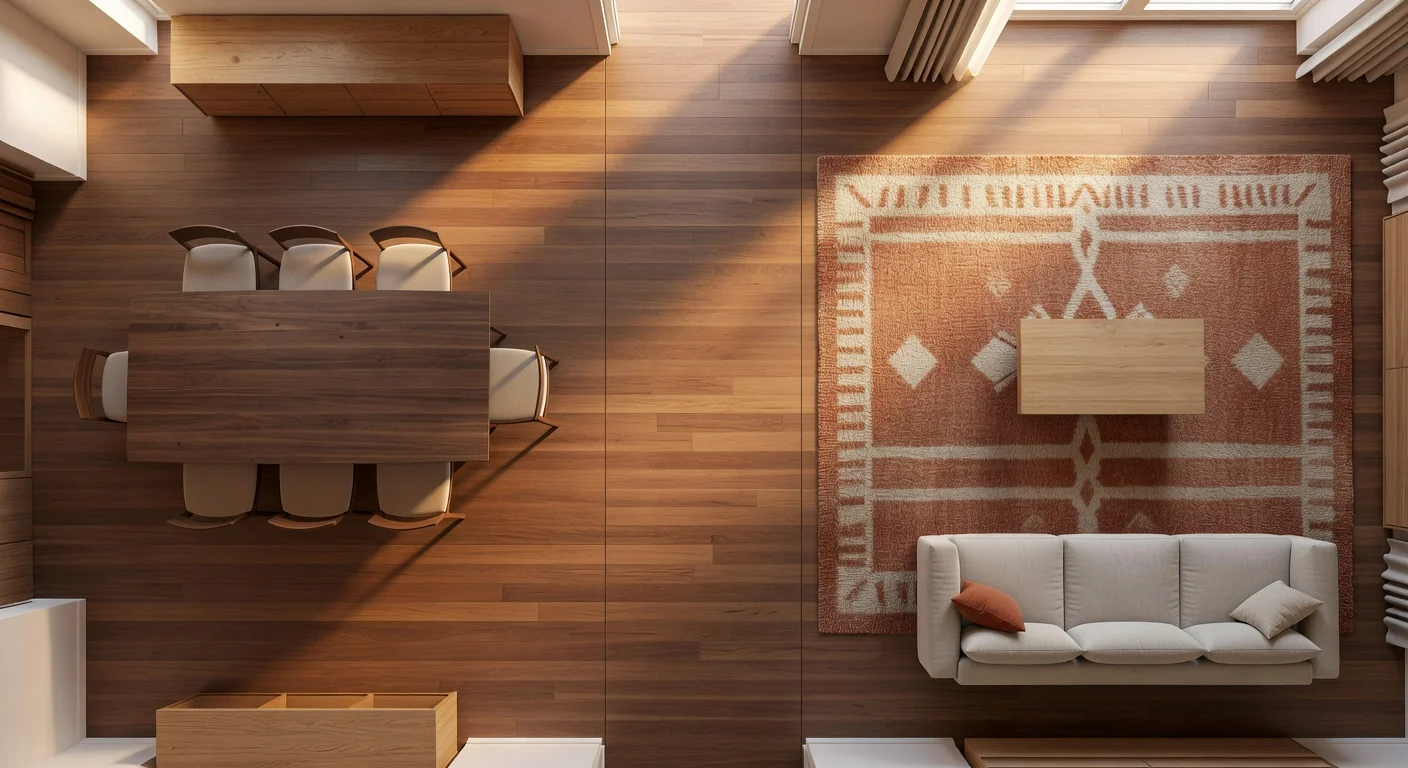
You need oversized rugs that fit the front legs of all your major furniture pieces simultaneously. A tiny 5x7 rug floating under a coffee table makes the room look fragmented and cheap.
- Living Room: Buy an 8x10 or 9x12 rug.
- Dining Room: The rug must extend exactly 24 inches past the table on all sides.
- Kitchen: Use narrow 2.5x7 foot runners to define the cooking corridor.
Using rugs is the single most effective way to anchor a floating layout.
How Do I Arrange Furniture in a Long Rectangular Open Concept Room?
Start by placing your largest furniture piece anchored directly in the center of the longest uninterrupted wall. Long, narrow rooms (often called bowling alley layouts) are notoriously difficult to furnish because they naturally force furniture into a straight line.
Do not line everything up on one side.
Break the length of the room by placing a round dining table near the kitchen, which disrupts the harsh rectangular lines.
Then, configure your seating arrangement in a U-shape or L-shape further down the room.
- Find the focal wall (usually where the media console goes).
- Float the main sofa facing that wall, leaving a 36-inch walkway behind it.
- Place two accent chairs exactly perpendicular to the sofa to create a conversation square.
- Center a round or oval dining table in the remaining space.
Where Should I Mount the TV in an Open Floor Plan?
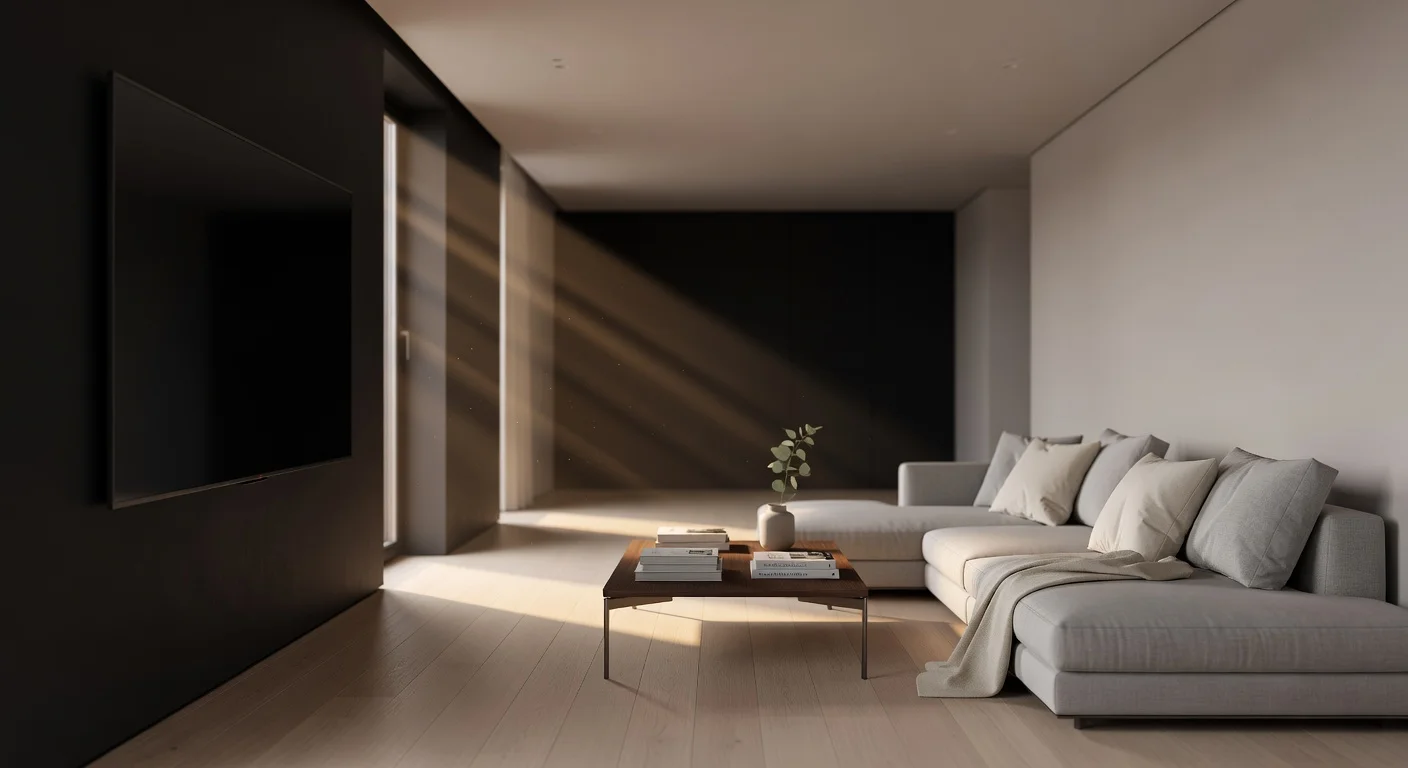
Mount the television on a wall where it completely avoids direct natural glare from major windows. Getting this wrong will make your screen unwatchable every afternoon between 3 PM and 6 PM.
If your open floor plan is surrounded by glass, place the TV on the same wall as the largest windows.
This sounds counterintuitive, but it means the sunlight stays behind the screen rather than reflecting off the glass surface.
Keep the seating distance between 6 and 9 feet for a standard 65-inch screen.
How wide should my walkways be?
Your main traffic paths must be strictly 36 inches wide at a minimum. Anything narrower forces guests to turn sideways when walking past a kitchen island or a dining chair.
I strongly recommend measuring this out with painter's tape.
- Primary paths (front door to kitchen) need 36 to 48 inches.
- Secondary paths (between the sofa and coffee table) need exactly 18 inches.
- Clearance around dining chairs needs 24 inches for someone to comfortably slide backward.
Do my living room and dining room need to match perfectly?
No, they just need to share a common color palette or baseline wood tone to feel related. Coordinating everything too perfectly makes your home look like a generic furniture showroom.
"Matching sets are the enemy of character. You want pieces that talk to each other, not pieces that wear the exact same uniform."
In late 2025, I noticed designers abandoning the hyper-matching trend entirely.
Mixing materials is how you build warmth.
If your dining table is heavy walnut wood, offset it with a sleek, metal-framed glass coffee table in the living zone.
Changing up your decor accessories—like throw pillows on the sofa that match the color of a centerpiece on the dining table—ties the opposing sides of the room together effortlessly.
What do I do with awkward floor pillars?
You treat structural support pillars as natural dividing lines for your living zones. In many 2026 renovations, knocking down load-bearing walls leaves behind a central pillar that cannot be moved.
Do not try to hide it.
Instead, build your layout off of it.
Align the edge of your dining rug exactly with the pillar, or place a custom bookshelf between the pillar and the nearest wall to create a functional entryway.
It gives the eye a structural anchor.
How does lighting define my layout?
You must hang overhead fixtures directly above the center of your functional zones, rather than evenly spacing them across the ceiling. A grid of identical recessed lights makes a home feel like an airport terminal.
- Dining Table: Drop a pendant light or chandelier precisely 30 to 36 inches above the tabletop.
- Kitchen Island: Use a row of two or three pendant lights spaced 24 inches apart.
- Living Area: Rely heavily on a large floor lamp tucked in the corner, paired with a low-hanging central fixture.
By dropping the lighting elements at different physical heights, you create a three-dimensional layout.
The lower light over the dining table effectively builds an invisible ceiling, forcing that specific area to feel intimate despite the lack of surrounding walls.
Frequently Asked Questions
How do you arrange furniture in a large open concept room?
You arrange the furniture by floating it in the center of the room over large area rugs to create distinct functional zones. Keep heavy pieces away from the external walls to establish clear 36-inch walkways around the perimeter.
Where do you put the TV in an open floor plan?
Mount the TV on the longest uninterrupted wall that does not directly face a large window. This prevents sunlight glare and creates a natural focal point for the floating living zone.
Should rugs match in an open concept?
No, rugs should coordinate rather than match perfectly. Use different textures or subtle pattern variations within the same color palette to give the living and dining areas their own distinct identities.
How do you separate a living room and dining room without walls?
Place a low-profile sofa with its back facing the dining area to act as a physical barrier. You can also use overhead lighting, like dropping a chandelier directly over the dining table, to signal a shift in room function.
What is the trick to organizing an open floor plan?
The trick is to define clear traffic paths before placing your coffee tables or chairs. Always ensure your walkways from the kitchen to the living area are a straight line, not an obstacle course.
Can I use two different sofas in an open living space?
Yes, mixing sofa styles adds visual weight and prevents the space from looking like a catalog. Just ensure both pieces share a similar seat height, usually around 18 inches off the floor.