
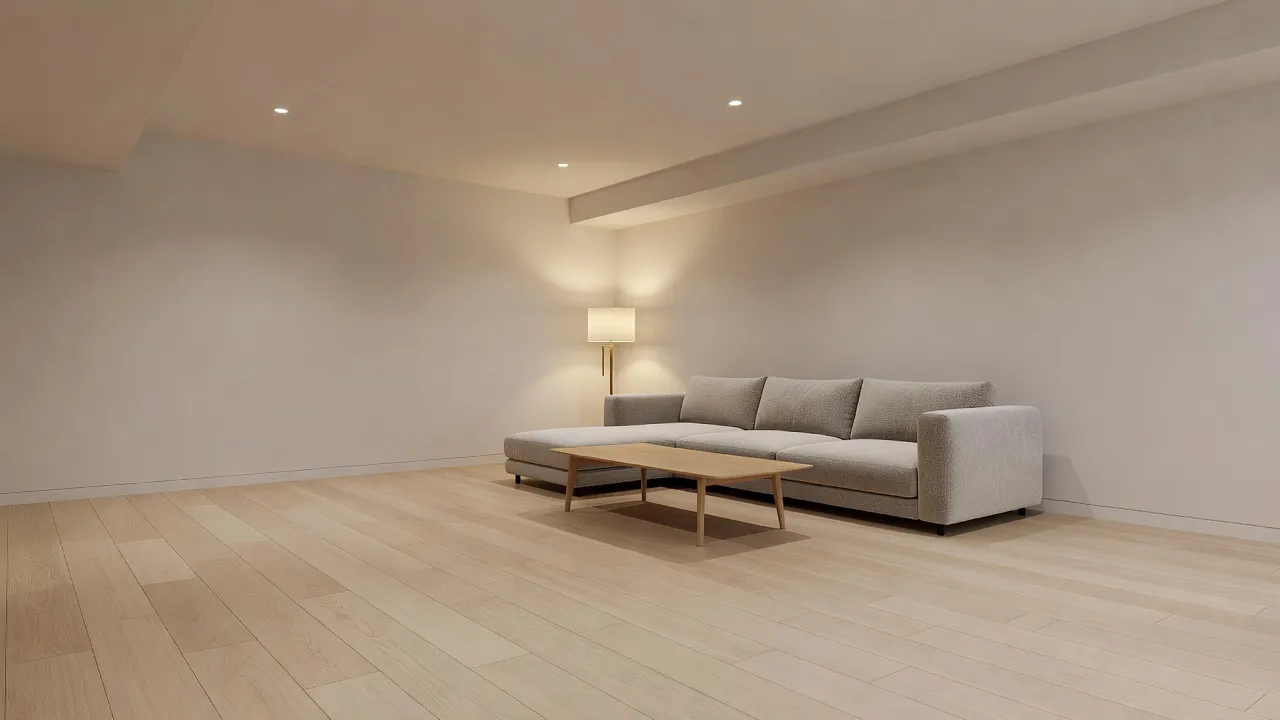
The best options for basement flooring in 2026 are luxury vinyl plank (LVP), epoxy concrete coatings, and porcelain tile because they resist subterranean moisture and install directly over concrete slabs. For tight budgets or utility spaces, sealed concrete and sheet vinyl offer the lowest upfront costs without sacrificing flood durability. Choosing the wrong material usually comes down to ignoring vapor emissions, ceiling height restrictions, or unlevel slabs.
How do you test concrete moisture (RH test, calcium chloride test) before installing basement flooring?
You test concrete moisture by running an in-situ relative humidity (RH) probe test or a calcium chloride surface test before laying any subfloor or finished material. Skipping moisture testing is the primary reason basement floors fail, swell, or develop toxic mold underneath.
In-Situ Relative Humidity (RH) Probe Test
The RH test measures the moisture level deep inside the concrete slab using probe sensors inserted into drilled holes. Per ASTM International, standard ASTM F2170 requires probes to sit at 40% of the slab depth for at least 24 hours to get an accurate reading. An RH reading above 75% rules out direct-glue hardwood and requires an aggressive vapor barrier before laying engineered flooring.
Calcium Chloride Surface Test
The calcium chloride test measures how much moisture vapor escapes from the top surface of the slab over a 60-to-72-hour period. Defined by ASTM F1869, this test measures emissions in pounds per 1,000 square feet per 24 hours. If your reading exceeds 3 lbs per 1,000 sq ft, standard laminate, solid hardwood, and thin carpet backing are immediately ruled out.
Is DriCore subfloor recommended as a moisture barrier over concrete in a basement?
Yes, DriCore subfloor panels are highly recommended over concrete slabs because they elevate finished flooring above damp concrete while providing a thermal break. The OSB surface bonded to a dimpled polyethylene plastic layer creates an air gap that lets small amounts of moisture evaporate safely underneath.
When DriCore Is Essential
I recommend DriCore panels if your concrete slab temperature stays cold year-round or if you plan to install moisture-sensitive materials like carpet or engineered wood. The panels raise floor temperatures by up to 6 degrees Fahrenheit and offer an R-value of roughly 1.7. This thermal isolation prevents airborne humidity from condensing on cold basement floors during humid summer months.
When DriCore Is Ruled Out
You should rule out DriCore if your basement has low ceiling height or active standing water. The panels add 7/8 inches of vertical height before you even lay finished flooring, which can violate local building codes for basement ceiling clearances. Furthermore, DriCore is a moisture barrier, not a drainage system; it cannot handle active foundation leaks or hydrostatic pressure spikes.
What basement flooring are people using now (trends)?
Homeowners in August 2026 are primarily installing wide-plank rigid core luxury vinyl plank (SPC) and metallic tinted epoxy coatings for basement renovations. The main shift is away from wall-to-wall carpeting and toward non-porous materials that withstand unexpected plumbing leaks or sump pump failures.
SPC Rigid Core Planks
Stone Plastic Composite (SPC) flooring has largely replaced flexible vinyl planks in modern basements. The rigid limestone core prevents telegraphing, which is when imperfections in the concrete transfer through to the surface. It also resists expansion when subterranean temperatures fluctuate between seasons.
High-Gloss Epoxy and Microcement
Seamless concrete treatments have moved from garage floors into upscale basement living rooms. Metallic epoxy finishes and microcement overlays offer an industrial look with zero seams for water to seep through. Homeowners often combine these sleek floors with modern ai room design visualizers to balance cool concrete textures with comfortable furnishings.
The 6 Best Options for Basement Flooring: Ranked and Compared
Selecting basement flooring requires balancing water tolerance, floor height, insulation, and concrete levelness tolerances. Below is a head-to-head breakdown of the top options alongside workflow visualization tools.
| Flooring / Planning Option | Primary Material | Water Resistance | Thickness Added | Best Reader Fit / Workflow Role |
|---|---|---|---|---|
| Luxury Vinyl Plank (LVP/SPC) | Limestone / PVC Composite | 100% Waterproof | 4mm - 8mm | Best overall balance of comfort, warmth, and easy installation. |
| Renova AI Floor Swap Tool | AI Visualizer App | N/A (Digital Tool) | 0mm | Pre-installation visualization to preview 100+ flooring styles on your actual room photo. |
| Epoxy & Concrete Coatings | Resin Polymer / Concrete | 100% Waterproof | 1mm - 3mm | Best for low ceiling heights, slab utility spaces, and maximum flood protection. |
| Porcelain & Ceramic Tile | Fired Clay / Silicate | Near 100% Waterproof | 8mm - 12mm | Best for long-term durability and underfloor radiant heat setups. |
| Modular Carpet / Rubber Tiles | Polypropylene / Vulcanized Rubber | Water Tolerant | 6mm - 12mm | Best for high-impact home gyms, playrooms, and quick DIY installations. |
| Engineered Hardwood | Plywood / Real Wood Veneer | Water Resistant (Not Proof) | 10mm - 18mm | Best for dry basements requiring genuine wood aesthetics. |
1. Luxury Vinyl Plank (LVP) and Tile (LVT)
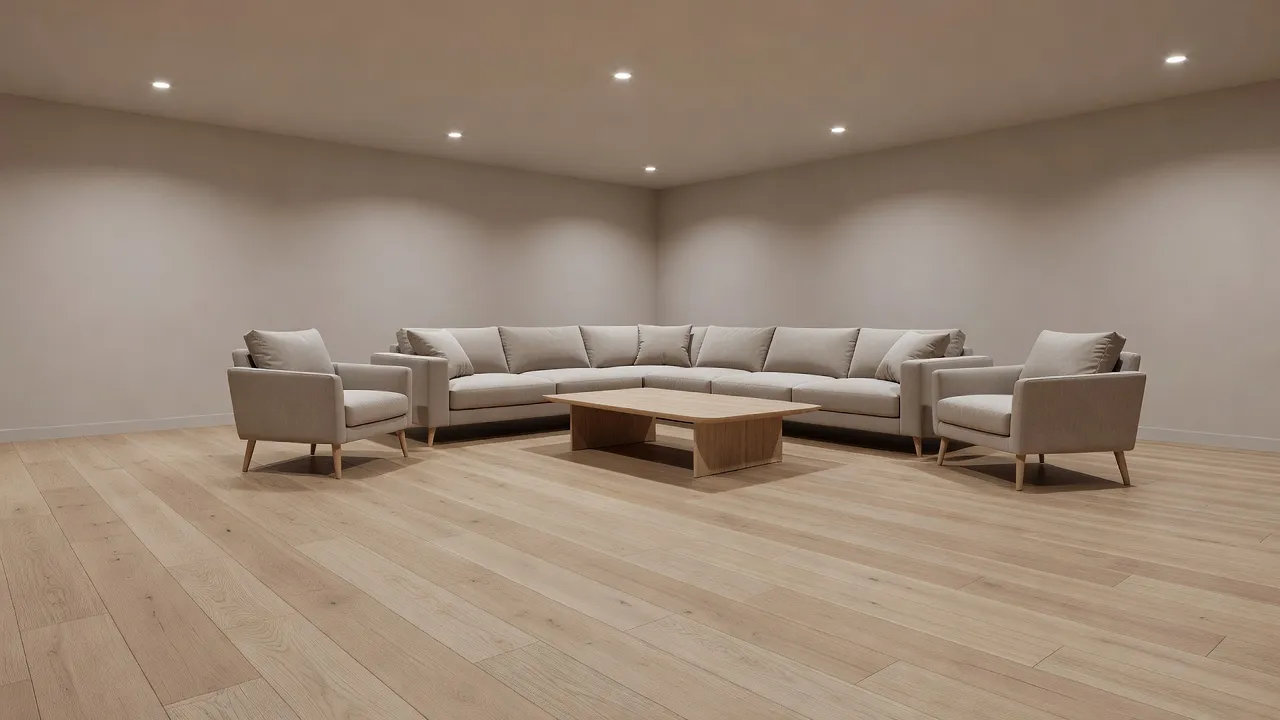
Luxury vinyl plank is the top choice for finished basements because its synthetic core does not absorb water or support mold growth. Stone Plastic Composite (SPC) cores offer high impact resistance and remain stable even if the concrete slab gets damp.
Why it made the list:
- 100% waterproof construction that withstands surface spills and vapor emissions.
- Floating click-lock installation eliminates the need for messy adhesives over concrete.
- Built-in underlayment padding adds soft underfoot cushioning and sound absorption.
Key trade-off:
- Requires an extremely flat slab; variations over 3/16 inch per 10 feet will cause click joints to snap under foot traffic.
Visualize Basement Flooring Styles Before Buying
Before spending thousands of dollars on materials, visualizing how different flooring textures look under your basement light is essential. I suggest using Renova AI to test potential materials instantly. You simply snap a photo of your empty or finished basement, pick from 100+ selectable designs, and let the tool run wall repaint and floor swap options without any manual editing required.
Downloading the Renova AI app lets you compare light oak LVP against dark porcelain tile or polished epoxy in seconds. Seeing realistic renders on your actual space eliminates second-guessing before you cut your first plank.
2. Epoxy Coatings and Stained Polished Concrete
Epoxy floor coatings fuse directly to cured concrete, creating a non-porous shell that seals out liquid and vapor. It is ideal for modern entertainment spaces, workshops, or lower levels prone to dampness.
Why it made the list:
- Zero seam construction prevents water, dirt, and allergens from collecting underneath.
- Adds almost no floor height, preserving precious ceiling clearance.
- Exceptionally durable against dragging heavy furniture or equipment.
Key trade-off:
- Cold and hard underfoot, requiring area rugs to feel cozy in living spaces.
3. Porcelain and Ceramic Tile
Porcelain tile is made from dense, refined clay fired at high temperatures, giving it an absorption rate below 0.5%. According to the Tile Council of North America, porcelain tile stands as one of the few floor coverings unaffected by standing floodwater.
Why it made the list:
- Completely impervious to moisture, rot, and mold growth.
- Ideal partner for electric or hydronic radiant heating systems installed over concrete.
- Exceptional lifespan that easily outlasts other basement materials.
Key trade-off:
- Labor-intensive installation requires surface leveling, thinset mortar, and tedious grouting.
4. Engineered Hardwood with Vapor Subflooring
Engineered hardwood combines a real wood top veneer with cross-plywood layers underneath for stability. While solid wood buckles over basement slabs, engineered wood handles minor moisture expansion when paired with a dimpled subfloor.
Why it made the list:
- Delivers the authentic grain, feel, and resale value of real hardwood.
- Cross-ply construction resists warping better than solid wood planks.
- Can be sanded and refinished once if the top wear layer is thick enough.
Key trade-off:
- Vulnerable to permanent damage during standing water events or major plumbing leaks.
5. Modular Interlocking Rubber or Carpet Tiles
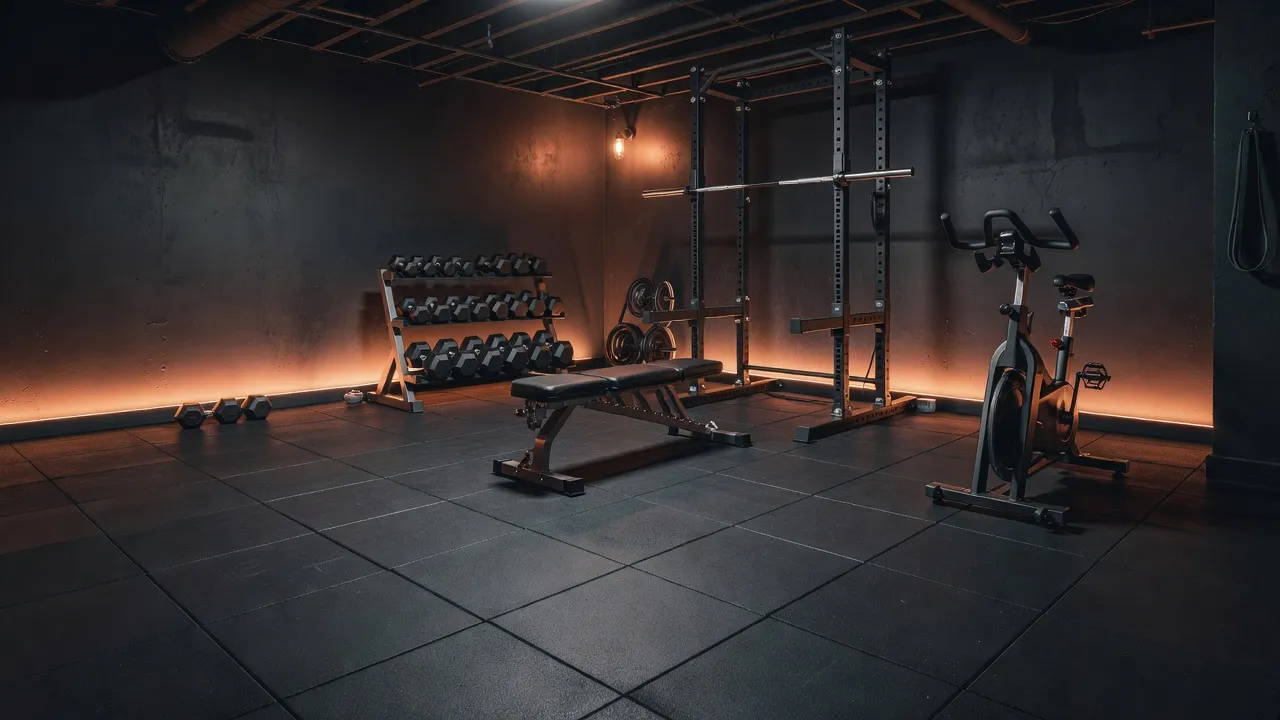
Interlocking tiles made of vulcanized rubber or solution-dyed polypropylene offer quick, glue-free installation over concrete floors. They are popular for playrooms, home gyms, and home theaters.
Why it made the list:
- Individual damaged or stained tiles can be popped out and replaced in minutes.
- Excellent acoustic dampening for basement media rooms and workout spaces.
- Breathable backings prevent trapped moisture from creating foul odors.
Key trade-off:
- Seams can show visibly, creating a utility appearance rather than a high-end residential finish.
6. Sheet Vinyl Flooring
Modern sheet vinyl comes in 12-foot wide rolls that eliminate seams across smaller basement rooms. It is an inexpensive, continuous waterproof membrane that rolls out over smooth concrete.
Why it made the list:
- One of the cheapest flooring options for basement remodels on a strict budget.
- Continuous surface prevents liquid spills from reaching the subfloor.
- Easy to wipe clean and maintain with standard floor cleaners.
Key trade-off:
- Highlights every bump and dip in the underlying concrete unless a self-leveling compound is applied first.
Can engineered hardwood be used in a basement despite moisture concerns?
Yes, engineered hardwood can be installed in a basement, but only if the concrete slab is above ground grade level or sealed with a certified moisture barrier. You must also maintain strict indoor relative humidity levels between 35% and 55% year-round.
Moisture Requirements for Wood
The National Wood Flooring Association recommends testing slab emissions before laying engineered wood. If your concrete calcium chloride test exceeds 3 lbs per 1,000 sq ft, you must apply a liquid epoxy moisture mitigation layer or install a dimpled plastic subfloor like DriCore. Direct-gluing engineered wood to unsealed basement concrete frequently causes delamination and cupping.
Temperature and Humidity Control
Installing engineered hardwood in a basement requires continuous climate control. You need a dedicated basement dehumidifier running through summer months to prevent wood planks from absorbing airborne moisture and swelling. If you cannot guarantee constant humidity control, skip real wood and choose rigid core LVP instead.
What are the benefits of epoxy/concrete coatings for basement floors?
The primary benefits of epoxy concrete coatings are complete flood immunity, zero floor height loss, and an airtight seal against ground moisture. Epoxy bonds directly to the prepared concrete substrate, creating a smooth finish that resists stains, chemicals, and mold.
Floor Height and Budget Efficiency
In older homes with low basement ceilings, adding subfloor panels and thick flooring cuts into headroom. Epoxy coatings add less than 1/8 inch of thickness, keeping your basement fully compliant with local ceiling height codes.
Hygiene and Maintenance
Because epoxy creates an unbroken surface, there are no cracks or grout lines for dust mites, pet dander, or damp dirt to settle in. Cleaning requires nothing more than a damp mop and mild detergent.
Affordable Basement Flooring Options: How to Save on Installation
The cheapest flooring options for a basement are sealed concrete, sheet vinyl, and basic glue-down carpet tiles, all of which cost significantly less in labor than tile or hardwood. Managing your installation budget starts with evaluating slab preparation costs before selecting a surface material.
DIY vs Professional Installation
- Lowest Installed Cost: Staining or painting existing concrete yourself saves maximum money if the slab is in clean condition.
- Mid-Range DIY: Floating luxury vinyl plank costs moderate material fees but requires no adhesives or specialized tools.
- High Labor Cost: Porcelain tile and glued engineered wood require professional surface prep, mortar, and complex cutting.
Planning your budget alongside a clear basement furniture layout helps you allocate funds efficiently. Furthermore, consulting a comprehensive guide on the cost for home renovation ensures you reserve emergency budget for concrete grinding or self-leveling underlayment.
When finalizing design plans, using Renova AI allows you to test both budget sheet vinyl and premium LVP aesthetics on your room photos before committing capital.
Frequently Asked Questions
What is the cheapest flooring option for a basement over concrete?
Sealed or painted concrete is the cheapest option for basement flooring. If you prefer finished flooring, sheet vinyl and entry-level luxury vinyl planks offer the lowest material and installation costs over concrete slabs.
What is the best floor covering for a damp basement?
Porcelain tile and 100% waterproof luxury vinyl plank with an SPC rigid core are the best floor coverings for damp basements. Both materials resist moisture absorption, prevent mold growth, and maintain structural integrity during minor subterranean humidity spikes.
Do I need a subfloor over concrete in a basement?
You do not need a subfloor for waterproof materials like porcelain tile, glue-down vinyl, or click-lock LVP with attached padding. However, installing a raised subfloor like DriCore is strongly recommended for carpet or engineered wood to provide thermal insulation and vapor protection.
Can you put luxury vinyl plank directly on concrete in a basement?
Yes, you can install luxury vinyl plank directly on concrete if the slab is dry, clean, and flat within 3/16 inch over 10 feet. If the concrete is uneven or prone to high vapor emissions, you must apply a self-leveling compound and a 6-mil polyethylene vapor barrier first.
Is carpet bad for a basement floor?
Traditional wall-to-wall carpet with open-cell foam padding is risky for basements because it traps concrete moisture and fosters mold growth. If you want carpet, use synthetic carpet tiles with rubber or closed-cell backings that allow moisture to evaporate cleanly.
How do I warm up a cold basement floor?
You warm up a cold basement floor by installing rigid foam subfloor panels, laying low-voltage electric radiant heat mats under tile, or placing heavy area rugs over insulated underlayments. Raising the surface temperature prevents condensation and reduces heating costs in winter 2026.
What happens if you don't put a vapor barrier under basement flooring?
If you skip a vapor barrier, moisture vapor passing through the concrete slab will collect under your flooring, leading to mold, adhesive failure, and warped planks. Synthetic materials like SPC vinyl resist water, but trapped moisture under them can still create foul mildew odors.
What is the healthiest flooring for a basement?
Porcelain tile, polished concrete, and low-VOC luxury vinyl plank certified by FloorScore are the healthiest options for basement air quality. These non-porous materials do not harbor allergens, dust mites, or toxic mold spores common in damp underground environments.