
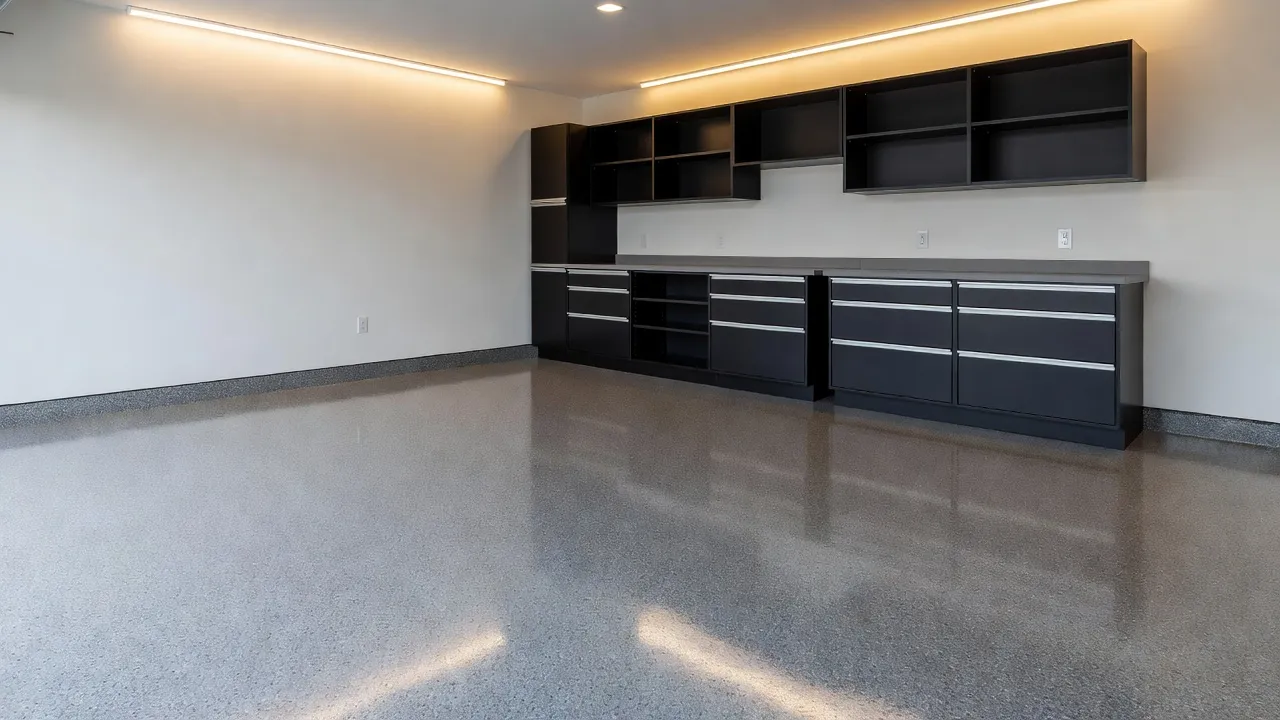
The best garage flooring options over concrete are polyaspartic coatings for lifetime durability, interlocking polypropylene tiles for fast DIY installation, and 100% solids epoxy for heavy chemical resistance. Choosing between liquid coatings, modular tiles, and mats comes down to your budget, concrete moisture levels, and whether you plan to install the system yourself.
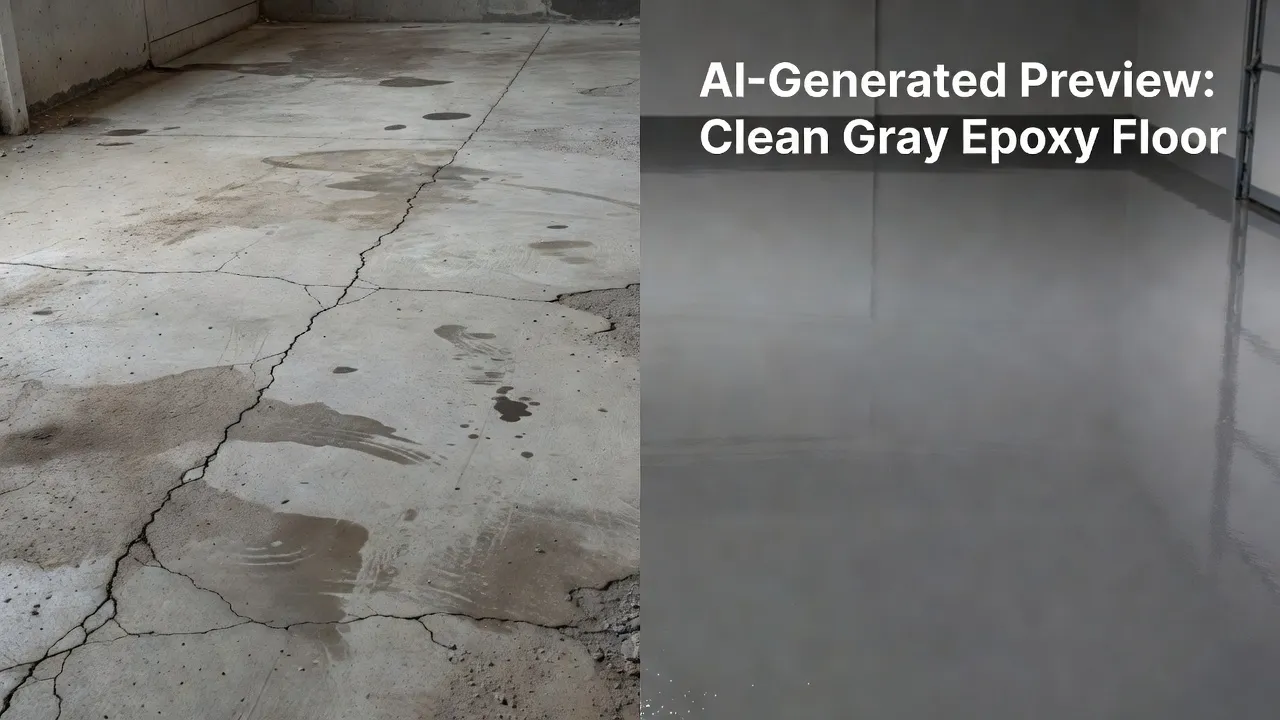
Before spending $2,000 to $5,000 on surface prep and materials, visualizing how different finishes look against your garage walls and storage systems helps prevent costly redesign mistakes. Using the Renova AI app, you can snap a photo of your current garage slab and instantly preview different floor colors, flake blends, and tile patterns before buying a single product.
Top Garage Flooring Options Over Concrete Ranked by Performance and Cost
When evaluating garage flooring options over concrete, material longevity and mechanical bond strength determine long-term value. Below are the six primary flooring systems ranked by durability, moisture tolerance, and total installed cost as of September 2026.
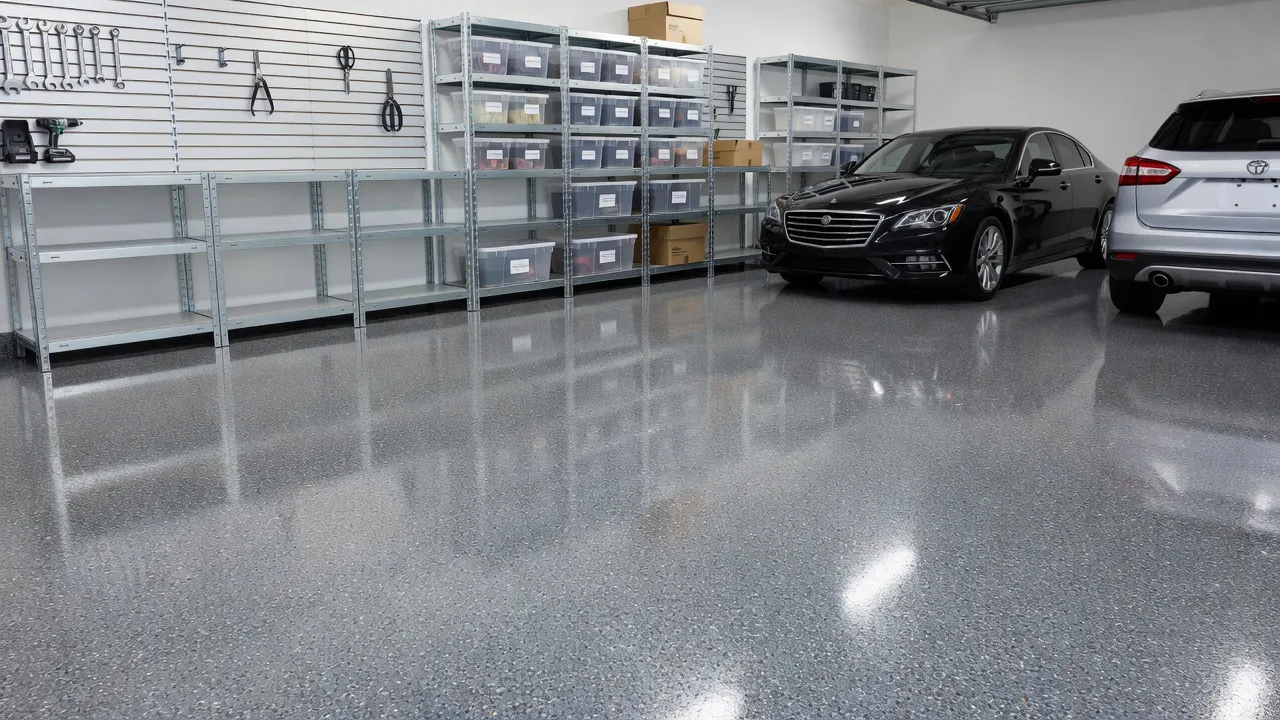
1. Polyaspartic and Polyurea Coatings
Polyaspartic coatings are the highest-performing liquid floor systems available for residential concrete slabs. Developed as an aliphatic ester compound related to polyurethane, polyaspartic cures up to four times faster than standard epoxy while providing superior UV stability.
- Best for: High-traffic garages, extreme temperature swings, and homeowners wanting a one-day professional installation.
- Key trade-off: Material costs are high, and the 15- to 20-minute pot life leaves zero margin for DIY application errors.
2. 100% Solids Epoxy Systems
Commercial-grade 100% solids epoxy creates a thick, high-build protective barrier that hides minor concrete pitting. Unlike water-based DIY paint kits, 100% solids epoxy contains zero volatile organic compounds (VOCs) that evaporate during curing, leaving a dense 10-mil to 20-mil film.
- Best for: Heavy working shops requiring chemical resistance against motor oil, brake fluid, and battery acid.
- Key trade-off: Requires extensive mechanical concrete grinding and turns yellow over time if exposed to direct sunlight.
3. Interlocking Polypropylene Tiles
Hard plastic polypropylene tiles snap together over concrete without adhesives, creating a floating floor that isolates your feet from damp slabs. Brands like RaceDeck engineer these tiles with sub-floor channels that allow trapped water and air to circulate underneath.
- Best for: Cracked slabs, high-moisture concrete, and DIYers wanting a clean setup in under four hours.
- Key trade-off: Clicking sounds underfoot and potential hollow echoes when walking across the garage.
4. Flexible PVC Interlocking Tiles
Flexible polyvinyl chloride (PVC) tiles offer a rubberized, quiet feel underfoot while supporting rolling vehicle loads up to 60,000 pounds. These solid tiles seal tighter at the seams than open-grid polypropylene, keeping dirt from falling beneath the surface.
- Best for: Home gyms, detail bays, and garages where comfortable standing is a priority.
- Key trade-off: Susceptible to staining from street hot tires if bright tile colors like white or yellow are chosen.
5. Roll-Out Vinyl Flooring Mats
Heavy-duty polyvinyl roll-out mats cover wide concrete expanses with minimal seams, protecting slabs from road salt and fluid spills. Available in coin, diamond, and ribbed textures, these mats require no surface grinding or floor adhesives.
- Best for: Fast rental property upgrades and basic spill containment on a moderate budget.
- Key trade-off: Mats expand and wave under direct heat or hot vehicle tires if not anchored properly.
6. Concrete Stains and Acrylic Sealer
Penetrating acid or water-based stains absorb directly into porous concrete to create a marbleized tone that will never chip or peel. Sealing the stained surface with a clear acrylic or urethane coat seals out dusting and mild road grime.
- Best for: Low-traffic storage spaces and minimalist aesthetic designs.
- Key trade-off: Zero impact resistance or protection against deep concrete cracks and spalling.
Garage Flooring Systems Compared
The table below breaks down installed costs, lifespan expectations, and key performance metrics across top garage floor choices.
| Flooring System | Average Installed Cost (per sq. ft.) | Expected Lifespan | Primary Benefit | Major Limitation |
|---|---|---|---|---|
| Renova AI Visualization | N/A (App Preview) | Instant | Preview 100+ styles & floor swaps on your slab | Digital preview tool only |
| Polyaspartic Coating | $5.00 - $12.00 | 15 - 20+ Years | 1-day cure, zero UV yellowing | Requires professional installation |
| 100% Solids Epoxy | $3.50 - $8.00 | 10 - 15 Years | Exceptional chemical resistance | Yellows in UV, long cure time |
| Polypropylene Tiles | $2.50 - $5.00 | 10 - 15 Years | Easy DIY snap assembly | Can sound hollow underfoot |
| Flexible PVC Tiles | $3.50 - $7.00 | 10 - 12 Years | Comfortable, noise-dampening | Tire staining on light colors |
| Roll-Out Vinyl Mats | $1.50 - $3.50 | 5 - 8 Years | Simple roll-and-cut install | Prone to bunching under hot tires |
| Concrete Paint/Stain | $0.20 - $1.50 | 1 - 3 Years | Lowest initial price floor | Peels under hot tires |
How Do Epoxy, Polyaspartic, and Polyurea Garage Floor Coatings Differ in Durability and Maintenance?
Polyaspartic and polyurea coatings offer superior impact resistance and thermal stability compared to epoxy, while epoxy provides a thicker build for low cost. Understanding chemical bonding mechanisms helps explain why these liquid coatings behave differently under real garage stress.
Chemical Composition and Flexibility
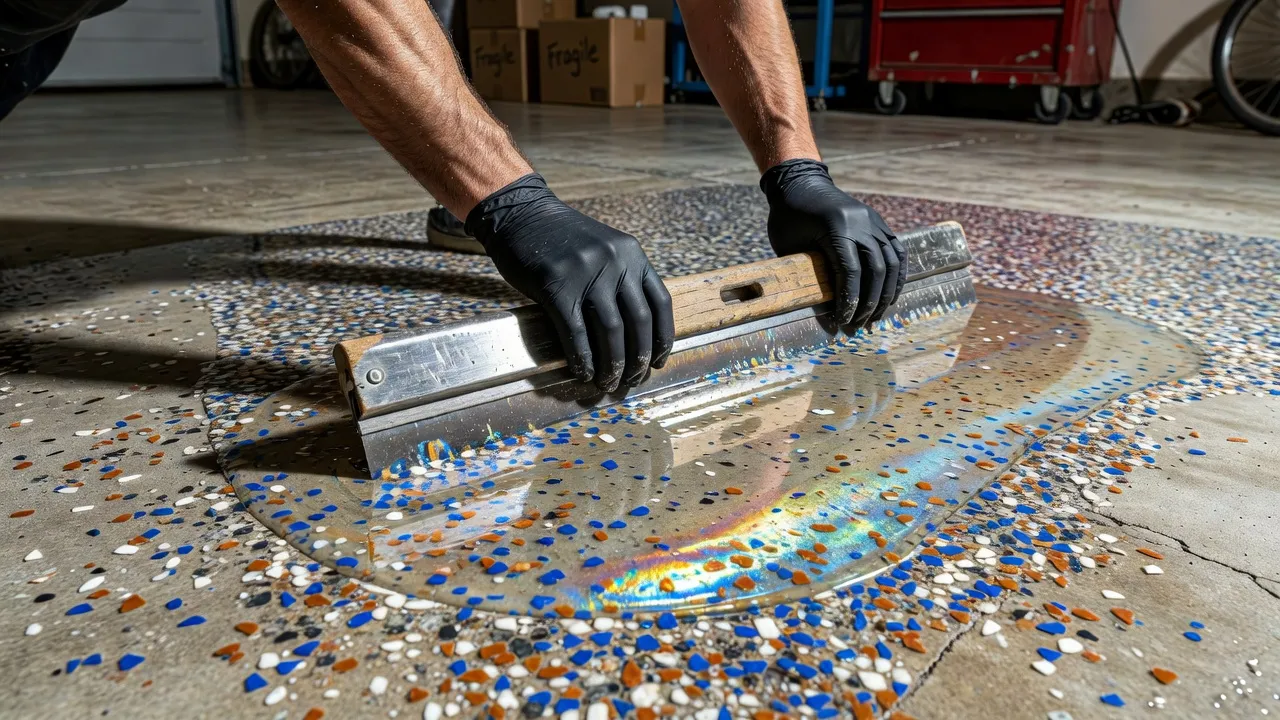
Standard epoxy cures through a chemical reaction between an epoxide resin and a polyamine hardener, forming a rigid thermosetting polymer matrix. According to polymer engineering guides on Wikipedia, epoxies bond tenaciously to clean concrete but feature low tensile elongation.
Polyurea and its sub-category, polyaspartic ester, feature polymer chains that flex under load. When vehicle tires transfer summer road heat directly onto the floor, polyaspartic stretches slightly without snapping its cross-linked chemical bond to the concrete substrate.
Resistance to Hot Tire Pickup and UV Light
Hot tire pickup occurs when hot rubber tires park on a freshly coated floor. As the tire cools, it contracts and grabs the surface coating, pulling low-grade coatings right off the slab.
- Epoxy: Susceptible to hot tire pickup if applied over smooth, unetched concrete or if water vapor pushes up from underneath. Standard epoxies also amber when hit by sun streaming through open garage doors.
- Polyaspartic: 100% UV-stable and resistant to temperatures exceeding 300 degrees Fahrenheit. It will not yellow or soften under hot performance tires.
Maintenance and Cleaning Protocols
All three coating types create a seamless surface that blocks road salt, oil, and auto fluids from entering the slab.
For routine care, clear off loose grit with a soft bristle broom. Mop deep dirt monthly using warm water mixed with 4 ounces of clear ammonia per gallon, avoiding film-forming soap detergents.
How Do Interlocking Garage Floor Tiles Compare - PVC vs Rubber vs Polypropylene?
Polypropylene tiles excel in rigid load capacity and drainage, PVC tiles dominate in noise reduction and comfort, while pure rubber is rarely recommended for active garages due to chemical degradation.
| Material | Characteristics |
|---|---|
| Polypropylene | Rigid, 40k lb load capacity, grid drainage |
| PVC | Semi-flexible, shock-absorbing, tight seams |
| Pure Rubber | High grip, but degrades under oil/petroleum |
Polypropylene (Hard Plastic Tiles)
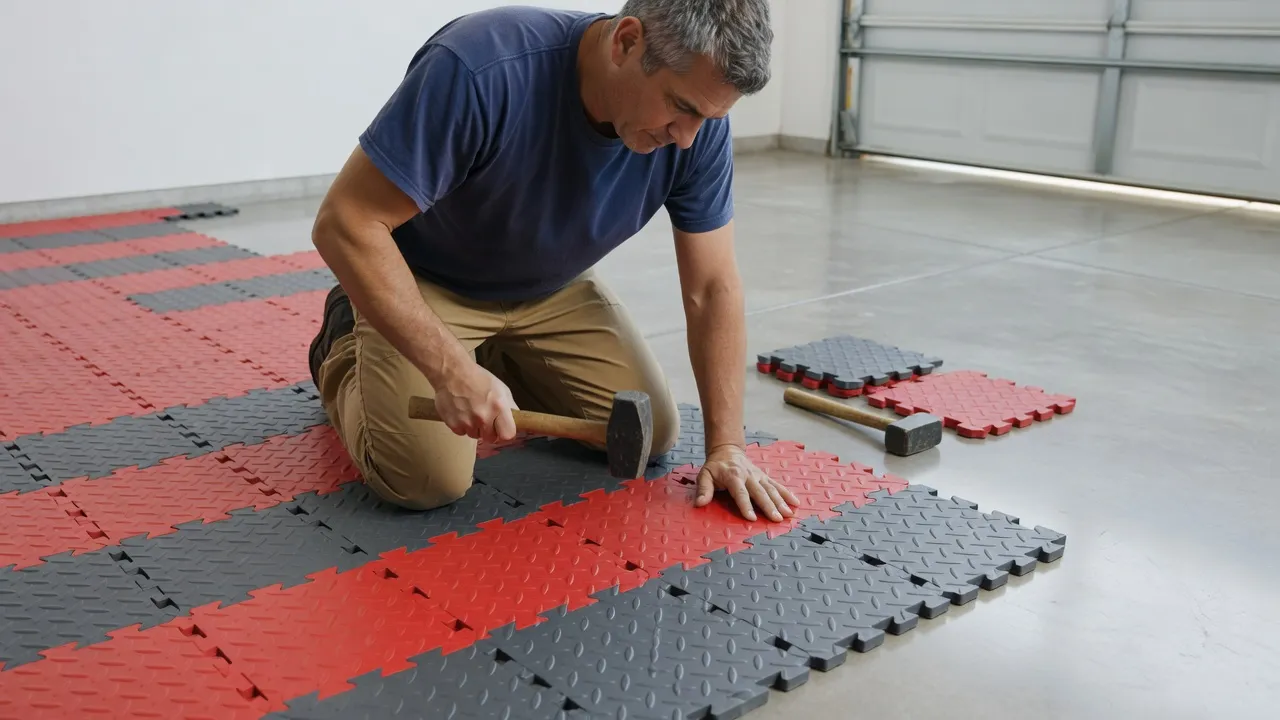
Polypropylene is a high-density, semi-rigid thermoplastic polymer. These modular tiles feature male and female loop-and-peg connectors snapped together using a rubber mallet.
- Compressive Strength: Rated for rolling loads between 40,000 and 80,000 pounds. You can place heavy jack stands directly on top without denting the material.
- Thermal Expansion: Polypropylene expands when ambient temperatures climb. Installers must leave a 1/2-inch gap along garage perimeter walls to prevent center buckling during hot summers.
PVC (Flexible Polymer Tiles)
Molded from solid polyvinyl chloride, these tiles feel similar to dense shoe soles. They feature puzzle-cut interlocking edges that interlock flush without noticeable seam lines.
- Acoustic Performance: Absorbs impact noise from dropped tools and muffles footstep echoes.
- Chemical Sensitivity: Highly resistant to road salts, but standard motor oil can leach into lower-grade PVC if left pooled for days.
Vulcanized Rubber Flooring
While rubber mats perform well in home weight rooms, pure vulcanized rubber reacts poorly inside working garages. Petroleum products, gas, and power steering fluid break down rubber polymers, causing mats to soften and curl over time.
If you want shock absorption for a workout space inside your garage, consider laying modular PVC tiles over concrete first, or explore moisture-tolerant interior flooring approaches like those evaluated for options for basement flooring.
What Garage Flooring Do Homeowners Recommend Based on Their Installation Experience?
Homeowners consistently favor interlocking polypropylene tiles for single-person DIY projects, while recommending professional crews for multi-layer polyaspartic coatings. Real-world installation feedback centers on three core factors: concrete surface preparation, project timing, and odor control.
The Prep Work Reality Check
The biggest mistake homeowners report when applying liquid coatings is rushing slab preparation. Acid etching kits included in budget boxes rarely open concrete pores deeply enough for heavy vehicle traffic.
Professional contractors use walk-behind diamond grinders to achieve a Concrete Surface Profile (CSP) of 2 or 3, which feels like 60-grit sandpaper. If you skip diamond grinding, even high-end coatings will peel within two seasons.
Surface Profile Profiles (CSP):
CSP 1: Acid Etched (Too smooth for heavy duty epoxy)
CSP 2-3: Diamond Ground (Ideal for Polyaspartic & 100% Solids Epoxy)
CSP 4+: Shot Blasted (Heavy industrial applications)
Installation Timeline and Downtime
Downtime dictates floor choice for households without street parking options:
- Polyaspartic: Full vehicular drive-on access in 24 hours.
- Interlocking Tiles: Drive-on access immediately after snapping the final tile edge.
- 100% Solids Epoxy: Requires 3 to 7 days of cure time before parking heavy vehicles.
When factoring project timelines into your overall home updates, reviewing broader structural pricing through guides like our breakdown on the cost for home renovation helps balance garage budget allocations alongside kitchen or bath projects.
How Does Concrete Garage Floor Paint Compare to Epoxy and Tile in Pros and Cons?
Concrete garage floor paint is a low-cost visual fix that lacks the film thickness and structural cross-linking needed to resist tire abrasion. Comparing single-part paints directly against engineered coatings and tiles highlights stark performance gaps.
1-Part Acrylic Concrete Paint
Single-component acrylic paints dry purely through solvent or water evaporation. They form a thin, 1-mil to 2-mil film over the concrete surface without creating a cured chemical bond.
- Pros: Costs under $50 per gallon; applies easily with a standard paint roller; cleans up with soap and water.
- Cons: Hot vehicle tires pull acrylic paint off concrete within weeks; offers zero protection against concrete impact chips.
Epoxy and Polyaspartic Coatings
Liquid thermosetting resins bond mechanically inside open concrete pores, curing into a dense protective armor.
- Pros: Resists gas, solvents, hot tires, and heavy floor jacks; lasts 10 to 20 years when properly installed over a ground concrete slab.
- Cons: Costs $3 to $12 per square foot installed; requires extensive dust containment and breathing respirators during surface grinding.
Interlocking Tiles
Modular floor tiles bypass concrete bonding entirely by sitting directly on top of the slab as a floating surface.
- Pros: Hides cracked, uneven, or oil-stained concrete without surface grinding; can be uninstalled and moved to a new home.
- Cons: High initial material cost ($2.50 to $7.00 per square foot); liquids can filter through open tile seams down to the bare concrete beneath.
How Do Garage Floor Epoxy Kits from Home Depot and Consumer Reports Compare?
Consumer testing demonstrates that commercial 100% solids epoxy systems outlast entry-level DIY water-based epoxy kits sold at big-box stores by a wide margin. Independent reviews highlight significant differences in solids content, film build, and long-term durability.
Water-Based DIY Box Kits
Popular retail DIY products like the Rust-Oleum EpoxyShield kit available at Home Depot typically contain 40% to 50% solids suspended in a water base.
As the water evaporates during drying, the applied film shrinks by half its wet thickness. This leaves a thin 2-mil layer that wears through quickly under heavy tire traffic and winter salt slurry.
- Wet Film Applied: 8 mils
- Water Evaporation: 50%
- Dry Film Remaining: 4 mils, prone to early wear
Commercial 100% Solids Epoxy
Commercial-grade epoxies contain no water or solvent carriers. Every drop spread onto the concrete slab remains behind as a hard, cured structure.
Comprehensive field testing published by Consumer Reports indicates that high-solids floor systems withstand impact, tire abrasion, and chemical spills far longer than single-coat retail alternatives.
For maximum longevity, professionals apply a 100% solids base coat, broadcast decorative vinyl flakes to saturation, and seal everything under an aliphatic polyaspartic clear coat.
Visualizing Your Garage Flooring Options Before You Buy
Choosing colors, chip blends, or tile checkerboard patterns from small plastic samples is difficult. A dark gray flake floor might look sleek in a showroom, but make a dimly lit two-car garage feel tight and dark.
Instead of guessing, use the floor swap feature in Renova AI to visualize real design transformations on your phone.
Step 1: Open Renova AI & snap a clear photo of your current concrete garage floor.
Step 2: Tap the "Floor Swap" feature and browse 100+ finishes and material styles.
Step 3: Render instant previews of polished concrete, dark flake epoxy, or bright modular tiles.
By generating high-resolution visual previews, you can coordinate floor finishes with wall paint choices or adjacent mudroom spaces before committing to expensive contractor quotes.
Step-by-Step: Preparing Concrete for Garage Flooring Success
Regardless of whether you choose polyaspartic, 100% solids epoxy, or modular tiles, proper concrete slab preparation dictates your floor's ultimate lifespan.
Step 1: Perform a Moisture Vapor Test
Tape a 2x2-foot sheet of clear heavy plastic tightly onto your bare garage concrete slab using duct tape. Leave it undisturbed for 24 to 48 hours.
If condensation forms under the plastic or the concrete turns dark gray, your slab is pushing moisture upward. Liquid epoxy coatings will fail under these conditions; modular polypropylene tiles are a safer choice.
Step 2: Degrease and Clean the Slab
Scrub oil spots using a concentrated citrus degreaser or microbe-based oil stain remover. Liquid coatings cannot adhere to petroleum-soaked concrete.
Step 3: Open Concrete Pores
For liquid coatings, rent an industrial floor grinder equipped with 30-grit diamond tooling to remove old paint, laitance, and surface sealers. Vacuum up all silica dust using a HEPA-filtered vacuum setup.
Step 4: Repair Cracks and Spalling
Fill deep concrete cracks and gouges using a two-part rigid epoxy crack filler or polyurea repair gel. Grind filled repairs flush with the surrounding concrete floor once cured.
Frequently Asked Questions
What is the best garage floor coating over damaged concrete?
Interlocking polypropylene or PVC tiles are best over pitted or damaged concrete because they float above imperfections without requiring extensive patching or grinding. If you prefer a liquid coating, all cracks and deep spalls must be repaired with a two-part epoxy filler before applying a self-leveling broadcast floor system.
How much does it cost to epoxy a 2-car garage floor?
As of September 2026, professionally installed multi-layer epoxy or polyaspartic systems for a standard 400-to-500-square-foot two-car garage range from $2,000 to $4,500. DIY water-based epoxy kits cost $300 to $600 in materials, but lack long-term durability against hot tire pickup.
Can I install garage floor tiles over cracked concrete?
Yes, interlocking plastic or flexible PVC tiles install easily over cracked slabs. Because modular tiles clip together without adhesives, underlying concrete movement and hair-line cracks will not affect the top surface.
Is polyaspartic better than epoxy for garage floors?
Polyaspartic cures significantly faster, provides superior UV stability, and flexes better under thermal stress than epoxy. However, 100% solids epoxy is less expensive per square foot and works exceptionally well as a thick primer base coat under polyaspartic topcoats.
How long does garage floor paint last on concrete?
Standard single-part acrylic garage floor paint lasts 1 to 3 years under light vehicular traffic. Driven tires transfer extreme friction and heat that quickly lift thin paint layers from smooth concrete slabs.
Will road salt damage my garage floor coating?
High-quality 100% solids epoxy and polyaspartic coatings resist sodium chloride and calcium chloride road salts completely. However, unsealed bare concrete absorbs salt brine, leading to internal rebar corrosion and top-surface freeze-thaw spalling.
How do I stop my garage floor tiles from making noise?
Placing a 2-mil perforated foam underlayment over the bare concrete slab before snapping hard polypropylene tiles together muffles clicking noises and softens foot impacts.
Final Recommendations for Your Garage Floor Project
Selecting the right garage floor system requires matching your home's moisture conditions and budget with realistic maintenance expectations. For quick weekend transformations, interlocking tiles provide clean aesthetics with zero chemical drying time. For long-term performance that increases property value, a professionally ground polyaspartic flake system remains the gold standard.
Before buying materials or scheduling contractors, download the Renova AI app on iOS to test multiple colors, patterns, and style designs directly on a photo of your garage space. Taking ten minutes to visualize your finished garage floor guarantees a clean layout you will enjoy every time you pull into your driveway.