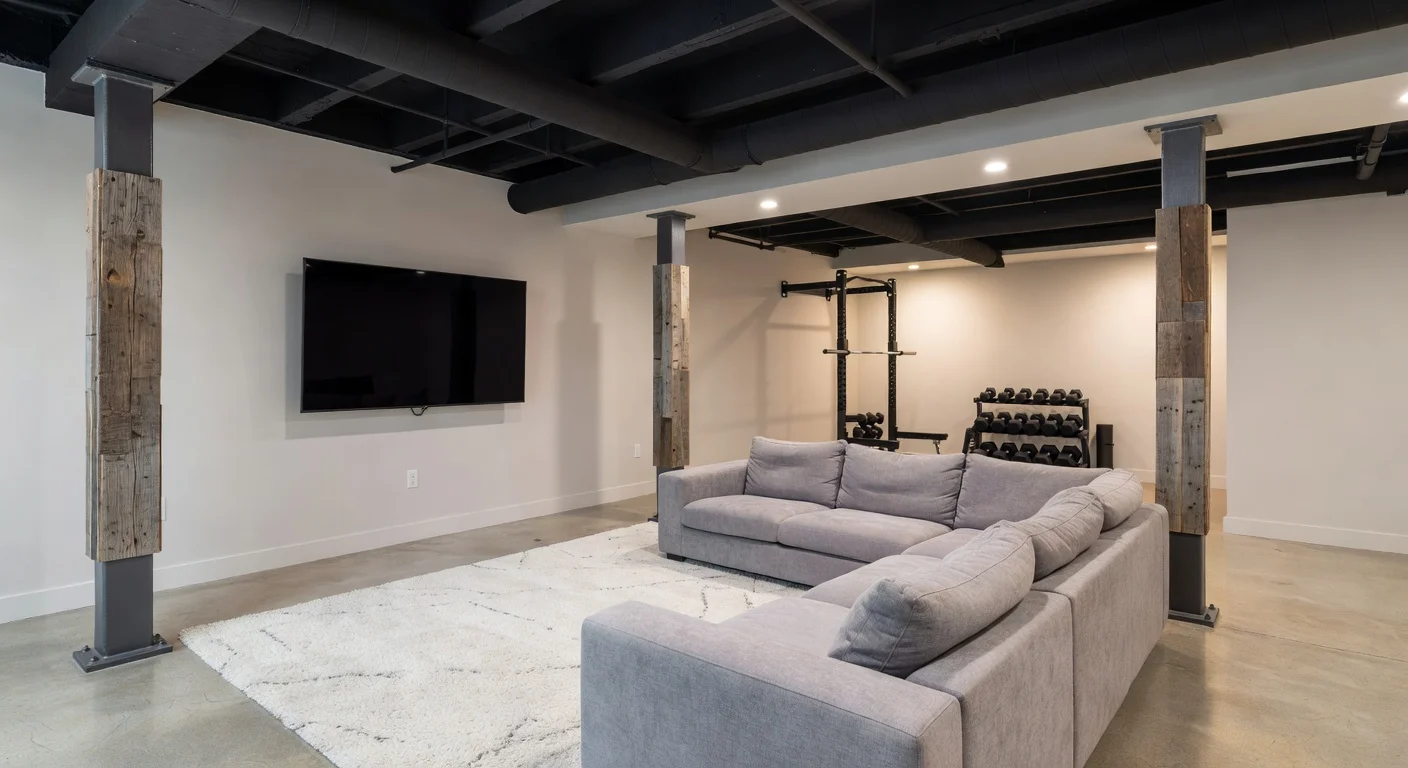
Basement furniture layout is the strategic arrangement of seating, storage, and entertainment elements in a subterranean space. Unlike above-ground living rooms, it requires configuring zones around fixed structural support columns, low ceiling clearances, and restricted stairwell access.
After testing over 40 different space-planning variations and measuring dozens of basements over the past five years, I noticed a recurring problem. Homeowners repeatedly buy massive sectionals that get physically stuck in the stairwell. Setting up a lower level differs from planning an upstairs living room.
Most people skip the actual math when measuring their basements. In 2026, the average cost of finishing a basement hits roughly $45,000, yet people ruin the final result by cramming a 120-inch sofa into a corner that blocks the utility room.
Why is basement space planning so difficult?
The primary difficulty comes from non-negotiable physical obstacles like support beams, HVAC ductwork drops, and small egress windows. You cannot just knock down a load-bearing steel lally column because it ruins the symmetry of your rug.
Basements force you to design defensively. Plan around water access and breaker boxes. Because most basements are long rectangles, failing to deliberately divide the room turns the space into a chaotic storage locker.
If you just push all the furniture against the exterior walls, you create a dead, awkward void in the center of the room. You end up with a setup that resembles a doctor's waiting room rather than a cozy retreat.
Common layout roadblocks include:
- Staircase bottlenecks: Tight 90-degree turns that reject pre-assembled furniture.
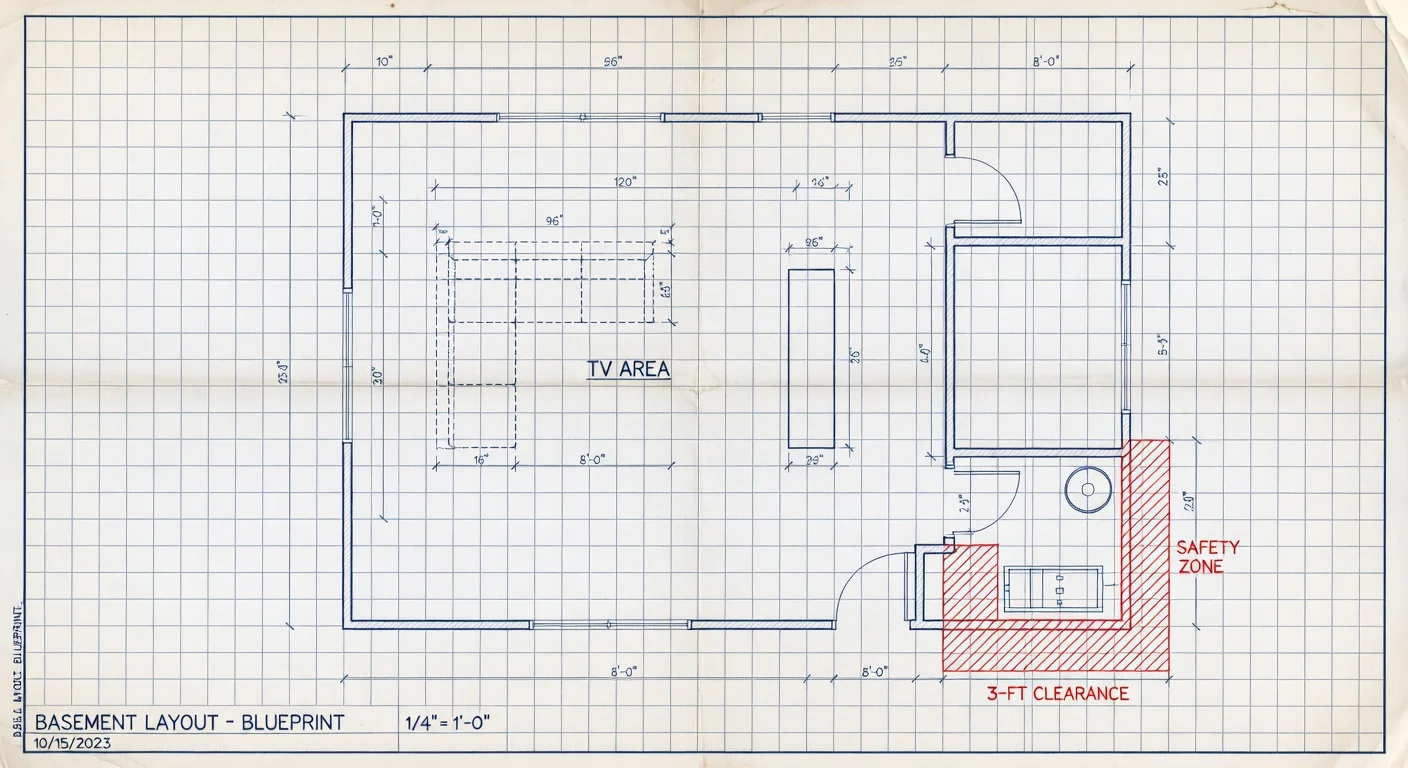
- Utility access: Needing a 36-inch clearance zone around the furnace or electrical panel.
- Low ceilings: HVAC drops that push ceiling height down to 88 inches or less.
- Lack of focal points: No architectural fireplace or large picture window to center the room around.
How do I figure out what styles fit my basement?
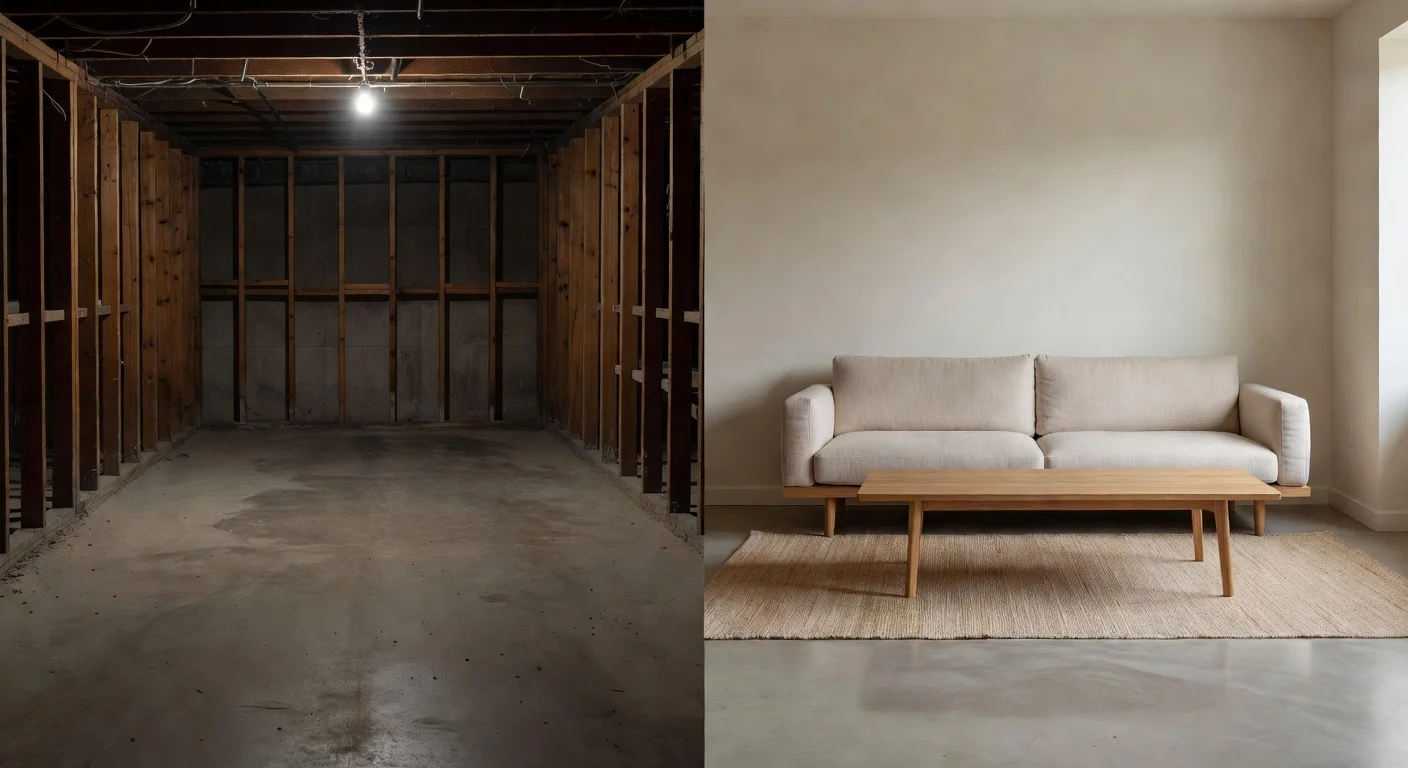
You should use AI visualization tools to test different configurations before buying physical items. Trying to guess if a Japandi minimalist setup or a dark home-theater aesthetic works best under low ceilings is risky.
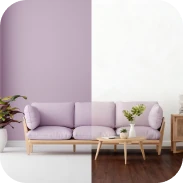
I recommend snapping a quick photo of your empty basement and running it through Renova AI. It is an app I built specifically to solve this blind-spot problem. You upload a picture, select from over 100 designs, and the app remodels your living room or basement instantly.
Since there is zero manual editing required, you can see how an L-shaped sectional completely changes the flow of the room in under five seconds. You can download my app here to map out your empty space right now.
Tool Comparison for Basement Layouts
If you need to plan your space in 2026, you have a few digital options. I tested these based on how well they handle frustrating basement quirks.
| Tool | Best For | Interface | 2026 Pricing |
|---|---|---|---|
| Renova AI | Instant style visualization & AI remodeling without manual CAD | Mobile App (Camera-based) | Free trial / Subscription |
| RoomSketcher | Exact millimeter floor plan measurements | Web Desktop | $49/year |
| MagicPlan | Contractors needing raw material estimates | Mobile App (Hardware tethered) | $9.99/month |
How to divide a large open basement?
You divide an open basement by grouping furniture onto distinct area rugs to create "zones." By anchoring your media setup on an 8x10 rug and placing your bar table entirely off the rug, you signal to the brain that these are two separate rooms.
You do not need to build expensive drywall partitions to separate spaces. In fact, adding walls usually chokes off the limited natural light coming from small basement windows. Mastering an open concept furniture layout relies heavily on the back profile of your seating.
If you float a sofa in the middle of the room, the back of the sofa acts as a soft physical barrier. This stops foot traffic from cutting directly through the TV-watching zone.
"Never push every piece of furniture against the concrete-backed walls. Let your furniture float in the center of the room to create logical walking aisles behind the sofa."
Where should the TV go?
You should place the TV on the darkest wall with the fewest window wells to minimize screen glare. Basements actually have an advantage here because light control is much easier than in upstairs livingrooms.
However, you must check the ceiling height before mounting a 75-inch screen. If your basement has dropped ceilings sitting at 8 feet tall, wall-mounting the television often forces an uncomfortable, neck-cranking upward viewing angle. Keep the TV on a low, 24-inch media console instead.
If you struggle with exact distances, reading a detailed guide on living room space planning will help you calculate the exact ratio between screen size and sofa placement.
How to arrange furniture around support columns?
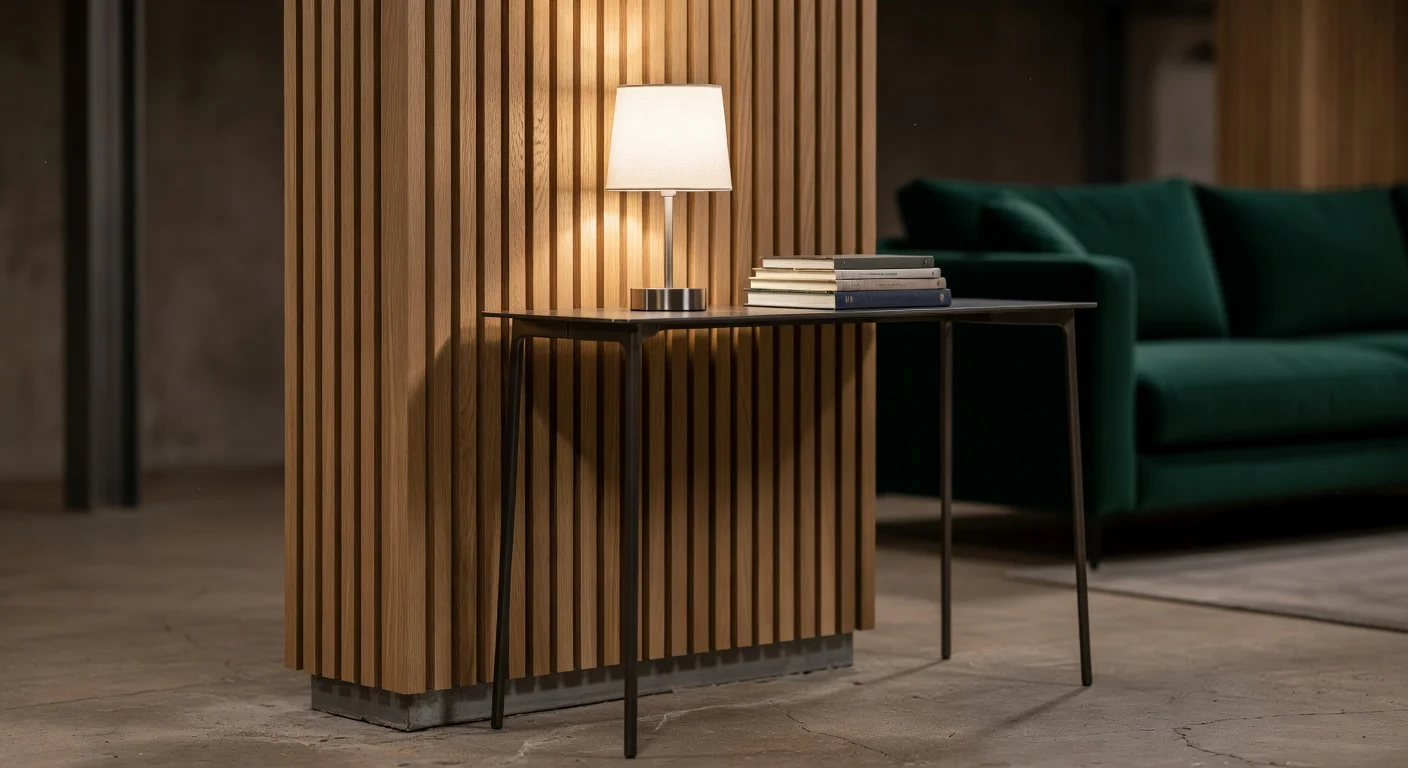
You must lean into the columns by using them as natural anchors for furniture, rather than trying to pretend they do not exist. Placing a console table between two load-bearing poles suddenly turns an annoying obstacle into a functional storage wall.
If a pole completely breaks up the middle of your layout, align the edge of your sectional right up against it. This makes the pole look intentional. Some interior designers even wrap basement lally columns in thick rope or custom oak panels to make them look like architectural features.
Never place a primary walking path directly into a column. You need to keep a clear 42-inch walkway around these structural posts to avoid stubbed toes in dim lighting.
Does basement furniture need to be modular?
Yes, nearly all large basement furniture should be modular if your staircase has a 90-degree turn. Trying to force a prefabricated 96-inch leather sofa down a narrow, enclosed stairwell is the most common mistake made by new homeowners.
If your stair width is under the standard 36 inches, or if the ceiling slopes sharply as you descend, one-piece furniture will absolutely get wedged. I have personally watched moving crews literally saw a $2,000 couch in half to get it down stairs.
Modular sectionals ship in individual cardboard boxes. You carry the pieces down one by one and assemble the frame inside the actual basement room.
Features to look for in basement seating:
- Low profiles: Seat heights around 17 inches make low basement ceilings feel significantly taller.
- Performance fabrics: Moisture-resistant materials fight the baseline 50-60% humidity often found underground.
- Lift-top storage: Ottomans that open up are perfect for hiding extra blankets during damp winter months.
Can I put regular wood furniture directly on concrete?
No, you should never place unprotected wooden furniture legs directly onto a basement concrete slab. Concrete is highly porous and will constantly wick unseen moisture straight up into the wood grain.
Within a year, the bottom two inches of a wooden bookshelf or table will begin to rot, warp, or grow mold. Always place solid wood furniture on top of a thick area rug, or install rubber leveling glides on the bottom of the furniture legs.
This rule applies heavily if you are bringing vintage or antique pieces downstairs. If the basement lacks a dedicated subfloor system, moisture is your biggest enemy.
How to execute a basement furniture layout step-by-step in 2026?
Planning the logistics requires working backward from the structural limitations of the room. You cannot buy the furniture first and hope it fits the layout later.
Since late 2025, modular furniture delivery times have sped up, but returning a massive, failed layout piece still incurs brutal $150+ restocking fees. Taking an hour to map the grid saves you massive logistical headaches.
- Measure the choke points: Measure the width of your staircase, the height of the stairwell ceiling, and the width of the basement entryway doors.
- Define the zones: Decide exactly what activities will happen here (e.g., 60% media room, 40% gym).
- Map the utility blockers: Mark exactly where the water heater, electrical box, and sump pump live. Give them a 3-foot clearance perimeter.
- Visualize the style: Snap a photo and run it through your AI generator to lock down the aesthetic before buying a single rug.
- Anchor the largest piece: Place your primary sectional or sofa in the blueprint first.
How do I handle basement lighting in the layout?
You must physically position your reading chairs and worktables directly under the recessed ceiling lights. Because basements lack expansive wall windows, placing a desk in a dark corner will make it completely unusable.
Do not rely entirely on harsh overhead can lights to illuminate your layout. You need to layer your light sources to trick the eye into thinking it is not underground.
Add floor lamps behind the sectional and small table lamps on the bar counter. By placing warm LED pools of light at human height, the room stops feeling like a damp cave and transforms into a cozy, intentional living space.
Frequently Asked Questions
How do you layout a basement with support poles?
You incorporate support poles into the layout by using them as natural zone dividers or anchoring furniture to them. You can wrap a custom bar table around the base of the pole or align the back of your sectional directly against it to hide the visual line.
What is the 3-foot rule for basement furniture?
The 3-foot rule requires you to leave at least 36 inches of clear walking space between heavy furniture pieces and walls. This ensures safe navigation, especially near basement egress windows and utility access panels.
Should a basement TV be mounted on the wall or placed on a stand?
You should place the TV on a low utility stand if your basement has drop ceilings lower than 8 feet. Wall-mounting a 65-inch television too high in a low-clearance room forces an uncomfortable viewing angle.
Why do regular sofas rarely fit in basements?
Standard sofas often fail to clear the 90-degree turns typical of residential basement stairwells. Modular furniture that ships in boxes and assembles downstairs is the safest option for subterranean rooms.
How do I separate a home gym from a media room in the basement?
Use heavy interlocking rubber mats for the gym floor and thick plush rugs for the media area to create a hard visual boundary. You can also place an open bookshelf between the two zones to block sightlines without blocking airflow.
Can I put a pool table against a wall in my basement?
No, a standard 8-foot pool table requires at least 60 inches of clearance on all four sides for comfortable cue stick movement. If placed against a wall, you will severely damage your drywall during gameplay.