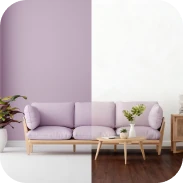
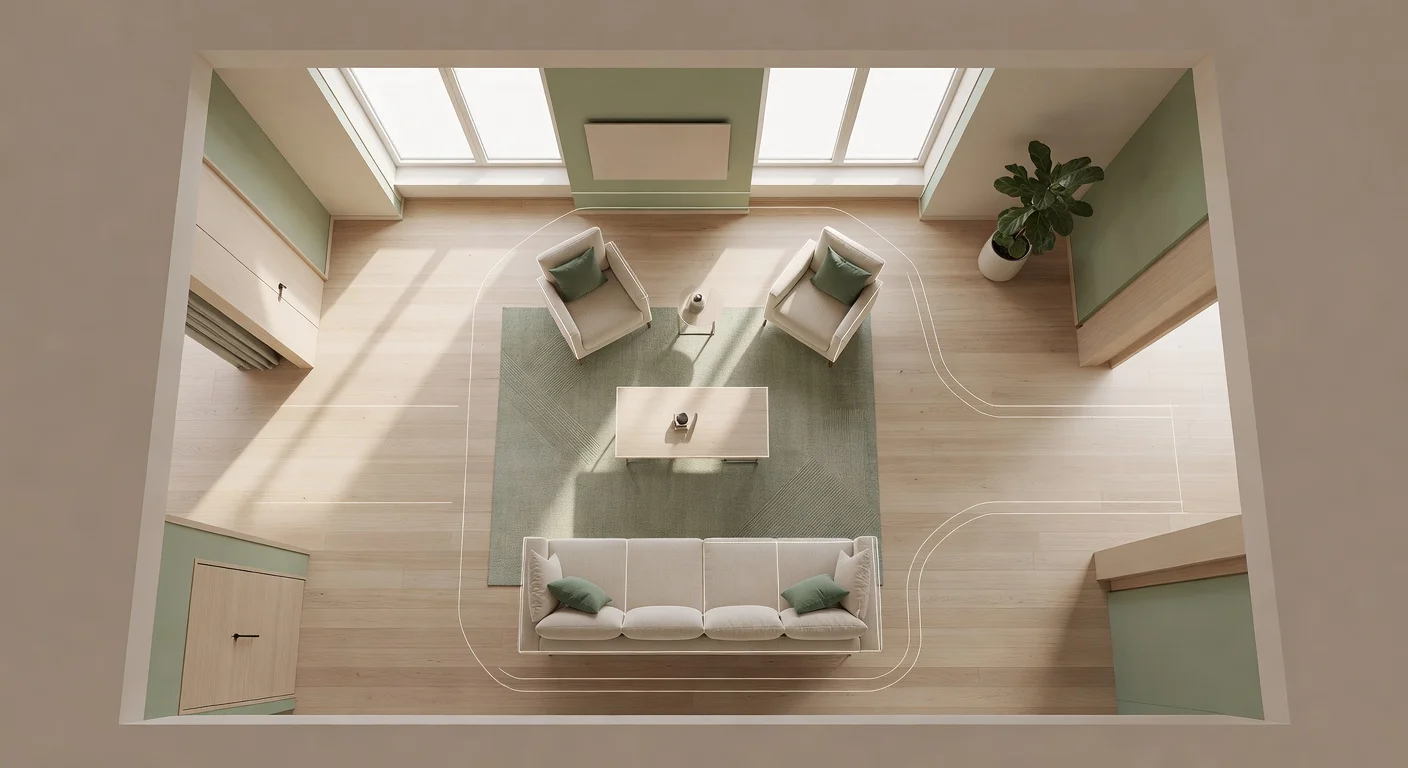
Living room space planning is the strategic arrangement of furniture to optimize traffic flow, conversation, and utility. Unlike randomly pushing couches against walls, it uses specific math—like 18-inch coffee table clearances—to make tight spaces function safely and beautifully.
I spent the entirety of late 2025 comparing every tape-measure hack, floor-planning rule, and visualization app I could find.
What I noticed is that most people buy furniture that is completely out of scale for their square footage.
They end up trapped in a daily obstacle course of their own making.
Fixing this requires understanding the absolute limits of physical space.
Why is living room layout so hard right now?
Modern living rooms often lack distinct, separate walls, making it impossible to rely on traditional symmetrical furniture placement. We are trying to wedge massive sectional sofas into irregular spaces built 40 years ago.
Plus, furniture dimensions have ballooned. The average sofa sold in 2026 is 15% deeper than models sold in 2010.
If your foundation is wrong, buying nicer pillows will not save the space. You need a structural grid.
How much space do I need between furniture?
You need precisely 18 inches between your seating and your coffee table, and 30 to 36 inches for primary walkways. Anything less than that will constantly cause you to trip over your own furniture.
The Spruce advises that understanding basic human ergonomics is the only way to avoid a cluttered space. Here are the hard numbers you need to follow:
- TV viewing distance: Place your sofa 1.5 times the diagonal measurement of your television screen away from the wall.
- Side table height: Tables should sit within 2 inches of the arm height of the nearest chair.
- Rugs: Buy a rug large enough (typically 8x10 or 9x12 feet) so the front two legs of every seating piece rest solidly on it.
What are the 2026 traffic flow rules for living room layouts?
The modern standard requires exactly 36 inches of clearance for main walkways leading to doorways or hallways. Designers used to settle for 30 inches, but bulky modern furniture requires wider paths to prevent bottlenecking.
If people have to turn sideways to reach the kitchen, your layout is broken. Seriously.
How do I draft my living room layout step by step?

Drafting a layout requires measuring your total square footage first, then plotting immovable objects like doors, windows, and fireplaces. You cannot guess these numbers (which honestly leads to expensive return shipping fees).
Before you open any app or buy any software, you must follow this sequence:
- Measure the perimeter: Map every wall down to the quarter-inch.
- Mark the permanent fixtures: Note the exact placement of electrical outlets, air vents, and window sills.
- Define the focal point: Choose whether the seating will face the fireplace, the television, or a massive bay window.
Where should the sofa actually go?
Your sofa should face the room's primary focal point, floating at least 12 inches away from the nearest wall. Pushing every piece of seating against the drywall creates an awkward dead zone in the middle of the room.
If you bring the chairs inward, the grouping feels intimate. People can actually have a conversation without shouting across a 10-foot void.
Can I separate spaces without building walls?
Yes, you can easily divide a multi-use room using large area rugs or the back profile of a sectional sofa. This trick is absolutely mandatory if you are dealing with an open concept furniture layout.
The physical back of the couch acts like an invisible barrier. It tells your brain that the living text stops and the dining area begins.
Do I really need an app for space planning?
No, grid paper works perfectly fine for physical measurements, but digital tools save you from buying furniture that clashes with your existing paint colors. Most paper plans fail to illustrate how light and color will actually fill the 3D volume of the home.
I honestly think skipping digital visualization in 2026 is a massive risk. A $2,000 couch mistake is not worth the stubbornness of sticking purely to graph paper.
What is the real cost of living room space planning tools in 2026?
Hiring a human interior designer for a custom living room layout currently averages $150 to $200 per hour in major metro areas. A complete room plan, including sourcing and CAD drawings, usually bills out between $1,500 and $3,000.
That creates a massive financial wall for regular homeowners. Because of this, 60% of renters and buyers are turning to consumer software.
Which are the top living room layout tools in 2026?
The three most prominent tools in 2026 range from highly technical 3D modeling programs for professionals to instant, photo-based smartphone apps for casual redesigners. Your choice entirely depends on how much manual drafting you actually want to do.
| Software Name | Target Audience | Starting Price | Ease of Use | Core Strength |
|---|---|---|---|---|
| SketchUp | Professional Contractors | $349/year | Very steep | Precise to the millimeter. |
| Planner 5D | Desktop DIYers | $19.99/mo | Moderate | Huge 3D catalog for dragging and dropping furniture. |
| Renova AI | Easiest to Use | Free trial available | Instant | Snap a photo to generate 100+ styles instantly. No manual drafting. |
Every single tool listed above serves a valid purpose. SketchUp is unmatched if you need to hand a blueprint to a custom cabinet maker.
What makes AI different from traditional 3D software?
AI tools generate fully styled rooms directly from a photograph instead of forcing you to piece together a room by dragging 3D blocks onto a blank grid. You skip the tedious architectural drawing phase entirely.
This is exactly why I mostly rely on Renova AI these days. Because there is absolutely no manual editing required.
You open the app, snap a picture of your chaotic layout, and it analyzes exactly where your walls and floors are. Then it swaps your living room's floor plan into over 100 selectable aesthetics. It repaints the walls, removes old clutter, and gives you a flawless visualization in exactly three seconds.
How to handle awkward room shapes?
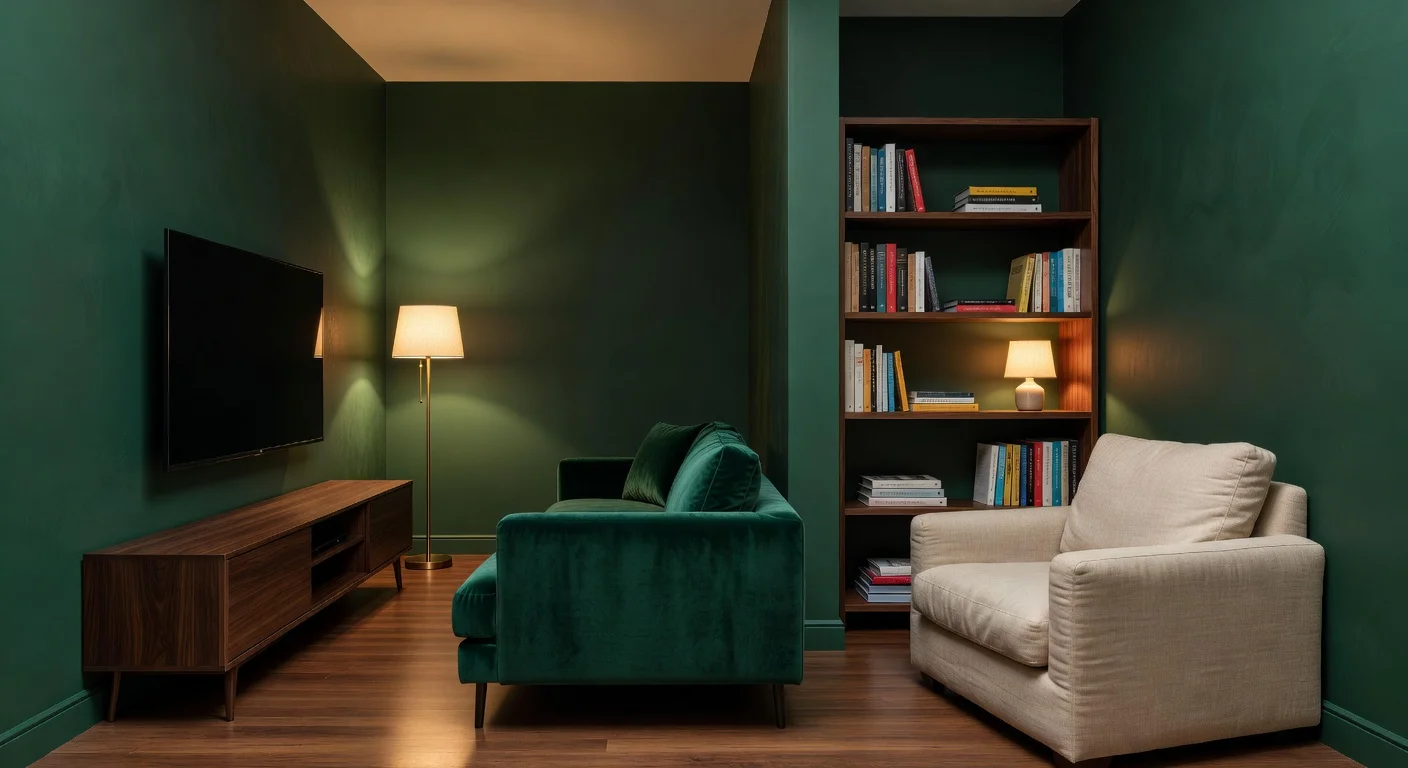
You handle awkward rooms by creating secondary focal points instead of forcing the room to do one giant task. Trying to make a bizarre L-shape room look perfectly symmetrical is a losing battle.
Accept the odd angles. Use a small corner column to build a reading nook, tucking a slim accent chair into the dead space.
What if my living room is long and narrow?
You must split a narrow room into two distinct functional zones instead of trying to stretch one seating arrangement across 25 feet of floor space. If you stretch the furniture out, it basically feels like a bowling alley.
Use the front half for the television and the primary sofa. Use the back half for a small office desk setup or an oversized statement plant.
You can read more about balancing scale and proportion in our comprehensive guide to decor living. Keep the visual weight low so natural light can travel from one end of the narrow room to the other.
Frequently Asked Questions
How much space should be between a sofa and a coffee table?
You should leave exactly 18 inches of space between the edge of your sofa and the coffee table. This allows enough room to walk past without hitting your shins, while keeping drinks within easy arm's reach.
Should furniture touch the walls in a living room?
No, pushing all your seating against the walls creates a sterile, waiting-room vibe. You should pull sofas and chairs at least 12 inches away from the wall to make the space feel intentionally designed and cozier.
How wide should a walkway be in a living room?
Primary walkways leading to doors or other rooms should be 36 inches wide. Secondary walkways passing between accent chairs or occasional tables can drop down to 30 inches without feeling too cramped.
Can I use an app to plan my living room layout?
Yes, there are dozens of tools available. SketchUp works well for pros, while smartphone options like Renova AI let you photograph your empty room and instantly generate styled layouts without manual dragging and dropping.
Where is the best place to put a TV in a long living room?
Mount the TV on the longest blank wall and float your sofa directly across from it, effectively splitting the long room into two separate zones. Leave the empty area behind the sofa for a dining table or reading nook.
How do you layout an open concept living room?
Use large area rugs to anchor the seating area and rely on the back of your largest sofa to create a physical barrier between the living zone and the dining room or kitchen.