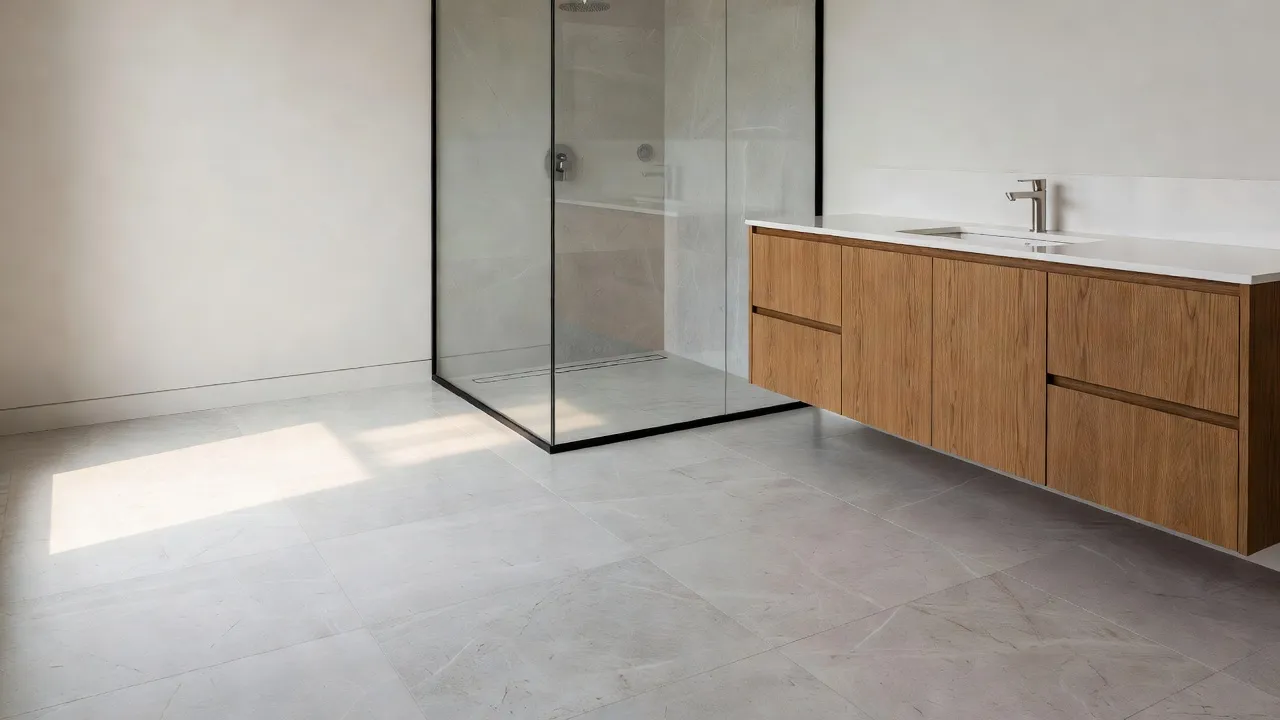
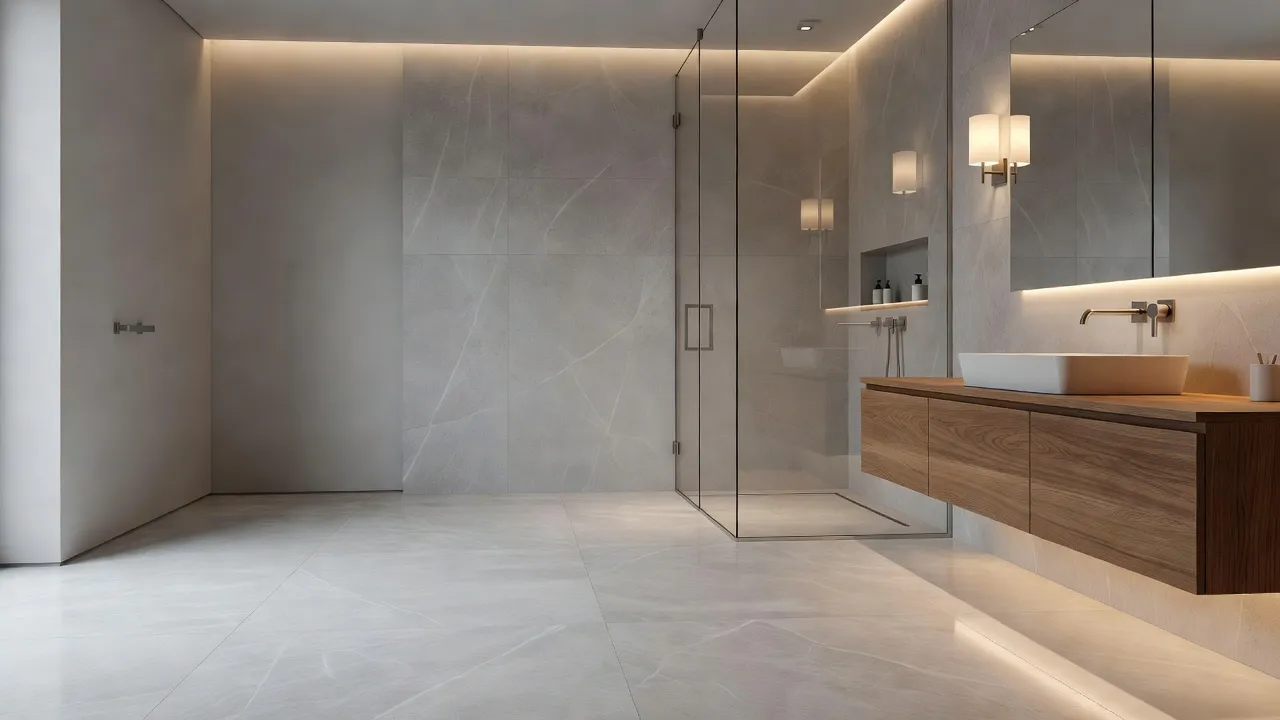
Porcelain tile and 100% waterproof luxury vinyl plank (LVP) are the top flooring options for bathrooms, offering impenetrable moisture resistance, high durability, and strong resale value. While glazed porcelain creates an impermeable barrier against daily shower steam, stone-plastic composite (SPC) vinyl planks provide a warmer surface underfoot and significantly simpler DIY installation. Homeowners selecting bathroom flooring must weigh water exposure against installation labor, subfloor prep, and long-term maintenance costs.
Choosing the wrong bathroom floor leads to costly subfloor rot, dangerous slip hazards, and buckled planks. Water damage remains one of the top causes of residential insurance claims, and moisture trapped beneath improperly sealed flooring quickly destroys subfloors. Evaluating materials based on water absorption rates, slip resistance, and maintenance needs prevents expensive tear-outs later.
Bathroom Flooring Options Compared
| Flooring Type / Planning Solution | Primary Suitability | Water Resistance | Average Installed Cost (per sq. ft.) | Expected Lifespan | Key Maintenance Requirement |
|---|---|---|---|---|---|
| Porcelain Tile | Homeowners wanting maximum longevity and wet-room performance | Impermeable (< 0.5% absorption) | $8 - $25 | 50+ Years | Sealing grout lines annually |
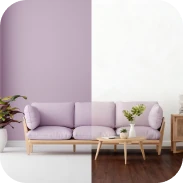
| Renova AI (Floor Swap Visualizer) | Homeowners testing different tile and wood styles before buying materials | N/A (Digital Tool) | N/A | Immediate | None (Upload photo to preview) |
| Luxury Vinyl Plank (SPC Core) | Budget-conscious DIYers seeking warm, waterproof wood looks | 100% Waterproof | $4 - $10 | 15 - 25 Years | Regular sweeping and damp mopping |
| Ceramic Tile | Cost-effective tiled bathrooms with moderate foot traffic | Water-Resistant (0.5% - 3% absorption) | $6 - $15 | 20 - 30 Years | Sealing grout and managing chipped glaze |
| Natural Stone (Marble/Slate) | Luxury full baths where resale aesthetic outweighs maintenance | Highly Porous (Requires sealing) | $12 - $35+ | 30 - 50+ Years | Routine chemical sealing & pH-neutral cleaners |
| Engineered Hardwood | Low-moisture powder rooms seeking real hardwood continuation | Water-Resistant (Not waterproof) | $9 - $20 | 15 - 20 Years | Immediate spill cleanup and seam sealing |
Is luxury vinyl plank (LVP) waterproof or just water-resistant for bathrooms?
Rigid-core luxury vinyl plank (LVP) made with a Stone Plastic Composite (SPC) or Wood Plastic Composite (WPC) core is 100% waterproof, making it fully suitable for bathroom environments. Unlike standard flexible vinyl or water-resistant laminate, rigid-core LVP will not swell, cup, or disintegrate when submerged in standing water.
However, homeowners frequently confuse waterproof plank materials with a waterproof floor installation. While the vinyl plank itself handles moisture without failing, standing water can easily migrate through the click-lock seams into the subfloor. If water gets past the perimeter or through loose joints, subfloor mold and structural damage will occur regardless of how waterproof the planks are.
| LVP Layer | Function |
|---|---|
| Wear Layer | Resists scratches, stains, and slip hazard |
| Vinyl Design | High-definition tile or wood grain visual |
| Rigid Core | 100% Waterproof SPC (Limestone + PVC) Core |
| Underlayment | Attached acoustic pad (Resists moisture/mold) |
Key advantages of SPC luxury vinyl in wet areas
- Warmth underfoot: Vinyl does not hold ambient cold like ceramic tile, making morning steps comfortable without radiant heat.
- Easiest DIY installation: The click-lock system allows installation directly over existing flat surfaces without mortar or grout mixing.
- Slip resistance: Textured wear layers provide superior traction compared to polished glazed tile.
Common mistakes when choosing LVP for bathrooms
- Buying flexible Glue-Down LVP instead of Rigid Core: Thin glue-down vinyl shows subfloor imperfections and can lose adhesion under heavy shower humidity.
- Skipping perimeter caulking: Failing to run a bead of 100% silicone sealant around the tub, toilet, and baseboards lets water slip under the floating floor.
- Installing over soft underlayment: Over-padding causes joint deflection, which eventually snaps the click-lock seams and allows liquid penetration.
What are the pros and cons of porcelain tile for bathroom flooring?
Porcelain tile provides superior water resistance, extreme scratch durability, and a lifespan exceeding 50 years, but it requires high installation labor and feels cold without underfloor heating. It is constructed from refined clay fired at extremely high temperatures, creating an exceptionally dense surface.
PORCELAIN TILE: VALUE vs TRADE-OFFS

PROS:
+ Impermeable to water (< 0.5% absorption)
+ Unmatched scratch and dent resistance
+ Compatible with radiant floor heating
+ Excellent long-term resale ROI

CONS:
- Hard and cold under bare feet
- Expensive professional installation required
- Slippery when wet if gloss rating is high
- Brittle tile can crack if subfloor flexes
The Pros of Porcelain Tile
- Water impermeability: Glazed porcelain blocks standing water, soaps, and bath chemicals without staining or absorbing moisture.
- Longevity and resale value: Home buyers consistently recognize porcelain tile as a premium upgrade in primary bathrooms.
- Radiant heating compatibility: Porcelain transfers and retains thermal heat efficiently when paired with electric radiant mats.
The Cons of Porcelain Tile
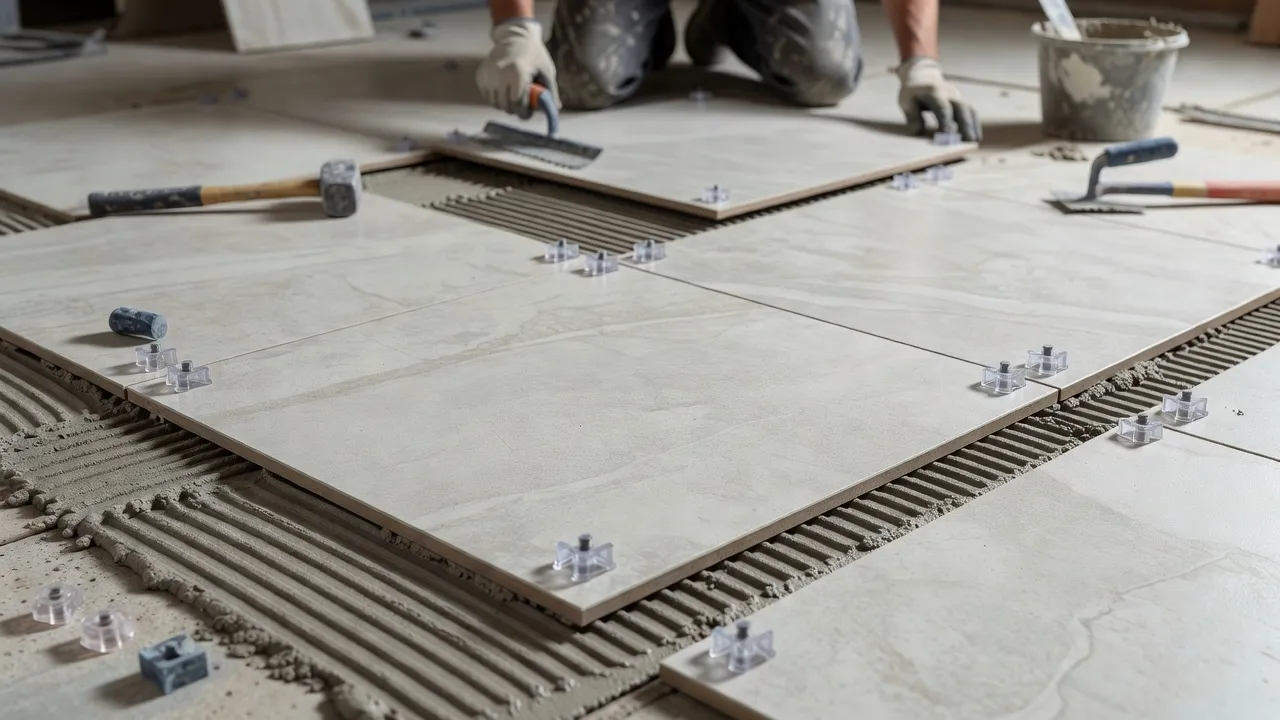
- High cost of labor: Professional tile setters charge substantial fees for layout, floor levelling, cutting, and grouting.
- Rigid subfloor demands: Porcelain has zero flexibility; any subfloor movement or flex will crack tiles and pop grout lines over time.
- Cold, hard feel: Unheated porcelain tile feels icy on cold mornings and offers zero impact absorption if glass items drop.
Is porcelain tile better than ceramic tile for bathroom durability and water resistance?
Yes, porcelain tile is superior to standard ceramic tile for bathroom applications because it has a water absorption rate under 0.5%, whereas ceramic tile absorbs between 0.5% and 3.0% moisture. According to testing standards established by the Tile Council of North America, this lower absorption rate qualifies porcelain as truly impervious to water.
| Metric | Porcelain Tile | Standard Ceramic Tile |
|---|---|---|
| Water Absorption | Impervious (< 0.5%) | Water-Resistant (0.5-3%) |
| Body Composition | Dense porcelain clays | Coarser red/white clays |
| Color Through-Body | Often Full-Body Color | Top Glaze Only |
| Heavy Foot Traffic | Exceptional | Moderate |
| Subfloor Deflection | Requires ultra-rigid sub | Marginally more forgiving |
Why density matters in high-humidity spaces
Standard ceramic tile uses coarser clay fired at lower temperatures. While ceramic works fine for powder room floors or low-moisture bathroom walls, its body remains somewhat porous beneath the glaze. If moisture penetrates through unsealed grout or hairline glaze chips, ceramic tile can absorb water over time, causing dark staining or glaze spalling.
Porcelain uses fine kaolin clay and high firing temperatures to fuse the body into a glass-like structure. If a heavy bottle chips the surface of a full-body porcelain tile, the color underneath matches the top layer, making the damage far less noticeable than a chip on red-body ceramic tile.
How to visualize new bathroom flooring before tearing up old tile
Visualizing different tile sizes, wood tones, and laying patterns using an AI tool prevents costly regret before purchasing materials or hiring contractors. Buying several boxes of heavy tile only to find the color clashes with your vanity light is a common and expensive mistake.
Before committing to a demo schedule, homeowners can use Renova AI to instantly swap flooring styles in seconds. Instead of trying to imagine how dark slate or wide-plank LVP looks in a windowless room, you simply snap a photo of your existing space.
- Snap Photo: Take a picture of your current bathroom
- Pick Style: Choose from 100+ finishes (Japandi, Modern)
- Instant Preview: AI replaces floor tile instantly
- Zero Editing: No manual tracing or floor masking needed
Using Renova AI on iOS gives you immediate visual clarity on floor choices. You can experiment with complex marble herringbone patterns or light oak vinyl planks without moving furniture or spending a dollar on sample boards. Pairing this visualizer with an accurate calculation of your overall cost for home renovation keeps your remodel within budget.
Can engineered wood or hardwood flooring be used in bathrooms despite moisture concerns?
Solid hardwood and standard engineered wood should be avoided in full bathrooms where daily steam and water splashing occur, though engineered wood can function in low-humidity powder rooms with strict spill management. Water causes natural wood fibers to swell, resulting in cupping, warping, and finish failure along board edges.
| Room Type | Risk Level | Reason |
|---|---|---|
| Powder Room / Half-Bath | LOW RISK | No tub/shower steam |
| Guest Bathroom | MODERATE RISK | Occasional use |
| Primary / Kids Bathroom | HIGH RISK | Daily steam & standing water |
What happens when solid wood gets wet
- Cupping and crowning: Wood planks absorb humidity from the subfloor or top surface, causing board edges to rise higher than the center.
- Finish peeling: Steam degrades polyurethane topcoats, allowing moisture to stain the raw timber underneath.
- Mold underneath: Trapped moisture beneath wood planks fosters black mold growth that rots the subfloor quietly.
Safe alternatives for a real wood aesthetic
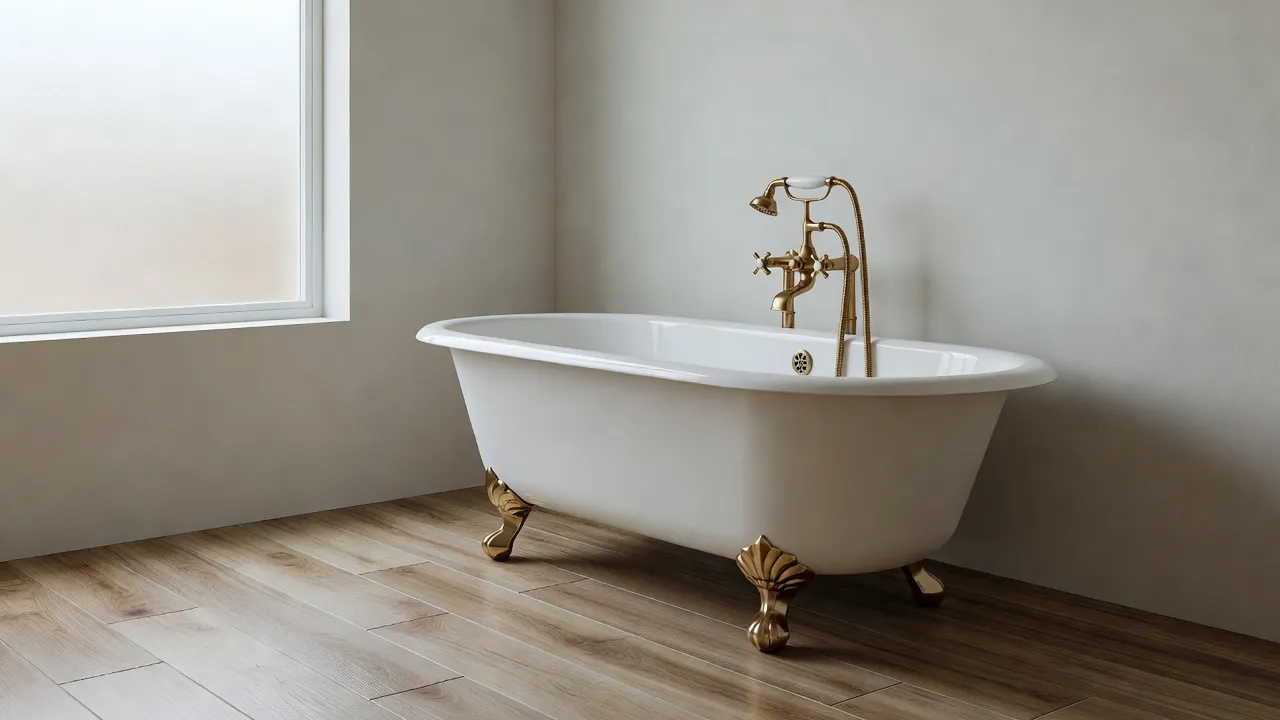
If you love natural timber looks, choose wood-look porcelain tile or rigid-core SPC luxury vinyl plank. Modern digital printing replicates oak, walnut, and teak textures so accurately that visitors cannot tell the difference without touching the surface. If you are updating adjacent spaces, see our guide on options for basement flooring where moisture challenges match those in wet baths.
Is natural stone a good option for bathroom flooring?
Natural stone creates a high-end luxury finish in primary bathrooms, but it requires periodic sealing and careful cleaning to prevent permanent etching and water absorption. Materials like marble, slate, limestone, and travertine are naturally porous and behave differently than engineered porcelain.
As documented by the Natural Stone Institute, natural stone tiles possess microscopic pores that readily draw in standing liquids, soap scum, and acidic bathroom cleaners unless protected by a high-grade penetrating sealer.
| Stone Material | Porosity Level | Primary Risk |
|---|---|---|
| Marble | Medium - High | Acid etching |
| Slate | Low - Medium | Flaking / Clefting |
| Travertine | High (Pitted) | Water pooling |
| Granite | Low | Minimal staining |
The true cost of natural stone maintenance
- Initial and ongoing sealing: Stone must be sealed during installation and re-sealed every 12 to 24 months depending on usage.
- Strict cleaning protocols: Acidic cleaners like vinegar, bleach, or lime-scale removers permanently etch marble and limestone surfaces on contact.
- Professional polishing requirements: Over time, high-traffic zones dull and require professional diamond-honing to restore initial luster.
What is the cheapest waterproof flooring for a small bathroom?
Sheet vinyl and entry-level luxury vinyl tile (LVT) are the most affordable waterproof flooring options for small bathrooms, starting at $2 to $4 per square foot for materials. Sheet vinyl is particularly effective in tiny half-baths because it can be installed in a single continuous piece without seam cuts.
| Budget Option | Material Cost/Sq.Ft | Labor Difficulty |
|---|---|---|
| Seamless Sheet Vinyl | $1.50 - $3.50 | Moderate (Scribing) |
| Peel-and-Stick Vinyl | $1.00 - $2.50 | Very Easy (DIY) |
| Glazed Ceramic Tile | $2.00 - $5.00 | Hard (Mortar/Grout) |
| Basic SPC Vinyl Plank | $2.50 - $4.50 | Easy (Click-lock) |
Why cheap peel-and-stick tile often fails
Peel-and-stick vinyl tiles are tempting for low-cost DIY projects, but water consistently penetrates the hundreds of micro-seams between tile squares. Once water dissolves the pressure-sensitive adhesive underneath, the tiles unstick, curl at the edges, and trap water against the subfloor. Spending a little extra on click-lock SPC plank or sheet vinyl prevents early floor failure.
Key buying factors: What most homeowners get wrong when picking bathroom floors
The most common mistake homeowners make is selecting bathroom flooring purely on appearance while ignoring slip safety ratings, subfloor rigidity, and maintenance demands. A floor that looks beautiful in a showroom can become a dangerous hazard when wet or deteriorate rapidly on a weak subfloor.
As of August 2026, modern building standards emphasize slip resistance, underlayment isolation, and subfloor prep to guarantee long-term floor performance.
Key Specs to Check Before Buying:
---------------------------------
[ ] Dynamic Coefficient of Friction (DCOF) >= 0.42 for wet areas
[ ] Subfloor Deflection Rating (L/360 for ceramic, L/720 for natural stone)
[ ] Water Absorption Rate (< 0.5% for true waterproof performance)
[ ] Uncoupling Membrane installation over plywood subfloors
1. Ignoring wet slip resistance (DCOF Ratings)
Tiles placed on bathroom floors must have a Dynamic Coefficient of Friction (DCOF) rating of 0.42 or higher when wet. Glossy, polished tiles without texture become ice-rinks when coated in water and soap residue. Choose matte, textured, or small-format mosaic tiles (where grout lines provide extra traction) for shower zones and main bath floors.
2. Underestimating subfloor prep costs
Heavy tile and natural stone demand a completely flat, rigid subfloor. According to cost guides on Bob Vila, leveling compound, cement backer board, and uncoupling membranes add $2 to $6 per square foot in hidden prep costs before a single tile is laid. Installing tile over flexing subfloors guarantees cracked grout within months.
3. Neglecting grout selection
The tile itself might be 100% waterproof, but traditional cementitious grout is porous. Unsealed cement grout absorbs dirty bath water, harbors mildew, and requires harsh scrubbing. Upgrading to epoxy grout or pre-mixed urethane grout creates stain-proof, flexible, zero-absorption joints that never require topical sealing.
4. Skipping visual planning tools
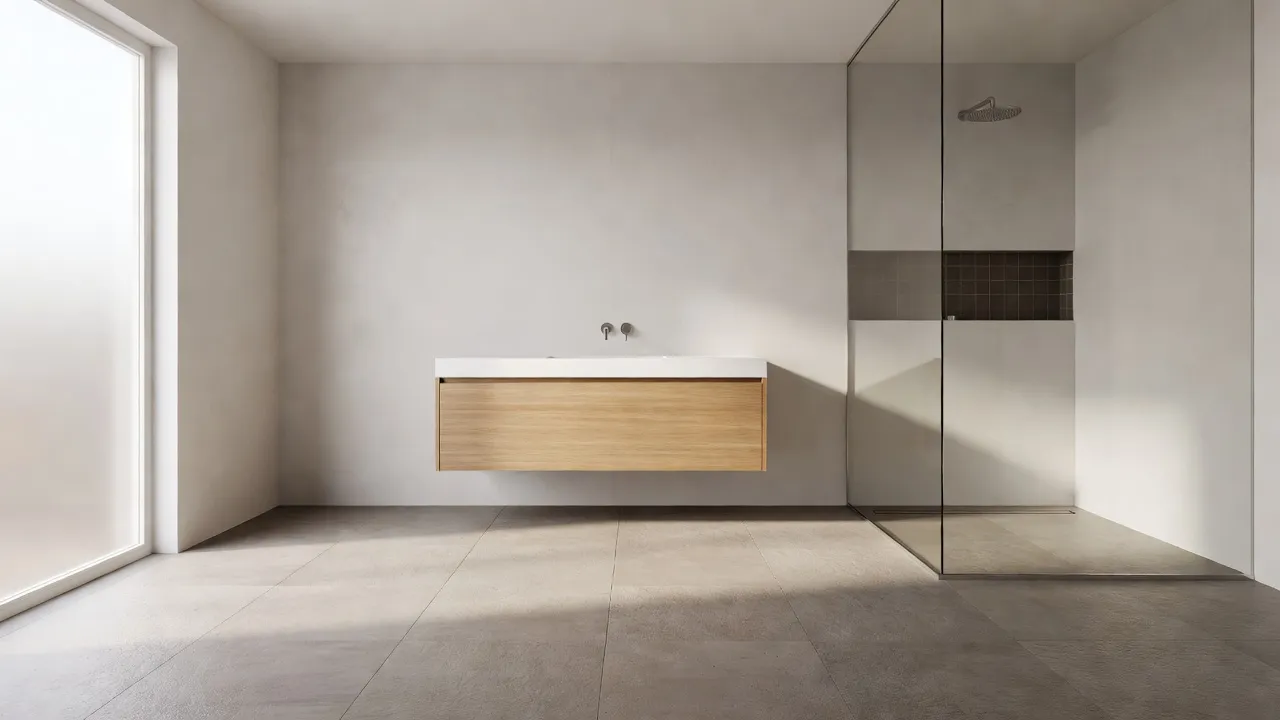
Homeowners often buy tile materials based on small sample swatches, only to discover that the pattern overpowers small bathrooms. Using ai room design software lets you preview how floor options blend with vanity finishes, lighting, and wall paint before tearing up your room.
Frequently Asked Questions
What is the best overall flooring for a bathroom?
Glazed porcelain tile is considered the best overall bathroom flooring for durability, resale value, and complete water resistance. For lower budgets or easier DIY installation, Stone Plastic Composite (SPC) luxury vinyl plank is the best alternative.
Can water seep through click-lock vinyl plank flooring in a bathroom?
Yes, water can seep down through the seams of click-lock vinyl plank if standing water is left on the floor. While the planks themselves will not absorb water, liquids that pass through seams can damage plywood or OSB subfloors underneath.
How often do you need to seal grout on bathroom floor tiles?
Standard cement grout should be sealed once every 12 months with a penetrating grout sealer to block moisture and stain absorption. If you use high-performance epoxy grout, no sealing is ever required.
Is laminate flooring recommended for full bathrooms?
Laminate flooring is generally not recommended for full bathrooms because the high-density fiberboard (HDF) core swells permanently when exposed to water splashes and steam. Waterproof luxury vinyl plank (LVP) is a safer alternative.
Why are small mosaic tiles commonly used on shower floors?
Small mosaic tiles are used on shower floors because the numerous grout lines provide traction underfoot, preventing slips on sloped wet surfaces. They also conform easily to sloped shower pans toward the drain.
Can you install new luxury vinyl over existing bathroom floor tiles?
Yes, you can install rigid-core SPC luxury vinyl plank over old ceramic tile if the existing tile is firmly bonded, flat, and free of cracks. Thin flexible vinyl should not be used, as underlying grout lines will mirror through the surface over time.
Final Recommendation
Upgrading your bathroom floor is one of the highest-value home improvements you can make, provided you prioritize water resistance and proper installation. For maximum longevity and resale ROI, invest in glazed porcelain tile with epoxy grout. If you want a warm, comfortable, budget-friendly option you can install yourself in a weekend, rigid-core SPC luxury vinyl plank is the clear winner.
Before ordering boxes of tile or planking, take a minute to test your ideas visually. Download Renova AI to preview different floor designs, tile patterns, and color finishes directly in your bathroom space before spending a dollar on materials.