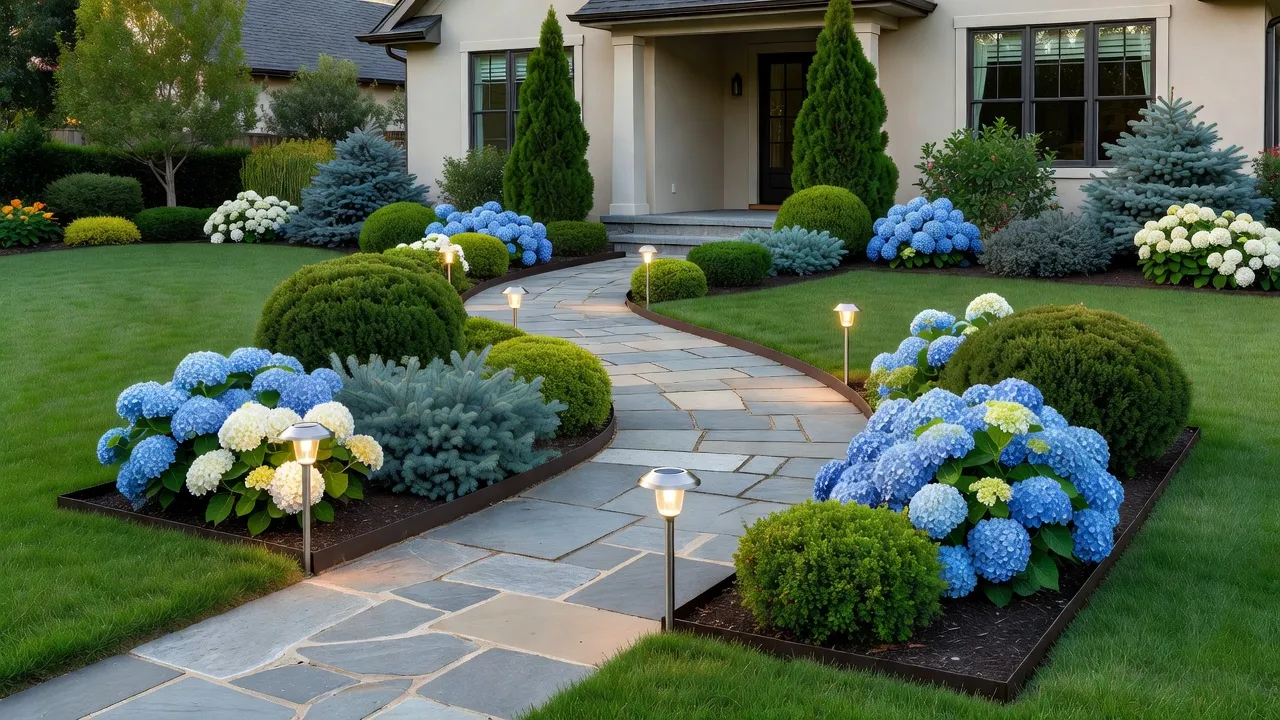
Landscaping for curb appeal means strategically pairing structured hardscaping, layered foundational plantings, and clear walkway lighting to make a house look welcoming from the street. The single biggest mistake homeowners make is buying impulse plants at the nursery without a structural plan, which costs upwards of $1,500 in overgrown shrubs, dead perennials, and ripped-up stone borders within three years. According to research published by the National Association of Realtors, well-planned exterior landscaping boosts home sale prices by 7% to 15% while returning up to 100% of its installation cost at resale.
Most people who attempt a front yard makeover misjudge scaling, light requirements, and plant spacing. They plant young boxwoods two feet from the foundation, only to watch them block windows and trap moisture against the siding five years later. As of August 2026, nursery stock prices average $45 to $85 per 3-gallon container, so making trial-and-error mistakes on a front yard layout gets expensive fast. Designing with scale, soil context, and seasonal color in mind ensures your investment holds its value year-round.
What are the most common landscaping mistakes that ruin curb appeal?
The most common mistake that damages curb appeal is planting trees and shrubs too close to the house without accounting for their mature width and height. Homeowners often fill empty beds with small plants from the home improvement store, ignoring the tag that warns a 12-inch sapling will expand into an 8-foot wide bush. When root systems crowd the foundation, they trap water, rot wood siding, and block natural sunlight from entering front windows.
+-----------------------------------------------------------------------+
|                   COMMON CURB APPEAL LANDSCAPING MISTAKES             |
+-----------------------------------------------------------------------+
|  [ Too Close to House ]    ---> Traps moisture, damages siding & roof |
|  [ Single Height Plants ]  ---> Creates flat, monotonous visual lines |
|  [ Ignoring Sun Zones ]    ---> Causes patchy beds and dead foliage   |
|  [ No Mulch/Edging ]       ---> Grass bleeds into beds, looks messy   |
+-----------------------------------------------------------------------+
Here are the specific layout errors that waste money and lower a home's street impression:
- Ignoring mature plant dimensions: Planting shrubs closer than 3 feet from siding forces aggressive pruning later, creating misshapen plants and bare stems.
- Flat height layering: Putting all plants at the exact same height makes the front entrance look flat and unstructured.
- Neglecting soil and light conditions: Placing shade-loving hostas in full afternoon sun leads to scorched, yellowing leaves by mid-summer.
- Using narrow foundation beds: Bed depths under 4 feet do not leave enough room to layer foreground perennials in front of background evergreen shrubs.
- Failing to match architectural style: Formal manicured hedges often clash with rustic farmhouses, while wild cottage gardens look chaotic against modern clean-lined homes.
Best for Single-Story Homes: Curb Appeal for a Ranch Style House
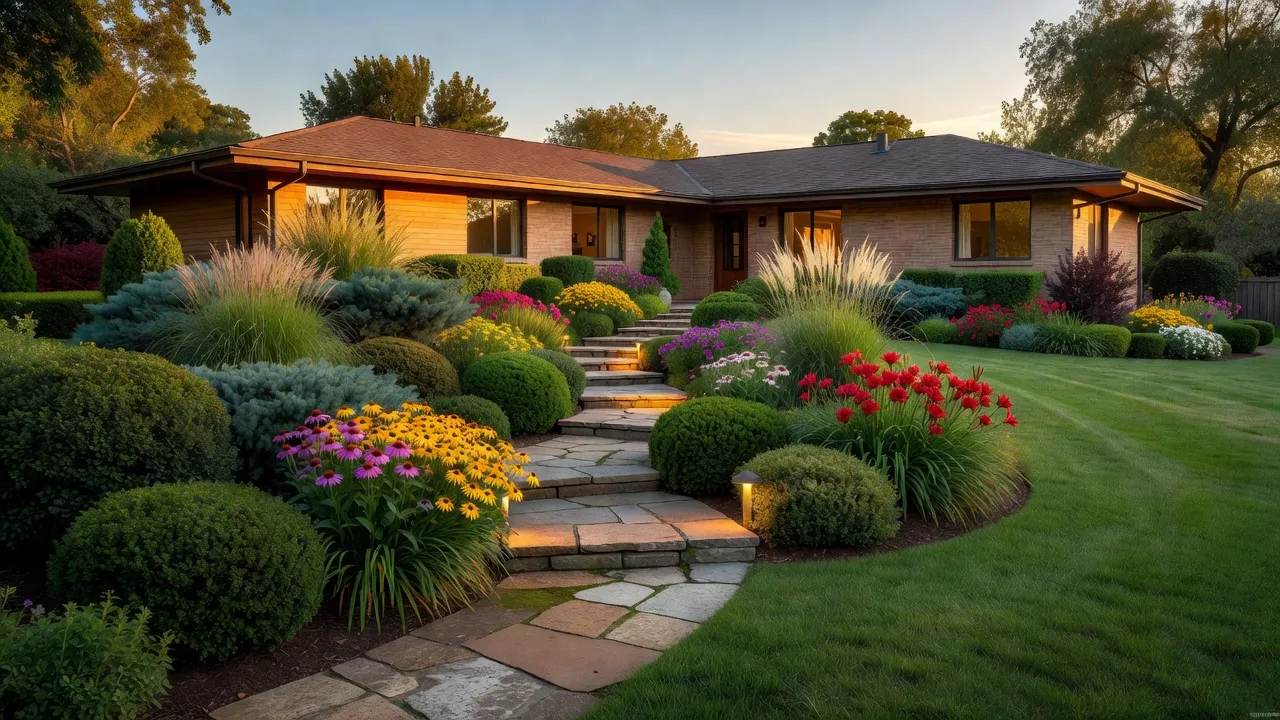
Improving curb appeal for a ranch home requires breaking up long, low horizontal rooflines with staggered vertical plantings and anchored entrance framing. Ranch-style houses sit low to the ground and run wide across the lot. If you plant a single straight row of low hedges in front of a ranch home, you emphasize its boxy shape rather than creating depth.
       RANCH HOUSE CURB APPEAL: VERTICAL & DEPTH STRATEGY

  [ Tall Ornamental Tree ]                 [ Layered Beds ]
        (Off-Center)                      (3-Tier Depth)
             ||          +---------------+   *  *  *  (Low Groundcover)
         __  ||  __      |   RANCH HOME  |  *** *** (Mid-Height Shrub)
        /  \ || /  \     +---------------+ ******** (Tall Evergreen)
       |    ||||    |       ||       ||       ||
=======|====||||====|=======||=======||=======||================ Walkway
How do you improve curb appeal for a ranch home with horizontal lines?
You build visual interest on a ranch house by introducing off-center vertical elements, such as a Japanese Maple or Serviceberry tree, positioned away from the front porch. Placing a small ornamental accent tree 10 to 15 feet out from the corner of the house creates balance.
According to planting guidelines from the University of Minnesota Extension, foundation beds should extend outward at least 6 to 8 feet from the house wall to allow proper airflow and multi-tier plant layering.
To create winning ranch style home curb appeal, follow these design steps:
- Build asymmetrical height: Place a taller accent plant (6-10 feet mature height) at the exterior corner opposite the garage.
- Anchor the front entrance: Use decorative pottery or distinct broad-leaf shrubs like hydrangeas near the front door to draw the eye directly to the entry.
- Curve the garden borders: Ditch straight bed edges; wide sweeping curves soften long rooflines and make small yards look larger.
- Mix evergreen and deciduous foliage: Ensure at least 40% of your plant choices keep their leaves through winter so the house does not look bare in cold months.
What landscaping works best for raised ranch curb appeal?
Raised ranch curb appeal relies on tall foundation plantings and tiered retaining walls to visually soften high, exposed concrete basement walls. Raised ranches often showcase 3 to 5 feet of unadorned concrete foundation along the front slope.
Installing a two-tiered stone retaining wall filled with cascading groundcovers like creeping phlox breaks that harsh vertical slab into two manageably soft visual steps.
Best for Visualizing Layouts: Previewing Designs Before Buying Plants
Previewing a garden design before buying physical plants prevents costly spatial errors and ensures color choices work with your home's exterior. Thousands of dollars are wasted every season when homeowners buy shrubs that look great at the garden center but clash with their house paint or overwhelm their front walk.
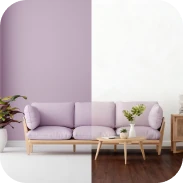
If you are struggling to imagine how different styles, shrub heights, or stone walkways will look on your house, using modern visualizers speeds up the decision process. Using an app like Renova AI allows you to snap a photo of your front yard and test over 100 distinct styles in seconds.
Whether you want to try modern minimalist hardscaping or a lush cottage border, you can preview the finished look on your smartphone without manual editing. You can also explore specialized layout guides like a butterfly garden design plan to pick plants that attract local pollinators while keeping your entry neat.
Scenario Comparison: Curb Appeal Upgrades by Budget and Effort
| Curb Appeal Strategy | Primary Scenario | Estimated Cost | Effort Level | Fits Best For |
|---|---|---|---|---|
| DIY Nursery Planting | Simple flat lots needing basic plant refreshed | $300 - $900 | High (Physical digging) | Hands-on homeowners with basic soil knowledge |
| Renova AI Visualizer | Pre-visualizing plant & hardscape options on your house photo | $0 (Free preview) | Low (Instant app render) | Homeowners avoiding costly plant placement mistakes |
| Hardscape Pathway & Edging | Replacing cracked walkways and sloppy bed edges | $1,200 - $4,800 | High (Paving & masonry) | Homes needing clean visual structure from street |
| Full Landscape Architect Plan | Sloped yards requiring major drainage and retaining walls | $3,000 - $8,500+ | Low (Turnkey service) | High-budget full property overhauls |
Testing designs virtually reduces stress. Rather than guessing whether boxwoods or hydrangeas fit your ranch style curb appeal, seeing digital previews gives you confidence before picking up a shovel. You can download Renova AI on the App Store to check exterior options right on site.
Best for Fast Budget Upgrades: High-Impact Walkways and Crisp Edging
Creating crisp, defined edges between lawn grass and garden beds is the fastest, lowest-cost way to boost front yard curb appeal. A messy garden bed where turfgrass bleeds into dirt looks unkempt, no matter how expensive your plants are. Clean trench edges or installed stone borders instantly signal that a home is well-maintained.
                    FOUNDATION BED DEPTH & LAYERING

 [ House Wall ]
      |
      |--- 1.5 ft ---> [ Air Gap / Drainage Zone ]
      |
      |--- 3.0 ft ---> [ Layer 1: Tall Evergreens (Boxwood/Yew) ]
      |
      |--- 5.0 ft ---> [ Layer 2: Flowering Shrubs (Hydrangea/Azalea) ]
      |
      |--- 7.0 ft ---> [ Layer 3: Perennials & Groundcover (Hosta/Salvia) ]
      |
 [ Turf Grass ] <----- [ Trench Edge / Stone Border ]
How deep should foundation planting beds be?
Foundation beds should be at least 6 to 8 feet deep from the house wall to accommodate three distinct tiers of growth. Narrow 2-foot beds force plants into a single cramped row, which ruins depth perception. A deep bed lets you set tall evergreen foliage in the back, medium flowering shrubs in the middle, and low groundcover in front.
What are cheap landscaping curb appeal ideas that show immediate results?
The cheapest landscaping curb appeal ideas are spreading dark organic mulch, installing low-voltage solar lighting, and defining bed borders. A fresh 3-inch layer of dark brown or black mulch costs under $150 for a standard front bed and immediately hides weeds while retaining soil moisture.
Try these budget-friendly tweaks for creative curb appeal:
- Cut a spade trench: Dig a 4-inch deep vertical trench along bed borders to stop lawn roots from creeping in without spending money on plastic edging.
- Add solar pathway lighting: Place warm LED stake lights along your front entry path to highlight walkway safety and architectural features at night.
- Flank the front porch with large planters: Two matching 18-inch glazed pots with tall thriller plants (like ornamental grass) create symmetry near the front door.
- Refresh front step borders: Add low-growing blue fescue or creeping thyme right along stone steps to soften hard masonry lines.
Best for Seasonal Transitions: Maintaining Fall Curb Appeal
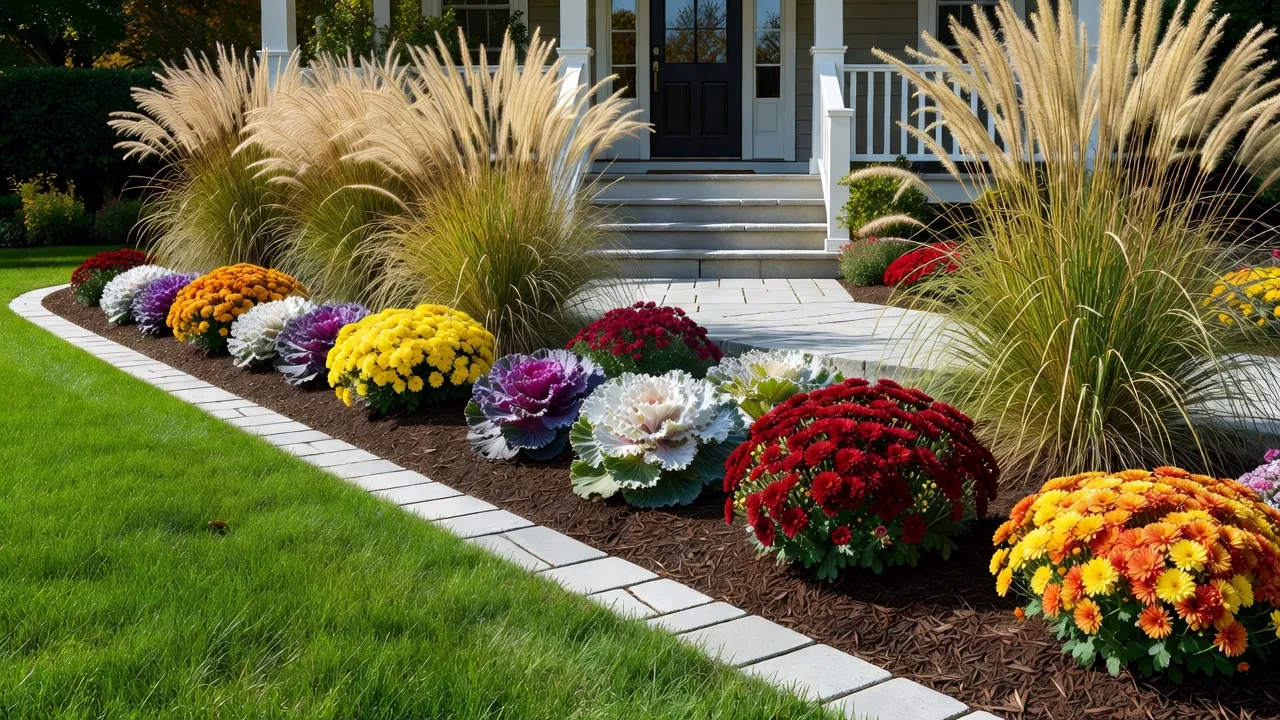
Maintaining fall curb appeal requires swapping out tired summer annuals for cold-hardy perennials, ornamental grasses, and structural evergreen foliage. By late August, summer annuals like petunias often look leggy and spent. Replacing them with vibrant cool-weather plants keeps your entry looking fresh straight into early winter.
                    FALL CURB APPEAL PLANTING LAYOUT

          +--------------------------------------------------+
          |             FRONT PORCH / ENTRYWAY               |
          +--------------------------------------------------+
             [ Pot 1 ]                            [ Pot 2 ]
          (Tall Fountain Grass)                (Tall Fountain Grass)
          (Golden Mums)                        (Deep Purple Mums)
          (Trailing Ivy)                       (Trailing Ivy)

      ------------------------------------------------------------
      BED AREA:
      - Background: Dwarf Conifers (Year-round green structure)
      - Midground:  Sedum 'Autumn Joy' (Deep red fall blooms)
      - Foreground: Ornamental Cabbage & Kale (Cold-hardy texture)
What plants provide the best fall curb appeal?
Potted chrysanthemums, Sedum 'Autumn Joy', purple fountain grass, and ornamental kale provide the best autumn color and structure for front yards. These varieties thrive in crisp weather and hold their rich purples, deep reds, and bright golds long after early frosts kill tender summer plants.
Check winter hardiness details on the USDA Plant Hardiness Zone Map to choose perennials that return every spring in your regional climate zone.
Here is a simple blueprint for boosting curb appeal during fall transitions:
- Incorporate feather reed grass: Ornamental grasses reach full plume height in late summer and add rustling motion through autumn wind.
- Plant Sedum 'Autumn Joy': This unkillable perennial starts green in spring, opens pink in August, and deepens to rich copper-red by October.
- Layer container pots with three tiers: Use a tall grass in the center, surround it with compact mums, and let trailing ivy spill over the rim.
- Keep evergreen anchors clean: Prune dead seed pods off summer bushes so background evergreens look neat against bright fall leaves.
Best for Complex Layouts: Balancing Hardscaping and Softscaping
Balancing hardscaping and softscaping requires using hard surfaces like stone paths to define traffic flow, framed by soft plantings that blur hard architectural edges. A front yard made entirely of lawn grass looks empty, while a yard overloaded with concrete pavers feels sterile. The ideal curb appeal layout balances roughly 30% hardscaping (walkways, steps, retaining walls) with 70% softscaping (grass, shrubs, flower beds).
When redesigning these exterior features, many homeowners apply principles from digital space planning. If you have worked on indoor projects using ai room design tools or studied interior design using ai, you already understand balance, focal points, and scale. Applying those exact visual principles outdoors keeps your curb appeal looking intentional.
To achieve harmony between stone and plant life, follow these three rules:
- Softening walkway borders: Never let concrete meet bare turf directly. Plant low-growing groundcovers like liriope or dwarf mondo grass along stone paths.
- Highlighting entrance focal points: Match the color tone of stone pavers to your home's roof shingles or brick accents for visual continuity.
- Integrating stone steps: Nestling dwarf boxwoods or Japanese forest grass alongside porch steps creates a custom built-in aesthetic.
Frequently Asked Questions
How can I increase curb appeal on a low budget?
You can increase curb appeal on a low budget by cutting crisp spade edges along lawn borders, applying dark mulch, and pressure washing dirty walkways. Spreading 2 to 3 inches of dark wood mulch hides weeds immediately and gives beds a professional finish for under $150. Painting your front door a bold, contrasting color and upgrading front porch light fixtures also delivers huge visual impact at minimal expense.
How much does front yard landscaping increase property value?
Professional front yard landscaping increases total property value by 7% to 15% according to real estate valuation data. High-impact upgrades like clean stone walkways, healthy lawn turf, and layered foundation plantings yield near 100% cost recovery at resale because they create immediate buyer trust before a buyer steps inside.
What are the best plants for front of house curb appeal?
The best plants for front-of-house curb appeal combine evergreen structure with low-maintenance flowering perennials. Boxwoods, dwarf conifers, and inkberry holly provide green structure year-round. Pairing those with hydrangeas, lavender, hostas, and daylilies delivers reliable spring-to-fall color without requiring daily maintenance.
How do you design curb appeal for a ranch house?
You design curb appeal for a ranch house by using sweeping curved garden beds and asymmetrical vertical plantings to offset long rooflines. Avoid single straight rows of low hedges. Instead, extend foundation beds outward 6 to 8 feet, place a tall ornamental tree off-center away from the garage, and use layered shrubs to guide sightlines toward the front entry.
What is the rule of three in landscape design?
The rule of three in landscape design states that planting in odd-numbered groupings creates a more natural visual flow than even-numbered pairs. Grouping three or five plants of the same variety together prevents rigid symmetry, making garden beds look balanced and professionally arranged.
What hardscaping features add the most curb appeal?
Flagstone or paver walkways, stone bed borders, and low retaining walls add the most curb appeal. Replacing a narrow 3-foot concrete sidewalk with a wide 4-to-5-foot stone pathway creates a grand entryway that comfortably accommodates two people walking side-by-side.
How deep should mulch be applied around front yard shrubs?
Mulch should be applied at a depth of 2 to 3 inches throughout front garden beds. Applying mulch thicker than 4 inches smothers plant roots, while applying less than 2 inches allows weeds to sprout. Keep mulch 2 inches away from tree trunks and shrub stems to prevent bark rot.