
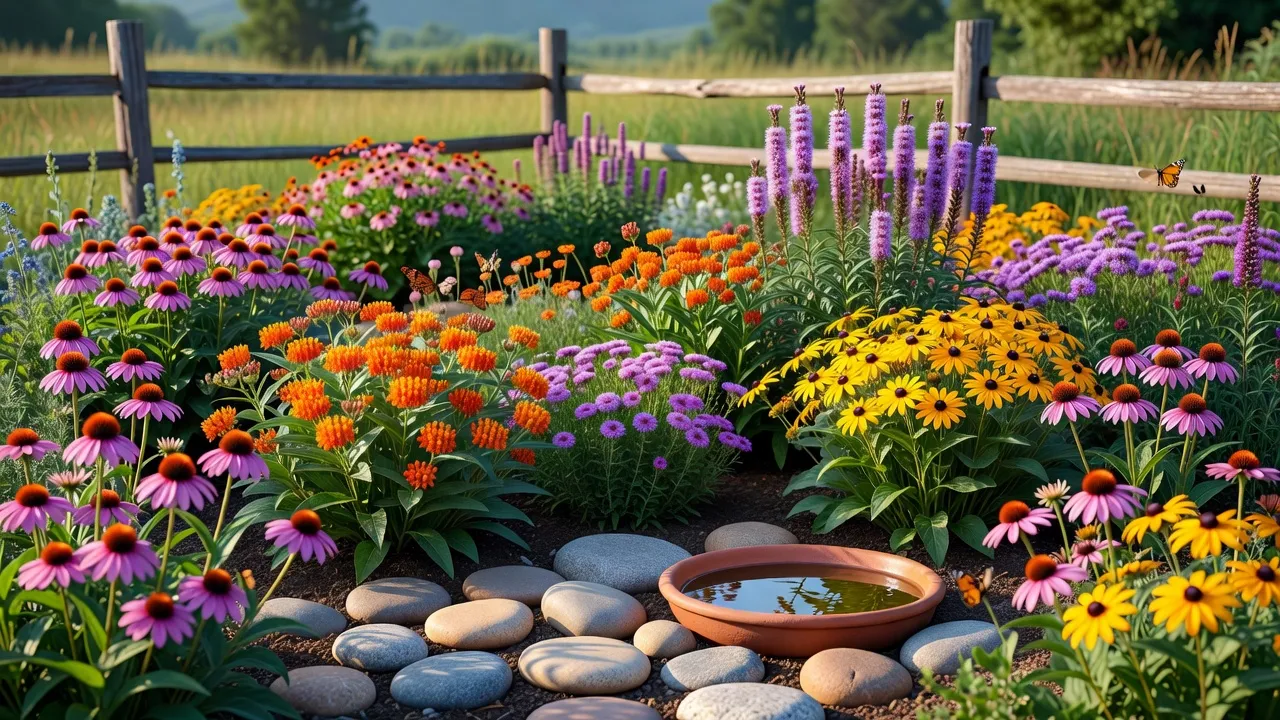
Designing a complete butterfly garden requires a five-step plan balancing full sun, continuous nectar blooms, native caterpillar host plants, and shallow puddling stations, which you can layout and plant in a single weekend for $250 to $600.
For decades, traditional landscape guides recommended planting bright non-native annuals and invasive shrubs like butterfly bush (Buddleja davidii). As of August 2026, ecological horticulturists strongly advise against those outdated cultivars. Modern conservation science shows that fancy imported flowers act like empty candy wrappers for pollinators—offering superficial sugar without providing the host vegetation required for caterpillars to survive.
Today, a successful butterfly garden design plan focuses on native plant corridors, layered bloom heights, and toxin-free shelter. Before turning over a single square foot of sod, you can take a photo of your plain lawn and test different plant borders using Renova AI, an instant layout tool that previews garden redesigns without requiring manual grid drawing or complex drafting software.
| Step | Action & Objective | Key Materials Needed | Realistic Time & Cost |
|---|---|---|---|
| 1. Site Selection | Identify a sheltered 100+ sq ft area receiving 6+ hours of direct sunlight. | Sun calculator or shade map, wind barrier (fencing or hedge). | 1–2 hours | $0 |
| 2. Layout Design | Map plant drifts, host corridors, and tall background borders visually. | Graph paper, yard stakes, or Renova AI app. | 2–3 hours | $0–$15 |
| 3. Soil Prep | Remove grass, loosen compacted soil, and blend organic compost. | Broadfork, spade, organic compost bags, soil test kit. | 4–6 hours | $50–$120 |
| 4. Hardscaping | Install shallow water puddling stations, dark basking stones, and wood shelter. | Clay saucers, coarse sand, flat granite river rocks, log pile. | 1–2 hours | $30–$60 |
| 5. Planting & Care | Plant native perennials in clusters of 3 to 5 and mulch heavily with bark. | Native perennials (nectar + host plants), organic cedar mulch. | 4–8 hours | $170–$400 |
Step 1: Choose a Full-Sun Site with Natural Windbreak
Butterflies are cold-blooded insects that rely on ambient solar heat to warm their flight muscles. To fly efficiently, a butterfly's thorax temperature must reach approximately 85°F to 100°F. If you locate your garden plot in a shady corner or along a wind-swept corridor, pollinators will simply fly past it to preserve energy.
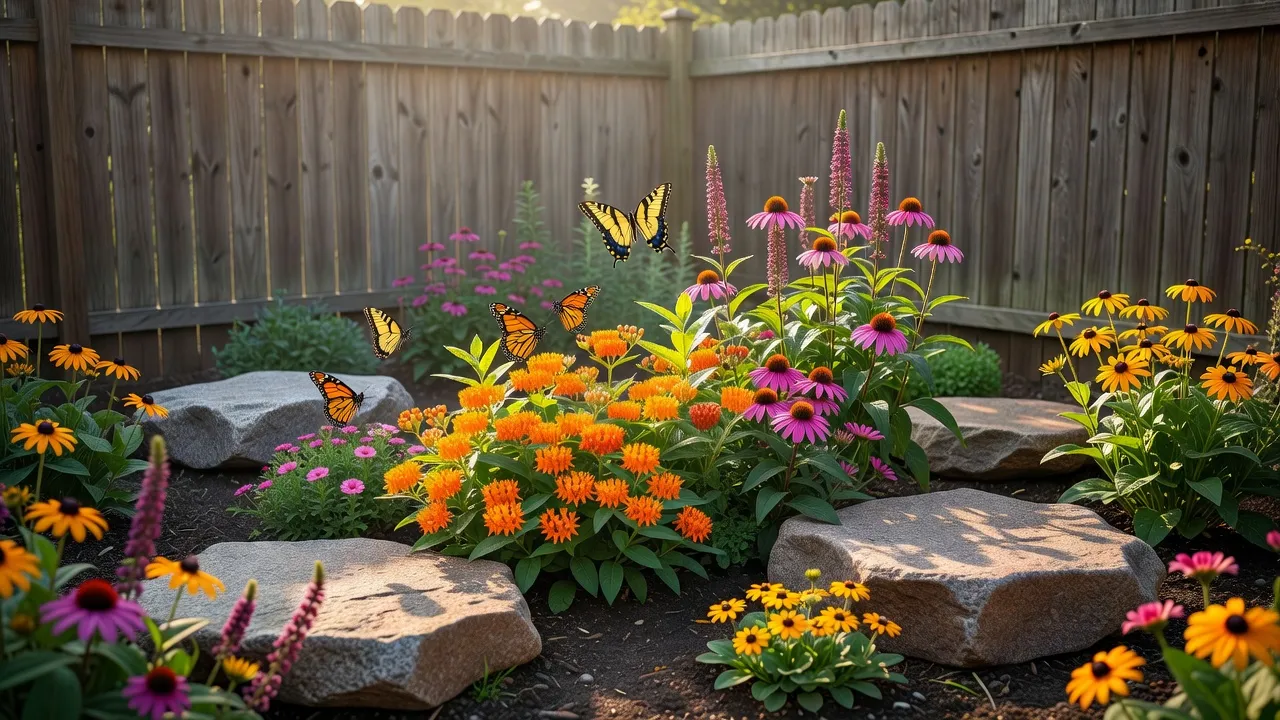
Position your plot where it receives a minimum of six to eight hours of direct, unfiltered sunlight each day between 10:00 AM and 4:00 PM. Observe your yard throughout the day to map shadow patterns cast by mature trees, rooflines, and fence lines.
How many hours of sunlight do butterflies actually need?
Butterflies require at least six full hours of direct daily sunlight to stay active and feed. According to habitat guidelines published by the National Wildlife Federation, adult butterflies rarely visit plants sitting in deep shade because their core body temperature drops quickly, leaving them vulnerable to predators like birds and spiders.
What makes an effective butterfly windbreak?
An effective windbreak consists of a solid fence, stone wall, or evergreen hedge positioned on the side of prevailing summer winds. Strong gusts exceeding 8 to 10 mph force adult butterflies to cling to foliage rather than fly between blossoms. Placing tall native shrubs—such as Spicebush (Lindera benzoin) or Viburnum—along the windward side of your garden creates a sheltered microclimate where butterflies float effortlessly between nectar sources.
Step 2: Map the Layout Using Nectar and Host Plant Zones
A well-structured butterfly garden design plan contains two distinct plant categories: nectar sources for adult butterflies and host plants for egg-laying females and hungry caterpillars. If you only plant nectar flowers, adult butterflies will stop for a quick sip and immediately leave to search for host plants elsewhere.
To keep butterflies living in your yard across their entire life cycle, group host plants near the center or rear of the garden bed. Place bright nectar plants around the perimeter.
What is the difference between host plants and nectar plants?
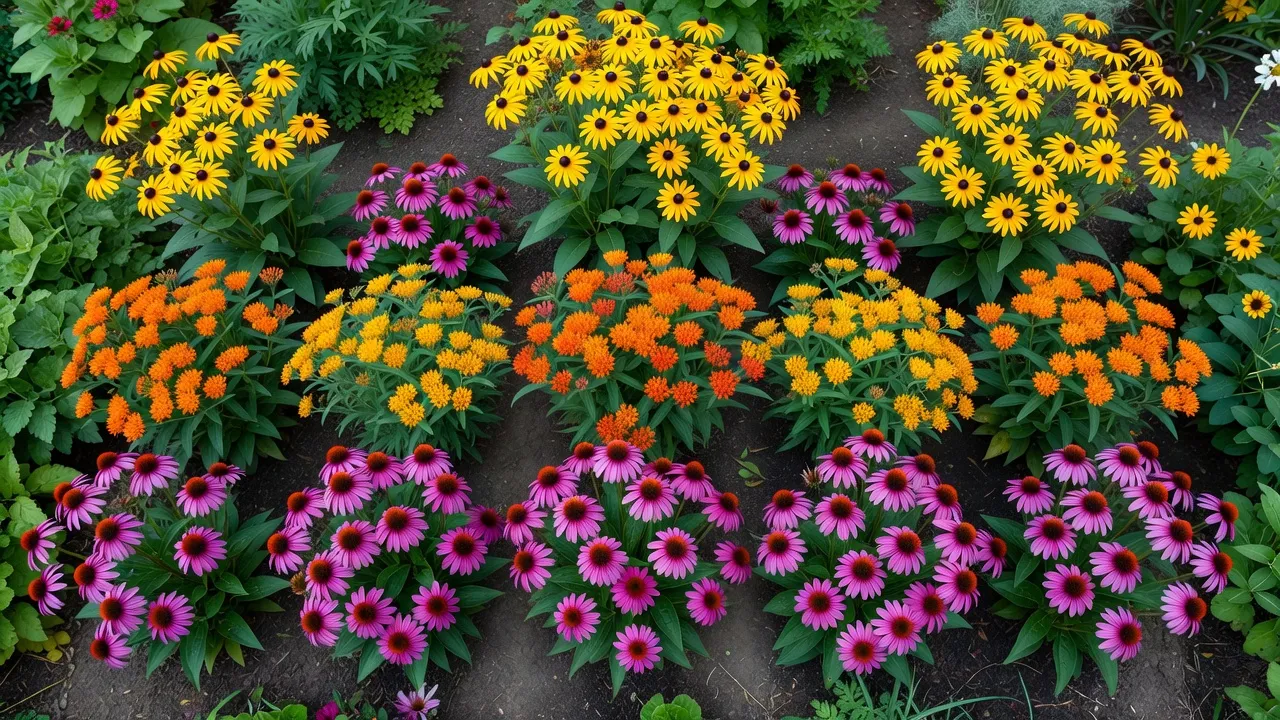
Host plants feed butterfly larvae (caterpillars), while nectar plants feed adult butterflies. Caterpillars are notoriously picky eaters and often rely on a single plant family for survival. For example, Monarch caterpillars eat strictly milkweed (Asclepias species), Black Swallowtail caterpillars rely on parsley, dill, and golden Alexander (Zizia aurea), and Eastern Tiger Swallowtail caterpillars feed on tulip trees and cherry foliage. Adult butterflies, by contrast, feed broadly on high-sugar liquid nectar from various tubular flowers.
+-------------------------------------------------------------------+
|                     NORTH / WIND PROTECTED BACK                   |
|  [Tall Host Shrubs: Spicebush / Ninebark]                         |
|  [Tall Nectar/Host: Common Milkweed, Joe-Pye Weed, Goldenrod]    |
+-------------------------------------------------------------------+
|                             MID-GROUND                            |
|  [Butterfly Weed (Asclepias tuberosa)] [Purple Coneflower]        |
|  [Black-Eyed Susan]                    [Blazing Star (Liatris)]   |
+-------------------------------------------------------------------+
|                        FOREGROUND / BORDER                        |
|  [Puddling Saucer & Flat Basking Rocks]                           |
|  [Creeping Phlox] [Sweet Alyssum] [Native Violet Host Zone]       |
+-------------------------------------------------------------------+
How high should I layer plants for maximum visits?
Layer your garden in three distinct height tiers—tall (4–6 feet), medium (2–4 feet), and low (1–2 feet)—to accommodate different flying heights. Giant Swallowtails and Monarchs prefer high-flying foraging on tall Joe-Pye Weed (Eutrochium purpureum) and Ironweed (Vernonia fasciculata). Smaller species, like Hairstreaks, Blues, and Skippers, stay lower to the ground feeding on wild geranium, creeping thyme, and native violets.
If you struggle to picture how these height layers work together in your actual lawn layout, trying a digital room design tool adapted for landscape beds helps eliminate guessing before spending money at the nursery.
Step 3: Prepare the Soil and Eliminate Pesticides
The most common reason a butterfly garden design plan fails in its second year is hidden chemical residues in the soil or newly purchased nursery stock. Synthetic fertilizers cause rapid, weak plant growth that attracts aphids, while chemical insecticides linger in soil and poison caterpillars months after application.
Start by removing grass using manual smothering (sheet mulching with cardboard and compost) or mechanical turf cutting. Avoid non-selective chemical herbicides like glyphosate, which destroy beneficial soil microbes and leave persistent chemical traces.
How do I check if my plants are free of hidden pesticides?
Ask your local plant nursery specifically if their perennials were treated with systemic neonicotinoid pesticides. Research documented by the Xerces Society for Invertebrate Conservation reveals that systemic neonicotinoids absorb directly into plant tissues, making the pollen, nectar, and foliage toxic to bees and caterpillars for months. Always buy from growers who explicitly certify their stock as neonicotinoid-free.
Soil Prep & Planting Checklist:
[ ] Test soil pH (aim for a neutral 6.0 to 7.0 range).
[ ] Sheet mulch lawn grass using chemical-free corrugated cardboard.
[ ] Layer 3 inches of well-rotted leaf compost over cardboard.
[ ] Confirm nursery plants are 100% neonicotinoid-free.
[ ] Dig holes twice as wide as container pots, keeping plant crowns level with soil.
[ ] Apply a 2-inch layer of hardwood mulch, leaving 1 inch of clear space around stems.
Should I add commercial fertilizer to butterfly garden soil?
No, native perennial butterfly plants thrive in average to low-fertility soils and do not require synthetic fertilizer. Excess nitrogen causes native wildflowers like Purple Coneflower (Echinacea purpurea) and New England Aster (Symphyotrichum novae-angliae) to grow tall, floppy stems that collapse under rain. A thin 2-inch layer of organic leaf compost applied every spring delivers all the slow-release nutrients your native perennials require.
Step 4: Add Puddling Stations and Flat Basking Rocks
Butterflies cannot drink safely from deep, open water sources like swimming pools, birdbaths, or standard pond margins because they risk drowning if their delicate wings get wet. Instead, they obtain essential moisture and minerals through a behavior called "puddling."
Males assemble around damp sand and muddy edges to extract dissolved salts, sodium, and amino acids. These essential minerals improve sperm viability and increase reproductive success.
Cross-Section of a Butterfly Puddling Station:

        [Flat Granite Basking Rock]          [Flat Granite Basking Rock]
                   \                                    /
  ~~~~~~~~~~~~~~~~~~\~~~~~~~~~~~~~~~~~~~~~~~~~~~~~~~~~~/~~~~~~~~~~~~~~~~~~
                     |   Coarse Sand + Sea Salt Mix   |
                     |   (Dampened with Fresh Water)  |
                     +--------------------------------+
                     | Shallow Terracotta Saucer (2") |
                     +--------------------------------+
How do I build a DIY butterfly puddling saucer?
Build a puddling station by filling a shallow 12-inch terracotta plant saucer with coarse builder's sand, river gravel, and a tiny pinch of unrefined sea salt.
- Place the saucer in a sunny spot directly next to your nectar flowers.
- Bury the rim flush with the surrounding garden mulch or soil.
- Mix in a handful of compost or a single drop of liquid kelp to supply trace minerals.
- Add water until the sand is thoroughly damp, but keep the water level just below the top surface of the sand so butterflies can land safely without wetting their feet.
Why do butterflies need dark basking stones in the garden?
Dark basking stones absorb solar radiation and transfer heat to cold butterflies sitting on them. Place several flat, dark granite river stones or slate tiles along the southern edge of your garden bed. Butterflies will stretch their wings flat against these warm stones early in the morning to elevate their body temperature before embarking on their first foraging flights.
Step 5: Plant in Drifts and Maintain Seasonal Bloom Succession
Wild pollinators have poor up-close eyesight; they locate floral food sources visually by scanning large patches of color from high in the air. A single isolated coneflower surrounded by wood mulch rarely catches the eye of a passing butterfly.
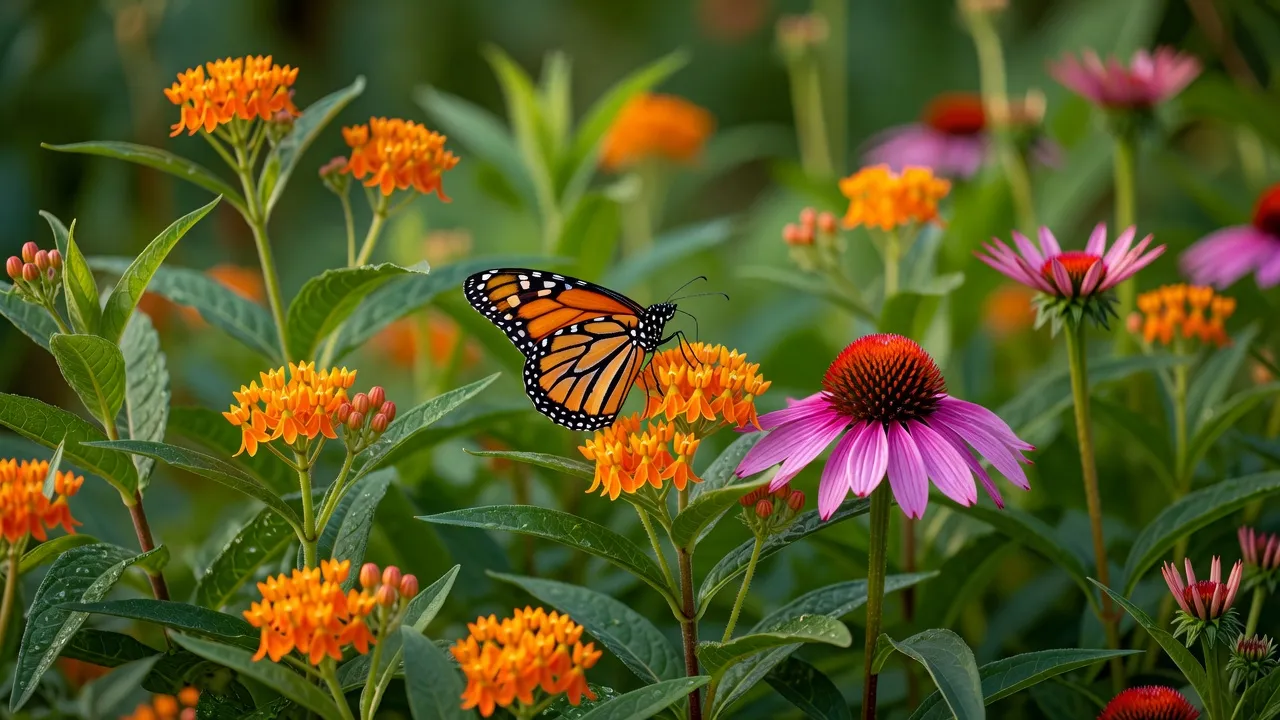
To maximize visits, plant each wildflower species in "drifts"—dense groups of three to five identical plants spaced 12 to 18 inches apart. This creates an unmistakable visual target.
How do I ensure continuous blooms from spring through late fall?
Select a minimum of three distinct native plant species for each phase of the growing season: spring, early summer, late summer, and fall.
According to native flora databases maintained by the USDA Forest Service, pollinators face acute starvation in early spring and late autumn when nectar availability drops. Plant Golden Alexander and Wild Lupine for spring; Milkweed, Bee Balm (Monarda fistulosa), and Coneflower for summer; and Goldenrod (Solidago) and Native Asters for fall nectar.
Bloom Schedule for Continuous Nectar (Zone 5–7 Example):

Spring (May - June):
- Golden Alexander (Zizia aurea)
- Wild Geranium (Geranium maculatum)
- Wild Lupine (Lupinus perennis)

Summer (July - August):
- Butterfly Weed (Asclepias tuberosa)
- Purple Coneflower (Echinacea purpurea)
- Blazing Star (Liatris spicata)
- Bee Balm (Monarda fistulosa)

Fall (September - October):
- New England Aster (Symphyotrichum novae-angliae)
- Showy Goldenrod (Solidago speciosa)
- Joe-Pye Weed (Eutrochium purpureum)
How to Visualize Your Landscape Plan Before Digging
Mapping plant heights, foliage colors, and bed borders on paper can feel overwhelming if you lack formal landscape drafting experience. Standard landscaping software often requires hours of tedious learning, manual measurement conversions, and complex CAD tools just to lay out a simple 10x15-foot backyard bed.
This is where modern visual apps eliminate guesswork. Rather than buying dozen-packs of perennials only to realize they clash in height or shade each other out, you can generate natural previews in seconds.
Traditional Garden Planning vs. Visual AI Workflows:

TRADITIONAL METHOD:
[Measure Yard] -> [Draw Paper Grid] -> [Guess Mature Plant Size] -> [Buy Plants] -> [Realize Layout Clashes]

MODERN VISUAL AI METHOD:
[Snap Yard Photo] -> [Upload to Renova AI] -> [Render Native Garden Style] -> [Buy Exact Plants Confidently]
By taking a quick photo of your yard on your phone, you can use Renova AI to visualize exterior and garden redesigns instantly.
- Snap a Photo: Stand at your back patio and take a clear, well-lit photo of your target lawn area.
- Select Style or Custom Prompt: Choose an outdoor landscape style or use the custom prompt feature to specify native plant borders, mulch beds, and flowering perennials.
- Instantly Preview: The app generates realistic exterior renders showing how structural plant beds look against your home's actual foundation, fence lines, and existing hardscapes.
Using a dedicated tool like the Renova AI app allows you to experiment with curved flower borders, stone edging, and shrub background layers in seconds. It provides the same visual clarity homeowners use when testing an ai room design project indoors, ensuring your outdoor garden layout looks intentional and balanced before you step foot in a nursery.
What Common Butterfly Gardening Mistakes Should You Avoid?
Even well-intentioned gardeners inadvertently harm the habitat they set out to protect by falling into a few common maintenance traps.
1. Planting Tropical Milkweed Instead of Native Milkweed
Tropical Milkweed (Asclepias curassavica) remains widely sold in big-box retail nurseries, but it causes significant ecological damage in non-tropical zones. Unlike native milkweed species that naturally die back during fall frosts, tropical milkweed continues blooming late into autumn.
This tricks migrating Monarch butterflies into stopping their southward journey to lay eggs prematurely. Furthermore, non-native milkweed harbors high concentrations of Ophryocystis elektroscirrha (OE), a crippling protozoan parasite that infects adult butterflies and causes wing deformities. Stick strictly to native varieties like Butterfly Weed (Asclepias tuberosa), Swamp Milkweed (Asclepias incarnata), or Common Milkweed (Asclepias syriaca).
2. Cleaning Up Fall Leaves and Dead Stems Too Early
Over 90% of native butterfly species do not migrate south for the winter; instead, they hibernate in your yard as eggs, caterpillars, chrysalises, or adults. They hide beneath fallen leaves, inside hollow plant stems, or attached to dead wildflower stalks.
If you rake your garden clean, shred leaves, and cut flower stalks back to the ground every October, you destroy the very butterflies you nurtured all summer.
- Leave dead perennial stems standing through winter (they provide food for winter birds, too).
- Keep a 2- to 3-inch layer of fallen leaves over your garden beds.
- Wait to prune plant stems and clean up leaf litter until spring temperatures consistently stay above 50°F for seven consecutive days.
3. Using Organic Insecticides and Bug Zappers
Organic sprays like Bacillus thuringiensis (Bt) are widely marketed as natural solutions for garden pests like tomato hornworms. However, Bt is a non-selective bacterial toxin that kills all moth and butterfly caterpillars that consume treated leaves.
Similarly, electric bug zappers do not effectively target mosquitoes; instead, studies show they primarily kill harmless nocturnal moths, beetles, and aquatic insects that form the foundation of the local ecosystem. Eliminate all chemical and broad-spectrum mechanical bug controls within your butterfly sanctuary.
Step-by-Step Maintenance Schedule for Butterfly Gardens
A native butterfly garden requires significantly less water and labor than a standard grass lawn once established, but keeping it tidy requires a basic seasonal routine.
Spring Routine (April – May)
- Delay Cleanup: Wait until daily temperatures exceed 50°F before removing last year's plant stems.
- Trim Stems High: Cut standing flower stalks down to 12–18 inches above the ground. Native solitary bees nest inside these hollow stems over summer.
- Top-Dress Compost: Spread a fresh 1-inch layer of organic leaf compost around plant bases.
- Replenish Puddling Sand: Refresh sand and coarse salt in water saucers.
Summer Routine (June – August)
- Monitor Moisture: Deeply water newly planted perennials once per week if rainfall falls below 1 inch. Established native plants rarely require supplemental water.
- Refill Puddling Saucers: Keep sand damp daily during dry heat spells.
- Weed Manually: Pull invasive weeds by hand to avoid disturbing shallow caterpillar chrysalises attached to foliage.
- Deadhead Selectively: Cut off spent blooms on aggressive spreaders, but leave late-summer seed heads intact for migrating wildlife.
Fall & Winter Routine (September – March)
- Leave the Leaves: Rake autumn leaves directly into garden beds to serve as natural overwintering insulation for larvae.
- Mark Plant Locations: Place wooden stakes next to late-emerging species like Asclepias so you don't accidentally dig them up next spring.
- Enjoy Winter Silhouettes: Leave dried seed heads like Coneflower and Black-Eyed Susan intact to feed overwintering finches and sparrows.
Frequently Asked Questions
What are the best host plants for monarch butterflies?
Monarch butterflies rely exclusively on milkweed species (Asclepias) as host plants. Top native options include Butterfly Weed (Asclepias tuberosa) for dry sunny spots, Swamp Milkweed (Asclepias incarnata) for moist soils, and Common Milkweed (Asclepias syriaca) for larger naturalized spaces.
Can I grow a butterfly garden in container pots on a patio?
Yes, you can grow a functional container butterfly garden on a sunny patio or balcony by selecting deep pots (at least 12–15 inches wide) and filling them with native perennials like dwarf coneflowers, lantana, verbena, and Asclepias tuberosa. Ensure containers receive 6+ hours of sun daily.
How big does a butterfly garden need to be?
A butterfly garden can be any size, from a 20-square-foot container patio array to a 500-square-foot yard border. However, dedicated plots of at least 100 square feet allow enough room to plant large clusters of 3 to 5 plants per species, making the site far easier for migrating butterflies to spot from the air.
How do I attract caterpillars without letting them destroy my garden?
Caterpillars eating leaves is a sign of a healthy, functioning ecosystem, not garden destruction. Host plants are meant to be consumed; foliage naturally regrows once caterpillars form chrysalises. Simply place host plants toward the center or back of beds where chewed leaves are hidden by surrounding nectar flowers.
Why aren't butterflies visiting my garden even though I have flowers?
Butterflies may avoid a garden if it lacks direct sunlight, sits in a windy corridor, uses pesticides, or only contains non-native flowers that produce low nectar. Adding flat basking rocks, shallow puddling stations, and planting native wildflowers in dense clusters usually resolves the issue.
Is butterfly bush (Buddleja davidii) bad for butterfly gardens?
While adult butterflies drink nectar from butterfly bush, it provides zero host value for native caterpillars. Furthermore, Buddleja davidii is classified as an invasive species in many states because its wind-dispersed seeds escape gardens and crowd out native habitat along natural waterways. Native alternatives like Buttonbush (Cephalanthus occidentalis) or Joe-Pye Weed are far superior options.
What should I put in a butterfly puddling station?
Fill a shallow saucer with coarse builder's sand, gravel, a handful of compost, and a pinch of sea salt, then add water until the sand stays damp. Butterflies land on the damp sand to safely siphon up moisture and critical mineral salts without risking drowning.