
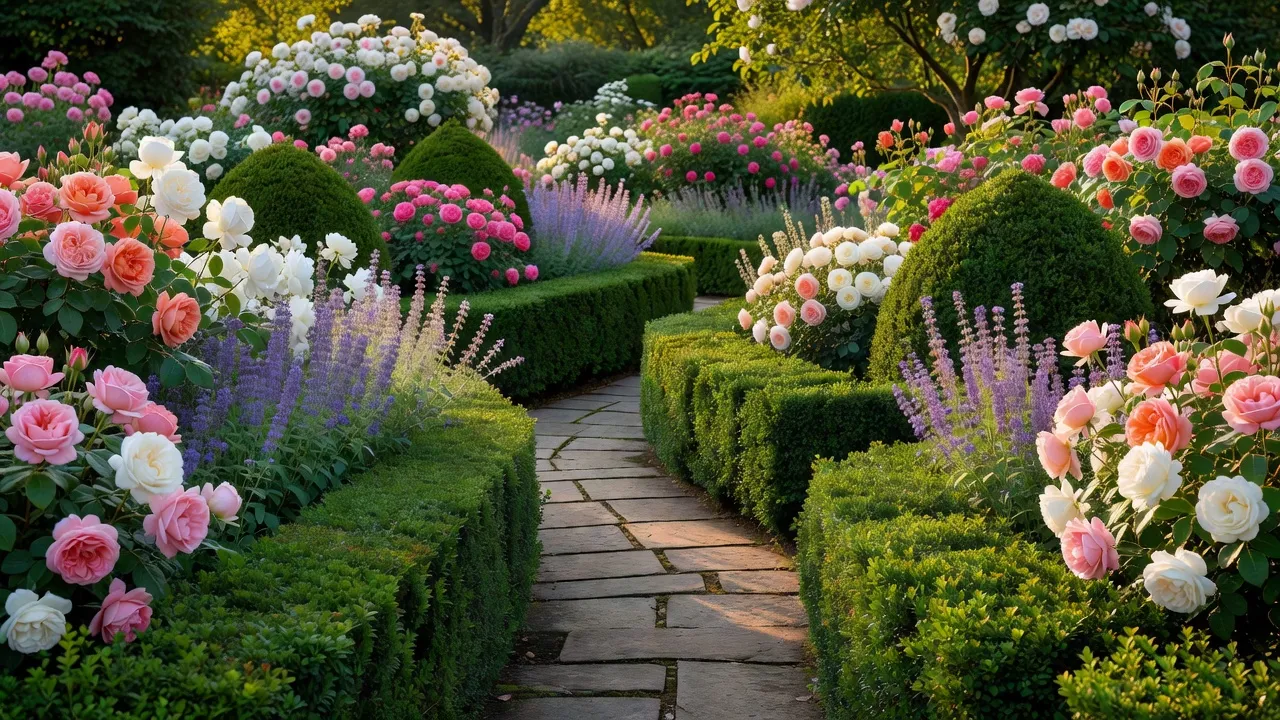
Successful garden design with roses requires matching shrub growth habits, such as shrub, climbing, floribunda, or hybrid tea, to specific spatial roles and sunlight conditions rather than planting isolated monocultures. What most home gardeners get wrong is packing bare-root roses tightly together to achieve immediate fullness. That mistake starves the root zones of air circulation, creates ideal humidity for black spot fungus, and leads to expensive plant replacements within two seasons.
Planning a rose garden in 2026 is less about rigid stiff rows and more about structural balance, disease-resistant cultivars, and visual companion planting. Before digging up turf or spending hundreds of dollars on nursery stock, testing layouts digitally with tools like Renova AI allows you to visualize plant heights, archway proportions, and color pairings against your home's exterior walls in seconds.
What are the most popular garden design layouts for planting roses?
The most popular garden design layouts for planting roses are cottage garden mixed borders, formal parterres, geometric beds, vertical arches or trellises, and naturalistic drifts within polyculture borders. Choosing the correct layout depends on your yard's architecture, local airflow, and how much annual maintenance you are willing to perform.
Here are the five primary rose garden layout frameworks used by modern landscape designers:
- Cottage Garden Borders: Roses intermixed with tall perennials, herbs, and ornamental grasses for an informal, layered look.
- Formal Parterres: Symmetrical, geometric beds bordered by low boxwood or germander hedging with roses grouped by height and color inside.
- Vertical Structures: Climbing and rambling roses trained over wooden arbors, metal obelisks, pergolas, or house facades.
- Mass Drifts: Groups of three to five plants of a single rose variety planted in staggered, repeating patterns down a long border.
- Container and Raised Bed Layouts: Compact patio or miniature roses arranged in large glazed pots or timber beds on terraces.
When designing a layout, ensure your site receives at least six hours of direct sunlight daily. Planting roses too close to structural walls or under dense tree canopies reduces light exposure and traps excess moisture on foliage.
What are the best formal, English, cottage garden, or mixed border layouts for a rose garden?
The best formal layout uses symmetrical geometric beds framed by clipped hedges, while the best cottage layout weaves repeat-blooming shrub roses alongside tall perennials in multi-tiered, cascading drifts. Matching your layout to your home's architectural style prevents the garden from looking disjointed.
Formal Rose Parterre Layout
The layout comprises two boxwood hedge frames facing each other, each containing hybrid tea roses. Between them runs a gravel walkway that is 4 feet wide. A central fountain or sundial focus is positioned at the midpoint between the two frames.
Formal Rose Gardens
Formal layouts work best for Georgian, Colonial, or Victorian architecture. According to planting guides published by the Royal Horticultural Society, formal beds require wide gravel or lawn paths (at least 4 feet wide) between planting boxes to allow air movement and clear maintenance access. You place upright hybrid tea roses or grandifloras in the interior grid, keeping uniform height throughout each section.
English Rose Gardens
English rose layouts balance structure with softness. They incorporate low evergreen edging to anchor the bed visually, but use modern David Austin shrub roses inside. These varieties feature heavy, nodding blooms that drape naturally over structural borders.
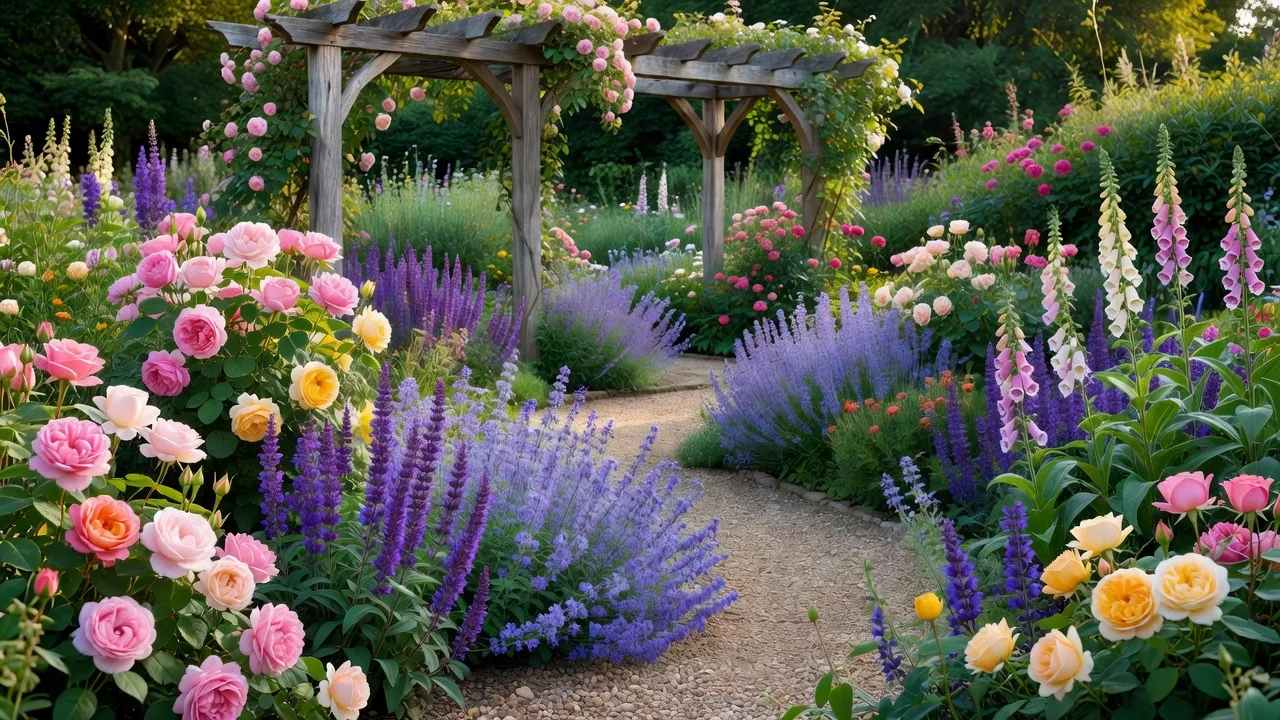
Cottage Gardens and Mixed Borders
Cottage layouts ignore strict symmetry. You plant roses as middle-of-the-border anchors, surrounded by bellflowers, nepeta, foxgloves, and alliums. The perennials hide the lower leggy stems of the rose bushes, while the roses supply continuous color from June through October.
How should roses be planted in groups, drifts, hedges, espaliers, or arches?
Roses should be planted in odd-numbered clusters of three or five for naturalistic drifts, spaced 2 to 3 feet apart for hedges, tied laterally onto flat frames for espaliers, and anchored at the outer bases of arches. How you train and space each growth habit determines whether the plant prospers or becomes an unmanageable tangle.

Planting in Groups and Drifts
- Odd-Number Rules: Plant three or five bushes of the same cultivar in a triangular or staggered block rather than a straight line.
- Visual Impact: Drifts create broad sweeps of single colors that pull the eye across the landscape.
- Spacing Guidelines: Keep centers 2.5 to 3.5 feet apart depending on mature width to allow individual crown development.
Planting Rose Hedges
- Best Cultivars: Use rugosa, floribunda, or vigorous shrub roses like the Knock Out series.
- Trench Planting: Dig a continuous trench 18 inches deep and fill it with composted organic matter before planting.
- Spacing: Space individual shrubs 24 to 30 inches apart to encourage stems to interlock into a solid barrier.
Espaliers and Arch Training
- Horizontal Bending: Train climbing shoots laterally along horizontal support wires attached to walls or fences. Bending canes horizontally breaks apical dominance and triggers bloom shoots along the entire stem length.
- Arch Positioning: Plant climbing roses 12 inches away from the outer base of an arch frame, never inside the foot path where thorns catch passersby.
How should roses be planted in beds, borders, or mixed shrub borders?
In beds and mixed shrub borders, roses must be planted with at least 3 feet of clear space around their root zones to prevent larger shrubs from outcompeting them for water and nitrogen. A polyculture approach, mixing roses with complementary companion plants, creates a self-sustaining ecosystem that repels common pests like aphids.
In mixed shrub borders, follow these three design principles:
- Place Roses in the Middle Tier: Keep tall background shrubs (like dark-leaved physocarpus or columnar yews) behind your roses, and short groundcovers in front.
- Incorporate Companion Plants: Plant purple salvias, catmint (Nepeta), and ornamental garlic (Allium) around the base. These companions emit aromatic oils that mask rose scents from aphids and Japanese beetles.
- Soil Preparation: Soil data published by the Missouri Botanical Garden emphasizes that roses require well-draining soil with a pH between 6.0 and 6.5. Amend heavy clay beds with mature compost and coarse sand before planting.
If you want to integrate flower colors into your surrounding yard, combining rose beds with a butterfly garden design plan allows you to support native pollinators while maintaining bright summer color.
Matching rose garden layouts to your space and budget
Selecting the right layout method for your yard depends on your budget, available square footage, and willingness to prune regularly. The table below compares popular rose garden scenarios with digital pre-visualization planning.
| Scenario / Design Strategy | Ideal For | Estimated Initial Cost | Maintenance Level | Key Advantage |
|---|---|---|---|---|
| Traditional Formal Bed | Homeowners with symmetrical yards seeking classic curb appeal | $600 - $1,500 | High (regular deadheading, edging) | Clean visual lines and structured display |
| Digital Pre-Visualization (Renova AI) | Homeowners wanting to visualize rose placement and exterior style before planting | Free - $20 | None (planning phase only) | Prevents costly plant placement mistakes |
| Informal Cottage Border | Small yards and lovers of mixed perennial gardens | $300 - $800 | Medium (seasonal cutting back) | Hides leggy rose bases with companion plants |
| Vertical Wall & Arch Layout | Narrow side yards, walkways, and entry gates | $250 - $700 | Medium-High (annual cane tying and pruning) | Maximizes tight spaces by growing upward |
| Mixed Shrub Polyculture | Organic gardeners looking for disease and pest resilience | $400 - $1,000 | Low-Medium (self-balancing ecosystem) | Reduces need for chemical spray treatments |
How to design a rose layout using AI pre-visualization
Designing a rose garden layout using AI pre-visualization involves uploading a exterior photo of your yard to see how different garden styles, bed boundaries, and structural features look against your home. Before buying plants from a nursery, digital tools help you test color schemes and scale.
Using the Renova AI web platform or downloading the mobile version on the iOS App Store makes this spatial testing fast:
- Snap a Clear Photo: Take an exterior photo of your front yard, side border, or patio wall in daylight.
- Select Exterior / Garden Style: Choose from design styles like Cottage, Modern Landscape, Mediterranean, or Farmhouse.
- Generate Visualizations: The AI generates rendered visual concepts in seconds, showing where garden beds, archways, and border layers naturally fit.
- Refine Custom Changes: Use custom inputs to request climbing rose arches, boxwood borders, or mixed perennial beds until you find the right combination.
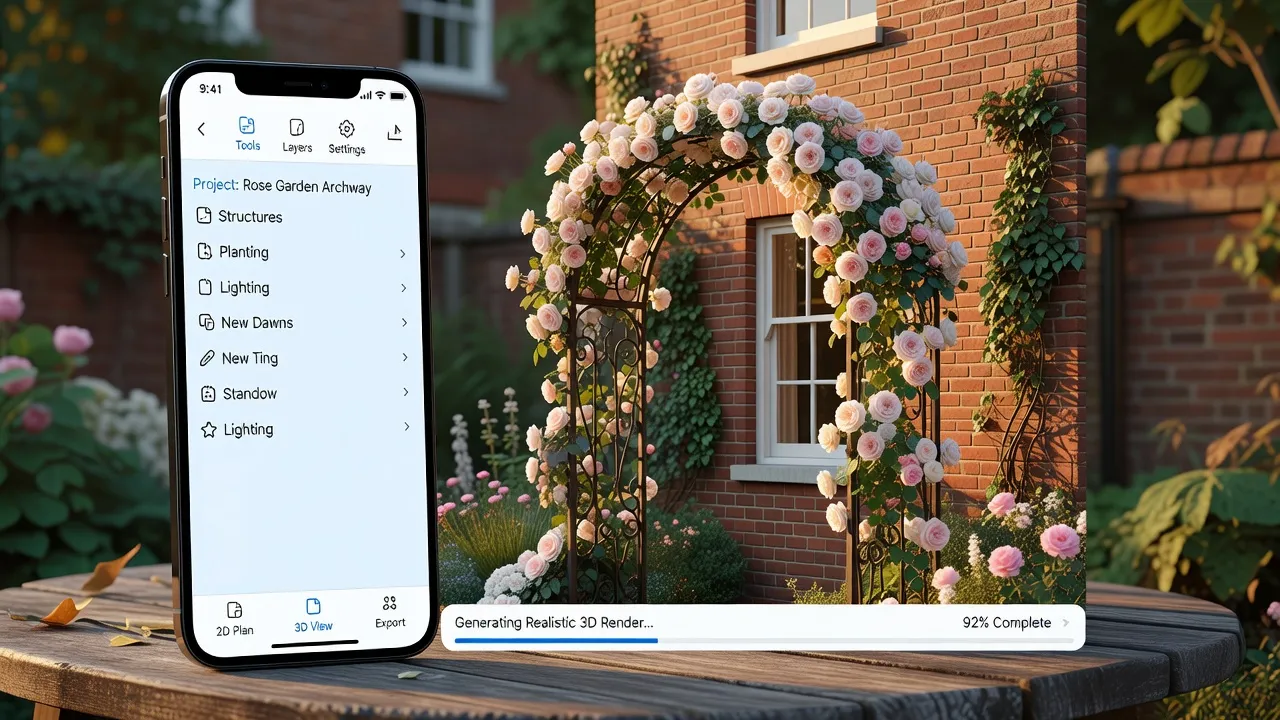
Applying digital tools to outdoor planning works the same way homeowners use ai room design to test furniture placements inside. Seeing spatial proportions before digging prevents misjudging mature shrub heights. For more guidance on broader landscape layouts, explore our detailed guide on building a magnificent garden.
What common rose garden layout mistakes cost gardeners the most?
The most costly rose garden layout mistakes are overcrowding bare-root plants, planting beneath tree canopies, skipping soil drainage tests, and omitting vertical structures at planting time. Avoiding these mistakes saves hundreds of dollars in lost nursery stock and remedies.
1. Overcrowding Shrubs for Quick Fullness
Bare-root rose bushes look small when purchased in early spring. Nursery tags state mature widths of 3 to 4 feet, but gardeners often plant them 18 inches apart to fill empty mulch. By August, overlapping branches block sunlight and trap humidity, causing black spot fungus to defoliate the entire bed.
2. Planting Monocultures Without Companion Plants
Planting fifty bushes of a single rose cultivar creates a fragile ecosystem. If black spot or powdery mildew strikes one plant, it spreads through the entire bed within a week. Mixing roses with insect-repelling perennials breaks pathogen pathways and naturally keeps pest populations down.
MISTAKE: Monoculture Row (High Disease Risk)
[ Rose ] --- [ Rose ] --- [ Rose ] --- [ Rose ] --- [ Rose ]
(Pathogens spread directly from leaf to leaf)

BETTER: Polyculture Drift (Natural Disease Barrier)
[ Rose ] --- (Salvia) --- [ Rose ] --- (Catmint) --- [ Rose ]
(Companion foliage blocks fungus spores and attracts beneficial bugs)
3. Adding Vertical Climbers Without Support Frames
Climbing roses do not have suction cups or tendrils like ivy or sweet peas. They cannot cling to brick or stone on their own. If you plant a climbing rose without installing sturdy wooden lattices, stainless steel wires, or iron obelisks first, heavy canes fall onto the ground and rot.
4. Ignoring Structural House Lines and Curb Appeal
Planting tall shrub roses directly under low windows obscures exterior sightlines and cuts off natural light into your home. Check our recommendations on landscape for curb appeal to ensure outdoor plantings complement your home's structural proportions.
How to prune and maintain your rose layout across four seasons
Maintaining a designed rose garden requires heavy late-winter structural pruning, deadheading spent blooms in summer, and mulching root zones in autumn. Consistent seasonal care ensures your structural layout holds its shape for decades.
Spring Setup
- Late Winter Pruning: As leaf buds swell in February or March, prune stems at a 45-degree angle just above outward-facing buds. Remove dead, diseased, or crossing wood.
- Feed and Mulch: Apply a balanced organic fertilizer (5-10-5) and spread a 2-inch layer of well-rotted compost or bark mulch across root zones, keeping mulch 3 inches away from main stems.
Summer Maintenance
- Deadheading: Cut spent flower stems down to the first five-leaflet leaf facing outward to encourage fast reblooming.
- Drip Irrigation: Water root zones directly using drip tubing. Overhead sprinklers wet foliage and invite fungal spores to germinate.
Autumn and Winter Protection
- Clean Up Fallen Foliage: Rake away dead leaves around the base of bushes in November to prevent fungal spores from overwintering in the soil.
- Mound Soil: In cooler climate zones (USDA Zone 5 and below), mound 6 to 8 inches of topsoil or compost around the base of graft unions to shield roots from freeze-thaw cycles.
Frequently Asked Questions
What are the best companion plants for a rose garden layout?
The best companion plants are aromatic perennials like catmint (Nepeta), lavender, purple salvia, Russian sage, and ornamental alliums. These plants suppress weeds, hide leggy rose bases, and emit scents that repel aphids and thrips.
How far apart should roses be planted in a garden border?
Modern shrub and floribunda roses should be planted 3 to 4 feet apart from center to center. Hybrid teas need 2 to 3 feet of clearance, while large climbing roses require 6 to 10 feet of lateral space along walls or fences.
Can you design a formal rose garden in a small backyard?
Yes, you can design a formal rose garden in a small space by installing a central circular bed framed by four quarter-circle beds. Use dwarf rose varieties or miniature floribundas to keep proportions balanced without overcrowding paths.
What is the difference between shrub roses and climbing roses in garden design?
Shrub roses grow into bushy, self-supporting mounds between 3 and 5 feet high, making them ideal for borders and hedges. Climbing roses produce long, flexible canes that grow 8 to 15 feet long, requiring vertical structures like arbors or trellises for support.
Do roses need full sun, or can they grow in partial shade?
Roses perform best in full sun, requiring at least six hours of direct sunlight daily for heavy blooming. Certain shade-tolerant cultivars, such as 'Gruss an Aachen' or 'Iceberg', can tolerate four to five hours of sun, but produce fewer blooms.
How do I use AI to plan my rose garden layout before planting?
You can take a photo of your yard, upload it to an AI landscape app like Renova AI, and test exterior styles, flower bed shapes, and arch placements visually. This helps you check scale and color balance before spending money on nursery stock.
Should I plant bare-root or potted roses when building a garden layout?
Bare-root roses are ideal for early spring planting because they establish deep root systems quickly and cost less when buying in bulk. Potted roses are better for late spring or summer planting when you want immediate blooms and easy placement.