A garden trellis design must match the plant's natural climbing mechanism, total weight capacity, and vertical space to prevent collapsing and maximize plant output. Heavy crops like winter squash or mature climbing roses require pressure-treated lumber or 4-gauge galvanized steel panels, whereas lightweight twining vines like sweet peas perform best on thin wire mesh or bamboo. As of September 2026, building or buying a trellis ranges from $15 for simple wooden teepees to over $350 for permanent powder-coated iron arbors.
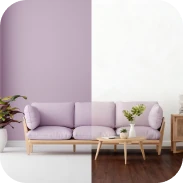
Before sinking posts into the ground, layout planning saves substantial labor. Visualizing how a heavy vertical structure fits into your outdoor space helps prevent light blockage on shorter crops. Tools like Renova AI let you upload a quick yard photo to preview exterior and garden layout designs in seconds using artificial intelligence. Testing different vertical placements digitally ensures your garden structure complements your overall exterior aesthetic before you buy materials.
What are the most popular garden trellis designs experts recommend?
Garden experts primarily recommend four classic trellis designs: flat lattice panels, vertical arches, freestanding obelisks, and wire-guided espalier frames. Each style targets distinct weight classes, plant growth habits, and aesthetic goals in residential landscapes.
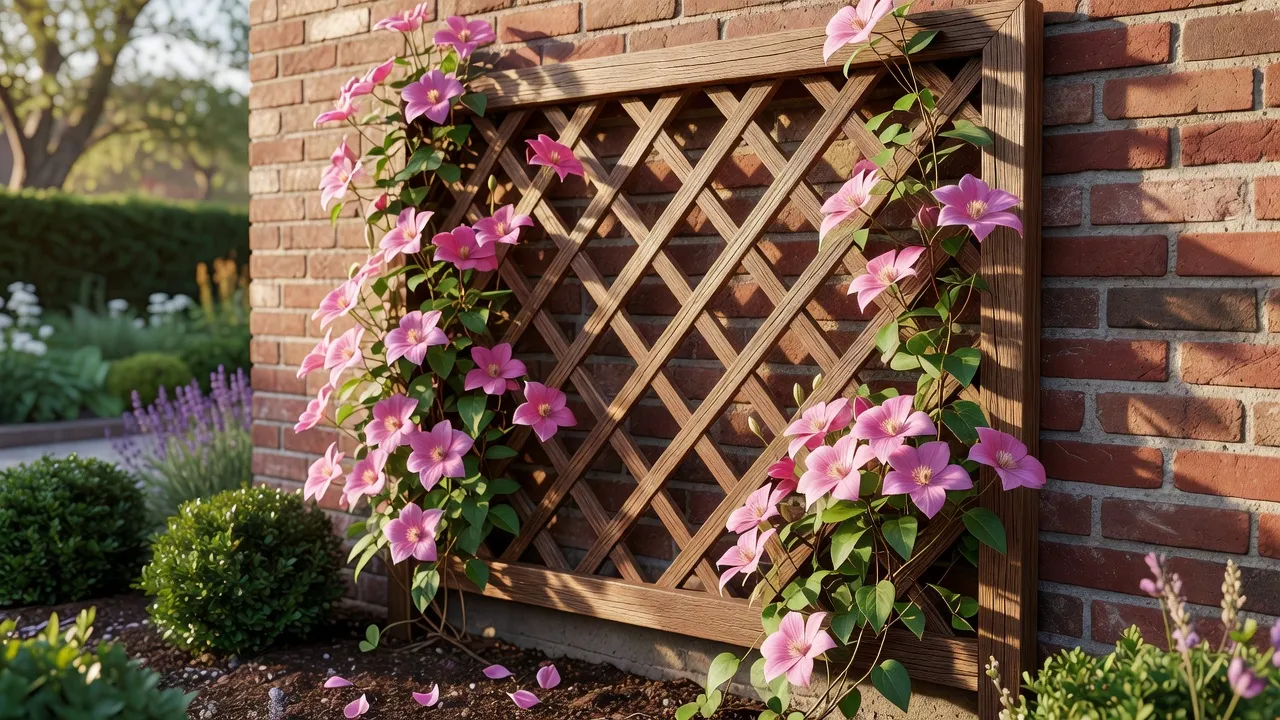
- Flat Lattice Panels: Best for perimeter fencing, wall mounts, and privacy screens. Wooden or vinyl lattice grids support twining vines like clematis and morning glories with minimal wire adjustments.
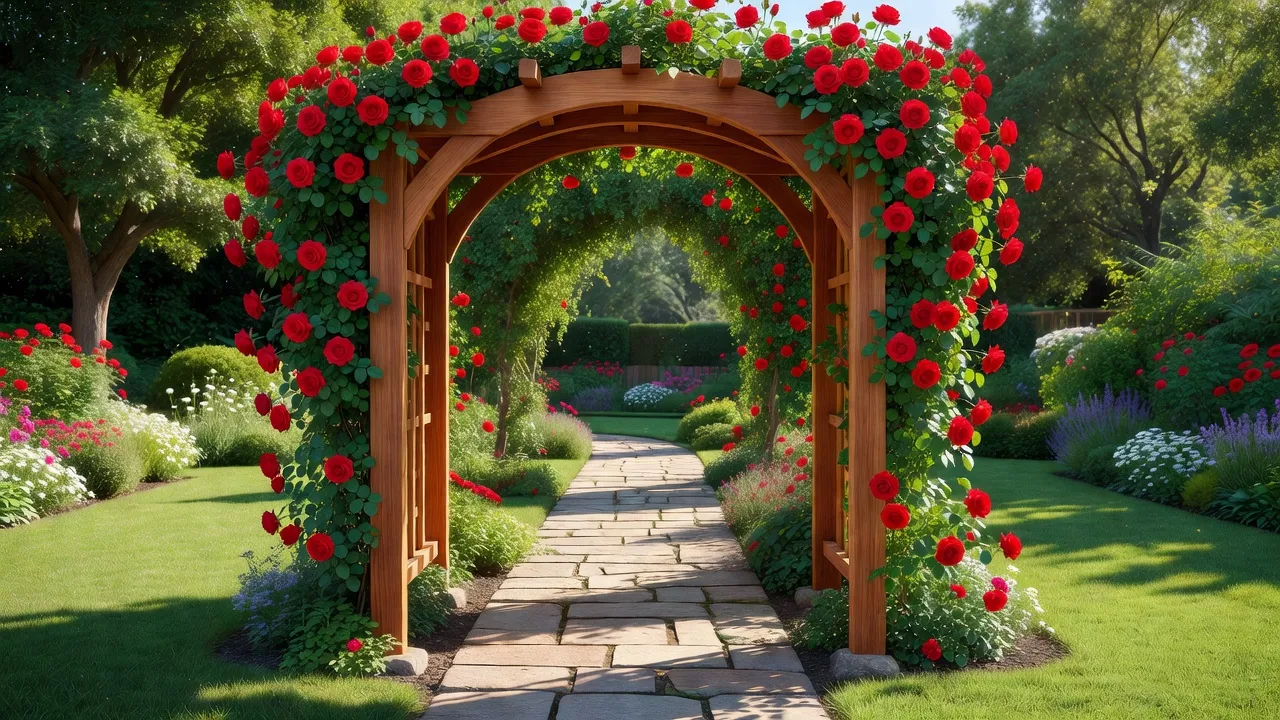
- Arches and Arbors: Ideal for pathways and garden entrances. Heavy-gauge metal arches support heavy perennial climbers like wisteria or climbing roses, creating a walkable canopy.
- Obelisks and Pyramids: Perfect for adding vertical accent points inside flower beds or containers. These standalone four-sided structures support moderate climbers like sweet peas and pole beans.
- Espalier Wire Tiers: Recommended for fruit trees and rigid vines grown against flat brick or wooden walls. Horizontally run galvanized wire anchors to masonry posts, forcing branches outward along tight geometric planes.
If you are pairing vertical structures with custom flower borders, reviewing a complete cottage garden design plan can help you place vertical obelisks where they won't cast unwanted shade on low-growing perennials.
What types of trellises are recommended for climbing plants?
The best trellis type depends on how your chosen plant climbs, whether through twining stems, wrapping tendrils, adhesive rootlets, or long sprawling canes. Matching the physical framework to the plant's natural clinging mechanism prevents plant damage and saves hours of manual tying.
Arch Trellises
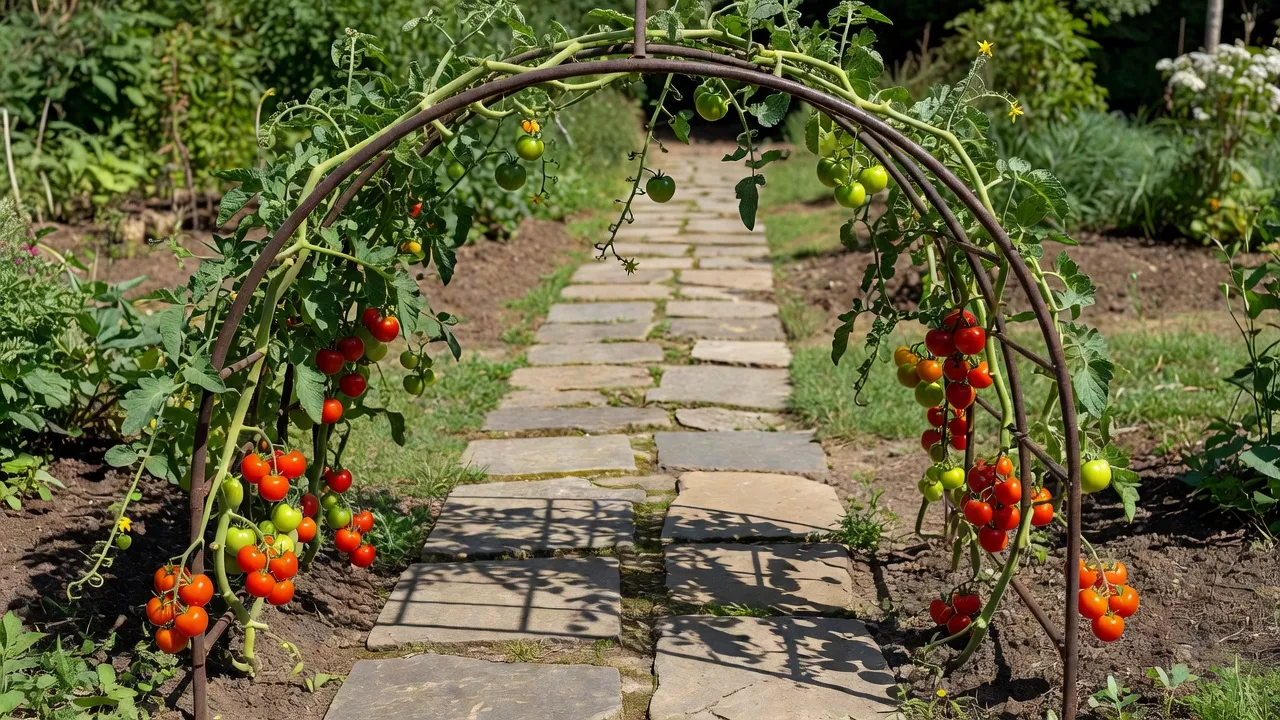
Arch trellises excel at supporting heavy, sprawling crops and woody vines over garden walkways. Constructing an arch from 16-foot livestock panels creates an immediate walk-through tunnel. Tomatoes, pole beans, and heavy gourds hang downward through the wire mesh, making harvesting simple while keeping foliage dry.
Obelisk Trellises
Obelisk trellises provide narrow, tall support ideal for ornamental flower beds and patio containers. Typically constructed from cedar, teak, or wrought iron, obelisks taper toward a decorative top finial. They work exceptionally well for Mandevilla, black-eyed Susan vine, and compact indeterminate tomatoes.
Fan Trellises
Fan trellises spread upward and outward, making them the top choice for training sprawling shrubs against flat surfaces. The widening top layout allows air to circulate around dense foliage. The Royal Horticultural Society notes that fan training is particularly effective for wall-mounted shrubs like firethorn and fig trees, as it maximizes sun exposure along heat-retaining walls.
A-Frame Trellises
A-frame trellises feature two hinged panels resting against each other, creating a stable triangular tent structure. This setup works best for heavy vining vegetables like cucumbers and vining squash. You can plant heat-sensitive greens like spinach directly underneath the A-frame canopy to benefit from the natural shade provided by the climbing leaves overhead.
Espalier Systems
Espalier trellises hold fruit trees flat against walls using steel cables held rigid by eye-bolts. This technique forces apple, pear, and peach trees to grow along two-dimensional planes. It maximizes fruit production in tight suburban side yards where traditional orchard tree canopies cannot fit.
Arbor Trellises
Arbors combine vertical side posts with an overhead flat or curved roof grid. They create defined entry portals into distinct garden zones. Cedar or vinyl arbors easily bear the immense weight of perennial vines like trumpet vine or grapes.
Lattice Panels
Lattice trellises use crisscrossed diagonal or square slats to form a high-coverage privacy screen. High-density polyethylene or cedar lattice stands up to high wind loads when anchored to 4x4 posts set in concrete.
Teepee Trellises
Teepee trellises use three to six bamboo poles lashed together at the apex with twine. They are the cheapest, fastest vertical support to erect in vegetable beds for annual pole beans and sugar snap peas.
What is the best trellis for climbing plants?
The best overall trellis for climbing plants is a powder-coated steel cattle panel grid attached to wooden or metal support posts. This combination offers unmatched structural rigidity, resists rust for well over a decade, and provides a tight wire grid that accommodates every climbing style.
Different plants cling to surfaces in distinct ways. Understanding these mechanisms helps you choose the right material:
- Tendril Climbers (Peas, Passionflower): Need thin supports under 0.5 inches in diameter. Heavy wooden posts are too thick for tendrils to curl around, requiring supplemental wire mesh or string.
- Stem Twiners (Pole Beans, Morning Glories): Need vertical posts or cables between 0.5 and 2 inches wide. Stems wrap spirally as they reach upward.
- Scramblers and Canes (Climbing Roses, Bougainvillea): Have no natural clinging organs. They require sturdy horizontal bars where heavy stems can be manually secured with stretchy plant tape.
- Adhesive Rootlet Climbers (English Ivy, Boston Ivy): Grip directly to flat masonry or textured wood. They do not require grid trellises but can destroy soft wood mortar over time.
For ornamental flower beds, pairing appropriate vertical supports with a well-planned garden design with roses prevents heavy bloom canes from bending to the mud after summer rainstorms.
What is the best trellis for vegetables like tomatoes, peas, beans, and cucumbers?
The best vegetable trellis is an A-frame or livestock panel arch system because it lifts fruit off the soil, increases air circulation, and cuts fungal disease risks dramatically. Keeping edible crops elevated prevents soil-borne pathogens like blight from splashing onto lower leaves during irrigation.
According to agricultural data from the Iowa State University Extension, vertical trellising increases usable garden yields per square foot by up to three times compared to ground-sprawling methods. Different vegetables demand specific grid layouts:
- Tomatoes (Indeterminate): Standard cheap wire cages usually collapse by August. Use 5-foot-tall heavy wire panels or vertical string-training setups with roller hooks suspended from an overhead bar.
- Cucumbers: A-frame wooden trellises lined with nylon netting allow cucumbers to hang completely straight, preventing curved fruit and yellow undersides.
- Peas (Sugar Snap, Snow Peas): Thin jute twine tied between wooden stakes or lightweight bamboo lattice provides perfect attachment points for delicate pea tendrils.
- Pole Beans: A classic 7-foot bamboo teepee allows beans to spiral upward effortlessly, keeping pods clean and easily accessible at eye level.
If you grow vegetables in elevated boxes, combining sturdy vertical frames with a raised garden design layout maximizes yield in compact footprints without overcrowding root zones.
| Vegetable Crop | Recommended Trellis Type | Ideal Grid / Wire Spacing |
|---|---|---|
| Tomatoes | Cattle Panel / Heavy Cage | 4" x 4" to 6" x 6" openings |
| Cucumbers | A-Frame / Slanted Panel | 2" x 4" mesh or nylon netting |
| Pole Beans | Bamboo Teepee / Strings | Vertical poles / 1" to 2" diameter |
| Sugar Snap Peas | Pea Netting / Branch Mesh | Fine mesh under 1" spacing |
| Vining Squash | Reinforced Cattle Arch | 4" x 4" steel wire grid |
Scenario Matrix: Choosing Trellis Designs by Garden Requirement
Selecting the right trellis design comes down to structural weight demands, local wind exposures, and long-term garden goals. The table below outlines common real-world installation scenarios:
| Garden Scenario / Goal | Primary Structural Need | Recommended Trellis Type | Estimated Material Cost (2026) | Best Material Choice |
|---|---|---|---|---|
| Yard Layout Visualization | Digital preview before ground installation | Renova AI Design App | Free trial, then $6.99/wk or $59/yr | Digital app rendering |
| High-Yield Small Raised Bed | Maximum vertical crop density | A-Frame or Overhead Cattle Arch | $30 - $75 | Galvanized steel & cedar |
| Property Line Privacy Screen | High coverage and wind resistance | Flat Box-Lattice on 4x4 Posts | $120 - $280 | Pressure-treated wood or PVC |
| Ornamental Flower Border Accent | Focal point for decorative vines | Tapered Metal Obelisk | $45 - $130 | Powder-coated wrought iron |
| Narrow Side-Yard Fruit Production | Shallow depth along sunlit walls | Wall-Mounted Espalier Wire Tier | $25 - $60 | Stainless steel cable & turnbuckles |
| Pathway Entrance Portal | High overhead clearance and weight tolerance | Arch or Heavy Wooden Arbor | $150 - $400+ | Western Red Cedar or tubular steel |
Scenario 1: Vertical Gardening in Small Footprints and Raised Beds
When floor space in raised beds is severely limited, sloped or arched vertical trellises create growing area out of thin air. In a standard 4x8-foot bed, vining squash can easily smother neighboring crops if left on the soil.
Installing a cattle panel arch anchored with steel T-posts directly inside raised bed corners allows heavy plants to climb upward and over pathways. Cucumbers and summer squash hang underneath the arch for rapid picking.
- Pros: Doubles bed output; simplifies insect inspection under leaves; keeps fruit off damp soil.
- Cons: High arching foliage casts dark shadows on sun-loving crops planted directly north of the panel.
Scenario 2: Creating Privacy and Living Walls on Patio Boundaries
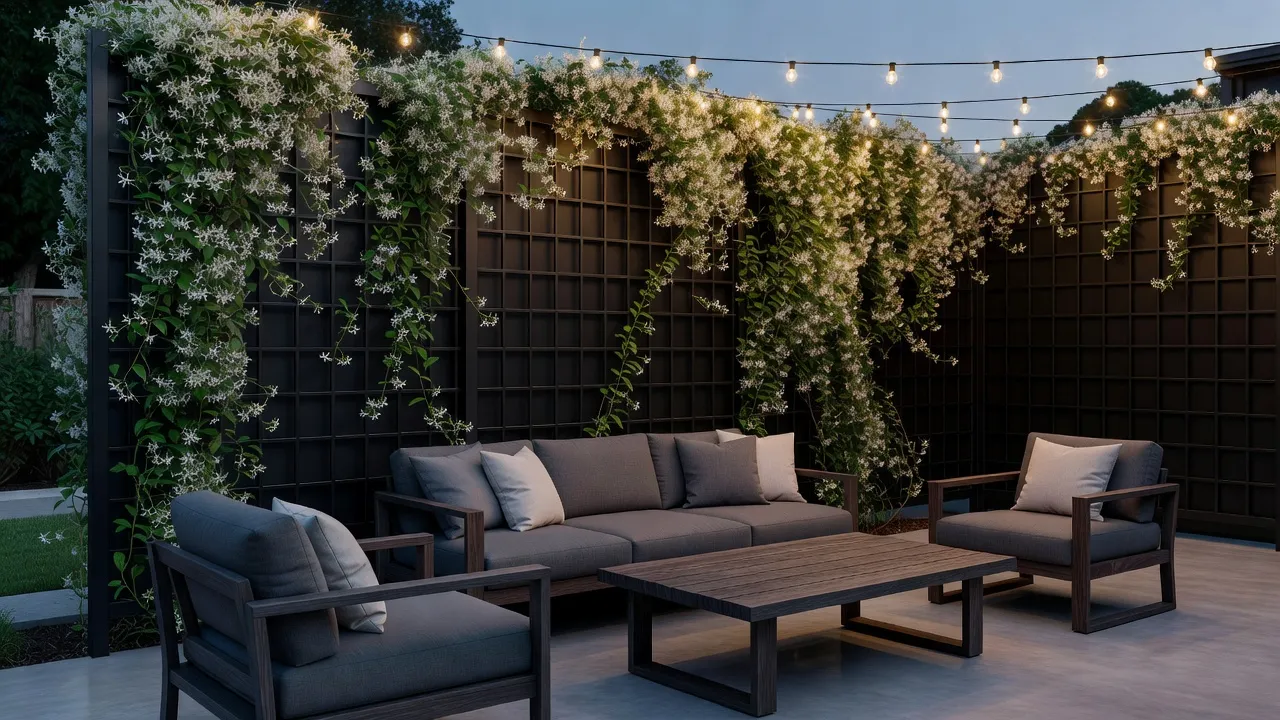
If your patio is exposed to neighboring windows, installing full-coverage lattice panels establishes instant natural privacy. Wood-plastic composite and vinyl lattice materials have largely replaced traditional untreated softwood slats because they won't warp or rot under dense vine growth.
For rapid year-round screening, combine sturdy lattice frames with evergreen climbers like Carolina jessamine (in warmer zones) or persistent vines like Dutch pipe. Mounting lattice frames 3 inches off wall surfaces with spacer blocks maintains healthy airflow behind foliage and protects siding from moisture accumulation.
Scenario 3: Architectural Accents in Formal and Cottage Flower Gardens
Freestanding obelisks and decorative metal arbors act as permanent focal points that anchor soft botanical plantings. During cold winter months when perennial vines die back, a well-crafted iron or cedar obelisk retains architectural structure in empty garden beds.
When choosing obelisks, height is crucial. A 4-foot obelisk quickly gets overwhelmed by vigorous climbers like clematis or perennial sweet peas. Opt for 6-foot to 8-foot structures set into metal ground stakes to prevent high winds from blowing top-heavy vines over mid-season.
Scenario 4: High-Wind Zones and Heavy Perennial Canes
Heavy woody vines like wisteria, trumpet vine, and mature climbing roses will destroy lightweight decorative trellises over time. A mature wisteria vine can twist thin aluminum tubing and pull unanchored wooden frames apart.
In high-wind areas or when supporting long-lived woody plants, rely exclusively on robust materials:
- 4x4 Ground Posts: Set pressure-treated pine or cedar posts at least 24 inches deep into the soil, ideally anchored with quick-setting concrete.
- Heavy-Gauge Wire: Use 12-gauge or thicker galvanized steel wire strung through pre-drilled post holes.
- Heavy Metal Hardware: Fasten main support members with exterior-grade stainless steel lag screws rather than thin deck screws.
Using Renova AI to Plan Outdoor Trellis Projects
Installing heavy garden trellises, arbors, and raised bed frames represents a significant investment of time and cash. Placing a large arbor in the wrong part of your yard can disrupt sun exposure across your entire garden layout.
The Renova AI app makes outdoor planning simple. By snapping a photo of your existing yard, patio, or exterior building wall, you can visualize over 100 stylistic layout transformations in seconds.
- Instant Visual Rendering: Preview how different wooden lattice screens or metal garden accents look against your home's exterior siding.
- Custom Style Changes: Prompt the AI to add specific garden elements, stone pathways, or vertical planter structures without touching manual editing tools.
- Zero Learning Curve: No need to master complex 3D modeling software—simply upload your photo and select your preferred garden style (such as Farmhouse, Boho, Japandi, or Modern).
Starting with a free trial (3 free generations, followed by $6.99/week or $59/year) helps you refine your exterior design concepts before buying lumber or digging post holes.
2026 Material Costs and DIY vs. Pre-Built Trellis Comparison
Understanding current market prices for garden construction materials prevents mid-project budget overruns. As of September 2026, raw lumber prices have stabilized, but pre-fabricated metal ornamental garden structures remain at a premium.
- Bamboo Poles and Twine (DIY): $15 – $25 total per teepee. Lasts 1 to 2 seasons before bamboo degrades underground.
- Galvanized Cattle Panels (16 ft x 50 in): $35 – $50 per panel at farm supply stores. Requires T-posts ($6 each) and wire ties. Lasts 20+ years.
- Pre-Assembled Cedar Lattice Panels (4x8 ft): $45 – $85 per panel depending on thickness and joint construction.
- Powder-Coated Wrought Iron Obelisks: $60 – $180 depending on height and metal gauge.
- Custom Heavy Timber Arbors: $250 – $600+ in raw cedar or redwood lumber and structural bracket hardware.
Building your own cattle-panel arch or wooden ladder trellis offers the highest structural strength per dollar spent. Pre-built retail trellises save assembly time but often use thin hollow-core metal tubing that bends under severe wind loads or heavy harvests.
How to Anchor and Maintain Garden Trellises for Long-Term Durability
An unanchored trellis carrying a heavy vine acts like a sail in high winds and will tip over easily. Securing the base and protecting building materials from moisture determines how many years your structure survives outdoors.
Anchoring Methods
- Soil Footers: Drive 4-foot steel T-posts or rebar stakes 18 to 24 inches directly into the ground. Secure the trellis legs to these hidden stakes using heavy zip ties or hose clamps.
- Concrete Footing: For permanent arbors or heavy gate structures, set 4x4 posts into 24-inch-deep post holes filled with concrete.
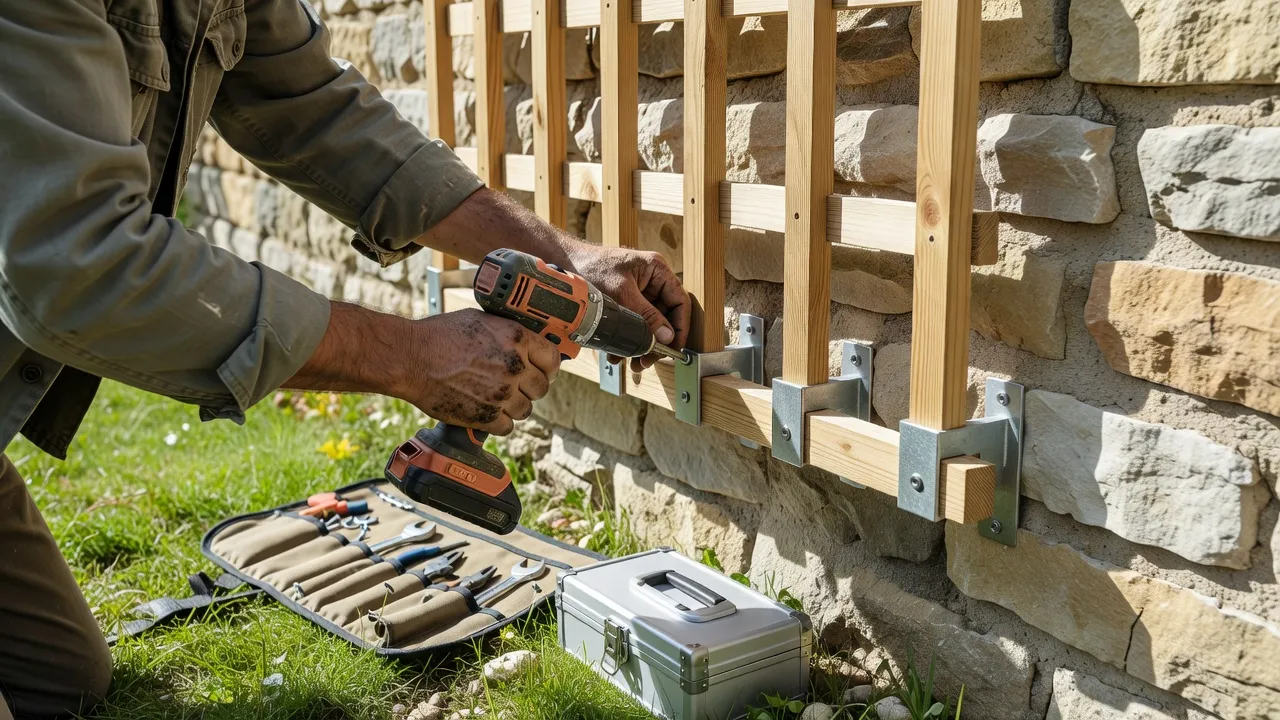
- Wall Mount Spacers: Never nail wooden trellises flat against exterior siding. Use 2-inch or 3-inch wooden spacer blocks and long masonry anchors to preserve an air gap behind climbing plants.
Maintenance Tips
- Wood Treatment: Coat untreated softwoods with non-toxic, plant-safe exterior sealers or linseed oil before planting. Avoid copper-based pressure treatments directly adjacent to edible organic vegetable roots if that is a concern for your garden bed.
- Rust Prevention: Touch up scraped metal trellises with rust-inhibiting exterior spray paint each spring before vines green up.
- Vine Pruning: Cut back dead growth on annual vines every fall to prevent heavy winter snow or ice from collapsing the framework.
Frequently Asked Questions
What is the cheapest trellis design for a vegetable garden?
The cheapest trellis design is a bamboo teepee made from three or four bamboo poles lashed together at the top with natural jute twine. A four-pole bamboo teepee costs less than $15 to construct and reliably supports pole beans, sugar snap peas, and lightweight vining crops for multiple growing seasons.
How far away from a wall should a garden trellis be mounted?
A garden trellis should be mounted at least 2 to 4 inches away from a wall surface using spacer blocks or standoff brackets. Leaving this gap allows necessary air circulation to dry out foliage, prevents fungal plant diseases, and keeps moisture from accumulating against your home's siding.
Can you leave metal and wooden trellises outside during the winter?
Yes, high-quality pressure-treated wood, cedar, powder-coated steel, and vinyl trellises can remain outside year-round. However, lightweight plastic or cheap tubular metal trellises should be cleaned and stored indoors over winter to prevent frost cracking and rust degradation caused by freezing water.
What is the difference between a trellis, an arbor, and a pergola?
A trellis is a flat or minor three-dimensional framework designed primarily to support climbing plants. An arbor is a functional entrance archway with vertical posts and a overhead roof grid, often integrated with side trellises. A pergola is a much larger outdoor architectural structure built over patios or decks to provide overhead shade using a rafter system.
How do I stop my heavy climbing plants from pulling down my trellis?
To support heavy plants, anchor your trellis posts 18 to 24 inches deep into the soil using heavy steel rebar or concrete footings. Secure the main plant stems horizontally across structural members using flexible, stretchy plant tape rather than thin wire, which can slice through heavy vines under wind stress.
What material lasts the longest for outdoor garden trellises?
Powder-coated galvanized steel, high-density vinyl (PVC), and stone or masonry espalier frames last the longest, often surviving 20 to 30+ years with minimal maintenance. Western Red Cedar and redwood are the longest-lasting natural wood choices, naturally resisting rot and insect damage for 10 to 15 years outdoors.
Do climbing plants damage house siding when grown on a wall trellis?
Climbing plants with adhesive pads or aerial rootlets, like English ivy or Boston ivy, can pull off paint, dig into mortar, and trap moisture against house siding. Plants trained onto a freestanding wire or wood trellis offset 4 inches from the wall will not damage siding, provided you trim the foliage to prevent direct contact with house walls.