

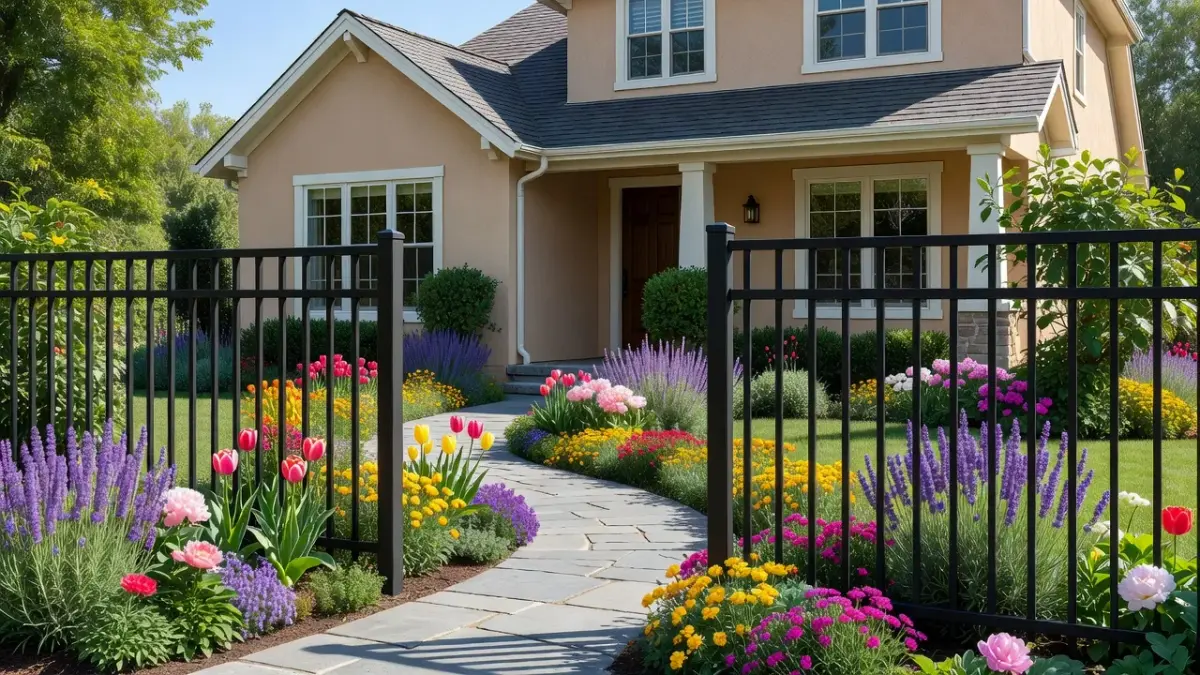
A low 3- to 4-foot front yard fence typically costs between $15 and $60 per linear foot installed and yields one of the highest visual returns on exterior home investments. Unlike 6-foot backyard privacy barriers, a front garden fence acts as an architectural frame rather than an obstacle, accentuating walkway sightlines while preserving view corridors to the front porch.
When planned correctly, a front yard fence defines property boundaries, deters foot traffic across lawns, and highlights exterior landscaping. However, installation mistakes—like ignoring municipal height restrictions or picking non-contextual materials—can lead to forced teardowns or diminished property values.
What are the most popular front yard fence styles for curb appeal?
The most popular front yard fence styles for curb appeal are white vinyl pickets, black horizontal aluminum slats, natural cedar post-and-rail, and decorative iron panels. Each style offers distinct structural transparency, upkeep demands, and architectural compatibility.
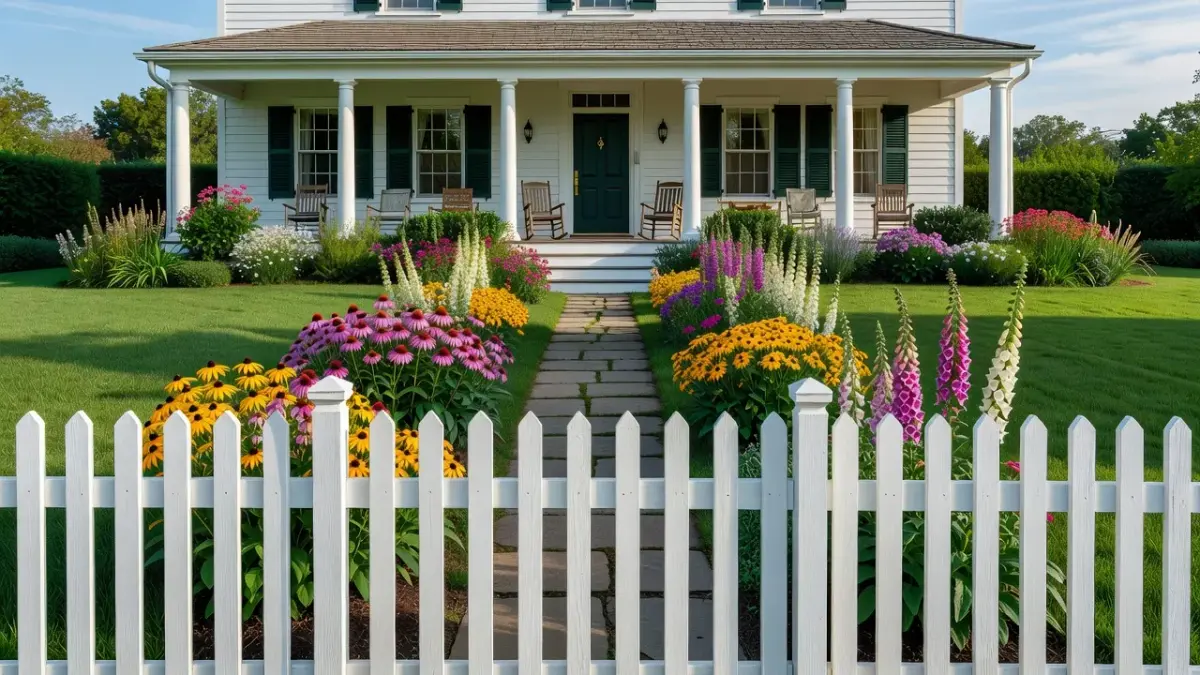
- Classic White Picket Fence: Spaced 2 to 3 inches apart, 3-foot pickets offer iconic traditional framing for Craftsman, Colonial, and Farmhouse structures. Vinyl pickets require minimal washing, while painted wood provides authentic detail that needs repainting every 4 to 6 years.
- Horizontal Slat Fence: Featuring horizontal wood or composite boards spaced 0.5 to 1.5 inches apart, this design complements mid-century modern and contemporary architecture. It creates an elongated visual line that makes narrow lots feel wider.
- Black Ornamental Metal Fence: Fabricated from powder-coated aluminum or wrought iron, open metal pickets establish crisp perimeter lines without blocking flower beds. According to historical architectural guidelines on Wikipedia, ironwork provides unmatched structural longevity and historic authenticity.
- Split-Rail or Post-and-Rail Fence: Built with rustic cedar or pressure-treated pine, split-rail fencing provides an open, informal boundary for country properties, ranch homes, or cottage gardens. Adding wire mesh backing keeps small dogs safely inside without ruining the rustic look.
What front yard fence styles do landscapers recommend for curb appeal?
Landscapers recommend front yard fences that maintain at least 30% to 50% visual transparency while matching the home's architectural material palette. Professional landscape architects prioritize low fence profiles that integrate seamlessly with layered flower beds and shrubbery.
Landscape designers frequently suggest stepping fence heights down near driveways and walkways to preserve visibility triangles for oncoming cars. Pairing a dark charcoal or black fence with bright green foliage creates high-contrast depth, drawing attention toward the front door.
To ensure your fencing works in tandem with softscaping, plan your plant beds along both sides of the fence line. Integrating structural planting into your landscaping for front yard curb appeal softens hard hardscape edges, anchoring the structure into the surrounding terrain.
What are good alternatives to chain link fences for curb appeal?
The best low-cost alternatives to plain chain link fencing include black vinyl-coated chain link, steel wire panel systems, hog wire fencing, and low aluminum pickets. These options preserve budget efficiency while avoiding the industrial look of galvanized mesh.
| Style | Aesthetic Impact | Approx. Cost / Lin. Ft |
|---|---|---|
| Vinyl-Coated Mesh | Minimalist / Low | $12 - $22 |
| Hog Wire Wood Frame | Craftsman / Rustic | $20 - $38 |
| Black Aluminum Picket | Classic / Clean | $25 - $55 |
| Low Cedar Picket | Traditional Warm | $18 - $35 |
- Black Vinyl-Coated Chain Link: Coating galvanized steel in dark PVC allows the mesh to visually blend into garden backdrops, reducing visibility by roughly 60% compared to silver wire.
- Hog Wire with Timber Framing: Cedar framing around heavy-gauge steel grid panels provides a modern-rustic border that supports climbing vines like clematis or star jasmine.
- Black Powder-Coated Aluminum: Mimicking traditional wrought iron at a fraction of the weight and maintenance, aluminum pickets resist rust while offering clean vertical lines.
- Low Wood Picket Extensions: Simple 3-foot pressure-treated pine panels deliver timeless curb appeal at price points competitive with heavy-duty metal fencing.
How to Visualize Front Fence Designs Before Buying
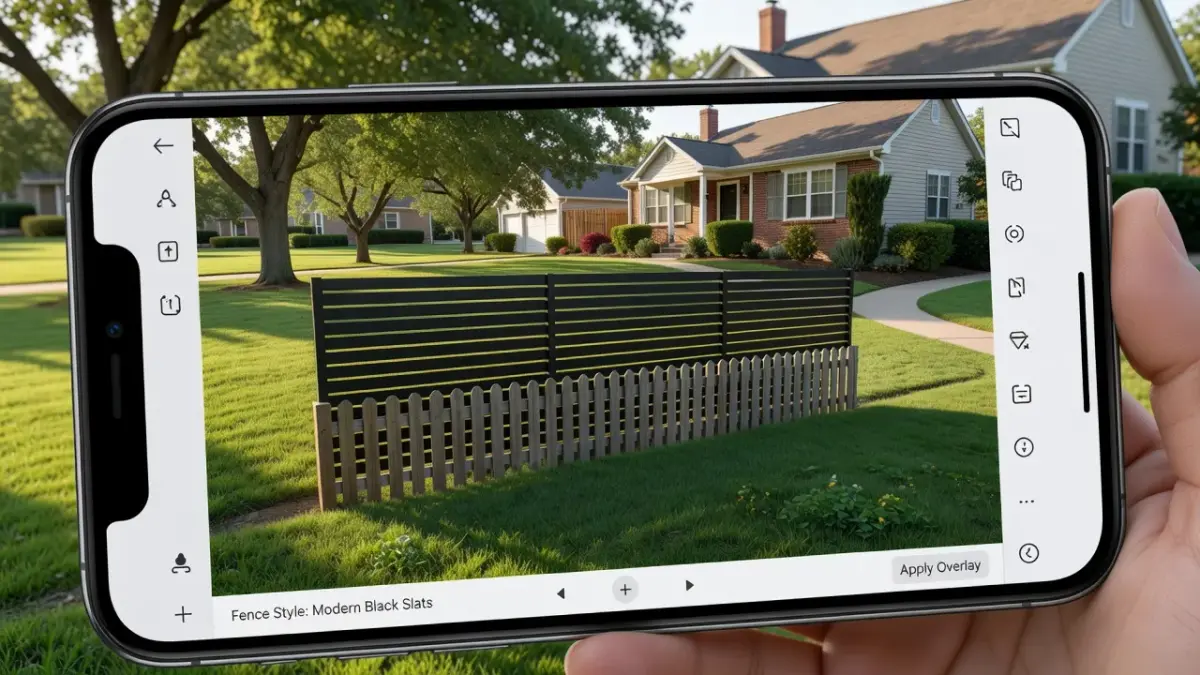
Before spending thousands on materials, you can preview how different fence styles look against your home's facade using mobile visualizers. Testing layout options eliminates costly visual mismatches between your home's trim colors and prospective fencing materials.
Tools like Renova AI let you upload a single front yard photograph to generate instant exterior redesigns across over 100 architectural styles. Available on the iOS App Store, the app lets homeowners test horizontal slats, white pickets, or dark metal fencing with no manual editing required.
If you are evaluating options across different platforms, exploring curb appeal AI tools helps you test fence heights and material finishes right from your phone before signing a contractor quote.
Scenario 1: Defining Boundaries on Small Suburban Lots Without Blocking Light
For compact suburban front lots under 50 feet wide, open 3-foot aluminum pickets or spaced vertical wood slats maintain clear sightlines while defining property limits. High privacy walls cast deep shadows across compact lawns and make small front yards feel claustrophobic.
On small lots, set your fence back at least 12 to 18 inches from the sidewalk edge to leave room for low-growing groundcovers like creeping thyme or liriope. This soft buffer keeps the barrier from feeling harsh or aggressive to neighborhood pedestrian traffic.
Keeping vertical pickets thin (under 2 inches wide) ensures light passes through onto turf grass and entry steps, ensuring your front entrance remains bright and welcoming.
Scenario 2: Framing Historic Craftsman, Victorian, or Farmhouse Architecture
Historic architectural styles benefit from classic vertical picket fences or low wrought iron boundaries that mirror the home's window trim, porch columns, or porch railings. Aligning fence detailing with existing architectural features unifies the entire front yard exterior.
- Victorian Homes: Iron pickets with decorative finials accentuate intricate gingerbread trim and steep rooflines.
- Craftsman Bungalows: Sturdy timber posts with flat top caps and wide cedar pickets anchor low-slung roof profiles.
- Farmhouse Designs: Spaced white pickets or post-and-rail borders pair naturally with prominent covered front porches.
When updating farm-style exteriors, matching your front perimeter fence with complementary accents like farmhouse front doors helps preserve historical character throughout the property exterior.
Scenario 3: Securing Pets and Children on High-Traffic Neighborhood Streets
When safety is the primary goal, 42- to 48-inch fences with tight picket spacing (under 3 inches) keep pets contained while adhering to municipal front-yard code limits. Standard residential codes rarely permit front yard enclosures over 4 feet tall near public sidewalks.
To prevent small dogs from squeezing through gaps or digging underneath, add a recessed pressure-treated kickboard along the base of your fence panels. Wire mesh backing behind decorative timber gates adds an invisible secondary barrier for small pets.
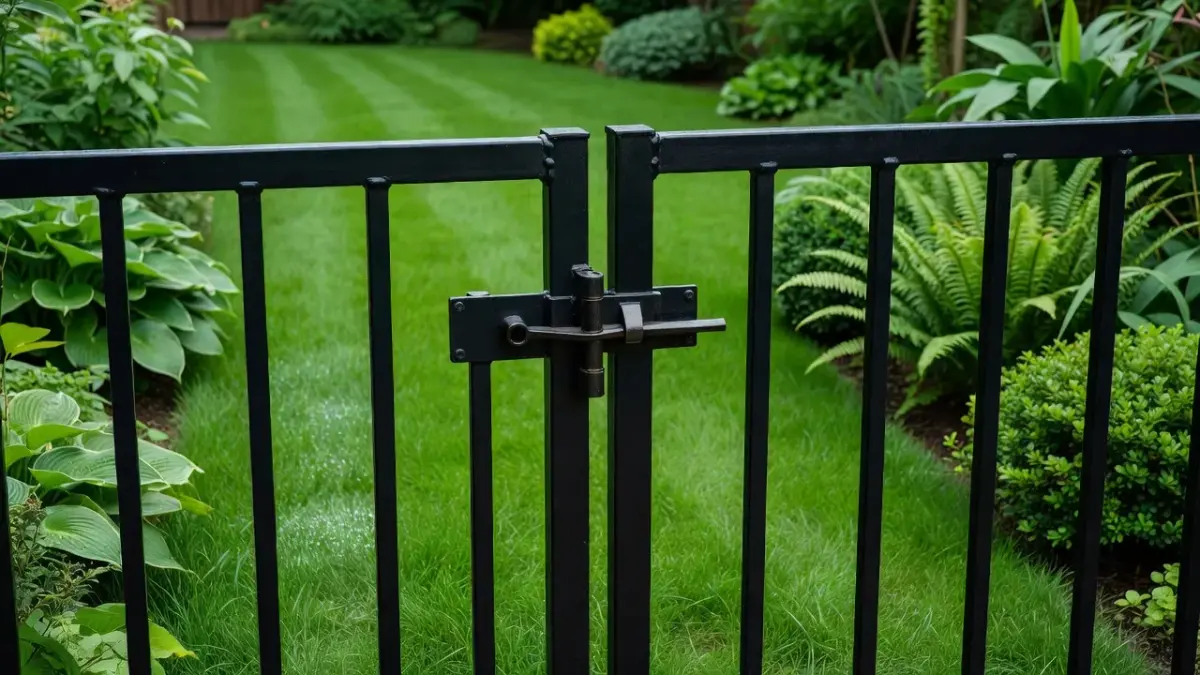
Selecting self-closing, magnetic latches ensures front gates latch securely even if children run through without pulling the gate shut behind them.
Scenario 4: Enhancing Front Garden Curb Appeal with Architectural Plant Screening
Integrating climbing flora or mixed perennial borders along a 3-foot fence line turns structural fencing into a living garden backdrop. Using low fencing as a plant support structure brings organic texture to structured hardscaping.
| Fence Material | Best Companion Plants | Maintenance Need |
|---|---|---|
| White Vinyl Picket | Lavender, Salvia, Roses | Low (Annual Pruning) |
| Dark Aluminum Grid | White Hydrangeas, Boxwood | Low (Seasonal Trim) |
| Cedar Horizontal | Decorative Grasses, Ferns | Moderate |
| Split Rail Timber | Coneflowers, Native Grass | Very Low |
Planting tall flowering perennials like purple coneflowers or Russian sage behind open pickets lets blooms peek through without obstructing the fence framework. Climbing roses or clematis trained along timber top rails add vibrant vertical color during spring and summer months.
Scenario 5: Softening Sloped Terraces and Uneven Front Yard Topography
On sloped front yards, stepped fence panels installed on level concrete footings create clean horizontal lines across uneven grade changes. Stepping panels down a slope preserves structural integrity far better than sloped ("racked") bottom rails that leave awkward ground gaps.
Stepped fencing leaves triangular spaces beneath each panel, which can be filled with stone retaining borders or terraced garden beds. This approach turns difficult site topography into an attractive multi-level landscape feature.
For steep yards, pair stepped wood or metal panels with low stone retaining walls along the base to prevent soil erosion onto public sidewalks.
Comparing Front Yard Fence Scenarios, Costs, and Fit
Selecting the right fence depends on balancing lot size, safety needs, municipal codes, and long-term material maintenance. The table below breaks down practical requirements across typical front yard installation scenarios:
| Use-Case Scenario | Key Requirements & Style | Estimated Cost (Per Linear Ft) | Best Fit & Considerations |
|---|---|---|---|
| Small Suburban Boundary | Low profile, 3-ft height, >40% open spacing | $18 – $40 | Best for: Open feel. Avoid tall solid panels that crowd sidewalks. |
| Historic Architecture | Architectural alignment, painted wood or iron | $25 – $65 | Best for: Period homes. Requires ongoing paint/seal upkeep. |
| Child & Pet Safety | 4-ft height, <3-inch gaps, self-closing gate | $22 – $50 | Best for: High-traffic streets. Requires secure latching hardware. |
| Integrated Garden Screen | Open lattice, hog wire, or spaced pickets | $20 – $45 | Best for: Plant lovers. Pick rot-resistant cedar or aluminum. |
| Sloped & Terraced Lots | Stepped panel layout, reinforced posts | $30 – $70 | Best for: Hilly yards. Requires precise post-hole footings. |
Common Front Yard Fence Mistakes and What They Cost Homeowners
The most expensive front yard fence mistake is violating local municipal setback rules and height limits, which frequently results in mandatory removal costs ranging from $500 to $2,500. Most US towns enforce strict codes restricting front yard structures to 36 or 48 inches in height.
- Ignoring Property Lines: Building a fence even a few inches over property boundaries can trigger legal disputes and expensive reconstruction. Homeowners should secure a professional property survey ($400 to $900) before digging post holes.
- Blocking Driveway Sight Triangles: According to fence installation guides on Angi, local ordinances mandate clear sight triangles near driveways; installing tall, solid panels near street intersections creates dangerous blind spots for traffic.
- Overlooking Utility Lines: Digging post holes without calling 811 to locate underground electrical, gas, or water lines risks severe utility damage and emergency repair fees.
- Choosing Low-Grade Fasteners: Using standard steel screws instead of hot-dipped galvanized or stainless steel hardware leads to rust stains running down pickets within 12 to 18 months.
Visualizing Exterior Changes with AI Tools
Previewing material choices before purchasing hardware prevents design mismatch and avoids buyer's remorse. Rather than guessing how a dark aluminum or classic white fence will look against your home's exterior colors, virtual design tools show you realistic renderings instantly.
With Renova AI, homeowners can test different fence styles, exterior wall paints, and garden configurations simply by uploading a photo of their front elevation. The platform requires no manual design experience, offering 3 free generations before affordable access plans kick in ($6.99 per week or $59 per year).
Testing your front yard ideas virtually ensures your fencing choice complements existing trim lines, walkway paths, and front porch features before contractors break ground.
Frequently Asked Questions
What is the ideal fence height for front yard curb appeal?
The ideal front yard fence height for curb appeal is 36 to 48 inches (3 to 4 feet). Heights under 4 feet establish property boundaries while keeping view lines open to the home's front door and porch.
How far back from the sidewalk should a front yard fence be placed?
A front yard fence should typically be set back 6 to 24 inches from public sidewalk edges or property lines. This buffer leaves room for lawn maintenance and keeps plant growth from spilling onto public walkways.
Does adding a front yard fence increase property value?
Yes, a well-designed front yard fence increases property value by boosting curb appeal and defining usable front yard space. According to real estate analysis on Realtor.com, attractive perimeter fencing offers strong buyer appeal, especially for households with pets or young children.
What is the cheapest fence style that still looks good in a front yard?
Spaced vinyl or pressure-treated pine pickets are the most affordable stylish front yard options, costing roughly $15 to $28 per linear foot installed. Black vinyl-coated chain link framing is another low-cost choice that blends seamlessly into garden backdrops.
Are solid privacy fences allowed in front yards?
Most municipal building codes forbid solid 6-foot privacy fences in front yards forward of the home's front building line. Front yard structures are generally capped at 3 to 4 feet in height with required open-spacing percentages.
How do I maintain a wood front yard fence so it doesn't rot?
To prevent wood rot, use pressure-treated or cedar lumber, keep bottom rails at least 2 inches above soil levels, and apply a clear oil-based sealant or exterior paint every 3 to 5 years.
What color fence provides the best front yard curb appeal?
Crisp white, charcoal black, and natural warm cedar stains offer the most timeless front yard curb appeal. White brightens traditional homes, while black metal creates high-contrast framing against green foliage and modern facades.