

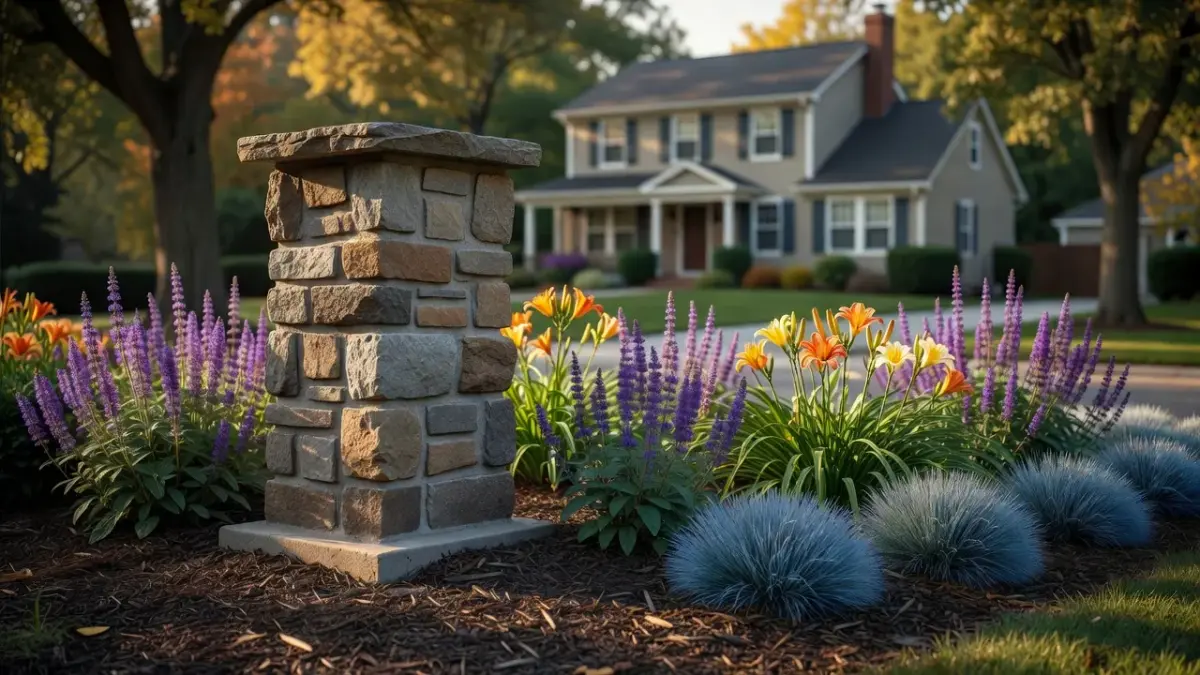
Landscaping around your mailbox boosts front yard curb appeal when you pair salt-tolerant perennials with compact evergreen shrubs that stay clear of postal service delivery access zones. According to official guidelines from the United States Postal Service, roadside mailboxes must sit 41 to 45 inches above the road surface, with the door set back 6 to 8 inches from the curb edge. Planting within these physical limits requires tight height management so letter carriers can reach your box without interference.
Before digging around utility lines or spending hundreds of dollars at a local nursery, visualizing your design in place prevents expensive mistakes. Using visual tools like Renova AI, you can upload a photo of your front curb and preview how different perennial garden beds look against your home's exterior before buying soil amendments or plants.
What are the best low-maintenance plants for mailbox landscaping?
The best low-maintenance plants for mailbox landscaping include creeping phlox, black-eyed Susans, Russian sage, and dwarf daylilies. These species handle radiant heat off asphalt, resist vehicle exhaust fumes, and survive periodic dry spells without requiring daily watering.
When choosing low-maintenance varieties, select plants that top out below 24 inches so they never block the mailbox door or obscure your street address digits.
- Creeping Phlox (Phlox subulata): Acts as a dense evergreen groundcover that produces vibrant spring blooms while suppressing weeds around the post base.
- Dwarf Daylilies (Hemerocallis 'Stella de Oro'): Reaches just 12 inches high, blooming continuously from early summer through early autumn with zero deadheading required.
- Russian Sage (Salvia yangii): Provides drought-proof purple flowers and feathery foliage, though dwarf varieties like 'Little Spire' work best to prevent floppy stems over the curb.
- Sedum (Sedum spectabile 'Autumn Joy'): Stores moisture in thick succulent leaves, making it virtually indestructible during high-summer heat waves.
What native plants work well for mailbox landscaping?
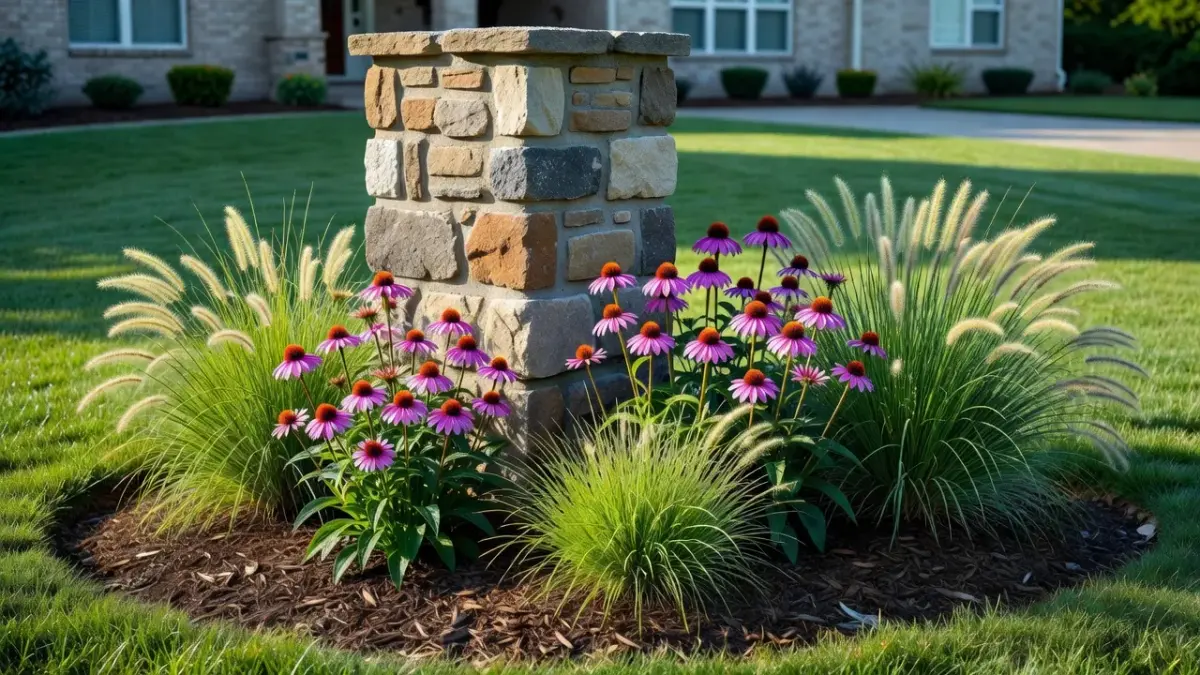
Native plants like purple coneflower, butterfly weed, blue false indigo, and little bluestem work best for mailbox landscaping because they naturally adapt to regional soil conditions and severe weather. The Lady Bird Johnson Wildflower Center lists native perennials as the highest-yield choice for drought resilience and pollinator support in exposed garden sites.
Selecting native species eliminates the need for chemical fertilizers, which can easily wash off narrow curb strips and run into storm drains during heavy rainstorms.
- Butterfly Weed (Asclepias tuberosa): A taprooted native that thrives in poor, sandy soil and produces bright orange clusters that attract monarch butterflies.
- Purple Coneflower (Echinacea purpurea): Handles heat radiation from concrete streets and keeps rigid stems intact during summer storm gusts.
- Little Bluestem (Schizachyrium scoparium): A native bunchgrass that shifts from blue-green summer foliage to copper-orange tones in late fall.
- Blanket Flower (Gaillardia pulchella): Thrives in lean, dry soils where moisture drops rapidly after summer downpours.
Which evergreen shrubs, perennials, and ornamental grasses suit a mailbox planting?
Compact evergreen shrubs like boxwoods, hardy perennials like catmint, and dwarf ornamental grasses like fountain grass offer year-round structure without overgrowing roadside boundaries. A balanced mailbox garden layers these three plant categories by height, placing groundcovers in front and mid-height perennials near the main post base.
| Layer | Plants | Height |
|---|---|---|
| Back | Dwarf Boxwood, Inkberry | 18"-24" |
| Middle | Catmint, Coneflower | 12"-18" |
| Front/Edges | Blue Fescue, Phlox | 6"-12" |
These layers are arranged vertically around the mailbox post, with the evergreen anchor at back, hardy perennial in middle, and dwarf grass or groundcover at front and edges.
Evergreen Shrubs for Year-Round Structure
- Dwarf English Boxwood (Buxus sempervirens 'Suffruticosa'): Slow-growing shrub that keeps dark green leaves through winter freeze cycles.
- Inkberry Holly (Ilex glabra 'Gem Box'): A native alternative to boxwood that resists salt spray and maintains a neat rounded shape.
- Dwarf Japanese Garden Juniper (Juniperus procumbens 'Nana'): Spreads horizontally along stone borders without rising more than 8 inches off the ground.
Hardy Perennials for Seasonal Color
- Catmint (Nepeta racemosa 'Walker's Low'): Yields soft gray-green foliage and aromatic blue blossoms that repel deer and rabbits.
- Coreopsis (Coreopsis verticillata 'Moonbeam'): Produces butter-yellow blossoms on thread-leaf foliage from June through September.
Ornamental Grasses for Texture and Motion
- Blue Fescue (Festuca glauca 'Elijah Blue'): Forms tight 10-inch mounds of silvery-blue blades that contrast sharply against dark wood mulch.
- Fountain Grass (Pennisetum alopecuroides 'Little Bunny'): Stays under 12 inches high while showing soft white flower plumes in late summer.
How should plant scale and foundation plantings be considered for mailbox landscaping?
Plant scale and foundation plantings around a mailbox must maintain a 3-to-1 ratio between total bed width and post height while leaving clear line-of-sight clearance for oncoming traffic. A standard 4-foot mailbox post looks top-heavy if surrounded by a tiny 1-foot ring of mulch, but it gets overwhelmed if planted with shrubs taller than 30 inches.
When designing front yard curb appeal, connect the mailbox bed visually to your home's main entry landscaping using matching materials like stackable stone borders or identical mulch tones. You can reference broader front yard planning tactics in our curb appeal front yard landscaping guide to sync your main porch design with street-level plantings.
- Driveway Sightlines: Keep plants under 24 inches within a 10-foot radius of the driveway edge to meet municipal sight-triangle safety laws.
- Proportion to Curb: A 4x6 foot oval bed provides enough root space for 3 to 5 plant specimens without creeping into asphalt lanes.
- Proximity to Street Infrastructure: Leave an 8-inch buffer from the back of the curb to prevent lawn mowers and snowplow blades from shredding foliage.
Mailbox Landscaping Use Cases and Design Comparison
Choosing the right design plan depends on sun exposure, soil depth, municipal constraints, and budget realities. As of October 2026, basic nursery stock for a standard 4x6 foot mailbox garden costs between $120 and $350 in materials.
| Use Case / Scenario | Ideal Plant Combination | Average Material Cost | Maintenance Level | Visual Planning Approach |
|---|---|---|---|---|
| Renova AI Layout Tool | Supports all exterior plant & material choices | Free (3 renders), then $59/year | Zero manual labor | Upload curb photo for 3D visual styles |
| 1. Full-Sun Suburban Curb | Dwarf Daylilies, Russian Sage, Blue Fescue | $150 – $220 | Low (Prune once in spring) | Match mulch tone to house foundation beds |
| 2. Shady Wooded Driveway | Autumn Fern, Hosta ('Halcyon'), Coral Bells | $180 – $280 | Low (Seasonal leaf cleanup) | Combine variegated leaves for dark corners |
| 3. High Salt & Snow Region | Creeping Phlox, Wintercreeper, Sedum | $120 – $190 | Very Low (Salt tolerant) | Install raised stone border edge |
| 4. Strict HOA Height Limit | Blue Fescue, Creeping Thyme, Dwarf Boxwood | $160 – $240 | Medium (Quarterly edge trimming) | Keep clear 24-inch vertical height limit |
| 5. Arid Desert Xeriscape | Agave, Blue Euphorbia, Black Lava Rock | $200 – $350 | Extremely Low (Drip line irrigation) | Pair architectural succulents with river rock |
Scenario 1: Full-Sun, Road-Salt Exposed Suburban Curb
A full-sun suburban curb requires heat-hardy perennials and salt-tolerant groundcovers that can withstand asphalt surface temperatures exceeding 110°F in midsummer. Roadside soil along suburban streets often contains high concentrations of sodium chloride from winter de-icing operations, which burns sensitive root systems.
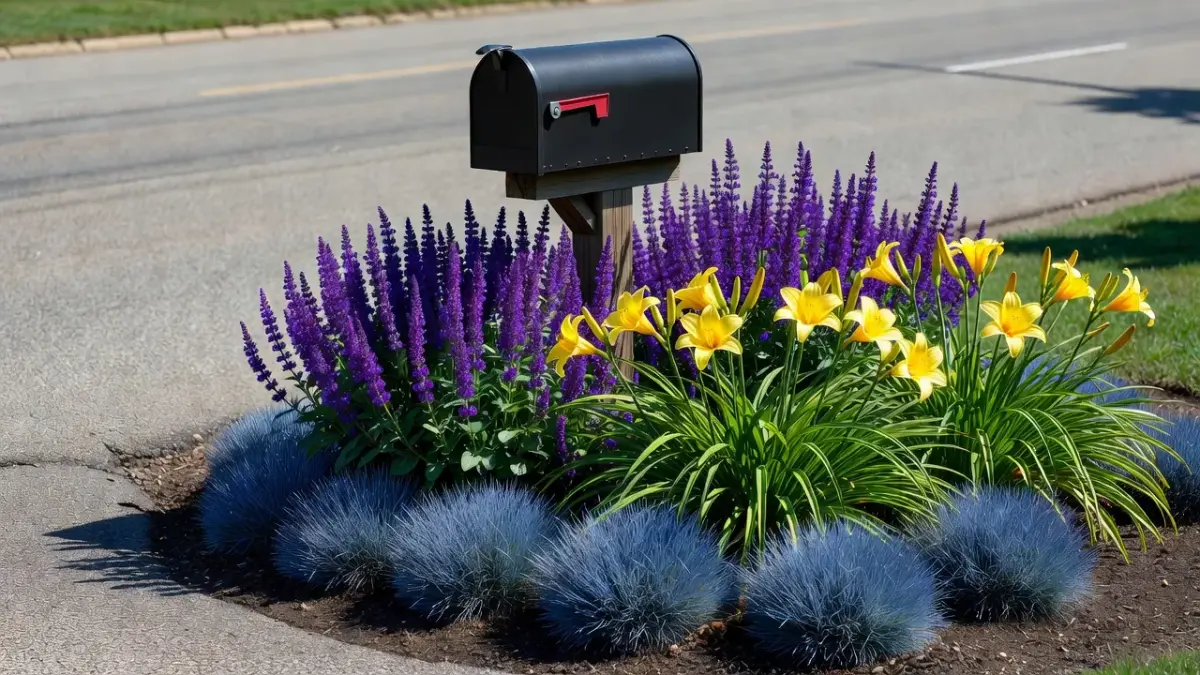
To design this layout, surround your post with a 3-inch layer of hardwood mulch and install drought-resistant species like Sedum and Salvia.
Recommended Plant Palette
- Russian Sage (Salvia yangii 'Little Spire'): Stands up to intense vehicle exhaust and reflected street heat.
- Dwarf Daylily (Hemerocallis 'Happy Returns'): Blooms repeatedly in direct, unshaded sunlight.
- Creeping Thyme (Thymus serpyllum): Releases a fresh scent when stepped on by mail carriers or lawn crews.
Installation Steps
- Dig out turfgrass in a 4x6 foot oval around the mailbox post to a depth of 4 inches.
- Mix 2 cubic feet of organic compost into the native soil to improve drainage and break up compacted clay.
- Edge the perimeter with flexible paver edging or natural flagstone to block lawn turf from re-entering.
- Position plants, water thoroughly, and add a 3-inch layer of shredded bark mulch.
Scenario 2: Shady Wooded Driveway Enclave
Shady mailbox locations beneath large tree canopies require shade-tolerant perennials with variegated foliage to brighten dark roadside edges. Sites under mature oak or maple trees face intense root competition for water, making organic soil conditioning mandatory during bed construction.
Using species detailed in plant research from the Missouri Botanical Garden, shade-loving options like Hosta and Heuchera thrive under low-light forest borders.
- Hosta (Hosta 'Halcyon'): Features thick blue-blue leaves that resist slug damage and brighten dim driveways.
- Coral Bells (Heuchera 'Palace Purple'): Adds deep burgundy foliage color year-round in USDA hardiness zones 4 through 9.
- Japanese Forest Grass (Hakonechloa macra 'Aureola'): Cascades over bed borders with yellow-striped bamboo-like foliage.
If your mailbox area transitions into a larger timber framework or rustic property, you can connect your design style using our guide on rustic modern house exterior materials.
Scenario 3: Slope and Drainage-Prone Roadside
Sloped roadsides demand deep-rooted perennials and heavy river rock borders to prevent soil erosion during heavy rain storms. Water running down gutter lines quickly strips loose topsoil and fine wood mulch from flat mailbox beds.
Installing hardscaping anchors alongside fibrous-rooted grasses stabilizes bank soil permanently.
       [ HIGH SIDE OF SLOPE ]
                 |
        ( Terraced Stone Edge )
                 |
      [ Plant: Little Bluestem ]  <-- Deep roots anchor soil
                 |
      [ Plant: Creeping Juniper ] <-- Surface cover stops washouts
                 |
        ( River Rock Base Trench ) <-- Slows down rainwater runoff
                 |
       [ LOW SIDE / GUTTER LINE ]
- Creeping Juniper (Juniperus horizontalis 'Wiltonii'): Roots firmly along branches, forming a mat that pins down soil.
- Little Bluestem (Schizachyrium scoparium): Sends roots up to 5 feet deep into the ground, stabilizing steep roadside banks.
- River Rock (1 to 3-inch size): Replaces wood mulch to prevent floatation washouts during thunderstorms.
Scenario 4: Narrow HOA Strip with Strict Height Limits
Narrow HOA roadside strips require tightly manicured plant varieties that never exceed 18 inches in height or spread beyond designated property borders. Many homeowners associations issue fines if mailbox plants block line-of-sight for neighborhood traffic or extend into sidewalk paths.
Focusing on dwarf cultivars and clean structural lines ensures compliance while retaining crisp curb appeal.
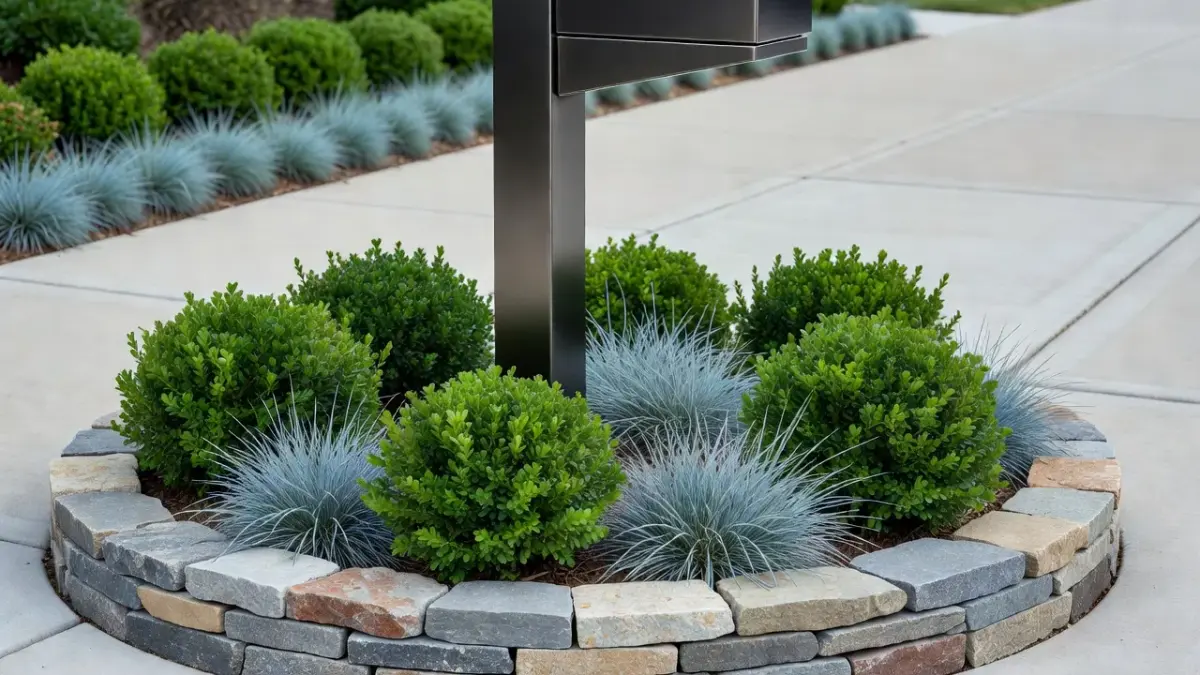
- Dwarf Boxwood (Buxus 'Green Gem'): Grows only 1 to 2 inches per year, requiring minimal shearing to keep a formal round shape.
- Blue Fescue (Festuca glauca): Maintains an exact 10-inch geometric ball shape without spreading rhizomes into neighboring yards.
- Flagstone Ring Border: Creates a clean, permanent barrier between turfgrass and ornamental plantings.
Scenario 5: Arid Desert Landscape and Xeriscaping Bed
Arid desert mailbox beds rely on succulents, gravel mulches, and drip-irrigated native plants that thrive in sandy soil with near-zero rain. In regions like Arizona, Nevada, and Southern California, traditional lawn turf near roadsides wastes water and fails under extreme radiation.
Incorporating drought-proof plants ensures long-term survival while keeping utility bills low. You can discover more regional layout tips in our detailed desert front yard landscape guide.
- Agave (Agave parryi 'Truncata'): Provides bold geometric shapes that complement modern stucco homes.
- Red Yucca (Hesperaloe parviflora): Produces tall coral flower spikes above evergreen grass-like leaves with zero supplemental water after establishment.
- Decomposed Granite or Lava Rock: Replaces organic mulches that break down rapidly under harsh desert sunlight.
How to Visualize Mailbox Landscaping Before You Plant
Using digital visualization tools allows you to preview plant layouts, color combinations, and hardscaping options on your actual home before buying materials. Spending money on large nursery shrubs or stone borders without testing spatial proportions often leads to overcrowded beds that must be dug up later.
With the Renova AI exterior design tool, planning your roadside garden takes three basic steps:
- Snap a Clear Photo: Stand 15 feet back from your curb, capturing your mailbox, post, curb line, and front yard backdrop.
- Select Your Exterior Style: Choose from over 100 design styles—including Modern, Cottage, Rustic, Minimalist, or Desert Xeriscape.
- Generate Instant Redesigns: View your front curb transformed with realistic plant beds, fresh mulch, and upgraded post materials in seconds without manual editing.
Testing design ideas digitally prevents buying plants that grow too tall, conflict with your home's trim color, or violate postal accessibility space.
Common Mailbox Landscaping Mistakes to Avoid
The most common mailbox landscaping mistakes include blocking postal carrier access, planting over underground utilities, and over-mulching around wood posts. A poorly planned curb bed can lead to postal delivery interruptions or premature post rot.
- Blocking Postal Access: Plants taller than 30 inches planted within 3 feet of the box door can trigger postal service delivery holds.
- Ignoring Underground Utilities: Failing to call 811 before digging can sever shallow cable lines, internet wires, or gas feeds buried along right-of-way strips.
- Volcano Mulching Against Wood: Piling bark mulch directly against a wooden mailbox post traps moisture and accelerates fungal wood rot at ground level.
- Planting Invasive Spreaders: Using aggressive spreaders like English Ivy or Mint near curbs will quickly overrun lawns and sidewalk cracks.
Frequently Asked Questions
How far should plants be kept from the mailbox post?
Keep plants at least 8 to 12 inches away from the base of the mailbox post to prevent moisture build-up and decay. Ensure low-growing groundcovers remain trimmed back from the path where postal delivery vehicles pull up to the box.
What plants survive car exhaust fumes near the curb?
Daylilies, Russian sage, fountain grass, and creeping phlox tolerate vehicle exhaust fumes and road dust exceptionally well. These tough species feature thick foliage coatings that resist air pollution damage along busy suburban roads.
How do I prevent dog urine from killing mailbox flowers?
Install a low 6-inch stone border around your garden bed or choose salt-hardy plants like creeping phlox, blue fescue, and sedum. You can also spray natural citrus repellents around the bed border to deter pets.
Can I plant climbing vines on my mailbox post?
Yes, but only choose non-woody, lightweight vines like clematis or annual morning glories. Avoid heavy woody vines like wisteria or aggressive clingers like English ivy, which damage wood posts and obscure address numbers.
What is the best mulch for roadside mailbox beds?
Shredded hardwood mulch is the best choice for roadside beds because its interlocking fibers resist blowing away from passing car wind shear. Heavy river rock is ideal for sloped streets where stormwater runoff flushes light wood chips away.
Do I need to call 811 before digging a small mailbox garden bed?
Yes, always call 811 before digging, even for a shallow 4-inch plant bed near the road. Utility providers frequently bury fiber optic lines, gas lines, and electrical conduits within public right-of-way easements along the curb.