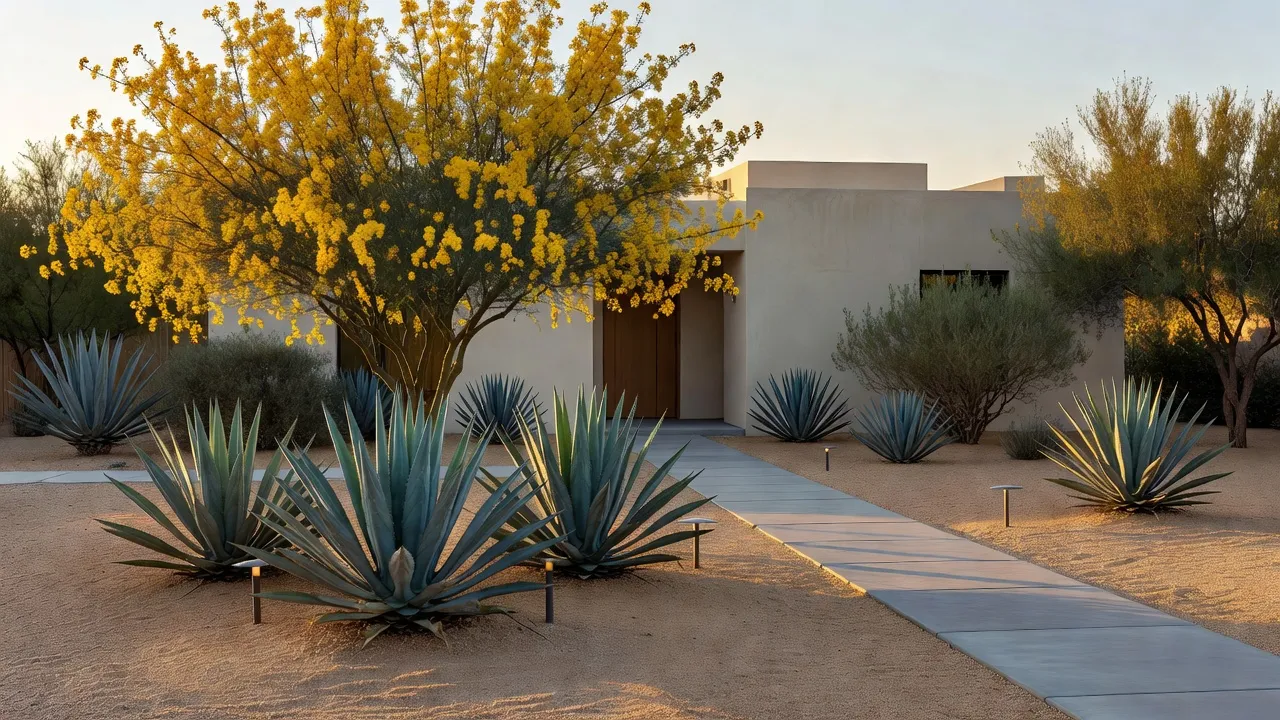
A high-impact desert front yard achieves curb appeal by replacing high-water turf with sculpted native flora, multi-tonal hardscapes, and low-voltage architectural lighting. As of September 2026, homeowners across the American Southwest are moving away from outdated, flat rock beds toward textured, multi-layered xeriscapes. By pairing architectural plants like blue agave with decomposed granite and local boulders, you can create a high-end look that slashes outdoor water use by up to 70 percent.
What are the latest trends in desert front yard landscaping for curb appeal?
Modern desert front yard trends focus on warm earth tones, multi-level hardscaping, structural specimen plants, and integrated low-voltage warm LED lighting. The era of wall-to-wall red crushed rock and sparse cactus arrangement is completely out of date. Today's desert designs prioritize organic lines, sunken or raised visual depth, and rich color contrast against home exteriors.
Key design trends shaping front yards in 2026 include:
- Warm tone material blending: Designers are replacing cold blue gravel with gold, tan, and soft beige crushed granite to complement residential stucco and wood accents.
- Architectural micro-mounding: Elevating planting areas by 6 to 18 inches creates topographical interest on flat suburban lots.
- Negative space and ground cover: Rather than covering every square foot with plants, high-contrast negative space using decomposed granite makes individual succulents pop.
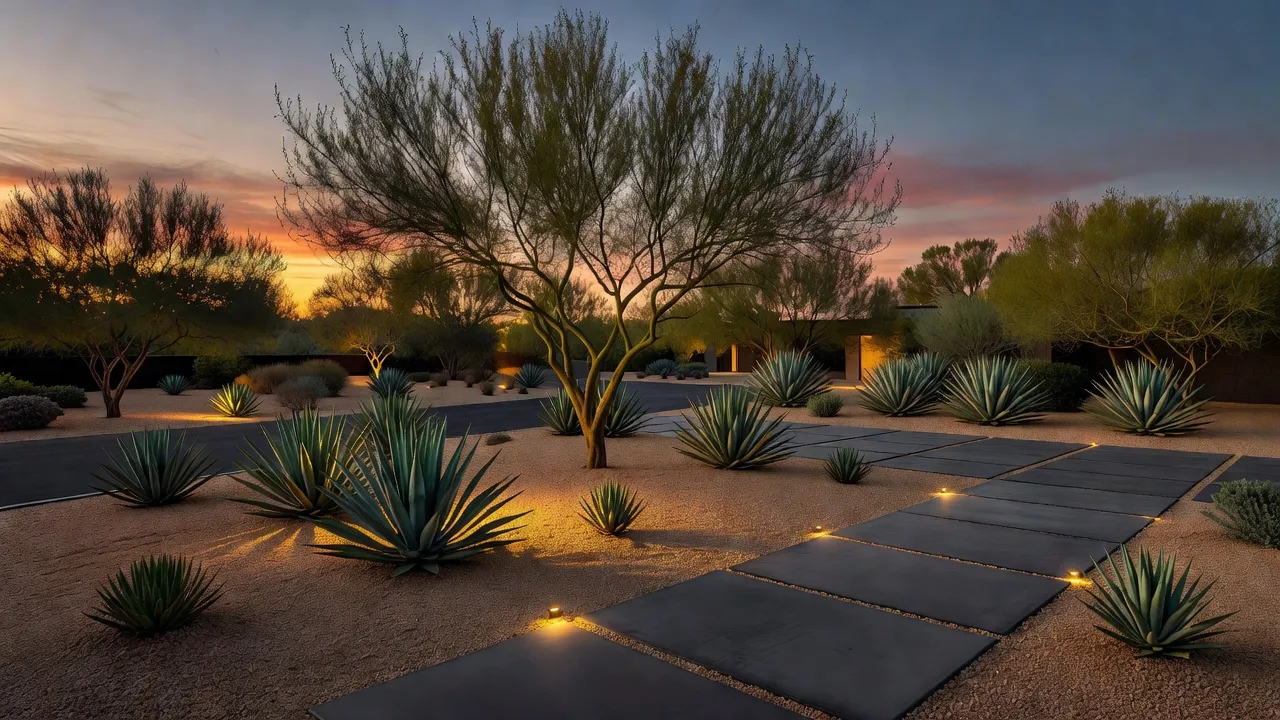
- Dark sky exterior lighting: Downward-facing step lights and subtle ground spotlights illuminate specimen trees like Palo Verde without creating light pollution.
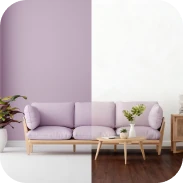
- AI-assisted layout visualization: Homeowners are turning to instant preview apps like Renova AI to visualize xeriscapes on their actual home before digging up dirt.
Which plants are popular for desert front yards (agave, palo verde, mesquite, ocotillo)?
The most popular desert front yard plants are Parry's agave, 'Desert Museum' palo verde, velvet mesquite, and ocotillo because they provide bold architectural shapes and thrive in extreme heat. Selecting plants with varying mature heights creates a full, balanced garden structure that looks intentionally designed year-round.
Here is how these staple species perform in front yard curb appeal applications:
Agave (Agave parryi & Agave americana)
Agaves serve as low-profile focal points with geometric leaf rosettes that look like sculpted art. Parry's Agave (Agave parryi) stays compact at roughly 2 to 3 feet wide, making it perfect for entryways and walkway borders. Blue Agave (Agave americana) grows much larger (up to 6 feet wide) and provides intense color contrast against dark grey stone or warm stucco.
Palo Verde ('Desert Museum' Hybrid)
The 'Desert Museum' Palo Verde is the preferred canopy tree for desert curb appeal because it is thornless and produces vivid yellow spring blooms. Unlike wild Palo Verde species, this hybrid grows rapidly, creates filtered shade that lowers ground surface temperatures, and leaves minimal leaf litter on paved entryways.
Mesquite (Velvet & Thornless Chilean)
Velvet Mesquite and Thornless Chilean Mesquite provide organic, sweeping branch structures that frame multi-story home facades. They offer soft, feathery foliage that sways in the wind, breaking up the hard geometric angles of modern desert architecture.
Ocotillo (Fouquieria splendens)
Ocotillos offer tall, whip-like vertical stems that reach 10 to 15 feet, providing striking height without casting dense shade. When planted near entry pillars or behind low masonry walls, their green leaves and bright red spring flowers draw the eye upward, increasing perceived home scale.
What materials—gravel, pavers, boulders, decomposed granite—work best for desert yards?
Decomposed granite and surface boulders work best for ground coverage and structure, while porous concrete pavers create clean, walkable path entryways. Combining two or three distinct stone sizes generates visual rhythm and prevents your front yard from looking like a uniform parking lot.
| Material | Recommended Size | Primary Use | Curb Appeal Contribution |
|---|---|---|---|
| Decomposed Granite (DG) | 3/8" minus | Ground cover | Warm, seamless base tone |
| Crushed River Rock | 1" to 3" screened | Dry creek beds | Visual drainage & depth |
| Surface Boulders | 18" to 36" rugged | Anchor features | Natural height & scale |
| Porous Concrete Pavers | 12" x 24" format | Walkways/Entry | Clean architectural lines |
Decomposed Granite (DG) vs. Standard Crushed Gravel
Decomposed granite packs down more tightly than loose gravel, creating a firm walking surface that stays in place during heavy monsoon rain. Standard crushed rock tends to shift underfoot and migrate into driveway spaces. Using a 3-inch layer of stabilized gold or beige DG yields a clean finish that suppresses weeds when paired with professional landscape fabric.
Porous Pavers and Stepping Stones
Large-format concrete pavers separated by 2 to 3 inches of dark gravel create a modern walkway rhythm. According to stone supplier technical guides on Wikipedia's Xeriscaping documentation, using permeable paving surfaces helps rainwater sink directly into root zones rather than running off into storm drains.
Local Surface Boulders
Boulders must be buried 20 to 30 percent into the soil grade to look like natural rock outcrops rather than dropped stones. Clustering boulders in odd numbers (three or five) next to agaves or soft grasses grounds the surrounding planting bed.
What are desert front yard landscaping trends in Arizona, California, and Nevada?
Desert landscaping trends vary by state based on local water conservation incentives, municipal turf removal mandates, and regional climate variations. While all three states emphasize drought-hardy plants, municipal policies heavily dictate material choices and layout structure.
Arizona (Phoenix, Tucson, Scottsdale)
Arizona trends favor native Sonoran Desert flora combined with mid-century modern masonry and shade structures. Phoenix homeowners prioritize high-canopy trees like Palo Verde and Mesquite to mitigate summer heat pockets around front windows. Tucson design guidelines strictly emphasize native saguaro preservation and rainwater harvesting basins built directly into front lawn grades.
California (Palm Springs, Inland Empire, San Diego County)
California desert yards frequently blend Mediterranean aesthetics with desert xeriscaping. Palm Springs modernism heavily influences California front yards, utilizing stark white gravel beds, architectural agaves, and horizontal slat wood fencing. The California Department of Water Resources enforces strict landscape water budget limits, driving widespread adoption of drip irrigation systems and synthetic lawn accents in covered porticos.
Nevada (Las Vegas, Henderson)
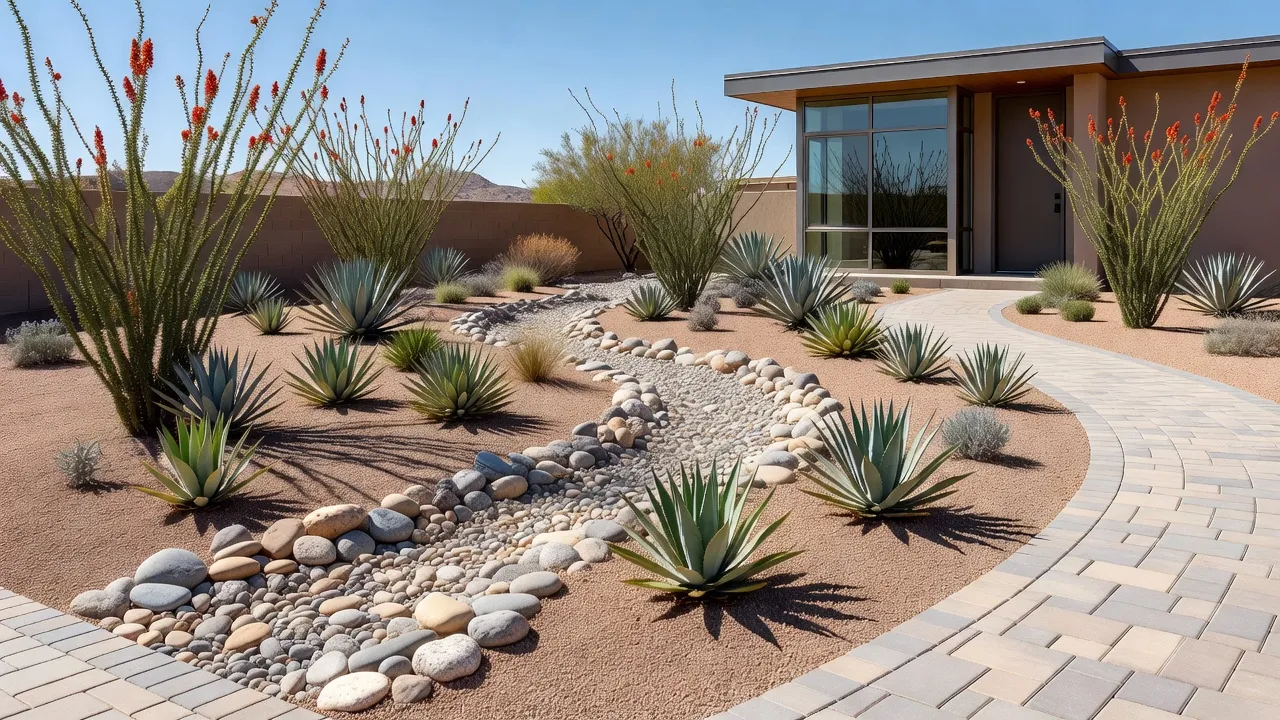
Nevada leads the region in aggressive turf replacement, where non-functional grass is largely restricted. The Southern Nevada Water Authority offers cash incentives up to $3 per square foot for grass removal, causing homeowners to completely strip front lawns. Current Las Vegas trends favor multi-tonal river rock dry creek beds, decorative boulder clusters, and artificial turf accents restricted strictly to enclosed courtyard spaces.
5 Practical Scenarios for Desert Front Yard Transformations
Every home presents a unique set of constraints, ranging from steep slopes and tiny urban footprints to strict HOA rules. Below are five real-world scenarios showing how to tailor desert materials and layouts to specific property needs.
Scenario 1: The Small Suburban Lot with Turf Removal Mandates
When converting a small 400-square-foot front lawn into a xeriscape, focus on scale and clean grid lines to prevent clutter. Overcrowding a compact front yard with too many plant species makes the entrance look chaotic.
- Base Material: Stabilized 3/8-inch Decomposed Granite in Mojave Gold.
- Specimen Plants: 3 Parry's Agaves, 1 'Desert Museum' Palo Verde anchored in the corner.
- Walkway: 18x36-inch grey concrete stepping slabs with 3-inch gravel gaps.
- Water Strategy: Single-line drip irrigation with automated smart timer.
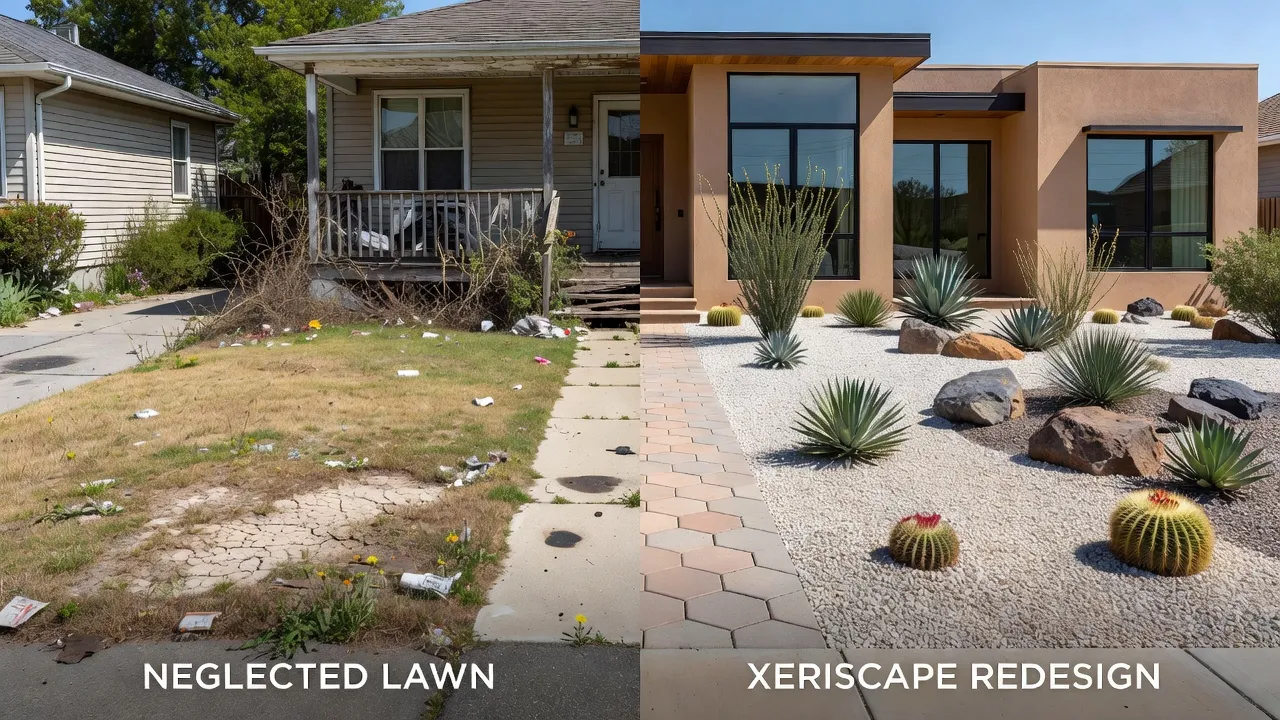
Prior to starting excavation, many homeowners upload a photo of their front lawn to the Renova AI app on iOS. You can quickly see how your facade looks with modern desert landscaping versus a traditional rock yard without drawing complex layout files or paying expensive designer fees up front.
Scenario 2: The Mid-Century Modern Ranch Front Yard
Mid-century ranch homes require low, horizontal planting profiles that complement wide rooflines. High, dense hedges block architectural facade lines and hurt curb appeal.
- Base Material: Dark grey basal crushed stone paired with smooth river pebbles near the foundation.
- Specimen Plants: Golden Barrel Cacti, Ocotillo planted near garage corner pillars, and Blue Euphorbia.
- Hardscape Accents: Horizontal composite wood planter boxes and low-voltage black cylinder uplights.
- Color Palette: Pairs exceptionally well with muted exterior paint shades; review our guide on Sherwin-Williams exterior paint color combinations to coordinate garage doors and trim with raw stone undertones.
Scenario 3: The Sloped Front Yard Needing Drainage Control
Sloped desert front yards suffer from topsoil erosion during sudden desert downpours unless stabilized with heavy stone. Smooth gravel will wash down the driveway during heavy rain if slope hydraulics are ignored.
- Erosion Fix: Terraced low retaining walls using split-face concrete block or stackable sandstone.
- Drainage Feature: A curved dry creek bed lined with 4 to 8-inch river cobble running diagonally down the slope.
- Plant Anchors: Deep-rooting shrubs such as Texas Sage (Leucophyllum frutescens) and Creosote bushes along upper embankment ridges.
Scenario 4: The Zero-Maintenance Rental or Investment Property
For rental properties, install high-durability, thornless desert flora that survives even if drip systems fail briefly. Avoid species with messy drop cycles or aggressive thorns that create tenant liability concerns.
- Base Material: 1/2-inch crushed granite rock (heavy enough to resist leaf blowers).
- Specimen Plants: Red Yucca (Hesperaloe parviflora) and Thornless Chilean Mesquite.
- Maintenance Level: Ultra-low; requires trimming only once per year in late winter.
- Hardscape: Continuous poured concrete walkway with stamped border edges.
Scenario 5: The Large Estate Entry Way Needing Scale and Depth
Expansive front yards need large-scale focal features to avoid looking empty or sparse. Small 1-gallon plants get swallowed up on a multi-thousand-square-foot front property lot.
- Focal Points: Multi-trunk Saguaro cactus (where native and legal) or a mature 15-foot Ocotillo cluster.
- Hardscape Features: Circular paver driveway apron centered around a raised masonry boulder planter.
- Plant Stratification: Layer taller desert trees at property edges down to low carpet succulents near the front stoop. For additional entry structure ideas, explore our overview on landscape for curb appeal.
Comparing Desert Yard Planning Tools and Layout Approaches
Planning a desert landscape overhaul requires choosing between DIY visualizers, professional landscape architects, and automated visual design software. The right path depends on your budget, timeline, and whether you need stamped engineering plans or visual concept approval.
| Design Approach | Setup Time | Estimated Cost | Manual Editing Needed? | Best For |
|---|---|---|---|---|
| Renova AI (Visual Generator) | Seconds | Free / $59 year | No (Fully Automated) | Instant front yard styling |
| Full Landscape Architect CAD | 3 to 6 weeks | $1,500 - $4,000 | High (Manual Drafting) | Complex construction plans |
| Traditional Paper Grid Drawing | 4 to 8 hours | $20 (Materials) | High (Manual Erasing) | Basic DIY plant spacing |
| HOA Committee Sample Boards | 1 to 2 weeks | $100 - $300 | Moderate | Material board submissions |
Using an AI visual generator like Renova AI allows you to bypass complex CAD programs. You snap a photograph of your current front yard, select a style like Minimalist or Modern, and let the tool render realistic desert hardscaping directly over your existing home image. It gives you immediate clarity on material choices before spending thousands on stone delivery.
How to Plan and Execute Your Desert Front Yard Makeover
A successful desert front yard conversion requires stripping turf, fixing drainage grades, laying weed barriers, installing drip lines, and spreading hardscape materials from heaviest to lightest. Skimping on soil preparation leads to recurring weed outbreaks through your fresh gravel beds.
Follow these practical steps to execute your installation smoothly:
-
Calculate Material Coverage Correctly:
One ton of 3/8-inch decomposed granite covers roughly 100 square feet at a 2-inch depth. Ordering too little leads to color batch mismatched stone later. -
Install Drip Lines BEFORE Stone Delivery:
Run 1/2-inch main poly tubing beneath paver bases and dig 6-inch trenches for lateral lines to each plant location. Place 1-gallon-per-hour emitters near root balls. -
Incorporate Visual Inspiration:
Curate references showing plant combinations that match your stucco color. Review our collection of beautiful gardens images to analyze plant contrast and shadow patterns under natural sunlight. -
Anchor Big Elements First:
Set 500-pound boulders and 15-gallon trees into position using machinery before hand-spreading tons of crushed rock. Spreading rock first means digging it back up to seat boulders correctly. -
Lock Down the Perimeter:
Use commercial metal or concrete edging along driveways and sidewalks. Without rigid edging, loose rock spills onto concrete paths every time it rains or winds blow.
Frequently Asked Questions
How much does it cost to convert a front yard to desert landscaping?
A front yard desert landscape conversion costs between $4 and $12 per square foot for basic gravel, plants, and drip lines. Professional installations with pavers, custom lighting, and large specimen trees typically range from $8,000 to $22,000 depending on lot size and earthmoving requirements.
Does a desert front yard increase home resale value?
Yes, a professionally designed desert front yard boosts home resale value by enhancing curb appeal and lowering monthly water utility bills. Buyers in arid states like Arizona, Nevada, and California actively seek homes with low-maintenance, drought-hardy landscaping over dying lawns.
How do I prevent weeds from growing through decomposed granite?
Prevent weeds by laying heavy-duty woven polypropylene weed barrier fabric beneath a 3-inch layer of compacted decomposed granite. Spray emerging weeds early with organic horticultural vinegar during warm spring months before root systems establish under the rock layer.
What is the lowest maintenance plant for a desert front yard?
Parry's Agave and Red Yucca are among the lowest maintenance desert plants available. They require zero pruning, survive on minimal drip irrigation once established, and maintain crisp structural shape through extreme summer heat and winter freezes.
Can I install desert landscaping myself without a contractor?
Yes, you can install basic gravel, plants, and drip systems yourself if you can handle heavy physical labor. However, grading steep slopes, setting large boulders over 200 pounds, and pouring custom paver pathways often requires heavy equipment and professional crews.
Do desert front yards require irrigation systems?
Yes, most new desert plants require drip irrigation for the first 1 to 2 years to establish deep root systems. Once fully mature, native species like Palo Verde and Mesquite survive on natural rainfall, but supplemental drip watering during summer droughts keeps foliage dense and colorful.
Which ground cover rock stays coolest in direct sun?
Light-colored beige, gold, or light tan decomposed granite stays noticeably cooler under intense summer sun than dark grey, brown, or black volcanic basalt rock. Lighter stone reflects heat away from plant root zones and home exterior walls.