
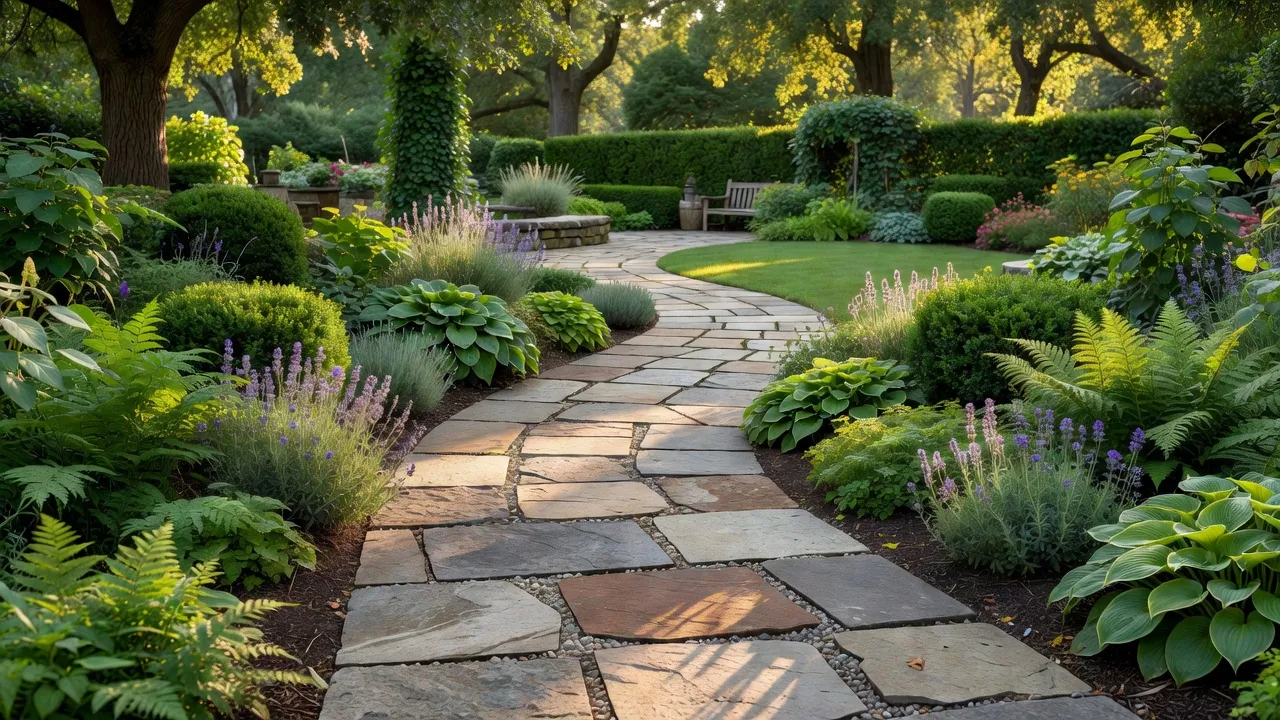
Flagstone walkway ideas range from rustic dry-laid stepping stones set in creeping thyme to formal ashlar-pattern mortared paths, with total installation costs averaging $15 to $30 per square foot as of October 2026. Choosing the right approach depends on your slope, local climate, and whether you want to pay a professional mason or tackle a weekend DIY project. The upfront stone prices only tell half the story, so factoring in base gravel, excavating equipment, and joint filler is key to avoiding budget surprises.
Before digging up your yard, visualizing how different stone shapes and border styles match your exterior architecture saves thousands in wasted materials. Apps like Renova AI let you upload a quick photo of your front yard or garden and preview garden pathways, exterior floor swaps, and landscape styles in seconds.
What are the most popular flagstone walkway design trends?
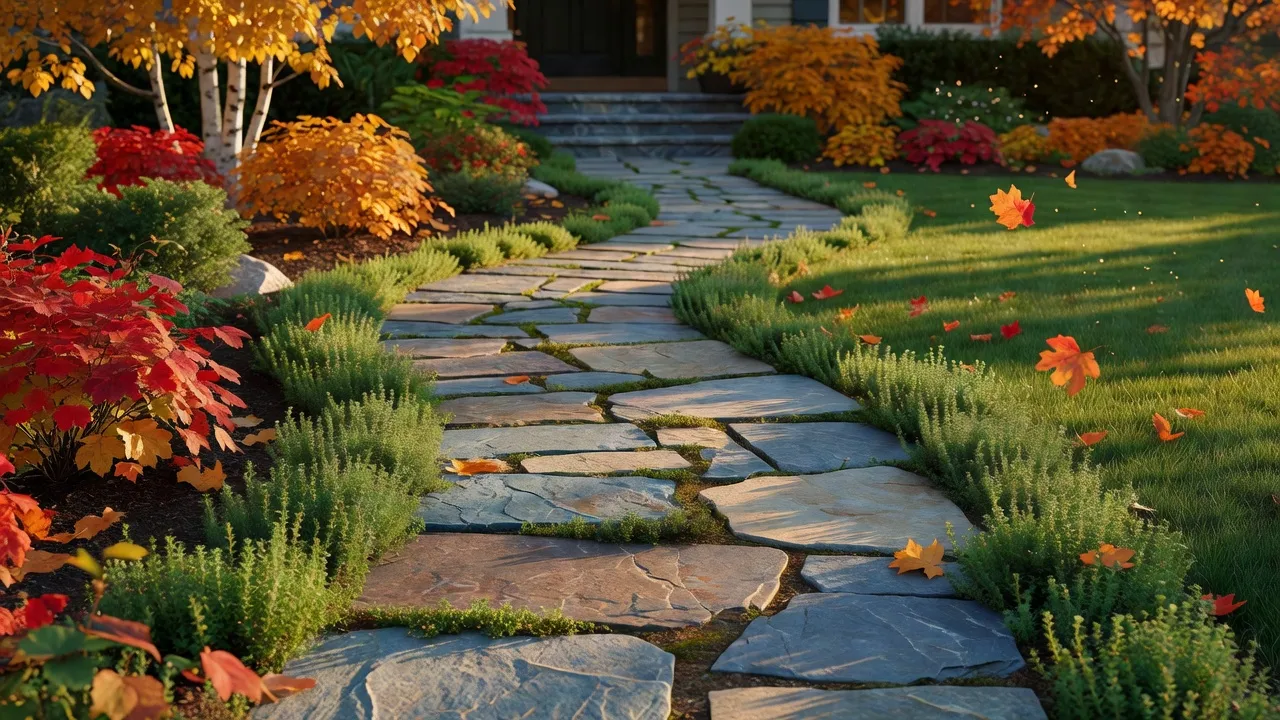
The most popular flagstone walkway trends in 2026 focus on organic, curving paths filled with living ground covers and wide, oversized irregular stones. Homeowners are moving away from sharp geometric lines in favor of naturalistic pathways that blend into surrounding plant beds.
Here are the four design styles dominating modern residential landscapes:
- Living Joint Pathways: Instead of hard mortar, homeowners fill 2-inch gaps between irregular flagstones with low-growing perennials like creeping thyme, dwarf mondo grass, or Irish moss.
- Mixed-Material Borders: Combining dark grey bluestone flagstone with steel edging, dark basalt gravel, or brick soldier courses creates high-contrast borders that keep surrounding soil in place.
- Stepping Stone Spacing: Spacing large flagstones 24 to 30 inches apart on center creates a casual strolling path through lawns or mulched garden beds at half the material cost of a continuous stone path.
- Xeriscaped Desert Paths: Pairing warm buff sandstone or rust-colored Arizona flagstone with decomposed granite matches warm-toned homes. If you want to boost your home's entry aesthetic, exploring a curb appeal desert landscape front yard layout can provide design inspiration for dry climates.
Which flagstone walkway styles do landscapers recommend?
Landscapers generally recommend dry-laid irregular bluestone or sandstone for casual backyard gardens, and mortared ashlar flagstone on a concrete pad for high-traffic front entrances. The best style depends directly on how much foot traffic the path receives and how much structural shifting your soil experiences during winter freeze-thaw cycles.
- Cottage and Rustic: Irregularly shaped flagstones with rough edges set loosely in pea gravel or soil. It works naturally alongside informal plantings, perennials, and traditional wild gardens.
- Modern Minimalist: Large-format, saw-cut rectangular flagstones laid in an offset linear bond with narrow 1/4-inch polymeric sand joints. The clean grid mirrors modern architectural lines.
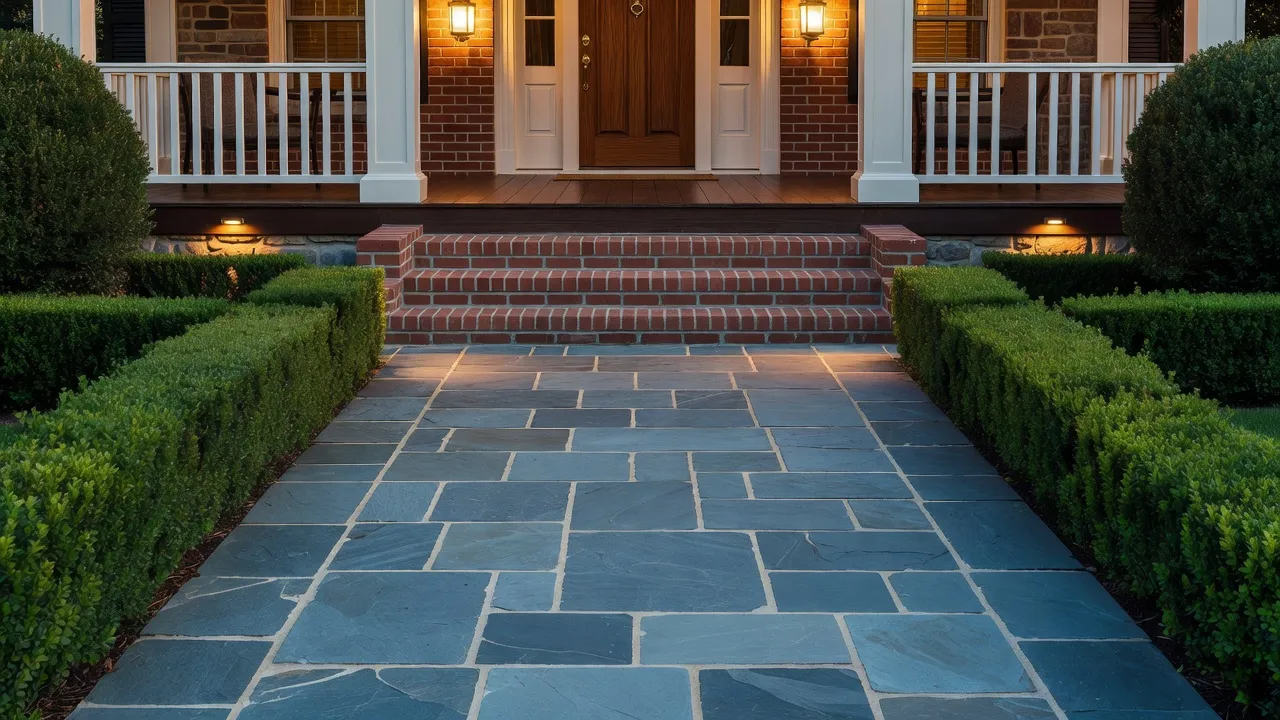
- Craftsman and Traditional: Thermal-finish bluestone or dimensional slate cut into repeating rectangular dimensions (12x12, 12x18, 18x24 inches). This structured geometric look complements historic brick and wood-sided homes.
If you are planning an overall property design, pairing your walkway layout with a cohesive cottage garden design plan ensures your softscape and hardscape balance each other out.
What flagstone walkway patterns are best (random, ashlar)?
Random irregular patterns are best for informal, winding garden paths, while ashlar rectangular patterns suit formal, straight entryways. Your pattern choice dictates not only the final look but also your total material scrap rate and installation speed.
| Aspect | Random (Irregular / Crazy Paving) | Ashlar (Cut Rectangular Grid) |
|---|---|---|
| Layout | Irregular shapes (A, B, C, D, E, F fit together without aligned edges) | Rectangular pieces arranged in aligned rows and columns (A, B, C in top row; D, E, F in bottom row) |
| Fitting time | High (puzzle piece labor) | |
| Aesthetic | Natural, rustic organic | |
| Material waste factor | 15–20% | 5–10% |
| Installation | Fast straight-line | |
| Material purchase cost | Higher |
Irregular (Random "Crazy Paving")
Random flagstone uses natural quarry-broken slabs of varied shapes and sizes. Fits together like an oversized jigsaw puzzle.
- Pros: Offers a custom, handcrafted appearance and hides natural stone color variations.
- Cons: Extremely labor-intensive to lay down because every stone must be test-fitted and hand-chipped to maintain consistent joint gaps. Expect a 15% to 20% waste factor from broken edges.
Ashlar (Dimensional / Cut Pattern)
Ashlar flagstone consists of factory-sawn rectangular and square stones cut to precise dimensions. Stones are laid in a repeating or semi-random geometric layout where no continuous joint line runs longer than eight feet.
- Pros: Faster to lay once your gravel base is flat. Produces a smooth, trip-free walking surface that meets standard home accessibility needs.
- Cons: Cut stone carries a 20% to 40% price premium per ton at the stone yard compared to raw irregular stone.
Dry-laid vs mortar-set: which is better for flagstone walkways?
Dry-laid flagstone is better for budget-conscious homeowners and flexible DIY projects, whereas mortar-set flagstone is superior for permanent, zero-weed front walkways. Choosing between these two installation methods changes your project budget, preparation timeline, and maintenance routine.
According to hardscaping installation benchmarks published by Angi, professional flagstone installation ranges from $15 to $30+ per square foot depending on structural base requirements.
Dry-Laid Installation (Sand & Gravel Base)
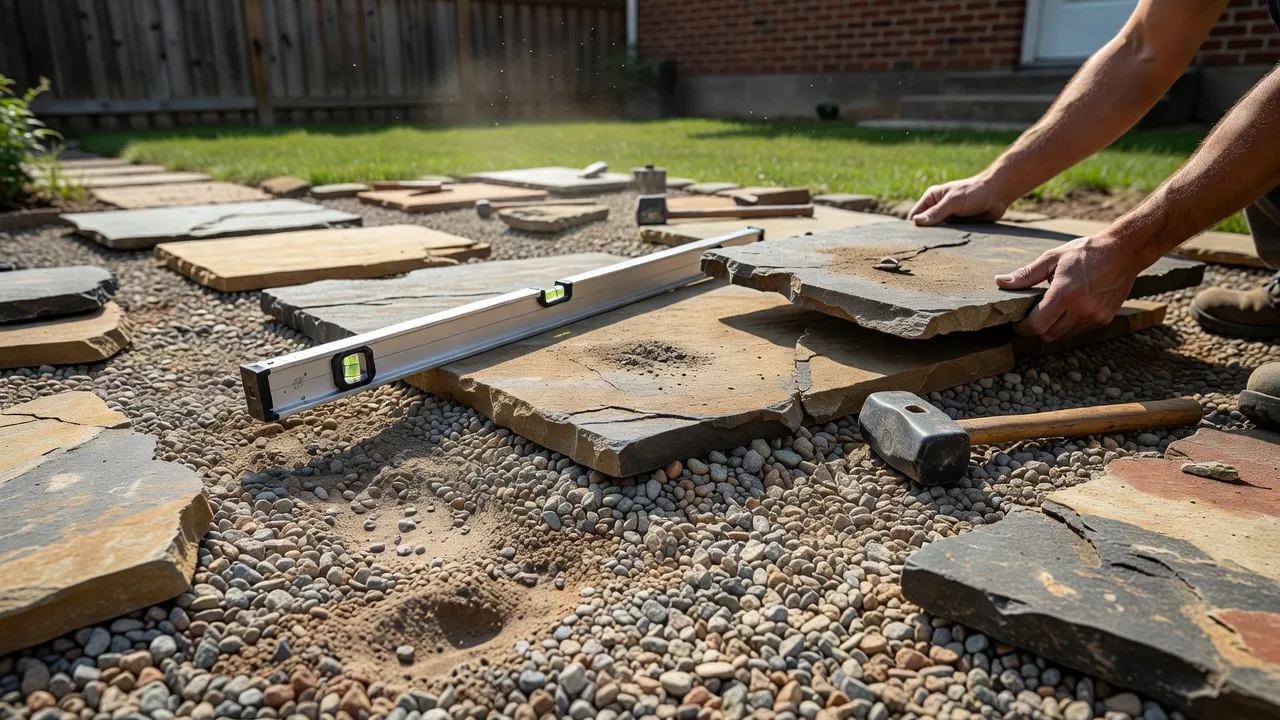
Dry-laid flagstone rests on a compacted base of crushed aggregate stone (4 to 6 inches deep) topped with a 1-inch layer of sand or stone dust. Joints are filled with polymeric sand, pea gravel, or soil.
- Total Cost: $12 to $22 per square foot (materials + labor).
- Flexibility: Excellent. If the ground shifts during winter frost, individual stones flex without cracking. Resetting a sunken stone takes five minutes with a trowel and small bag of sand.
- Drawbacks: Weeds can eventually sprout in joints if sand isn't swept clean annually. Polymeric sand may wash out over time on steep slopes.
Mortar-Set Installation (Concrete Slab Base)
Mortar-set flagstone is buttered with masonry mortar and laid onto a reinforced, poured concrete slab base (4 inches thick). Masonry mortar fills the joints flush with the stone tops.
- Total Cost: $25 to $40+ per square foot.
- Durability: Heavy-duty and permanent. Creates a solid surface with zero weed growth between joints.
- Drawbacks: According to construction guidelines from the Portland Cement Association, rigid mortar joints will crack if the underlying concrete foundation moves or lacks properly engineered drainage. Repairs require grinding out cracked mortar with a diamond blade.
What flagstone materials and installation tips are best?
Bluestone and quartzite are the most durable flagstone materials for freezing climates, while proper base compaction and a 1/4-inch per foot drainage pitch are essential for long-term stability. Selecting stone strictly by color without checking its mineral density is a recipe for flaking and spalling within three years.
Material Selection Guide
Geologically defined, flagstone is a flat stone split along natural bed planes, usually composed of sedimentary or metamorphic rock.
- Bluestone (Sandstone derivative): Extremely dense and slip-resistant. Available in blue-grey, full-color rust, and lilac hues. Perfect for northern climates.
- Sandstone / Arizona Flagstone: Warm beige, gold, and red tones. Easy to cut, but porous varieties can absorb water and split if exposed to severe de-icing salts.
- Slate: Vibrant dark charcoal, red, and green tones with layered textures. Looks high-end, but thin slabs can spall (flake off) in heavy freeze-thaw zones.
- Quartzite: Exceptionally hard metamorphic rock with a subtle shimmer. Highly resistant to stains, water, and weathering, though harder to cut by hand.
Key Installation Tips
- Dig Deep Enough: Excavate your path 7 to 9 inches deep for dry-laid stones. A shallow base leads to uneven stones after the first rainy season.
- Use the Right Base Layer: Use crushed stone with fines (CR-6 or 3/4-minus gravel) rather than round river pebbles. Crushed stone locks together when rolled or tamped.
- Check Stone Thickness: Buy stones that are at least 1.5 to 2 inches thick for dry-laid paths. Thin stones (1 inch or less) will snap when walked on unless set in concrete mortar.
- Maintain Drainage Pitch: Slope the walkway away from your home's foundation at a rate of 1/4 inch of drop per linear foot.
Best for tight budgets: Stepping stone paths with gravel filler
A stepping stone path filled with pea gravel or decomposed granite is the most cost-effective flagstone walkway design, costing $8 to $14 per square foot in materials. Instead of paving a continuous stone surface, you lay individual flagstones spaced 2 to 3 inches apart and fill the remaining area with inexpensive bulk gravel.
Stepping Stone with Gravel Filler (Cross-Section)
From top to bottom, the layers are:
- Topsoil
- Flagstone slabs with gravel or dust fill between them
- 1-inch bedding sand or stone dust layer
- 3 to 4-inch compacted crushed gravel base layer
- Woven landscape fabric
- Subgrade soil or dirt
Avoiding Budget Traps
The biggest hidden cost in hardscaping isn't the stone itself, it's freight delivery fees and bulk quarry drop charges. Ordering stone in small pallets (ton bags) from big-box stores often costs 40% more per pound than buying loose tons directly from a local landscape supply yard.
- Material Math: One ton of 1.5-inch thick flagstone covers approximately 80 to 100 square feet of continuous walkway. Spacing stones out with gravel extends that coverage to 150+ square feet per ton.
- Edging Is Required: Always install heavy-duty aluminum or thick plastic landscape edging along gravel paths. Without borders, surrounding gravel migrates into your lawn every time it rains.
Best for historic or cottage homes: Irregular flagstone with creeping ground covers
Irregular flagstone pathways set with living ground cover joints deliver an old-world, romantic look that softens historic brick and wood cottage exteriors. The natural green gaps soften stone edges and turn a functional walkway into an integrated garden feature.
Choosing the Right Plants
Plant choice determines how much maintenance your walkway demands:
- Full Sun Areas: Creeping thyme (Thymus serpyllum) releases a pleasant aroma when stepped on and handles light foot traffic well.
- Shade & Moisture: Irish Moss (Sagina subulata) or Scotch Moss creates a vibrant, carpet-like green cushion between stones.
- Drought-Tolerant Zones: Sedum album or dwarf mondo grass thrive with minimal water.
According to plant selection guides from the University of Minnesota Extension, ground covers planted between stepping stones require a 2-inch deep pocket of sandy loam topsoil between the stone joints rather than pure sand.
Best for high-traffic front entries: Mortared blue-ashlar flagstone with concrete base
High-traffic entryways need mortared ashlar flagstone on a concrete base to ensure a smooth, stable surface that won't trip visitors or snag snow shovels. Front steps and primary front door walkways demand a flat plane that meets local code safety guidelines.
Cost Realities for Front Entries
Building a mortared entry walkway is a long-term investment. Expect to pay between $3,000 and $7,000 for a standard 150-square-foot front entrance path built by a professional masonry crew in late 2026.
- Excavation & Disposal: Removing existing concrete slabs or soil costs $2 to $5 per square foot.
- Concrete Pour: A 4-inch rebar-reinforced slab base costs $6 to $10 per square foot in materials and labor before stone laying begins.
- Stone Laying & Mortar: Skilled mason labor runs $75 to $120 per hour for precise ashlar cutting and buttering.
To ensure your overall budget stays on track across exterior upgrades, review a comprehensive cost for home renovation breakdown before finalizing contractor agreements.
Best for sloped yards: Stepped flagstone walkways with retaining risers
Sloped yards require stepped flagstone walkways built with heavy stone risers or pressure-treated timber block frames to prevent soil erosion and hazardous footing. Attempting to lay flat flagstones on a slope steeper than 5% results in slippery footing during rain and stone drift over time.
How to Build a Stepped Flagstone Walkway
- Calculate Rise and Run: Measure total vertical drop (rise) and horizontal distance (run). Standard outdoor steps use a 6-inch rise and a comfortable 14-inch to 18-inch tread depth.
- Set Rigid Risers: Install heavy wall blocks, wall-grade flagstone risers, or 6x6 timber timbers at the front of each step landing. Anchor timbers into the ground using rebar pins.
- Pack the Tread Base: Fill behind each riser with 4 inches of compacted crushed gravel.
- Set Flagstone Treads: Lay wide, flat flagstone pieces onto the gravel bed, pitch them slightly forward (1/8 inch) so water drains off the step edge rather than pooling against the riser back.
Visualizing layout options before excavation: Using AI tools
Visualizing your landscaping ideas using AI rendering software eliminates expensive layout mistakes before you order stone deliveries or rent excavators. Hardscaping projects are permanent and heavy; moving five tons of bluestone twice because you didn't like the curve of the path is exhausting and costly.
Quick Walkway Design with Renova AI
With Renova AI, homeowners can test dozens of hardscape, plant, and patio layouts directly from their mobile device:
- Snap a Photo: Take a clear photo of your current yard, front stoop, or overgrown garden path.
- Select Style or Custom Prompt: Pick exterior designs like Modern, Farmhouse, or Rustic, or use custom prompts to request specific flagstone patterns and planting borders.
- Instant Rendering: See your yard re-imagined with custom pathways, floor swaps, and plant beds in seconds without manual editing.
Testing flagstone styles on Renova AI on the App Store is free for your first 3 generations, with full unlimited access available for $6.99 per week or $59 per year.
Flagstone walkway scenario breakdown
Comparing flagstone walkway options by material costs, base requirements, and difficulty levels helps you pick the right fit for your skills and budget.
| Walkway Scenario | Primary Material | Base & Joint Setup | Average Cost / Sq Ft (2026) | DIY Difficulty | Best Suited For |
|---|---|---|---|---|---|
| Virtual Layout & Design | Renova AI Visualization App | N/A (Digital Rendering) | 3 Free Gens ($59/yr) | Very Easy | Testing hardscape styles before excavation |
| Stepping Stone & Gravel | Irregular Sandstone / Bluestone | 3" Gravel Base + Pea Gravel Fill | $8 - $14 | Moderate | Garden side-paths & tight budgets |
| Living Joint Path | Irregular Flagstone | 4" Gravel Base + Topsoil Joints | $12 - $18 | Moderate | Cottage gardens & informal backyards |
| Linear Modern Ashlar | Cut Rectangular Bluestone | 6" Gravel Base + Polymeric Sand | $18 - $28 | Hard | Modern homes & clean-line front entries |
| Mortared Concrete Path | Thermal-finish Bluestone or Slate | 4" Reinforced Concrete Slab + Mortar | $25 - $40+ | Very Hard (Pro recommended) | High-traffic entries & long-term stability |
Frequently Asked Questions
What is the cheapest way to build a flagstone walkway?
The cheapest way to build a flagstone walkway is a dry-laid stepping stone path with gravel filler. Spacing irregular flagstones 2 to 3 inches apart and filling gaps with bulk pea gravel cuts overall stone volume in half, dropping material costs down to $8 to $14 per square foot.
How thick should flagstone be for a walkway?
Flagstone for dry-laid walkways should be at least 1.5 to 2 inches thick. Thin flagstone under 1 inch thick lacks structural strength when laid directly on gravel or sand and will crack under foot traffic unless set into wet masonry mortar over concrete.
Should you put sand or gravel under flagstone?
You should put both crushed gravel and bedding sand under flagstone. A stable walkway requires a 4- to 6-inch base layer of compacted crushed gravel (CR-6 or 3/4-minus) topped with a 1-inch layer of sharp bedding sand or stone dust to level out the stones.
How do you keep weeds from growing in a flagstone path?
To prevent weeds, install a high-quality woven geotextile landscape fabric beneath the crushed gravel base. For the surface joints, fill gaps between stones with polymeric joint sand, which hardens after misting with water to block weed growth and seed germination.
Can you lay flagstone directly on dirt or grass?
Laying flagstone directly on topsoil or grass is not recommended for permanent paths. Soil swells when wet and shrinks when dry, causing stones to tip, sink, and create trip hazards after rain. Removing grass and packing a gravel base prevents shifting.
How much flagstone do I need for a 50-foot walkway?
A standard 50-foot-long by 3-foot-wide walkway covers 150 square feet. Because one ton of 1.5-inch thick flagstone covers about 80 to 100 square feet, you will need approximately 1.5 to 2 tons of stone, plus a 15% allowance for waste and cutting.
How long does a dry-laid flagstone walkway last?
A properly constructed dry-laid flagstone walkway lasts 30 to 50 years or longer. Because the stone floats on a flexible gravel base, it adapts to seasonal ground freezing without cracking, requiring only periodic joint sand top-offs every few years.