
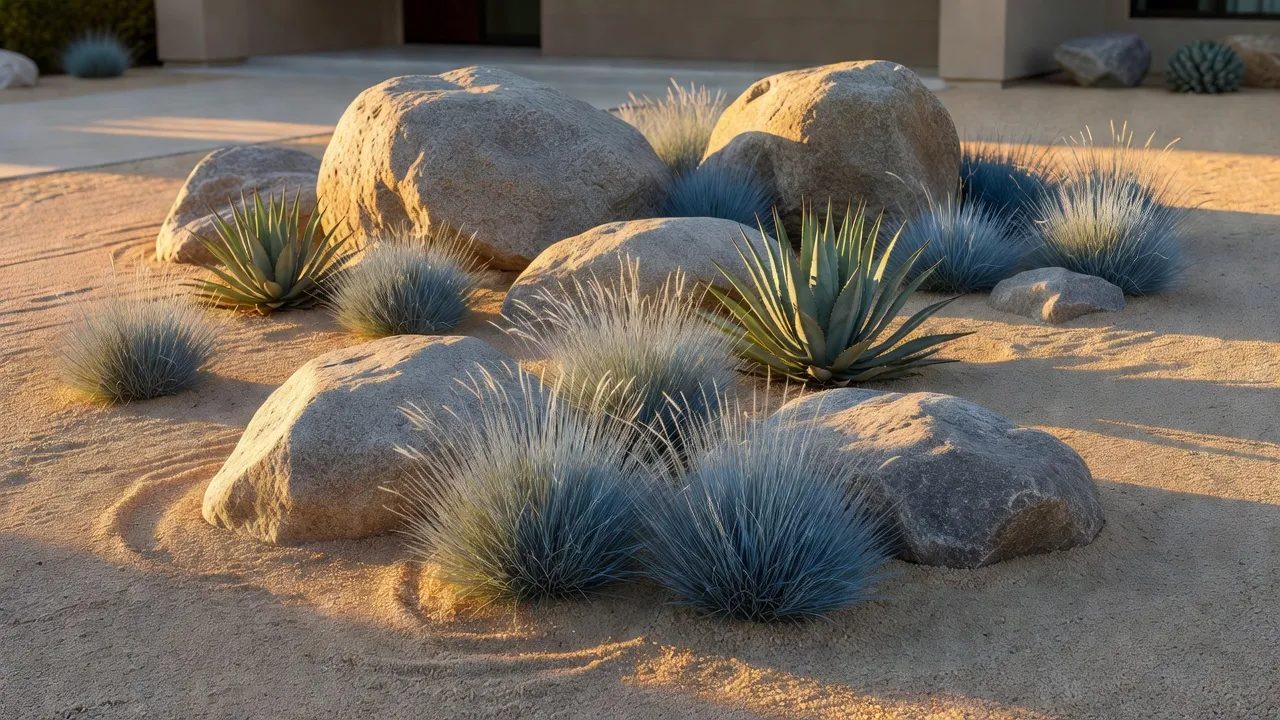
Rock garden designs are low-maintenance landscape layouts that combine decorative rocks, gravel, and hardy plants to create high-contrast, drought-tolerant yard features. Unlike traditional turf lawns that require weekly mowing and heavy irrigation, a rock garden relies on natural geological textures, structural stone placement, and resilient perennials to deliver year-round visual appeal.
As of September 2026, homeowners are rapidly moving away from thirsty water-hog lawns in favor of stone-focused outdoor designs. What used to require hiring expensive landscape architects with paper blueprints can now be prototyped instantly on your smartphone. Using modern tools like Renova AI, you can snap a photo of your existing yard and preview over 100 garden layout styles before ordering a single bag of crushed gravel.
What is a rock garden?
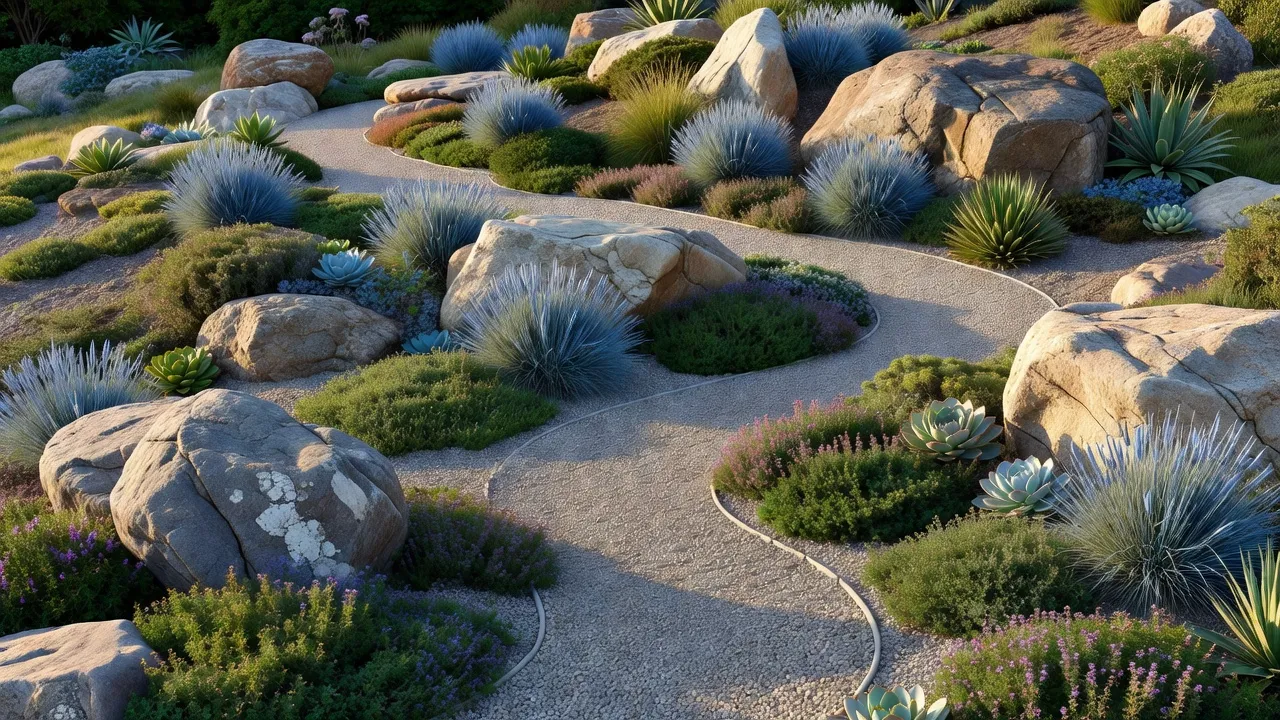
A rock garden is a specialized landscape feature built from arranged stones, gravel, and soil, designed to showcase low-growing plants and alpine flora. Historically known as a rockery, this design technique mimics natural mountain slopes, rocky outcrops, or river beds to maximize drainage and minimize maintenance.
The core benefit of a rock garden lies in its adaptability to tough terrain. Whether you are addressing an awkward slope or neutralizing poor soil, stone arrangements provide natural structure that stops erosion. By pairing river rocks or fieldstones with drought-hardy plants, you create a self-sustaining ecosystem that looks polished across all four seasons.
If you are upgrading your home's exterior, integrating stone features with a broader landscape for curb appeal adds dramatic visual texture without inflating your monthly water bill.
What are the current rock garden design trends?
The primary rock garden trend in 2026 focuses on high-contrast minimalism, blending dark volcanic gravel with sculptural native grasses. Today's homeowners are moving away from chaotic piles of mismatched river rocks and adopting intentional, monochromatic palettes that complement architectural home lines.
Here are the top rock garden design trends currently transforming residential yards:
- Monochromatic Stone Layers: Using uniform basalt or black lava rock contrasted with white marble chips to define plant beds.
- Architectural Boulders: Placing one or two massive 300-pound accent boulders rather than dozens of smaller stones.
- Micro-Dwarf Conifers: Integrating slow-growing miniature evergreens like dwarf Alberta spruce for structural height.
- Permeable Gravel Driveways and Paths: Replacing solid concrete walkways with crushed granite framed by sunken steel edging.
Before hauling hundreds of pounds of stone to your driveway, testing layout concepts saves massive physical labor. The Renova AI iOS App allows you to visualize exterior and garden style updates instantly on your iPhone, removing the guesswork out of stone selection.
What are Japanese and zen rock garden design trends?
Japanese and zen rock garden trends center on creating minimalist, dry landscapes (karesansui) that use combed gravel to represent water and carefully placed rocks to symbolize islands or mountains. Originating in Zen Buddhist monasteries, these designs prioritize negative space, stillness, and asymmetry.
According to documented design histories on Wikipedia, traditional karesansui gardens intentionally exclude actual water features, relying entirely on raked granite sand to evoke fluid movement. Modern iterations adapt this concept for residential suburban yards.
Key features of contemporary zen rock gardens include:
- Fine Decomposed Granite (DG): Light-colored, fine-grain crushed stone that holds crisp raked patterns.
- Moss and Stone Micro-Islands: Weathered moss-covered stones grouped in odd numbers (threes or fives) surrounded by raked gravel.
- Bamboo and Stone Basins: Small bamboo water drips (tsukubai) set against dark river pebbles.
What are xeriscape rock garden design trends?
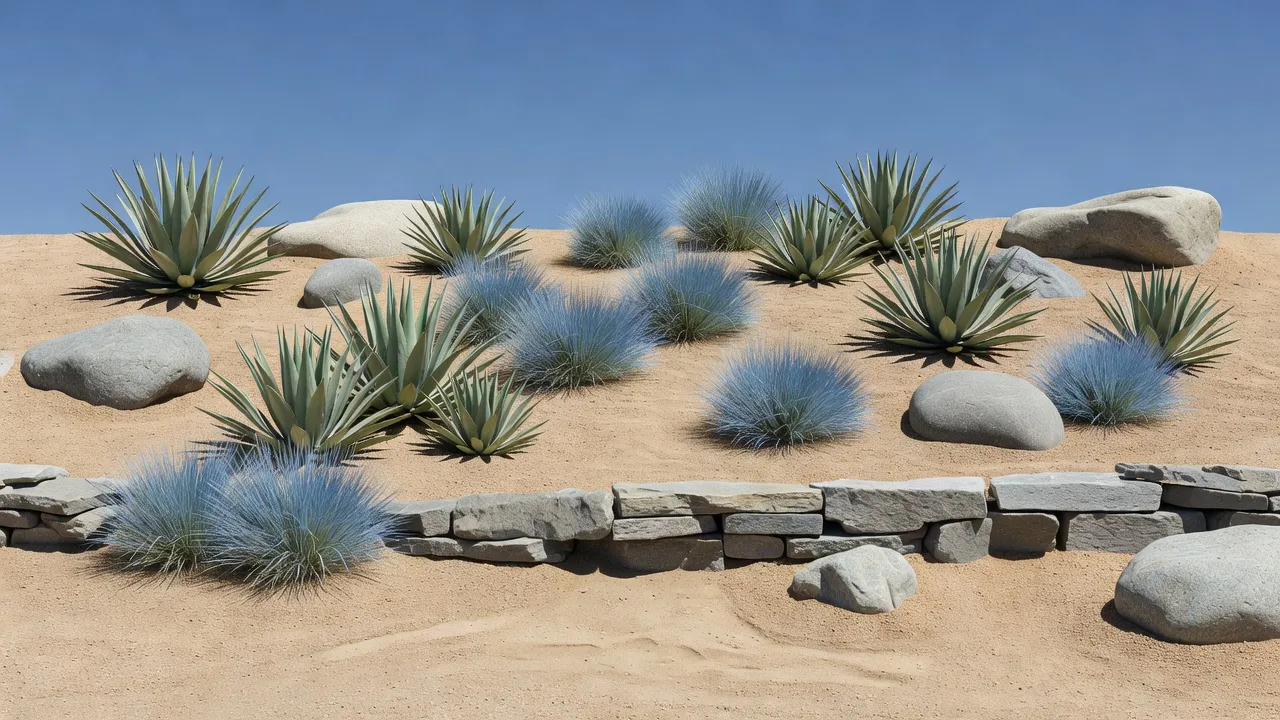
Xeriscape rock garden trends emphasize zero-irrigation plantings combined with gravel mulches to eliminate municipal water dependency. Developed primarily in dry western regions, xeriscaping replaces traditional wood mulch—which decomposes and loses color—with permanent stone ground cover.
State agricultural guides from Colorado State University Extension emphasize that gravel mulch reduces soil surface evaporation while keeping plant crowns dry to prevent root rot.
Popular elements of modern xeriscape designs include:
- Pea Gravel Beds: 2-inch deep layers of smooth 3/8-inch pea stone covering all bare dirt.
- Succulents and Agaves: Architectural plants like Agave parryi and blue chalksticks (Senecio) nestled into gravel banks.
- Deconstructed Retaining Walls: Stacked dry-stone ledge rock without mortar, allowing rock-cress and sedum to spill through the crevices.
If you are designing a front yard in an arid region, combining xeriscape fundamentals with a curb appeal desert landscape front yard plan ensures your property stays vibrant during hot summer dry spells.
What are alpine rock garden design trends?
Alpine rock garden trends focus on cultivating low-growing, high-altitude plant species inside deep pockets of stone grit and crushed limestone. These gardens simulate rocky mountain peaks, making them ideal for gardeners who want to collect specialty dwarf plants.
Plant selection guide parameters from the Royal Horticultural Society note that alpine species require sharp, fast-draining soil mixes to survive cold wet winters without rotting.
Standard components of alpine rock gardens include:
- Creeping Ground Covers: Plants like Thymus serpyllum (creeping thyme) and Phlox subulata that form dense flower carpets over raw rock.
- Tufa and Sandstone Slabs: Soft, porous stones that absorb water and allow plant roots to anchor directly into stone pores.
- Vertical Crevice Gardens: Stacking thin granite or slate slabs vertically on edge with narrow 1-inch soil gaps for root insertion.
What is a dry creek bed (dry river bed) garden trend?
A dry creek bed garden trend is a landscape technique that uses varying sizes of river rock and cobble to create a naturalistic drainage channel that handles runoff while looking attractive when dry. It converts stormwater problems into ornamental features.
Instead of hiding buried plastic drainage pipes, homeowners build dry river beds to direct heavy rainfall away from house foundations.
To build an authentic dry creek bed:
- Excavate a Shallow Trench: Dig a winding channel 6 to 12 inches deep with sloping banks, avoiding straight lines.
- Line with Landscape Fabric: Lay heavy-duty woven fabric to prevent weeds and keep rock from sinking into subsoil.
- Graduate Stone Sizes: Place large 10-inch anchor boulders along the bends, filling the channel center with 2-to-4-inch river cobbles and fine gravel.
6 practical rock garden designs for specific yard challenges
Selecting the right rock garden layout depends on your yard's slope, sun exposure, and drainage profile. The table below outlines how common planning approaches compare across cost, effort, and typical use cases.
| Design Approach / Tool | Best Scenario / Use Case | Estimated Cost | Main Effort / Constraint Removed |
|---|---|---|---|
| Renova AI Visualization | Fast layout testing before buying materials | Free (3 renders) to $59/yr | Removes manual drafting and costly trial-and-error mistakes |
| Dry Creek Bed Channel | Low-lying yards with heavy rain drainage issues | $300 - $1,200 | Eliminates standing water without underground plumbing |
| Terraced Hillside Rockery | Steep front or backyard slopes prone to erosion | $1,500 - $5,000 | Eliminates soil sliding while turning slopes into plant beds |
| Zen Raked Gravel Yard | Compact urban yards focused on low maintenance | $400 - $1,500 | Removes the need for lawn mowers and weekly weed trimming |
| Micro Alpine Crevice Garden | Small patios, side yards, or awkward corner spots | $150 - $500 | Replaces poor native soil with custom gravel grit pockets |
| Full Xeriscape Lawn Replacement | Arid region front yards facing water restrictions | $2,000 - $8,000 | Eliminates municipal lawn watering bills permanently |
Scenario 1: Best for steep slopes and soil erosion
Sloped front yards are prone to washout, making them ideal candidates for a terraced rock garden built with heavy fieldstones. Stacking boulders along natural contour lines slows down rainwater velocity and creates flat planting pockets.
Start by placing your largest stones at the base of the hill, sinking the bottom third of each rock below grade for stability. Fill the spaces behind the stones with a mixture of topsoil and crushed gravel to secure deep-rooted shrubs like juniper or cotoneaster.
Scenario 2: Best for small urban yards and tight spaces
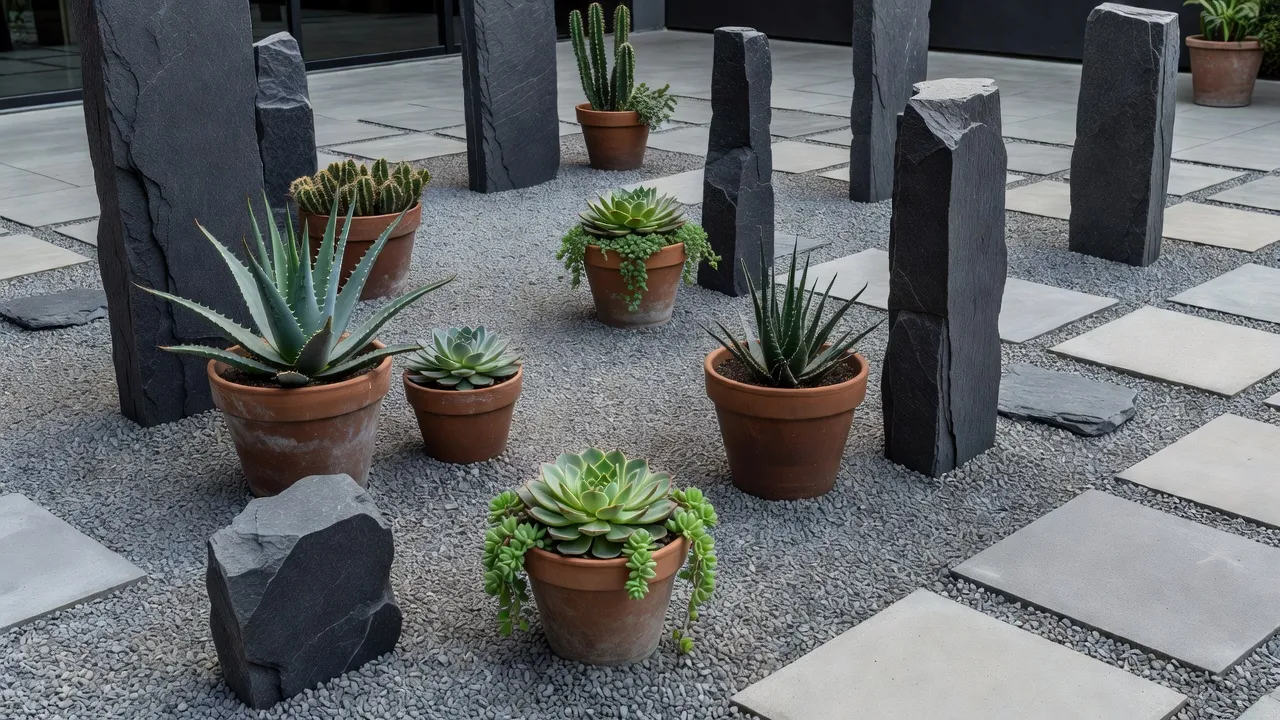
Small urban courtyards benefit from minimalist rock gardens that use vertical rock slabs and potted succulents to maximize ground area. When floor space is limited, adding massive boulders makes the yard look smaller; slim slate ledges add height without taking over walk areas.
Combine light grey gravel floors with vertical slate accents to bounce sunlight into shaded patio nooks.
Scenario 3: Best for full-sun, low-water desert climates
Full-sun yards in dry environments need xeriscape rock gardens dominated by decomposed granite and heat-tolerant agaves. Traditional turf grass rots or burns in 100-degree heat, whereas stone retains its structure without degrading.
Layering coarse gravel around heat-retaining boulders creates a stable microclimate for night-blooming cacti and yucca plants.
Scenario 4: Best for poor, rocky, or alkaline soil
If your native dirt is packed with clay or limestone, an elevated rockery lets you plant alpine species directly into imported soil pockets. Digging into hardpack clay is exhausting work that frequently kills root systems.
By building up rock walls above ground level, you bypass dense native subsoil entirely. Fill the pockets with a 50/50 blend of coarse sand and compost to keep delicate roots healthy.
Scenario 5: Best for high-rainfall yards with drainage issues
Yards plagued by seasonal muddy patches benefit from dry creek bed designs that collect and direct water naturally. Smooth river stones allow stormwater to pass quickly across the surface without washing away soil or mulched beds.
Plant water-loving perennials like Siberian iris along the outer edges of the creek bed to absorb excess moisture as it drains.
Scenario 6: Best for visual planning before spending on stone
If you are unsure how boulders and gravel beds will look against your home's exterior, digital AI preview tools eliminate design regret. Buying five tons of river stone only to realize the shade clashes with your siding is a costly mistake.
Using Renova AI, you can snap a photo of your front or back yard and experiment with different rock styles, garden layouts, and plant combinations in seconds. The app handles background rendering automatically so you can see realistic stone installations before spending a dime at the quarry.
To build a truly magnificent garden, previewing different stone shapes and gravel tones against your siding ensures the final landscape looks intentional rather than chaotic.
How do you select the right stones for a rock garden?
Select rocks based on local regional availability, choosing one dominant stone type in two or three varying sizes to keep the landscape looking natural. Mixing smooth river rocks with jagged slate and white marble creates a disjointed look that resembles a construction dumping site.
Here is a breakdown of common landscape stones and their functional uses:
- Fieldstone and Granite Boulders (8 to 24 inches): Use as structural anchors on slopes or primary visual focal points.
- River Cobble (2 to 6 inches): Best for lining dry creek beds, downspout splash zones, and low border walls.
- Decomposed Granite or Pea Gravel (1/4 to 1/2 inch): Ideal for walkable pathways, patio infill, and weed-suppressing ground cover.
- Crushed Basalt or Lava Rock: Highly porous dark stone that absorbs heat and pairs well with modern architecture.
Always sink structural boulders into the ground by 2 to 4 inches. Rocks that sit flat on top of the soil look unstable, while partially buried stones look like natural geological outcrops.
What plants grow best in rock garden designs?
The best plants for rock gardens are low-growing, drought-tolerant species that thrive in lean soil and fast-draining gravel environments. Alpine perennials, succulents, and ornamental grasses adapt well to heat re-radiated from surrounding stones.
Top plant choices grouped by function include:
- Flowering Ground Covers: Creeping phlox, snow-in-summer (Cerastium tomentosum), and creeping thyme (Thymus serpyllum).
- Structural Succulents: Hens and chicks (Sempervivum), stonecrop (Sedum species), and cold-hardy prickly pear (Opuntia).
- Compact Grasses: Blue fescue (Festuca glauca), autumn moor grass, and Japanese forest grass for shaded rock corners.
Avoid aggressive running grasses or taproot weeds that spread underneath gravel layers. Once unwanted weeds take root inside landscape fabric under heavy stone, pulling them out without ruining the gravel layer is difficult.
Step-by-step: how to build a low-maintenance rock garden
Building a durable rock garden requires proper excavation, weed barrier placement, structural stone setting, and gravel backfilling. Following a strict sequence ensures your rocks stay stable and weeds do not choke out your plants.
Step 1: Mark the boundary and dig down
Outline your garden bed using a garden hose or spray paint, then excavate 4 to 6 inches of sod and native topsoil. Removing turf grass roots prevents aggressive weeds from sprouting through your gravel later.
Step 2: Install commercial landscape fabric
Lay heavy-duty woven polypropylene landscape fabric across the excavated area, overlapping edges by at least 8 inches. Pins should be placed every two feet to secure the barrier against wind while you work.
Step 3: Place key structural boulders first
Position your largest anchor stones before adding small gravel or dirt pockets. Roll heavy boulders into place using a pry bar, tilting them slightly backward into slopes so gravity keeps them locked down during rainstorms.
Step 4: Cut plant openings and set perennials
Cut an "X" into the landscape fabric where you want each plant, dig a small planting hole, and backfill with fast-draining soil mix. Tuck the fabric flaps tightly around the base of the plant stem to prevent weed seed entry.
Step 5: Fill with gravel mulch
Shovel a 2-to-3-inch layer of crushed stone or river rock across the entire fabric surface to cover exposed seams. Hose down the gravel thoroughly to wash away stone dust and reveal the natural color of your rocks.
Frequently Asked Questions
What is a rock garden?
A rock garden is a landscape layout that uses rocks, boulders, gravel, and low-growing, drought-tolerant plants to create a low-maintenance, structured outdoor space. It mimics rocky natural terrains and thrives in dry, sunny, or sloped yards.
How much does it cost to build a DIY rock garden?
A DIY rock garden costs between $150 and $1,500 depending on yard size, boulder quantities, and stone types. Buying bulk gravel and quarry stone is significantly cheaper than purchasing bagged rock at big-box home improvement stores.
Do rock gardens require weed control?
Yes, rock gardens require occasional weed control, but far less than standard soil garden beds. Installing heavy-duty woven landscape fabric underneath stone layers stops most weeds, though windblown seeds may occasionally sprout in top gravel and need hand-pulling.
Can you build a rock garden on a flat lawn?
Yes, you can build a rock garden on a flat lawn by mounding soil and gravel into gentle hills called berms before placing rocks. Berms add elevation changes and depth to flat suburban yards.
What rock size is best for rock garden ground cover?
Pea gravel and crushed stone measuring 3/8 inch to 3/4 inch work best for walkable ground cover and plant mulching. Cobbles measuring 2 to 6 inches are better suited for borders, dry creek beds, and stabilizing sloped edges.
How do you clean leaves out of a rock garden?
Use a leaf blower set to low power, angled shallowly across the rocks so light leaves fly off while heavy stone layers stay in place. Avoid using stiff metal garden rakes, which displace gravel beds and tear underlying landscape fabric.
Should I use landscape fabric under rock gardens?
Yes, heavy-duty woven landscape fabric is essential under rock gardens to keep stone layers from sinking into muddy subsoil over time. It also acts as a primary physical barrier against deep-rooted perennial weeds.
How do I preview what a rock garden looks like in my yard?
You can use AI landscape design applications like Renova AI to upload a photo of your existing yard and preview different stone, boulder, and garden design styles instantly on your phone before purchasing materials.