
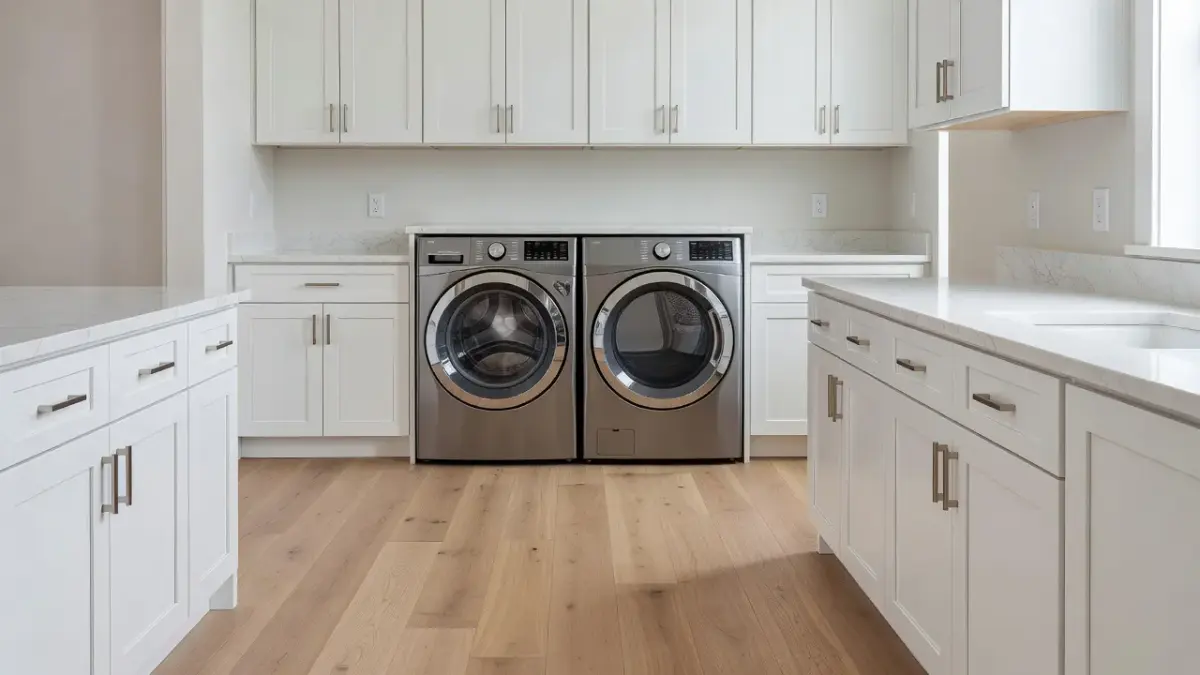
The best flooring for a laundry room is luxury vinyl plank (LVP) or porcelain tile, as both provide 100% waterproof protection against standing water, chemical spills, and washing machine leaks. Luxury vinyl plank offers quick click-lock installation and shock absorption for upper-floor installations, while porcelain tile delivers maximum scratch resistance and structural longevity over concrete subfloors. Selecting between them depends on your subfloor structure, budget constraints, and risk tolerance for plumbing failures.
What is the most durable flooring for a laundry room?
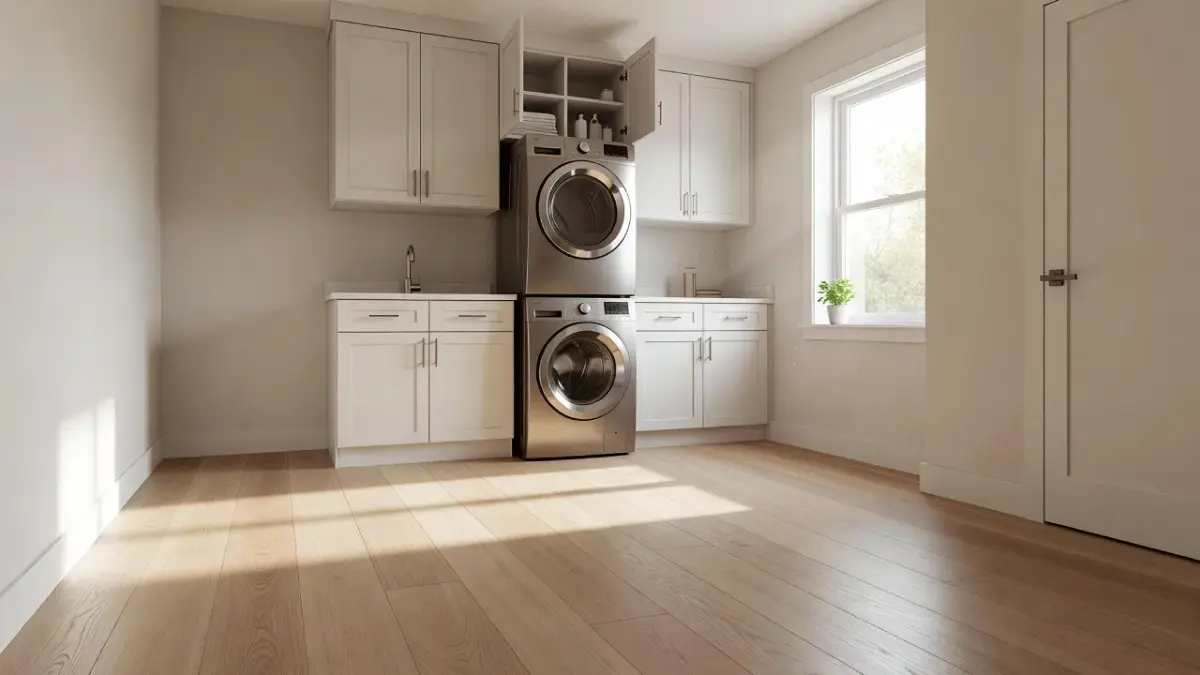
Porcelain tile is the single most durable flooring material for a laundry room, offering a water absorption rate under 0.5% and extreme resistance to heavy appliances. Unlike softer materials, porcelain withstands the constant vibration of a top-load spin cycle without cracking or shifting, provided the subfloor meets deflection standards set by the Tile Council of North America.
While porcelain takes top honors for sheer hardness, five distinct materials dominate laundry room installations based on durability under severe stress:
- Porcelain Tile: Impervious to moisture, detergent bleaches, and scratch marks from sliding heavy appliances. Requires cement backer board on wood subfloors.
- Luxury Vinyl Tile / Plank (LVT/LVP): Features a dense rigid core (SPC) and thick wear layer (20 mil or higher) that resists denting, water immersion, and heavy foot traffic.
- Sheet Vinyl: Provides a completely seamless surface that prevents water from reaching subfloors, though it can tear if heavy washing machines are dragged across it without glides.
- Epoxy Coating: Forms an indestructible chemical bond over concrete slabs, resisting pooled detergent, standing water, and impact hazards.
- Sealed Concrete: Extremely tough against mechanical wear, but relies entirely on high-grade topical sealers to prevent water absorption and chemical staining.
Waterproof vs. water-resistant flooring: which is better for a laundry room?
Waterproof flooring is mandatory for laundry rooms because water-resistant options only delay moisture damage rather than prevent it during an active plumbing leak. Water-resistant materials like standard laminate or water-resistant engineered wood can survive minor surface splashes if wiped up within a few hours, but catastrophic hose ruptures will cause immediate core swelling, edge cupping, and subfloor rot.
Understanding the technical difference protects your home from costly structural repairs:
- Waterproof Flooring (LVP, Porcelain, Sheet Vinyl): The core material itself cannot absorb water. Even if submerged for days, rigid core LVP or porcelain tile will not swell, disintegrate, or lose structural integrity.
- Water-Resistant Flooring (Standard Laminate, Treated Hardwood): The surface finish resists water penetration for a limited window (typically 24 to 72 hours), but liquid entering the click joints eventually saturates the wood-fiber core.
If you are evaluating options across your entire home, explore our guide on the best waterproof flooring options for your home to compare material lifespans and subfloor requirements across wet rooms.
Porcelain tile vs. luxury vinyl plank for laundry rooms: which is better?
Luxury vinyl plank is better for second-floor installations and quick DIY renovations, whereas porcelain tile is superior for ground-floor spaces over concrete slabs where long-term durability is the top priority. LVP provides built-in acoustic dampening that absorbs machine vibration, while tile requires permanent mortar installation and structural joist reinforcement.
| Feature / Criteria | Luxury Vinyl Plank (LVP) | Porcelain Tile |
|---|---|---|
| Water Resistance | 100% Waterproof (Core) | 100% Waterproof (Impervious) |
| Vibration Dampening | Excellent (Absorbs noise) | Poor (Transfers noise directly) |
| Material Cost (per sq ft) | $2.50 - $7.00 | $3.00 - $10.00 |
| Labor Installation Cost | $2.00 - $4.00 (DIY friendly) | $6.00 - $14.00 (Requires pro) |
| Subfloor Flexibility | High (Conforms slightly) | Rigid (Cracks with floor deflection) |
| Warmth Underfoot | Moderate (Room temp) | Cold (Requires radiant heating) |
If you are torn between materials, visualizing how different colors and textures look in your actual layout prevents expensive design mistakes. Using Renova AI allows you to snap a photo of your current space and perform an instant floor swap without moving your washer or dryer. You can test slate tiles, light oak vinyl, or patterned ceramics in seconds before buying sample boards.
Comparing Laundry Room Flooring Scenarios, Needs, and Costs
Matching your flooring choice to your specific subfloor type, story elevation, and budget prevents premature floor failure. As of November 2026, material supply chains have stabilized, but professional installation labor remains the largest variable cost in wet-room remodels.
| Laundry Scenario | Primary Flooring Solution | Est. Total Cost / Sq Ft (2026) | Key Prerequisite / Limit |
|---|---|---|---|
| Second-Floor Laundry | Stone Polymer Composite LVP | $5.00 - $11.00 installed | Requires underlayment rated for acoustic vibration |
| Digital Planning & Swap | Renova AI App | Free try / $59 per year | Needs a clean smartphone photo of existing floor |
| Slab-on-Grade Basement | Epoxy over Acid-Etched Concrete | $4.00 - $9.00 installed | Concrete must pass moisture vapor emissions testing |
| Heavy Mudroom Combo | Matte Porcelain Tile (PEI 4+) | $9.00 - $22.00 installed | Joists must meet L/360 deflection limits |
| Rental / Fast Refresh | Commercial-Grade Sheet Vinyl | $3.50 - $7.50 installed | Subfloor must be skim-coated completely smooth |
Is hardwood flooring a good choice for a laundry room?
No, solid hardwood is a risky choice for a laundry room because standing water from leaks permanently warps, cups, and discolor natural wood boards. Even high-end polyurethane sealers only protect the top face; water running underneath the appliances will seep into tongue-and-groove joints, causing the wood to expand and pop off the subfloor.
According to technical care standards from the National Wood Flooring Association, wood dimensional stability drops significantly when relative humidity fluctuates rapidly around laundry appliances.
If your laundry closet sits inside a continuous open-concept hardwood hallway, consider these compromises:
- Engineered Hardwood with SPC Core: Features a real wood veneer bonded over a rigid waterproof composite base.
- Wood-Look Porcelain Tile: Replicates grain details and plank dimensions while delivering complete moisture immunity.
- Wood-Look LVP: Matches real wood tones seamlessly at a fraction of the cost without water vulnerability.
How well does laundry room flooring handle plumbing leaks?
Impervious materials like sheet vinyl and porcelain tile handle major plumbing leaks without structural damage, provided water does not breach perimeter baseboards and rot structural wall framing. When a supply hose ruptures, a washing machine can discharge up to 30 gallons of water per minute across your floor.
Here is how common floorings react under an active flood scenario:
- Sheet Vinyl: The ultimate flood barrier. Because it has no seams across typical small rooms, water remains on top of the sheet until pumped out.
- Click-Lock LVP: Water will not damage the planks, but liquid can seep down through click seams during prolonged pooling. Planks must be unclipped, dried, and reinstalled to prevent mold underneath.
- Porcelain Tile: Completely impervious to water, but unsealed grout lines absorb dirty water and harbor bacteria if left untreated.
- Laminate & Hardwood: Severe failure. Cores swell within hours, requiring complete tear-out and subfloor remediation.
To minimize disaster risk, always install a low-profile drain pan connected to your home's waste lines beneath any washing machine.
5 Practical Use-Case Scenarios for Laundry Room Flooring
Choosing the right material requires assessing your room's daily environment rather than picking purely off sample boards.
Scenario 1: Second-Floor Laundry Rooms Needing Noise Control
Second-floor laundry rooms require lightweight, resilient flooring that absorbs high-decibel spin cycles while providing complete spill containment. Installing heavy porcelain tile upstairs requires verifying structural floor joist stiffness to prevent grout cracking over time.
- Best Material: Rigid core LVP (SPC) with attached acoustic cork or foam underlayment.
- Why It Works: It isolates machine thumping from bedrooms below and installs quickly over plywood subfloors without adding dead load.
- Critical Requirement: Sealed perimeter joints using 100% silicone caulk behind baseboards.
Scenario 2: High-Traffic Mudroom and Laundry Combinations
Utility spaces that handle muddy boots, wet pets, and heavy laundry baskets need high-abrasion flooring rated for severe wear. Fine dust and small rocks brought in from outside act like sandpaper under foot traffic.
- Best Material: Matte-finish porcelain tile rated PEI Class 4 or 5, or commercial sheet vinyl.
- Why It Works: Matte porcelain resists surface scratching and hides dried mud spots far better than high-gloss tiles.
- Critical Requirement: Use stain-resistant epoxy grout instead of traditional cementitious grout.
Scenario 3: Budget-Friendly Basement Laundry Conversions
Basement utility rooms over concrete slabs require moisture-proof materials that tolerate sub-slab vapor transmission. Cold basement concrete will cause adhesives under cheap stick-down tiles to fail within months.
- Best Material: Floating SPC vinyl plank or two-part industrial epoxy coating.
- Why It Works: Floating planks let moisture vapor escape around edges without breaking adhesive bonds, while epoxy seals the slab directly.
- Critical Requirement: Perform a calcium chloride moisture test on the concrete before laying any floor.
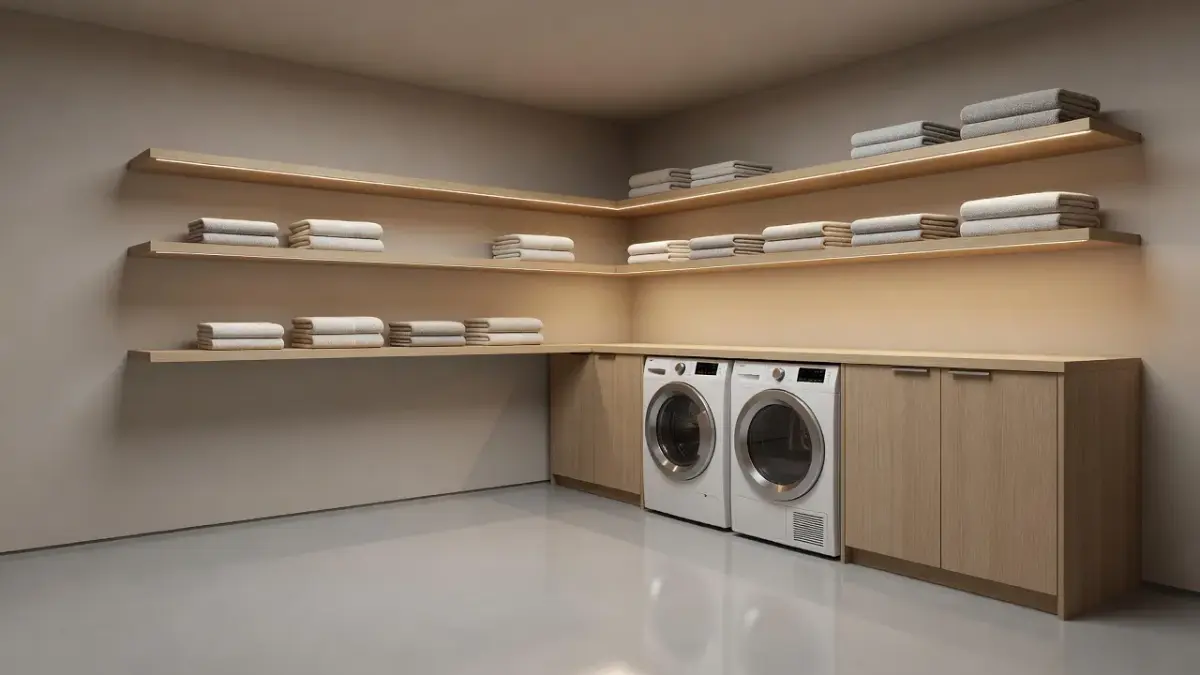
If you are redesigning a tight layout on a budget, check our guide on tiny laundry room design ideas and costs for practical layout plans and space-saving tips.
Scenario 4: Historic Homes Requiring Period-Correct Aesthetics
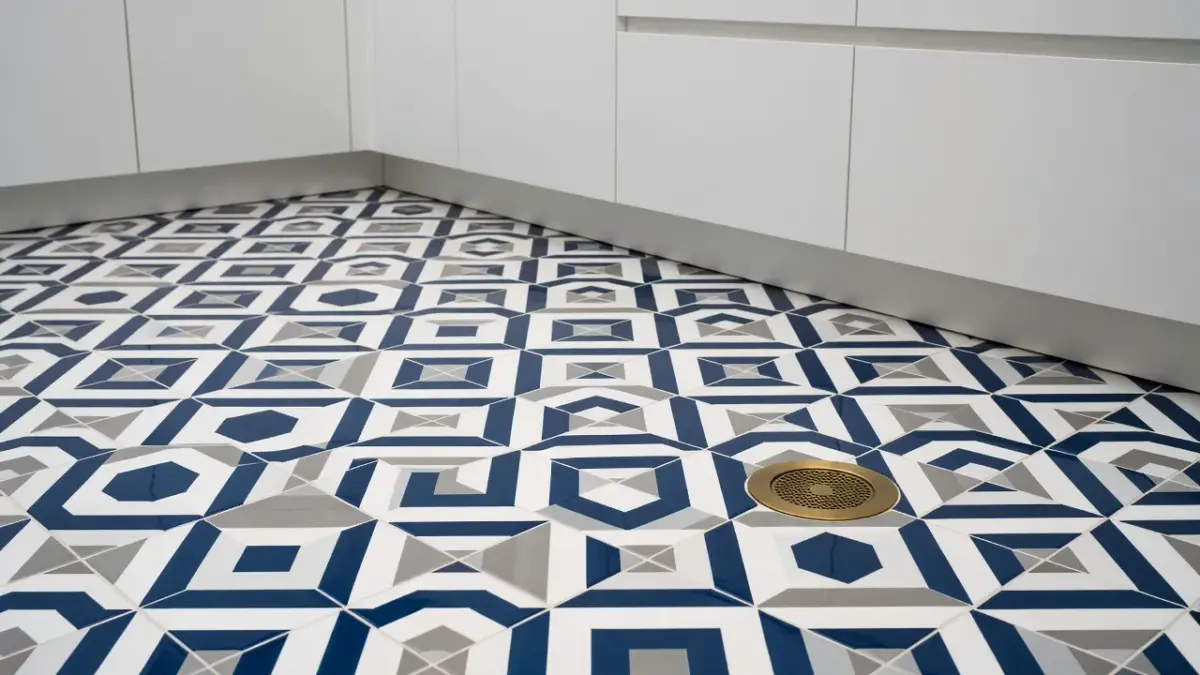
Older homes often demand vintage aesthetic charm (such as checkerboard patterns or classic hex tiles) paired with modern leak protection. Original pine floors in century homes simply cannot survive modern high-efficiency washer vibration and potential water line bursts.
- Best Material: Encaustic-style porcelain hex tiles or sheet vinyl featuring vintage geometric motifs.
- Why It Works: Captures authentic architectural character while meeting current waterproofing standards.
- Design Tip: If you want vintage character without tearing up historical subfloors, read about retro vinyl flooring options for vintage styles to compare low-profile sheet designs.
Scenario 5: Small Laundry Closets Off Living Spaces
Laundry closets tucked inside hallways or kitchens need flooring that integrates seamlessly with adjacent living spaces without creating awkward floor height transitions.
- Best Material: Flush-mounted LVP or continuous tile that extends under bi-fold doors.
- Why It Works: Eliminates trip hazards at doorway thresholds and makes small spaces feel visually unified.
- Design Tip: Align plank directions parallel to the main hallway line to visually expand narrow closets.
Planning Your Redesign with AI Flooring Tools
Testing flooring combinations in your home eliminates the guesswork of matching cabinet paint, trim colors, and tile patterns. Sampling physical tile cutouts only shows a tiny square; it doesn't reveal how a dark charcoal slate floor makes a small 6x6 laundry closet feel under artificial lighting.
Before committing to installation labor, you can use Renova AI to visualize your room transformation. Simply upload a photo of your existing laundry space, pick from over 100 design styles, and let the floor swap feature render realistic replacement options instantly. It requires zero manual editing or technical drafting experience.
Pricing is straightforward: your first three room generations are free, followed by options for $6.99 per week or an annual plan at $59 per year. Seeing how a prospective material looks alongside your existing appliances saves time and prevents buyer remorse.
Installation and Maintenance Tips for Long-Lasting Utility Floors
Proper perimeter sealing and subfloor preparation determine whether your laundry floor survives a major water leak. Even the most expensive porcelain tile will fail if installed over flexed plywood or unsealed perimeter gaps.
Follow these practical installation rules:
- Seal Room Perimeters: Run a continuous bead of 100% silicone sealant between the edge of your waterproof flooring and the drywall before installing baseboards.
- Use Machine Anti-Vibration Pads: Place dense rubber pads under washing machine feet to prevent floor denting and reduce acoustic noise transfer.
- Skim-Coat Subfloors: Sheet vinyl and glue-down LVP highlight every subfloor bump, nail head, and seam. Always pour self-leveling underlayment over uneven concrete or plywood.
- Avoid Steam Mops on Vinyl: Excessive thermal steam can melt vinyl wear layers and weaken click-lock joint seals over time. Use neutral-pH micro-fiber cleaners instead.
If you are upgrading adjacent utility areas like your garage entry or kitchen, review our detailed guide on the best garage flooring options over concrete slabs for heavy-duty surface options.
Frequently Asked Questions
What is the absolute best flooring for a laundry room?
Luxury vinyl plank (LVP) with a rigid SPC core is the best overall choice for most homeowners. It is 100% waterproof, easy to install DIY, comfortable underfoot, and dampens appliance vibration better than hard tile.
Can water seep through click-lock vinyl plank flooring during a flood?
Yes, while individual vinyl planks are 100% waterproof, standing water from a major leak can eventually pass through click-lock seams to the subfloor. If flooded, you must unclip the planks, dry the subfloor completely, and reinstall them to prevent mold.
Do I need a floor drain in my laundry room flooring?
A floor drain is highly recommended for second-floor laundry rooms and is mandated by building codes in many municipalities. Drains require tiling or sloped sheet vinyl to funnel excess water safely into drain pipes during a pipe rupture.
Can I install new laundry room flooring over existing vinyl?
Yes, you can install floating luxury vinyl plank over existing well-bonded sheet vinyl provided the floor is flat, clean, and structurally sound. However, installing tile over old vinyl is not recommended because the vinyl flexes and causes grout lines to crack.
Is sheet vinyl out of style for modern laundry rooms?
No, modern luxury sheet vinyl features high-definition printing that accurately mimics natural stone, wood, and geometric tiles. It remains a top choice for budget-conscious remodels because it provides a completely seamless, 100% leak-proof surface.
How do I protect my laundry floor from heavy appliance dents?
Install hard rubber anti-vibration pads or appliance caster cups under the feet of your washer and dryer. These pads distribute appliance weight evenly across planks and prevent heavy vibration from scuffing vinyl or cracking tile grout.
Should laundry room flooring be lighter or darker than the hallway?
Lighter flooring shades make small, windowless laundry rooms feel larger and brighter under artificial lighting. However, medium tones with subtle wood grain or tile veining are best for hiding lint, dirt, and pet hair between cleanings.