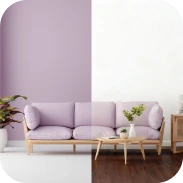

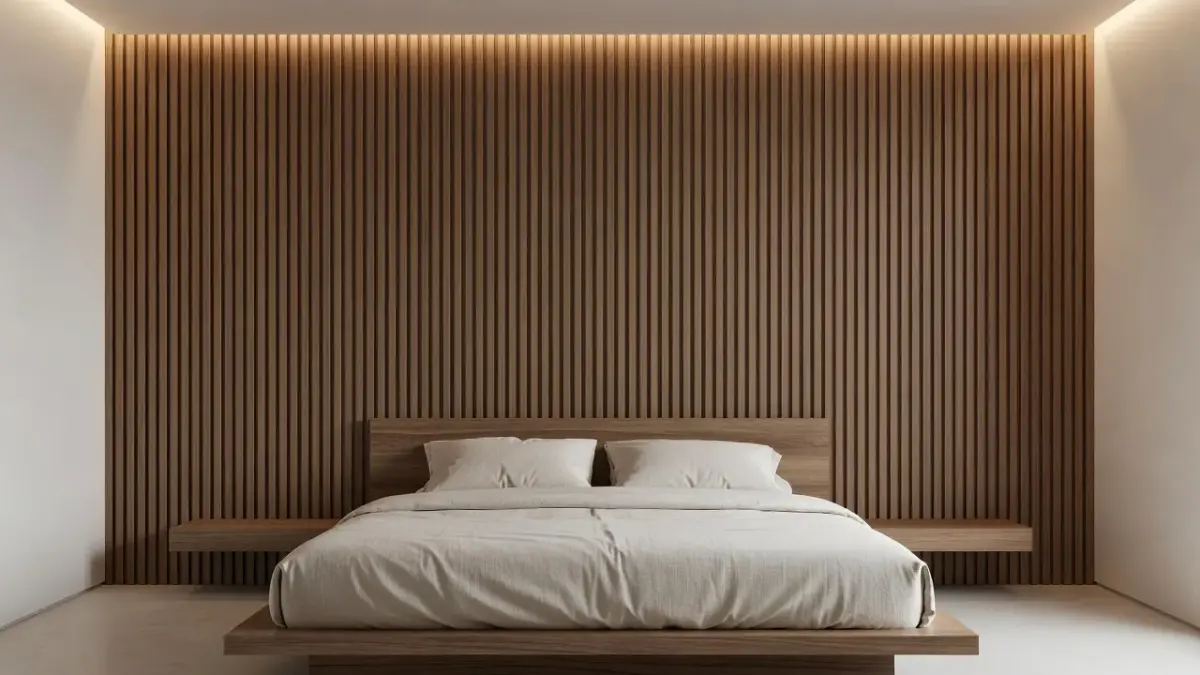
A wood panel accent wall in a bedroom costs between $3 and $25 per square foot installed, with acoustic wood slats, warm walnut tones, and vertical tongue-and-groove leading current interior design trends. Moving past the painted white shiplap of the late 2010s, modern bedroom paneling emphasizes sound absorption, rich wood grains, and architectural dimension directly behind the bed frame. Before buying materials, previewing how different timber stains interact with your existing room lighting takes seconds with Renova AI for iOS, an iPhone app that visualizes wall finishes directly on your camera preview.
What are the popular wood panel accent wall styles for a bedroom right now?
The most popular bedroom wood panel styles right now are vertical acoustic slat panels, warm micro-fluted boards, and geometric board and batten layouts. Flat pine planking has taken a back seat to options that add tactile depth and acoustic dampening to modern sleeping spaces.
Here is a breakdown of the dominant styles in residential bedrooms:
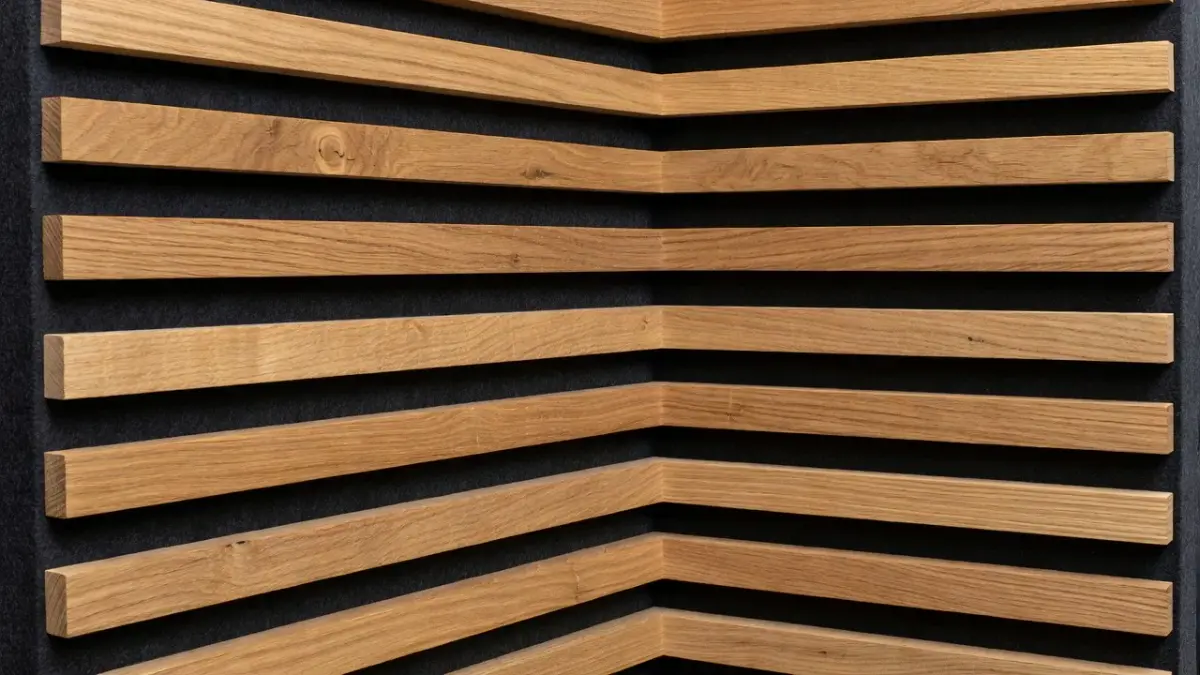
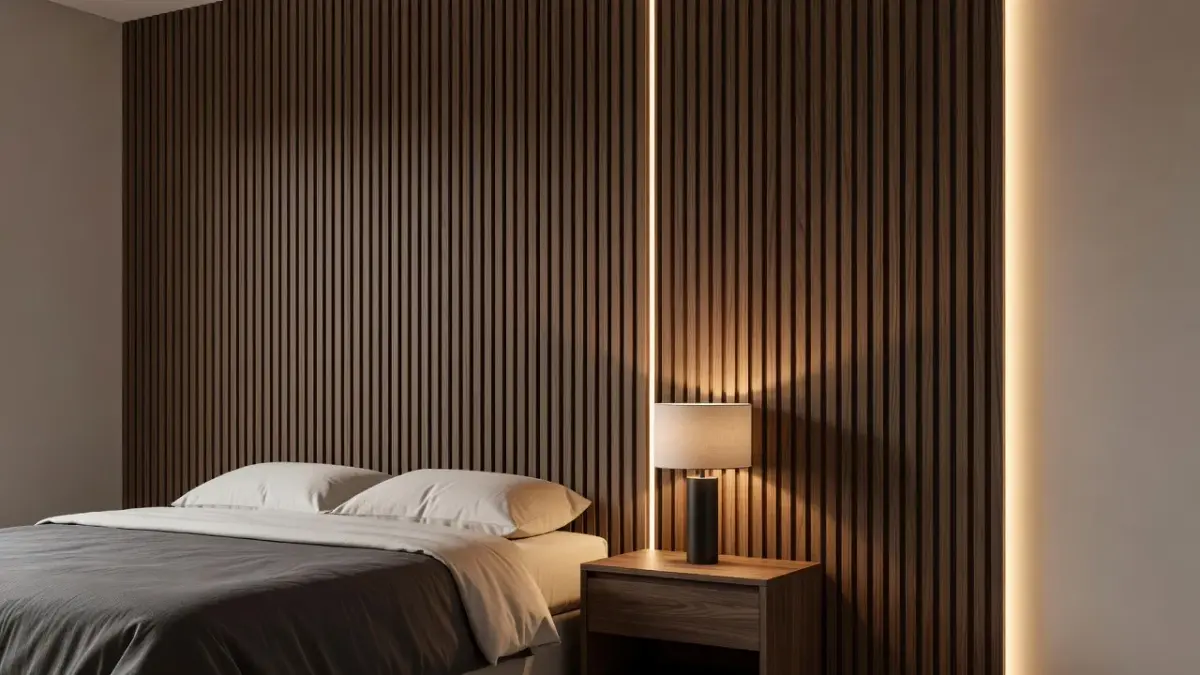
- Vertical Wood Slat Panels: Narrow strips of real wood or veneer mounted on a black felt backing. They absorb echo while creating vertical lines that draw the eye upward.
- Micro-Fluted Paneling: Concave or convex wood moldings grouped together to create a soft, undulating texture behind headboards.
- Modern Board and Batten: Wide MDF or wood boards arranged in asymmetrical, grid, or oversized rectangular patterns rather than traditional square cottage grids.
- Tambour Wood Panels: Flexible wooden slats attached to a canvas backer, allowing curves around corners or rounded headboards.
- Vertical Tongue and Groove (V-Groove): Clean, tight-fitting vertical planks that offer understated texture without heavy shadows.
Which wood accent wall trends do designers recommend for a bedroom?
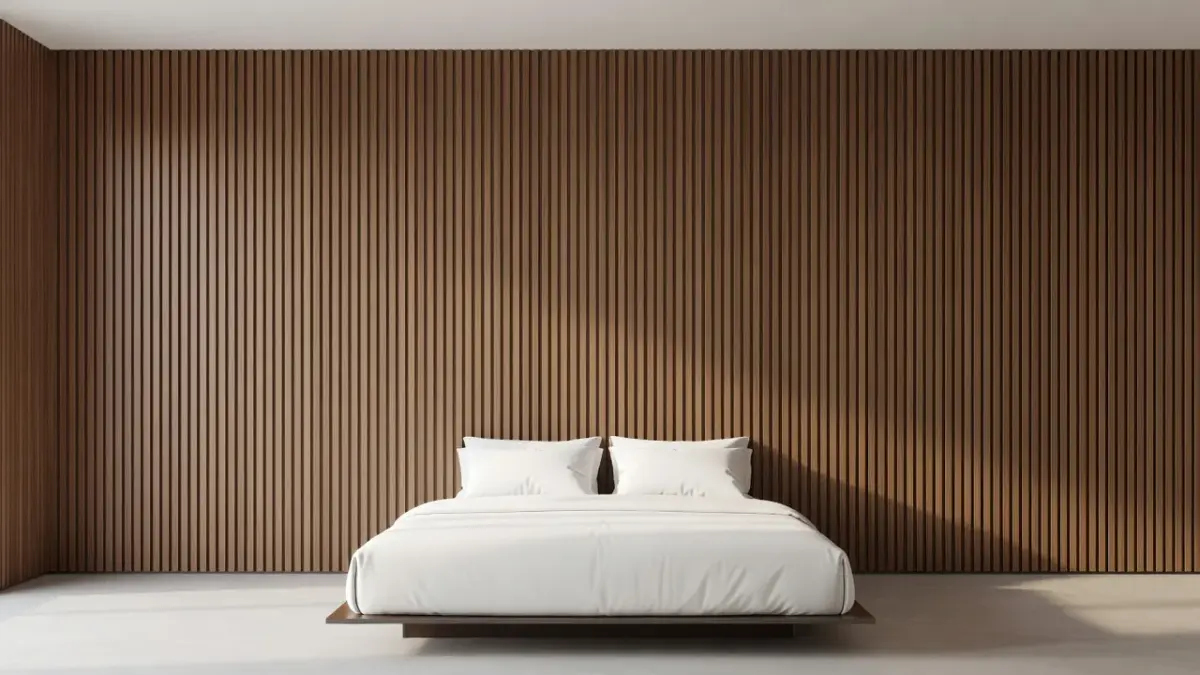
Designers currently recommend warm natural wood species like white oak, black walnut, and warm honey tones over cool gray stains or distressed rustic barnwood. The trend focus has shifted from farm-style rustic to refined minimalist warmth, often integrating hidden LED strip lighting directly into the panel channels.
As of November 2026, design preferences focus heavily on functional aesthetics:
- Acoustic Performance: Designers favor paneling backed by dense PET felt, which dampens room reverberation for better sleep quality.
- Integrated Lighting: Recessing warm LED channels (2700K temperature) into the top or sides of the paneling to illuminate the grain without overhead glare.
- Mid-Height Ledge Walls: Running paneling 48 to 54 inches up the wall, capped with a shallow wooden shelf for artwork and sconces, replacing traditional nightstand decor.
- Floor-to-Ceiling Continuity: Extending the wood wall treatment across the ceiling ceiling-plane above the bed frame to create a canopy effect.
If you are coordinating other elements in the room, aligning your wall wood species with your flooring choice prevents visual clutter. You can review current floor trends in our bedroom flooring ideas guide.
Visualizing Your Bedroom Wood Panel Accent Wall Before You Build
Committing to a full wall of hardwood or acoustic panels requires a clear visual plan before driving a single nail into drywall. Wood tones shift dramatically depending on window exposure, bulb wattage, and surrounding furniture finishes.
Using Renova AI allows you to test over 100 design styles on your exact space. You can snap a photo of your headboard wall and swap wall textures in seconds.
By testing options virtually, you avoid buying expensive oak or walnut planks only to realize the stain makes your room feel too dark. The app requires no manual photo editing, letting you render natural oak, dark walnut, or painted grid options over your current bedroom wall instantly.
When should you use shiplap vs reclaimed wood vs paneling for a bedroom accent wall?
Use shiplap for casual coastal or modern farmhouse looks, reclaimed wood for heavy rustic texture, and engineered acoustic paneling for sleek contemporary interiors with noise control needs. Choosing between these three options depends heavily on your budget, sound requirements, and design aesthetic.
| Feature | Shiplap Planks | Reclaimed Wood | Acoustic Slat Panels |
|---|---|---|---|
| Primary Aesthetic | Modern Farmhouse | Rustic / Cabin | Contemporary / Japandi |
| Surface Finish | Smooth, Painted | Rough-Sawn, Uneven | Veneer on Dark Felt |
| Material Cost/sqft | $2.50 - $6.00 | $6.00 - $15.00 | $8.00 - $22.00 |
| Acoustic Rating | Low (Hard Surface) | Low to Moderate | High (NRC up to 0.85) |
| Cleaning Ease | High (Wipeable) | Low (Traps Dust) | Moderate (Vacuuming) |
Here is when to select each material:
- Choose Shiplap when: You want a subtle, clean texture that can be painted white, sage green, or deep charcoal. The overlapping rabbet joints allow quick horizontal or vertical installation over standard drywall.
- Choose Reclaimed Wood when: You want authentic variation, weathered grain patterns, and historical character. Keep in mind that rough-sawn planks catch dust easily and require thorough cleaning before indoor installation.
- Choose Engineered Slat Paneling when: You want sound reduction alongside modern architectural lines. The recycled felt backing helps deaden echo in rooms with hard flooring.
If you are exploring panel ideas for adjacent living areas, check out our guide on decorative wall panels for living rooms to maintain stylistic cohesion across your layout.
What are the pros and cons of a wood slat accent wall in a bedroom?
The biggest pros of a wood slat accent wall are superior sound dampening and high-end visual impact, while the primary cons are higher material costs and complex outlet cutouts.
Pros
- Acoustic Sound Absorption: The synthetic felt backing reduces room echo significantly. According to acoustic testing guidelines published by ASTM International, materials combining porous backing with slat diffusers achieve higher Noise Reduction Coefficient (NRC) ratings than bare painted drywall.
- Visual Height Improvement: Vertical slats lead the eye upward, making low 8-foot bedroom ceilings feel noticeably taller.
- Hides Wall Imperfections: Pre-assembled slat panels cover uneven drywall, old wallpaper, or minor plaster cracks without extensive mudding.
Cons
- Higher Cost per Square Foot: Quality wood slat panels range from $8 to $22 per square foot, making a standard 10x8-foot wall cost $640 to $1,760 in materials alone.
- Dust Collection: Dust gathers on the flat horizontal top edges of individual slats, requiring periodic vacuuming with a soft brush attachment.
- Electrical Outlet Fitting: Cutting around light switches and electrical outlets requires extension boxes and precise jigsaw cuts through both wood slats and felt.
How do you choose a wood accent wall for a small bedroom?
For a small bedroom, choose light wood species like natural oak or birch with thin vertical slats to keep the space feeling open. Dark, heavy wood horizontal planks can visual close in a compact room, making the ceiling seem lower than it is.
When planning a wood feature in tight quarters (such as a 10x10 space), apply these design rules:
- Run Planks Vertically: Vertical lines emphasize ceiling height rather than room width, creating a sense of volume.
- Keep Wood Tones Light: Natural pine, white oak, or pale ash bounce light around the room. Save dark walnut or ebony stains for spacious primary suites.
- Limit the Paneling to the Bed Wall: Cover only the wall directly behind the headboard. Paneling multiple walls in a small room quickly causes visual overload.
- Integrate Floating Storage: Mount nightstands directly to the wood panel wall to clear floor space underneath.
For more small-space layout strategies, read our guide on optimizing a 10x10 bedroom layout with a queen bed.
Is board and batten or tongue and groove better for a bedroom accent wall?
Tongue and groove is better for sleek, seamless textured surfaces, while board and batten is superior for bold dimensional grid patterns. Both options use trim boards mounted to walls, but their installation complexity and final appearances differ substantially.
| Metric | Board and Batten | Tongue and Groove |
|---|---|---|
| Installation Style | Grids or wide vertical strips | Interlocking plank edges |
| Fasteners | Exposed or filled brad nails | Blind nailing through tongue |
| Material Type | MDF strips or clear pine boards | Solid wood or composite planks |
| Paint/Stain Prep | High (filling nail holes/caulk) | Low (pre-finished options) |
| Typical Cost | $3.00 - $8.00 per sq ft | $4.00 - $12.00 per sq ft |
Board and Batten Features
Board and batten uses flat vertical boards (battens) placed over the seams of wider panel boards or directly onto drywall. It is ideal if you plan to paint the entire feature wall in a bold tone like navy, olive green, or moody charcoal. You can research matching wall colors in our breakdown of accent wall paint ideas.
Tongue and Groove Features
Tongue and groove features interlocking edges where the tongue of one board fits snugly into the groove of the adjacent board. This conceals nail heads completely ("blind nailing") and creates a flat wall with small V-shaped channels between boards. It is the best choice when displaying natural timber grain without visible fastener holes.
5 Practical Scenarios: Choosing the Right Wood Wall for Your Bedroom
Different bedroom layouts require tailored wood panel treatments. Here are five practical use-case scenarios and the exact panel configurations that work best for each.
| Bedroom Scenario | Recommended Wood Style | Material Cost | DIY Difficulty | Primary Benefit |
|---|---|---|---|---|
| 1. Small Bedroom (8ft Ceiling) | Thin Vertical Oak Slats | $8 - $14 / sq ft | Moderate | Height illusion |
| 2. Condo / Shared Wall Bedroom | Acoustic Felt Slat Panels | $12 - $22 / sq ft | Easy (Modular) | Sound insulation |
| 3. Rental Apartment Bedroom | Peel-and-Stick Slat Modules | $5 - $10 / sq ft | Easy | Damage-free removal |
| 4. Primary Suite (High Ceiling) | Dark Walnut Grid Paneling | $10 - $25 / sq ft | Advanced | Dramatic luxury focus |
| 5. Modern Rustic Renovation | Vertical V-Groove Pine | $3 - $7 / sq ft | Easy to Moderate | Warm, budget-friendly |
Scenario 1: Low-Ceiling Small Bedroom
- The Problem: The ceiling feels low and claustrophobic.
- The Solution: Install narrow, 1-inch-wide light oak slats running vertically from top of baseboard to ceiling line.
- Why It Works: Vertical timber lines trick the eye into perceiving higher ceilings while keeping the palette bright.
Scenario 2: Shared-Wall Condo Bedroom
- The Problem: Neighbors' footsteps or ambient TV sound travels through the headboard drywall.
- The Solution: Mount pre-assembled slat panels featuring 9mm dense recycled felt backing directly to the drywall using construction adhesive and drywall screws.
- Why It Works: The combination of acoustic felt and wood diffraction cuts down sound transfer across shared walls.
Scenario 3: Rental Bedroom Upgrade
- The Problem: You want the warmth of real wood without forfeiting your security deposit.
- The Solution: Use lightweight real-wood veneer planks equipped with removable adhesive backing, or mount panels to a 1/4-inch plywood sub-sheet secured with minimal finish nails.
- Why It Works: You can patch a few nail holes quickly upon move-out rather than destroying the drywall surface.
Scenario 4: Primary Suite Headboard Wall
- The Problem: A large blank wall leaves a king-sized bed looking undersized and isolated.
- The Solution: Construct a full-height geometric board and batten grid painted in a deep matte tone, or install floor-to-ceiling walnut panels flanked by wall-mounted sconces.
- Why It Works: Creates an architectural focal point that anchors large-scale bedroom furniture.
Scenario 5: Budget-Friendly Guest Room Makeover
- The Problem: Limited renovation budget for a secondary bedroom.
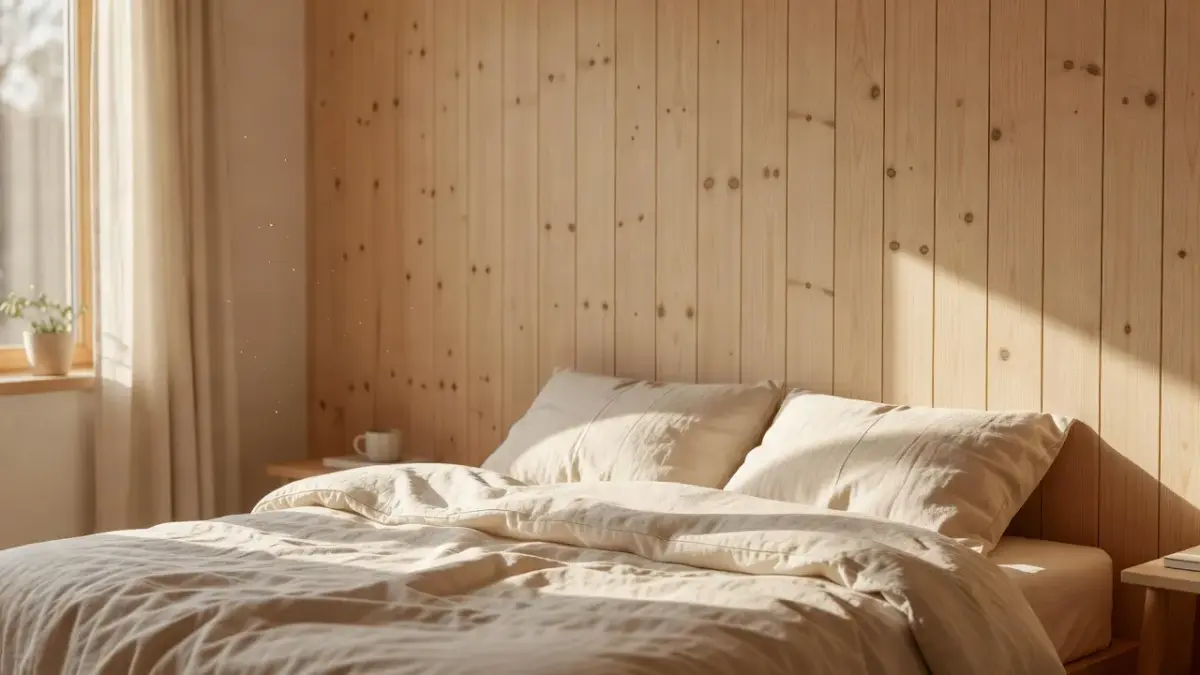
- The Solution: Raw MDF tongue-and-groove boards installed vertically, primed, and painted with durable satin wall paint.
- Why It Works: MDF costs a fraction of solid hardwoods while delivering identical clean panel lines once painted.
Material and Cost Breakdown: Raw Lumber vs. Pre-Assembled Panels
Pricing data updated in late 2026 places raw MDF paneling at $2 to $5 per square foot, while pre-finished acoustic hardwood slat sheets run between $12 and $22 per square foot.
When estimating your project budget, factor in these core expenses:
- Panels or Lumber: Calculate wall total square footage (Width x Height) and add a 10% waste factor for edge cuts.
- Adhesive and Fasteners: Heavy-duty construction adhesive ($8 to $12 per tube) plus 18-gauge brad nails.
- Trim Accessories: End caps or L-shaped edge trims ($15 to $35 per 8-foot strip) to finish exposed outer borders cleanly.
- Tools Needed: Miter saw, level, stud finder, caulking gun, and brad nailer.
Sourcing lumber certified by the Forest Stewardship Council ensures your wood materials originate from responsibly managed forests that provide environmental and economic benefits.
If you are planning a broader redesign beyond your accent wall, modern tools streamline the planning phase. Learn how digital layout platforms operate in our guide to interior design using AI.
Step-by-Step Installation: How to Install Bedroom Wood Panels
Installing a wood accent wall behind your bed is one of the most rewarding weekend DIY tasks. Following a clean installation sequence prevents uneven seams and crooked boards.
Step 1: Prep and Measure the Wall
Clear the wall completely. Remove outlet covers, baseboards, and picture hangers. Use a stud finder to locate vertical wall studs and mark them from floor to ceiling with a pencil line.
Step 2: Acclimate the Wood Planks
Store your wood panels inside the bedroom for at least 48 to 72 hours before installation. Wood expands and contracts based on indoor humidity; letting it adapt prevents boards from buckling or gapping after installation.
Step 3: Paint the Wall (For Slat Panels)
If you are installing slat panels with open gaps, paint the underlying drywall matte black or charcoal first. This ensures white drywall won't peek through the gaps between wood slats.
Step 4: Mount the First Corner Panel
Start from an inside corner. Use a 4-foot level to ensure your first panel is plumb (perfectly vertical). Secure it by driving 18-gauge finish nails through the felt backing or tongue edge directly into the wall studs.
Step 5: Cut Out Electrical Openings
Measure the exact position of light switches or outlets on the panel. Use a jigsaw to cut out the opening. Install box extenders on your electrical boxes so the switches sit flush against the new wood surface.
Step 6: Attach Remaining Panels and Finish Edges
Interlock tongue-and-groove joints or butt slat panel edges tightly together. Add construction adhesive to the back of each sheet for added support. Install matching edge trim along any exposed outer sides to conceal raw wood cuts.
Frequently Asked Questions
Does a wood panel wall make a bedroom look smaller?
Dark wood panels can make a bedroom feel smaller if applied to all four walls, but a single wood accent wall behind the bed creates depth. Using light-toned woods like white oak or running planks vertically expands the space visually.
How much does it cost to build a wood panel accent wall in a bedroom?
A DIY wood accent wall costs between $250 and $900 for a standard 120-square-foot bedroom wall, depending on whether you choose painted MDF or acoustic hardwood slats. Hiring a professional contractor adds $500 to $1,200 in labor costs.
Can you install wood paneling over drywall?
Yes, you can install wood paneling directly over drywall using construction adhesive and finish nails driven into the wall studs. Ensure the drywall surface is clean, dry, and flat before starting installation.
What is the easiest wood panel wall style to DIY?
Pre-assembled acoustic slat panels are the easiest style for DIY installation. They come in 8-foot or 9-foot sheets that mount directly to the wall with screws or adhesive, covering large areas quickly without individual plank alignment.
How do you clean and maintain a bedroom wood slat wall?
Clean wood slat walls by running a vacuum brush attachment vertically along the channels to remove dust from the felt backing. Wipe solid wood surfaces with a damp microfiber cloth, avoiding harsh chemical cleaners that strip natural oil finishes.
Should a wood accent wall be darker or lighter than the other walls?
A wood accent wall can be either darker or lighter, provided there is clear contrast with the surrounding walls. Dark walnut creates a moody focal point against light grey walls, while natural oak adds warmth against crisp white paint.
Can you attach a heavy headboard to a wood panel wall?
Yes, but you should anchor the headboard through the wood paneling directly into the underlying wall studs using heavy-duty lag bolts or heavy drywall anchors. Do not rely solely on the thin wood paneling to support weight.