
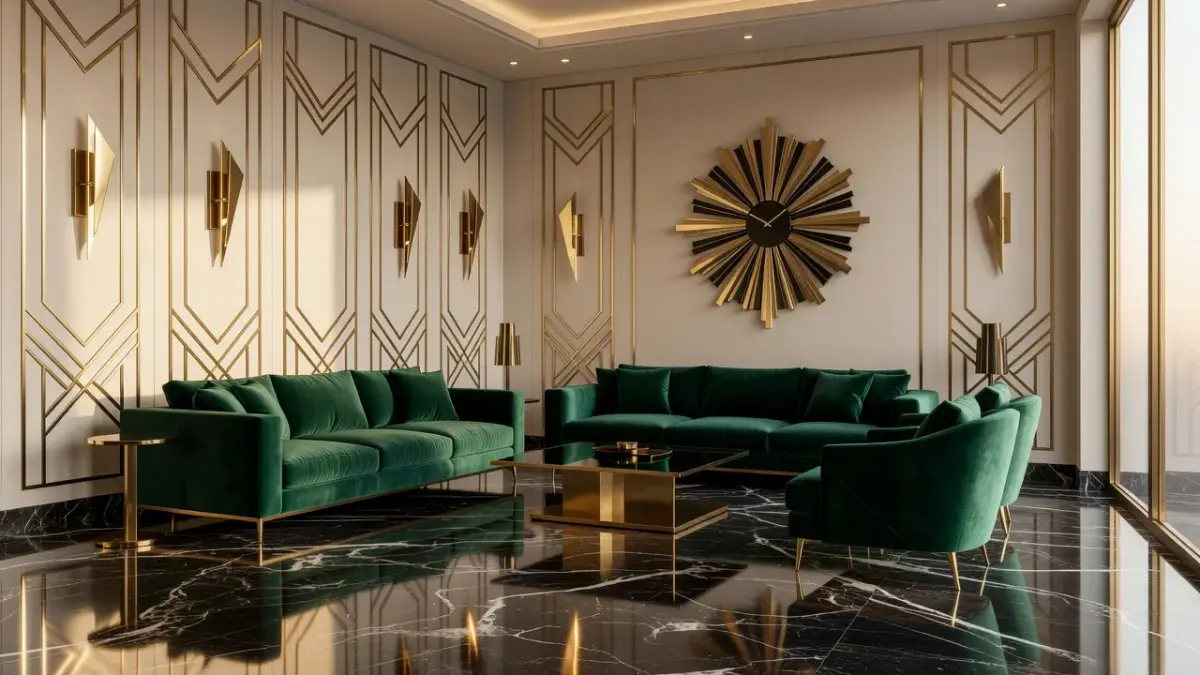
Art Deco interior design is an influential 20th-century aesthetic defined by bold geometric shapes, rich jewel tones, lavish metallic accents, and high-contrast symmetry. Originating in Paris during the 1920s, it fuses industrial progress with opulent craftsmanship, replacing organic curves with sharp angles, sunbursts, and polished finishes.
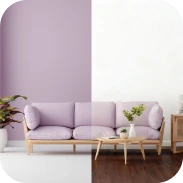
If you are planning to test this aesthetic before committing to expensive lacquer work or brass fixtures, previewing the space is essential. Using our iPhone app, Renova AI, you can instantly visualize over 100 decor styles - including Art Deco - on your smartphone without moving any furniture.
What defines art deco style interior design?
Art Deco style interior design is defined by its embrace of modern technology, geometric discipline, symmetrical layouts, and ultra-luxurious material choices. The movement formally debuted at the 1925 Exposition Internationale des Arts Décoratifs et Industriels Modernes in Paris, signaling a clean break from historic revivalism and the fluid, plant-like lines of Art Nouveau.
The biggest visual mistake homeowners make when identifying Art Deco is confusing it with mid-century modern or vintage Hollywood glam. Where mid-century design emphasizes function and organic wood shapes, Art Deco prioritizes theatrical flair, metallic polish, and strict linear repetition.
Art Nouveau (1890s-1910s: Organic) is on the left and Art Deco (1920s-1930s: Geometric) is on the right, with "vs" between them. Each row pairs the attributes of the two styles.
| Art Nouveau (1890s-1910s: Organic) | Art Deco (1920s-1930s: Geometric) |
|---|---|
| S-curves & vines | Chevrons & arches |
| Asymmetrical flow | Strict symmetry |
| Muted earth tones | Deep jewel tones |
| Carved solid wood | Chrome & lacquer |
The core structural pillars that define a genuine Art Deco interior include:
- Geometric Motifs: Repeated chevrons, zigzags, sunbursts, trapezoids, and sweeping skyscraper-inspired step lines.
- Symmetry and Scale: Paired furniture arrangements, dramatic vertical lines, and monumental architectural elements like tall arched doorways.
- High-Gloss Surfaces: Polished chrome, stainless steel, mirrored glass, high-shine lacquered wood, and exotic stone like black Nero Marquina marble.
- Rich Color Palettes: High-contrast foundations pairing stark black and ivory white with deep emerald greens, sapphire blues, and metallic gold accents.
What materials, colors and motifs characterize art deco interiors?
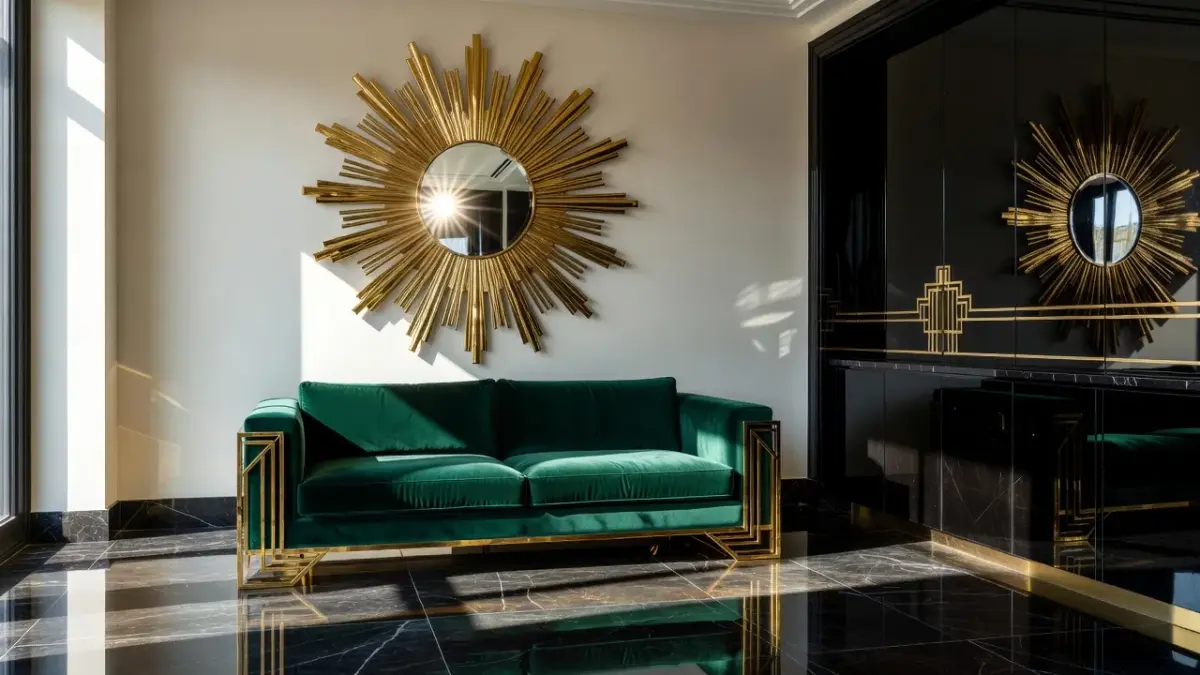
Art Deco interiors rely on high-contrast color schemes paired with industrial metals, exotic hardwoods, polished stone, and repeating geometric patterns. According to historical design archives at The Metropolitan Museum of Art, the era celebrated machine-age materials like chrome and Bakelite alongside traditional luxury materials like ebony, ivory, and shagreen.
Mistaking cheap gold-painted plastic or brushed bronze for authentic Deco finishes is a costly error. Authentic Art Deco uses polished, reflective metals - specifically mirror-finish chrome, nickel, and bright burnished brass - to catch and reflect indoor lighting.
ART DECO PALETTE MATRIX
| BASE SHADES | JEWEL TONES | METALLIC ACCENTS |
|---|---|---|
| Onyx Black | Emerald Green | Polished Brass |
| Crisp Cream | Sapphire Blue | Mirror Chrome |
| Deep Charcoal | Ruby Red | Burnished Gold |
Spanning the full width beneath the table: MOTIFS: Sunbursts · Chevrons · Step-Gables · Arches
Essential Art Deco Materials and Colors
| Design Element | Traditional Art Deco Material | Modern 2026 Alternative | Common Design Mistake |
|---|---|---|---|
| Metals | Polished Brass, Chrome, Nickel | Electroplated Gold, Stainless Steel | Using matte black or oil-rubbed bronze finishes |
| Upholstery | Silk, Velvet, Zebra/Leopard Hide | High-Performance Velvet, Fluted Fabrics | Choosing relaxed linen or distressed leather |
| Woodwork | Macassar Ebony, Rosewood, Walnut | Dark Stained Oak, Fluted MDF Panels | Overusing pale pine or knotty birch finishes |
| Flooring | Checkered Marble, Parquet Wood | Large-Format Porcelain, LVP Parquet | Installing distressed farmhouse wood planks |
| Glass/Stone | Mirrored Glass, Onyx, Travertine | Tempered Smoked Glass, Quartzite | Choosing matte concrete or rustic subway tile |
To anchor the walls, home designers often pair dark hardwoods with classic paint lines. You can check historic wall paint options in our breakdown of Sherwin Williams historic colors to select paint palettes that match period-accurate room hues.
How can art deco be used in modern homes?
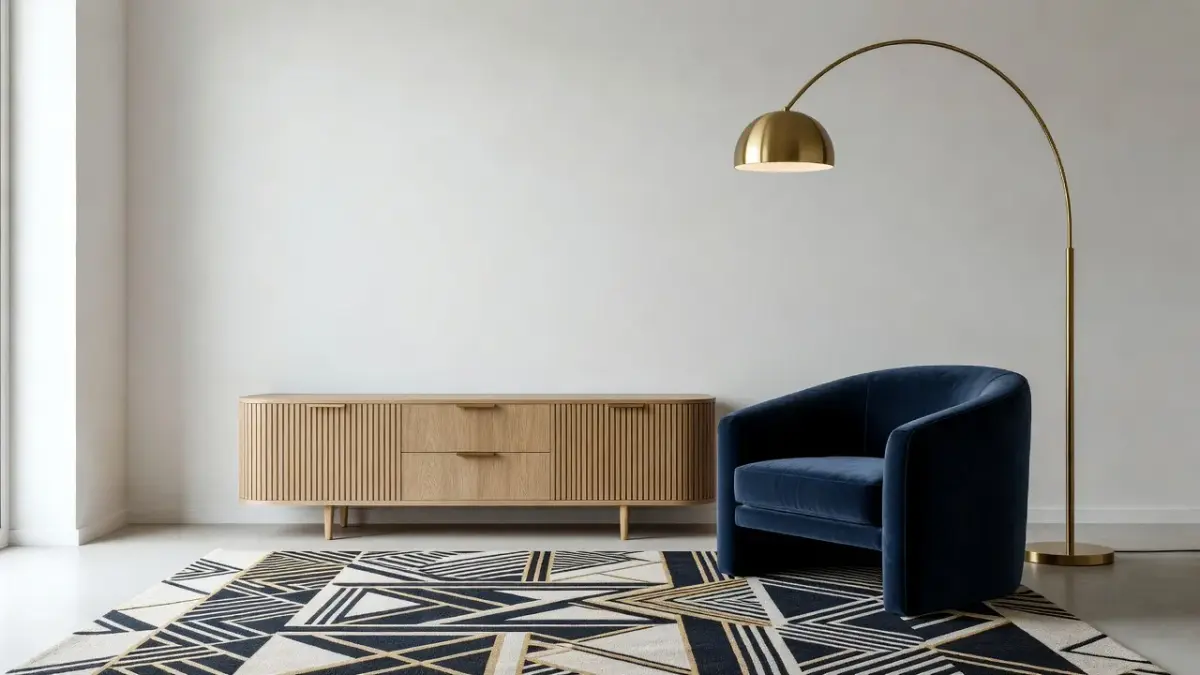
You can incorporate Art Deco into modern homes by selecting two or three statement architectural elements - such as geometric light fixtures, fluted wall panels, or velvet accent chairs - while keeping overall floor plans clutter-free. Trying to recreate a 1920s period room from floor to ceiling often makes a home look like a film set rather than a liveable modern residence.
The key to modern integration is balancing sleek contemporary shapes with Deco texture. If you want to dive deeper into contrasting modern frameworks with vintage styles, read our guide on modern interior design principles.
- Focus on Lighting: Install an oversized geometric brass chandelier or pair of globe sconces to serve as the visual anchor of your room.
- Add Architectural Fluting: Apply vertical fluted paneling to kitchen islands, vanity fronts, or fireplace surrounds to introduce subtle geometric texture.
- Introduce Curved Seating: Pick a scalloped velvet armchair or a curved sectional sofa to soften the hard linear edges of modern drywall rooms.
- Use High-Contrast Tile: Install black-and-white diagonal floor tile in entryways or bathrooms for instant architectural drama.
How to visualize Art Deco in your space with Renova AI
Testing bold Art Deco colors and geometric furniture in your actual room takes only a few seconds using the Renova AI app. Renovating a room with dark paint, marble flooring, or custom brass shelving involves significant financial risk if the final combination feels overwhelming in your lighting.
Our app solves this by scanning your space and rendering accurate style transformations instantly.
RENOVA AI WORKFLOW
The three steps sit side by side in a single row, left to right, beneath the title.
- STEP 1: SNAP: Take photo of your room
- STEP 2: SELECT: Pick "Art Deco" from 100+ design presets
- STEP 3: RENDER: View updated room instantly
Key Visualization Features:
- Instant Style Swap: Snap a photo of your living room, bedroom, or bathroom and select Art Deco from over 100 available style presets.
- Floor & Wall Redesign: Test black marble, herringbone hardwood, or bold wall colors without buying sample cans or wood swatches.
- Object Removal & Custom Edits: Remove existing bulky furniture or describe specific custom changes - like adding fluted wall sconces - using simple text prompts.
- Zero Editing Required: The AI processes lighting, perspective, and shadows automatically with no manual rendering experience needed.
Pricing starts with 3 free generations, followed by flexible subscriptions at $6.99 per week or $59 per year for unlimited room redesigns.
What is the art deco revival in interiors?
The Art Deco revival in interior design is a contemporary trend focused on reinterpreting 1920s luxury through sustainable materials, warm minimalism, and modern ergonomic furniture. As highlighted in our analysis of 2026 home decor trends, homeowners are moving away from cold, plain minimalism in favor of rich visual texture and architectural character.
Each item in the Original Art Deco (1920s Luxury & Polish) column points to the item in the same row of the 2026 Deco Revival (Warmth & Modern Comfort) column, with an arrow running from left to right.
| Original Art Deco (1920s Luxury & Polish) | 2026 Deco Revival (Warmth & Modern Comfort) |
|---|---|
| Exotic ivory & shagreen | Sustainable hardwoods |
| High-maintenance gloss | Matte & satin brass |
| Rigid symmetry | Relaxed organic flow |
| Stark contrast | Warm monochrome tones |
The current revival differs from the original movement in several distinct ways:
- Softer Metallics: Brushed brass and satin nickel are preferred over hyper-reflective mirror chrome, making rooms feel warmer under LED lighting.
- Tactile Fabrics: Homeowners pair sleek geometric lines with cozy boucle, textured velvet, and natural linen blends rather than stiff silks.
- Tactile Wall Treatments: Plaster finishes, fluted wood paneling, and tactile wallpaper replace plain flat wall paint.
- Sustainable Sourcing: Modern furniture makers replicate exotic dark woods like rosewood using sustainably harvested walnut and oak stained with dark eco-friendly finishes.
What are examples of modern art deco interiors?
Modern Art Deco interiors show up across residential homes through curated focal points like dramatic powder rooms, tailored bedroom headboards, and geometric kitchen cabinetry. According to design analysis from Britannica, Art Deco relies heavily on visual structure, making it highly adaptable for targeted home renovations.
1. The Art Deco Powder Room
Powder rooms are ideal spaces for full-expression Art Deco because their small footprint keeps bold choices from overpowering the house.
- Walls: Bold geometric wallpaper with metallic gold line work over a dark navy base.
- Vanity: Black marble countertop mounted on a custom brass frame with a vessel sink.
- Mirror: Tall arch-shaped or octagonal mirror flanked by vertical frosted-glass sconces.
2. The Art Deco Living Room
Living rooms use Deco features to frame conversation zones without crowding walkways.
- Furniture: A curved sofa upholstered in deep emerald or burnt orange velvet.
- Anchors: A starburst coffee table featuring a brass base and smoked glass top.
- Walls: Painted accent walls featuring stepped picture frame molding.
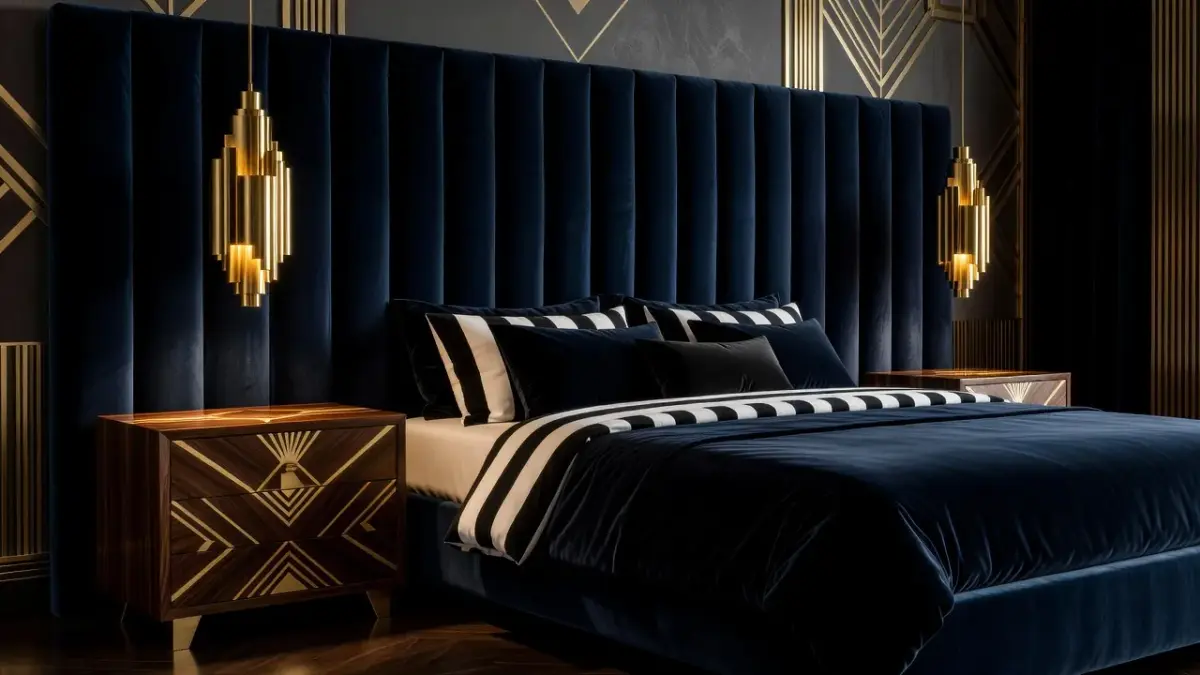
3. The Art Deco Master Bedroom
Bedrooms focus on plush, quiet luxury with strong vertical lines behind the bed.
- Headboard: Floor-to-ceiling channel-tufted velvet headboard in rich charcoal or sapphire.
- Nightstands: Dark walnut bedside tables featuring inlaid brass strip accents and round brass knobs.
- Lighting: Pendant lights with globe shades suspended over nightstands to eliminate lamps.
Planning approaches for an Art Deco remodel
Planning an Art Deco transformation requires balancing design costs, spatial layouts, and visual prep work before buying furniture. Homeowners frequently overspend on decor items that look striking in store displays but clash with their home’s ceiling height or natural lighting.
REMODEL PLANNING FLOWCHART
The three steps run left to right in sequence, each leading to the next:
- ASSESS SPACE: Check lighting, ceiling height
- VISUALIZE: Test layouts via digital tools
- EXECUTE: Source statement pieces & install lighting
Design Approach Comparison
| Design Approach | Best Suited For | Typical Cost Range | Key Advantage | Potential Drawback |
|---|---|---|---|---|
| Traditional Interior Designer | Full-home historic renovations | $5,000 - $25,000+ | Full project management and white-glove sourcing | High cost and lengthy design schedules |
| Renova AI App | Homeowners exploring ideas & visual layouts | Free trial; then $6.99/wk or $59/yr | Instant visual results on your own rooms with zero learning curve | Requires user to source physical furniture items independently |
| DIY Mood Boarding | Craft-focused homeowners with extra time | $0 - $100 | Total manual control over individual fabric samples | Flat images don't reflect your room's real lighting or size |
What are the most common mistakes when decorating in art deco style?
The most common mistake when decorating in Art Deco style is introducing too many competing geometric patterns, which creates visual confusion instead of structured elegance. Because Art Deco features striking shapes, mixing sunbursts, chevrons, and animal prints in a single space quickly looks chaotic.
ART DECO DECORATING DOS & DON'TS
The table has two columns side by side: DO on the left and DON'T on the right. Each row pairs a DO item with a DON'T item.
| DO | DON'T |
|---|---|
| ✔ Pick one primary pattern | ✘ Mix chevrons & sunbursts |
| ✔ Use warm 2700K lighting | ✘ Install cool daylight LEDs |
| ✔ Balance dark walls & brass | ✘ Paint everything black |
| ✔ Invest in quality hardware | ✘ Buy cheap hollow plastics |
Avoid these four expensive decorating traps:
- Buying Cheap Metallic Finishes: Thin yellow-gold spray paint or cheap gold-plated plastic hardware looks tacky next to rich woods. Invest in solid brushed brass or stainless steel hardware instead.
- Neglecting Scale and Clearance: Art Deco furniture often features thick frames and wide armrests. In small rooms, this blocks traffic lanes. Review proper clearances using our guide to living room space planning.
- Using Cool Blue LED Lighting: Art Deco colors (emerald, navy, onyx, gold) rely on warm lighting to bring out their depth. Using cool daylight bulbs (4000K+) makes high-gloss surfaces look harsh and clinical. Use warm 2700K lighting instead.
- Ignoring Architectural Transitions: Applying heavy Art Deco trim inside a modern house without adjusting door frames or baseboards creates an unnatural visual clash. Ensure room transitions flow logically between living areas.
Frequently Asked Questions
What is the difference between Art Deco and Art Nouveau?
Art Nouveau features organic, flowing curves inspired by vines, flowers, and natural forms. Art Deco emphasizes sharp geometric shapes, straight lines, sunbursts, and machine-age industrial materials like chrome and steel.
What are the main colors used in Art Deco interior design?
The primary Art Deco palette pairs high-contrast neutrals like onyx black, cream, and white with deep jewel tones including emerald green, sapphire blue, and ruby red, accented by polished brass or chrome.
Is Art Deco out of style in 2026?
No, Art Deco is experiencing a major revival in 2026. Modern updates replace high-gloss finishes with satin brass, warm lighting, and textured upholstery like velvet and fluted wood.
How can I decorate a small room in Art Deco style without cluttering it?
Focus on one or two statement pieces, such as a geometric light fixture or an arch-shaped mirror, and keep wall patterns simple. Use vertical fluting to draw the eye upward without eating into floor space.
What flooring works best for an Art Deco living room?
Checkered black-and-white marble, dark-stained hardwood in a herringbone or chevron pattern, and polished quartz are classic Art Deco flooring options.
What furniture shapes define Art Deco?
Art Deco furniture features bold geometric silhouettes, stepped profiles, sweeping curves, scalloped backs, and channel-tufted upholstery supported by brass or chrome legs.
How can I test if Art Deco will look good in my room?
You can use visualization apps like Renova AI to snap a photo of your existing space and instantly swap room styles to preview Art Deco furniture, colors, and flooring.