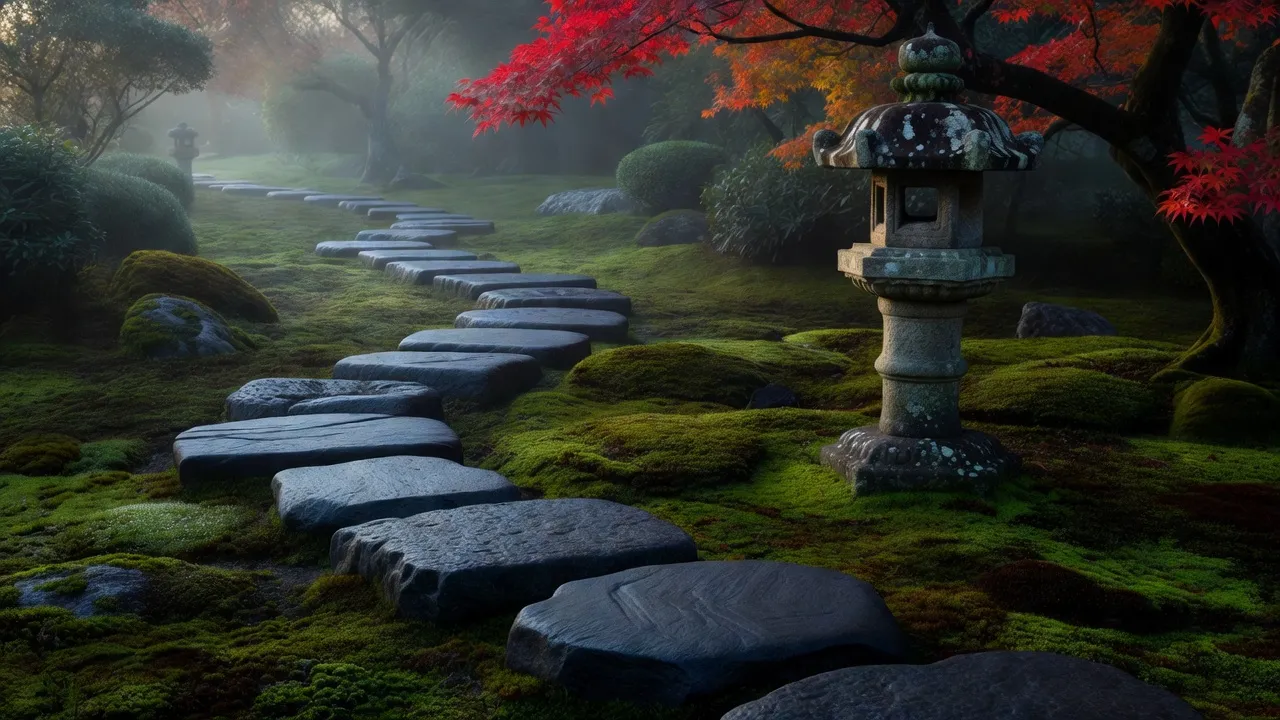
Japanese garden design is a landscape art guided by principles of asymmetry, spatial economy, natural materials, and symbolic representations of nature like water, stone, and moss. Unlike Western formal gardens that rely on symmetry and manicured lawns, a Japanese garden creates a scaled-down, meditative ecosystem that frames natural views and adapts to changing seasons. Whether you are building a dry rock garden (karesansui) in a backyard courtyard or planning a stroll garden (chisen-kaiyushiki), avoiding common spatial mistakes starts with learning how master designers organize stone, water, and greenery.
What Japanese garden projects has Hoichi Kurisu of Kurisu International designed, including Portland Japanese Garden?
Hoichi Kurisu designed the Natural Garden and Sand and Stone Garden expansions at the Portland Japanese Garden, along with world-class healing gardens across North America. After studying under master landscape architect Kenzo Ogata in Tokyo, Kurisu founded Kurisu International in 1972 to focus on the restorative power of landscape design.
His notable projects include:
- Portland Japanese Garden (Portland, Oregon): Directed major construction phases and designed the Natural Garden section, which uses cascading water and native Oregon plants to embody natural decay and renewal.
- Anderson Japanese Gardens (Rockford, Illinois): Transformed a private swamp into a 12-acre public stroll garden rated among the finest in North America.
- Meijer Gardens Japanese Garden (Grand Rapids, Michigan): Designed an 8-acre landscape featuring waterfalls, granite boulders, and a modern bonsai structure.
- Healing Gardens at Samuel Oschin Comprehensive Cancer Institute (Los Angeles, California): Built rooftop sanctuary spaces designed for therapeutic recovery.
According to the official history published by the Portland Japanese Garden, Kurisu's work emphasizes natural stone placement and water movement to reduce human stress.
What Japanese garden projects has Robert Murase of Murase Associates designed in Portland, Oregon?
Robert Murase designed the Japanese American Historical Plaza at Tom McCall Waterfront Park and the Garden of Awakening Light at the Portland Classical Chinese Garden (consulting on stonework), alongside landmark civic water gardens in Portland. Murase was a third-generation Japanese American landscape architect who spent nine years in Japan studying traditional stone masonry and garden layout before founding Murase Associates in 1982.
Key Portland projects by Robert Murase include:
- Japanese American Historical Plaza: Built in 1990 on the Willamette River, this memorial uses 12 massive granite basalt stones carved with poetry to commemorate Japanese Americans interned during World War II.
- Oregon Convention Center Plazas: Designed outdoor stone plazas and cascading water features that mirror the natural basalt formations of the Columbia River Gorge.
- Town Center Park in Wilsonville: Created interactive stone water basins that bridge traditional Japanese stone cutting with modern urban drainage design.
Murase's design philosophy always treated stone as the permanent bone structure of the garden, surrounding it with soft birch, maple, and moss planting.
Who designed Anderson Japanese Gardens in Rockford - Hoichi Kurisu or Dai Yoshida?
Hoichi Kurisu designed Anderson Japanese Gardens in 1978, working closely with businessman John R. Anderson. While Dai Yoshida is a respected landscape architect involved in Japanese garden preservation, he was not the designer of the Rockford site.
Kurisu transformed Anderson's private backyard swamp in Illinois into a multi-tiered sanctuary over several decades. As documented by Anderson Japanese Gardens, the 12-acre site includes winding paths, koi-filled ponds, authentic Sukiya-style timber structures, and dramatic waterfalls engineered from locally sourced rock.
What Japanese garden projects has designer Kinsaku Nakane created in Japan?
Kinsaku Nakane created the famous gardens at the Adachi Museum of Art, the restore work at Taizoin in Kyoto, and the garden at Ohe Hashi in Osaka. Nakane (1917-1995) was often called the "Modern Jihei Ogawa" for his mastery in connecting historic Japanese garden aesthetics with post-war architecture.
His landmark achievements in Japan include:
- Adachi Museum of Art (Yasugi, Shimane Prefecture): Designed the museum's six distinct gardens, which have been ranked continuously as top gardens in Japan by international publications like the Journal of Japanese Gardening.
- Taizoin Temple Motonobu-no-niwa (Kyoto): Restored and expanded the historic dry landscape garden originally designed by painter Kano Motonobu.
- Nijo Castle Garden Restorations (Kyoto): Headed crucial restoration projects on Edo-period stone landscapes.
Nakane's signature technique involved "borrowed scenery" (shakkei), where distant mountain ridges are visually framed to appear as part of the garden's foreground.
What Japanese garden design projects has Sasaki Associates worked on?
Sasaki Associates has designed modern Japanese-influenced master plans, including the waterfront landscape for the US Embassy in Tokyo and regional botanical installations across the Pacific Rim. Founded by Hideo Sasaki in 1953, the firm integrates classical Asian spatial ordering with large-scale environmental engineering.
As highlighted in public project archives on Sasaki Associates, their team frequently incorporates traditional gravel courtyards, stepping-stone pathways, and local stone retaining structures into corporate campuses and academic plazas. Their design work translates traditional japan garden design principles like subtle transitions (miegakure) into high-traffic civic hubs.
What Japanese garden projects has designer Ken Nakajima created?
Ken Nakajima designed the Cowra Japanese Garden in Australia, the Montreal Botanical Garden's Japanese Garden in Canada, and the Japanese Garden at Hasselt in Belgium. Nakajima (1914-2000) served as a world ambassador for Japanese landscape architecture, specializing in large international public sites.
His major global projects include:
- Cowra Japanese Garden (New South Wales, Australia): A 12-acre stroll garden built as a symbol of peace and international reconciliation between Australia and Japan.
- Montreal Botanical Garden (Montreal, Canada): A 6-acre garden featuring a traditional tea house, stream systems, and an extensive collection of cold-hardy Japanese maples.
- Japanese Garden of Hasselt (Hasselt, Belgium): The largest authentic Japanese garden in Europe, designed with ceremonial cherry orchards and a central koi pond.
Which Japanese garden design scenario fits your yard?
Getting a Japanese garden right depends heavily on your available square footage, local climate, and maintenance budget. Selecting the wrong style leads to overgrown maple trees, clogged water pumps, or weed-infested gravel beds.
| Scenario | Core Elements | Typical DIY Cost | Best Fit For |
|---|---|---|---|
| Small Courtyard (Karesansui) | Decomposed granite, granite boulders, moss edges, slate accents | $800 - $2,500 | Urban homes, tight side yards |
| Digital AI Landscape Visualization (Renova AI) | Photo uploads, 3D style rendering, instant layout testing | $0 - $50 (App plan) | Homeowners testing styles before buying |
| Suburban Stroll Garden (Chisen-kaiyushiki) | Koi pond, wooden bridge, stone lanterns, maple groves, stone steps | $12,000 - $45,000 | Large yards, full-sun spaces with water |
| Minimalist Japandi Hybrid | Bamboo fencing, architectural gravel, potted bonsai, cedar decking | $3,500 - $10,000 | Modern home exteriors, low water |
Scenario 1: Creating a small courtyard dry garden (Karesansui) on a tight budget
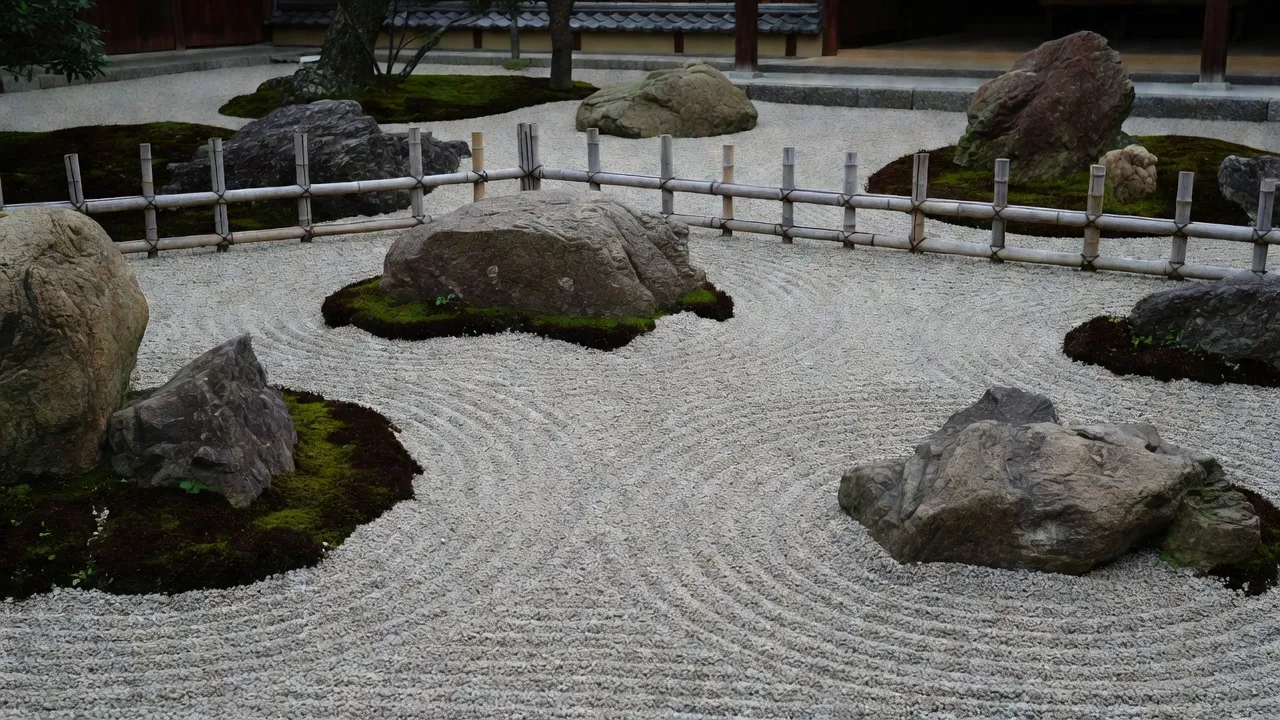
A dry rock garden (karesansui) is ideal if you have a shaded side yard under 300 square feet and want a low-water space. This layout uses raked gravel or crushed granite to represent ocean waves, while static rocks represent islands or mountains.
To keep costs under control, follow these practical installation rules:
- Dig down 4 inches: Lay woven landscape fabric down before pouring gravel to prevent deep weeds.
- Group stones in odd numbers: Set boulders in clusters of three (representing heaven, earth, and humanity) and bury the bottom third of each stone in the soil so it looks naturally anchored.
- Limit plant varieties: Stick to dwarf mondo grass, Japanese forest grass (Hakonechloa), and shade-tolerant mosses along the border.
If you prefer professional help over DIY rock-hauling, reviewing local garden design services helps ensure stone placement matches traditional spatial principles.
Scenario 2: Visualizing your yard layout before digging
Before buying expensive granite rocks or hiring heavy machinery, visualizing how stones and trees fit your plot prevents costly layout mistakes. Misjudging scale is the most common reason home projects fail. A stone that looks small at the quarry often overwhelms a modest lawn.
To test layouts instantly on your phone:
- Snap a clear picture: Take a high-resolution photo of your existing yard or patio area in natural daylight.
- Choose an exterior style: Select a dedicated design theme like Japandi or Minimalist to re-skin your outdoor space.
- Generate instantly: The AI renders stone pathways, bamboo screening, and Japanese maples directly onto your photo without manual editing.
Using Renova AI allows homeowners to test dozens of japanese garden design ideas on iOS or web in seconds. You can download the tool on the Apple App Store to preview moss beds and gravel lines before spending a dime on materials.
Scenario 3: Planning a residential stroll garden with water features
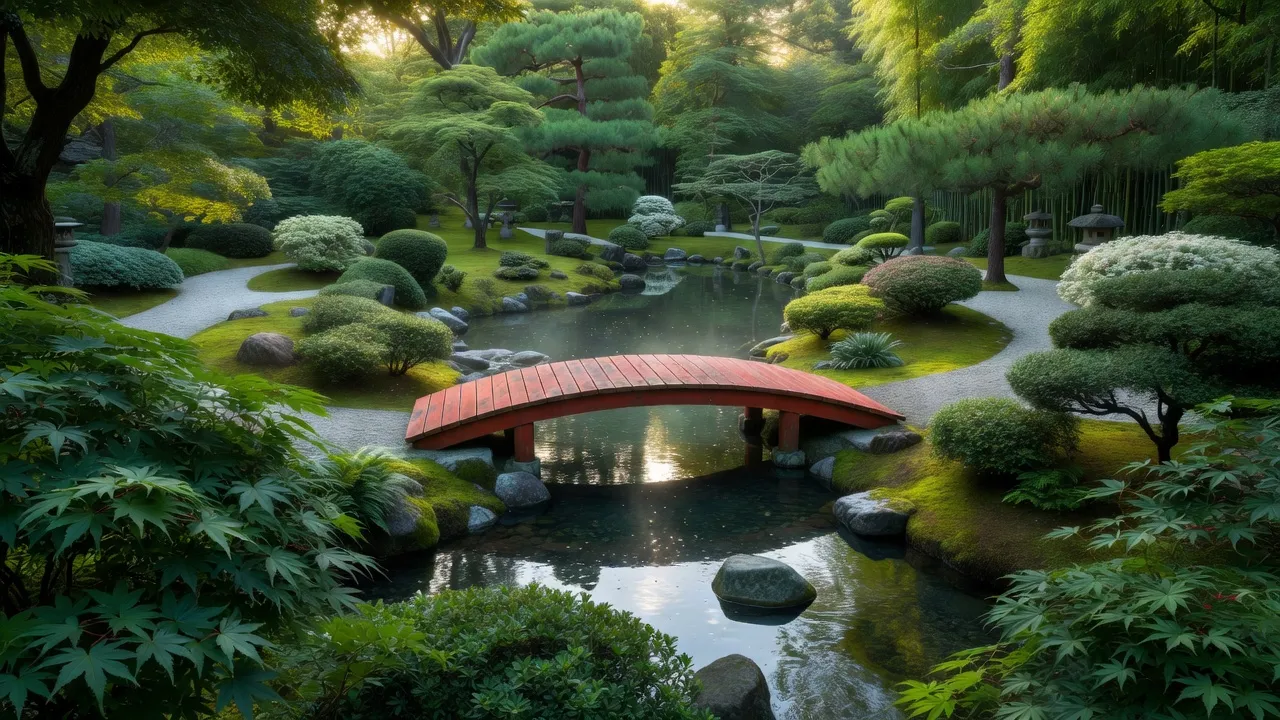
A residential stroll garden (chisen-kaiyushiki) works best for yards over a quarter-acre that can handle a recirculating stream or koi pond. This design relies on winding stone paths that reveal hidden views (miegakure) as you walk around corners.
Key structural components include:
- Stepping Stones (Tobi-ishi): Set flat-topped basalt rocks 2 inches above the soil line, spaced comfortable distances apart for a natural walking cadence.
- Stone Lanterns (Tōrō): Place lanterns near water crossings or bends in the path to act as visual anchor points at dusk.
- Water Circulation: Install an skimmer box and biological filter system to keep koi ponds clear without harsh chemical treatments.
For homeowner inspiration, studying magnificent garden layouts provides clear blueprints for balancing open pond water with dense maple canopies.
Scenario 4: Blending modern architectural homes with Japandi garden aesthetics
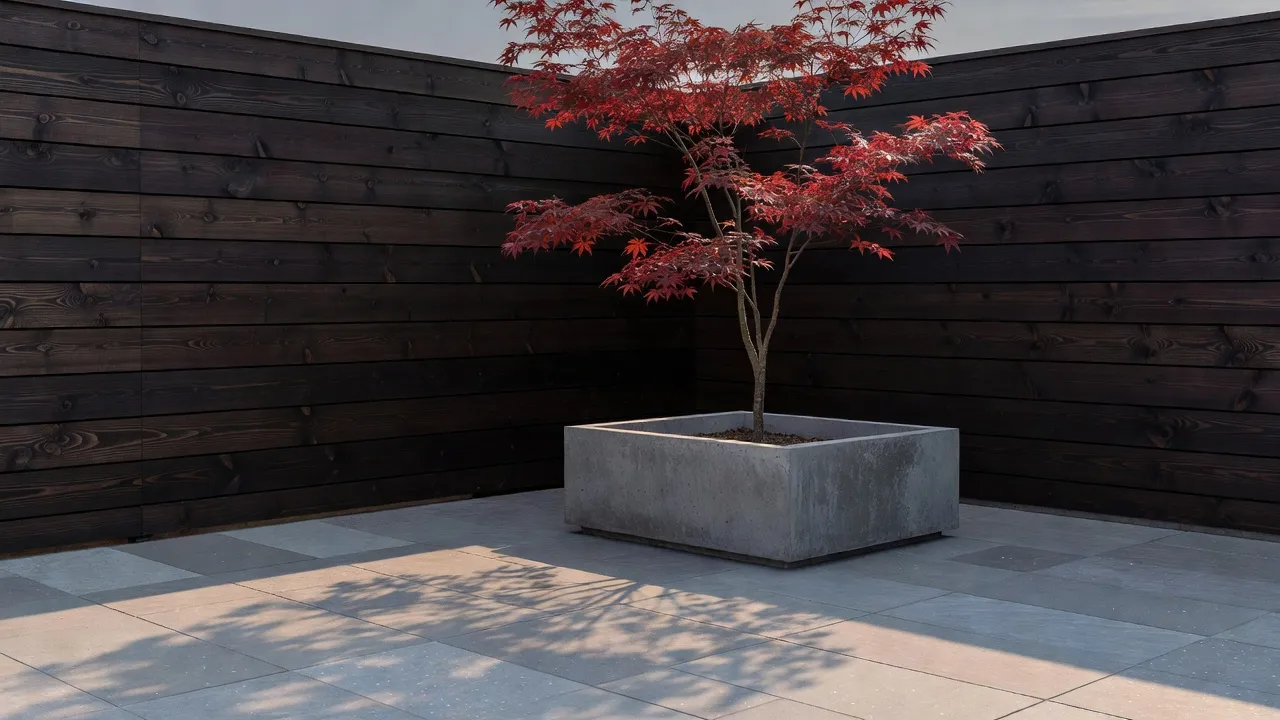
Japandi garden design combines clean Scandinavian wooden decking with Japanese stone minimalism. This hybrid layout is perfect for modern architectural homes that use dark cladding, large glass windows, and concrete patios.
Key steps for a balanced Japandi exterior:
- Build cedar slat screening: Use horizontal dark-stained cedar slats along property walls to screen out neighbors.
- Add indoor-outdoor visual links: Match indoor flooring lines with outdoor slate pavers or bamboo planters.
- Incorporate stone art: Add small indoor-outdoor sculptures or balanced rock arrangements similar to modern japandi art prints to keep the transition smooth.
What plants work best in a home Japanese garden design?
Japanese maples, black pines, azaleas, and dwarf mondo grass form the core plant matrix for most temperate Japanese gardens. Choosing plants that match your USDA hardiness zone ensures your yard looks green year-round without requiring daily watering.
Here is a quick reference breakdown for plant selection:
- Specimen Trees: Japanese Maple (Acer palmatum), Japanese Black Pine (Pinus thunbergii), Hinoki Cypress (Chamaecyparis obtusa).
- Foundation Shrubs: Satsuki Azalea (Rhododendron indicum), Boxwood (Buxus microphylla), Heavenly Bamboo (Nandina domestica).
- Groundcovers & Grasses: Moss (Thuidium delicatulum), Dwarf Mondo Grass (Ophiopogon japonicus), Japanese Forest Grass (Hakonechloa macra).
Avoid planting bright perennials with mixed tropical colors. Japanese garden aesthetics rely on varying shades of green, rust red, and stone grey rather than bright flower beds.
How do you maintain a dry rock garden (Karesansui)?
Maintaining a dry rock garden requires regular raking of the gravel, removing leaf debris with a soft blower, and weeding by hand. Raking patterns around central stones should mimic circular water ripples, while open gravel areas use long, straight wave lines.
Follow this simple monthly maintenance routine:
- Blow off leaves: Use a battery-powered leaf blower on low power to clear falling maple leaves without disturbing the gravel base.
- Apply organic weed preventative: Spray corn gluten meal or vinegar solution over the granite gravel twice a year to kill airborne seeds before they root.
- Re-rake water lines: Use a wide-toothed wooden rake twice a month to re-establish crisp ripple patterns in high-traffic spots.
Taking ten minutes a week to rake gravel becomes a relaxing, meditative routine that keeps the yard looking immaculate.
Frequently Asked Questions
What are the main principles of Japanese garden design?
The core principles are asymmetry (Fukinsei), simplicity (Kanso), naturalness (Shinzen), subtlety (Yugen), and breakthrough tranquility (Seijaku). These rules dictate that rocks should look naturally placed rather than engineered, and layouts should avoid rigid symmetry.
How much does it cost to build a Japanese garden?
A small DIY dry rock garden costs between $800 and $2,500 for gravel, weed barrier, and local boulders. Professional installations for larger stroll gardens with streams, maple groves, and custom stone lanterns typically range from $12,000 to over $45,000 depending on site excavation needs.
Can I design a Japanese garden in a small yard?
Yes, small yards are ideal for Japanese courtyard gardens (tsubo-niwa). These micro-gardens focus on a few key elements like a bamboo water basin (tsukubai), a single stone lantern, and small ferns framed by wooden fencing.
What is the difference between Japandi and traditional Japanese garden design?
Traditional Japanese garden design follows strict historical rules centered on natural symbolism, pond layouts, and sacred rock formations. Japandi garden design blends these Japanese stone concepts with Scandinavian functional decking, clean architectural lines, and neutral outdoor furniture.
What gravel is used for raking in a Japanese dry garden?
Decomposed granite or small crushed granite chips (sized 1/8 inch to 1/4 inch) are standard for raking. Smooth river pebbles do not hold raked wave ridges, so angular crushed stone is preferred for clean patterns.
Do I need real water to create a Japanese water feature?
No, traditional dry gardens (karesansui) use raked gravel or smooth slate river rock beds to represent flowing streams and ocean waves without any real plumbing or water pumps.
How do I prevent weeds in my gravel rock garden?
Install heavy-duty woven landscape fabric underneath a 3-to-4-inch layer of crushed stone. Avoid using plastic sheeting, which traps standing water and rots surrounding plant roots.