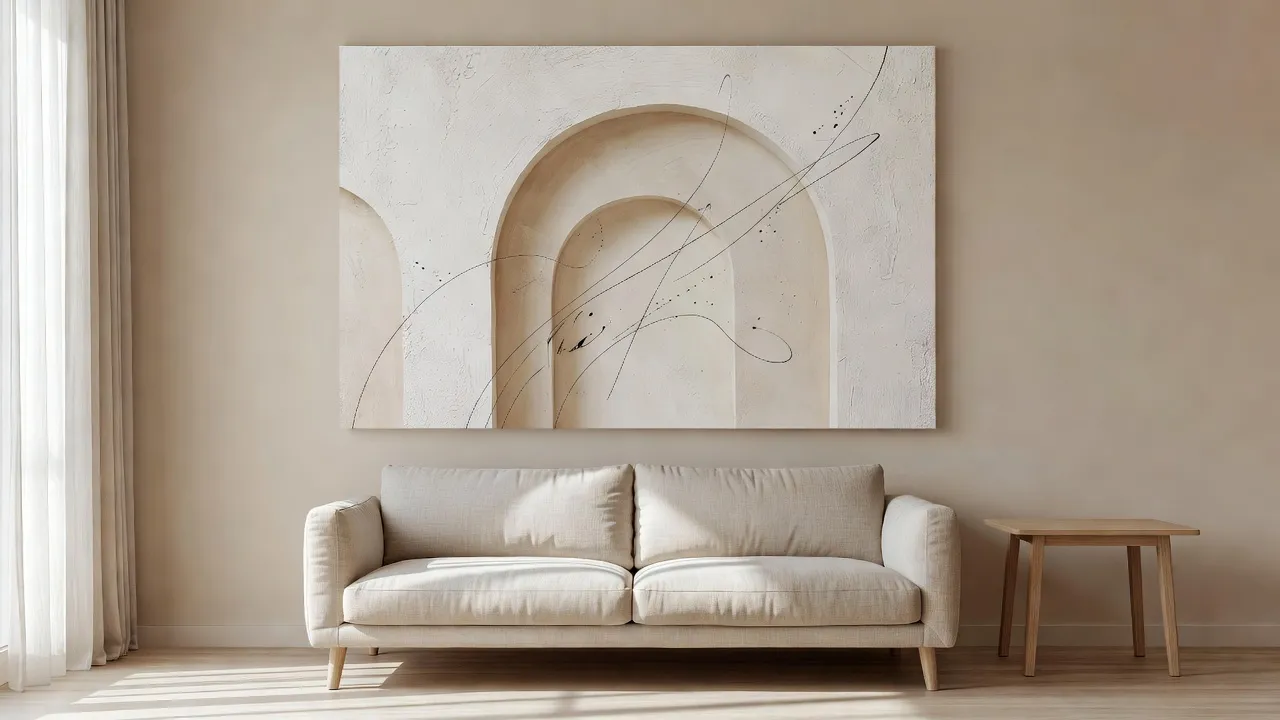
Japandi art is a visual design movement that fuses Japanese wabi-sabi minimalism with Scandinavian functionalism, emphasizing earthy color palettes, organic textures, and muted brushstrokes. Grounded in the ancient concept of wabi-sabi—finding beauty in natural imperfection—and the Nordic principle of hygge (cozy mindfulness), this art style skips loud graphics in favor of linen canvases, sumi-i ink washes, and understated geometric arches. Choosing the right scale and texture for your space can be tricky, which is why testing pieces with Renova AI helps you preview wall placements and frame finishes in your actual room before spending a dollar on printing.
Who are the best Japandi art print artists?
The best Japandi art print artists include Eleni Koubrati of Studio Paradissi, Berenice Hernandez, and Christiane Spangsberg, who blend organic brushwork with warm, structural minimalism. These creators balance Japanese ink tradition with modern Scandinavian abstraction to produce quiet visual anchors.
- Eleni Koubrati (Studio Paradissi): A Greek architect turned artist whose muted botanical studies and stone-like geometric prints rely on soft ochre, warm beige, and matte black pigments.
- Berenice Hernandez: Known for her bold botanical cut-outs and hand-painted linen textures, Hernandez brings a tactile quality to minimal plant forms that suit light wood frames.
- Christiane Spangsberg: A Copenhagen-based artist famous for single-line ink drawings that embody restraint, restraint being the core principle of Japanese calligraphic traditions.
- Astrid Wilson: Offers slightly warmer, Scandinavian-tinted color studies featuring muted sage, cream, and terracottas that add subtle depth without overpowering white space.
What are the best Japandi art prints and shops on Etsy?
The best Japandi art print shops on Etsy include MinimalistArtShop, SoftLineArt, and FineGrainStudio, which offer both instant digital downloads and heavyweight matte giclée prints. Etsy remains a primary hub for independent artists selling high-resolution 300 DPI image files scaled for standard frame dimensions.
| Etsy Shop Name | Primary Style & Medium | Format Options |
|---|---|---|
| MinimalistArtShop | Textured acrylic & plaster arches | Giclée prints & printable files |
| SoftLineArt | Sumi ink botanical line art | Printable JPGs (up to 24x36") |
| FineGrainStudio | Earth-tone mid-century geometries | Heavyweight cotton rag paper |
| NordiWallArt | Wabi-sabi canvas textures | Framed stretched canvas |
When shopping on Etsy, verify paper weight specs before buying. High-end Japandi prints perform best on 230gsm to 300gsm archival matte paper. Standard glossy photo paper reflects too much light, ruining the serene, non-glare surface quality essential to the aesthetic.
What Japandi style prints are available on Society6?
Society6 offers Japandi style prints ranging from gallery-grade framed canvas art to wood-mounted prints featuring minimalist watercolor shapes, raw ink washes, and neutral abstract arches. The platform allows buyers to customize print borders, frame timber tones, and surface materials.
- Framed Canvas Prints: Printed directly onto poly-cotton blend canvas with natural oak or whitewashed wood frames that sit flush against light-colored walls.
- Wood Wall Art: Designs printed directly onto raw Baltic birch wood panels, letting the natural wood grain show through lighter white and beige pigments.
- Gallery Wall Sets: Curated sets of three matching prints featuring complementary stone silhouettes, archway geometries, and delicate bamboo-style line drawings.
As of August 2026, Society6 lists thousands of independent printmakers offering custom sizing up to 40x60 inches. Matching frame tones to your existing flooring is critical to keeping a room unified. If you are experimenting with room layouts, checking your existing living room wall colors helps you choose between charcoal ink or warm terracotta prints.
Which Japandi artists are popular on Instagram?
Popular Japandi artists on Instagram include @studioparadissi, @inkandatmosphere, and @aliciagalladdesign, who share process videos of raw pigment mixing, plaster scraping, and ink application. These creators showcase how wall art interacts with natural sunlight and interior wooden furniture.
- @studioparadissi: Showcases architectural sketches, textured stone motifs, and low-contrast gallery walls in bright Nordic interiors.
- @inkandatmosphere: Focuses on oversized, hand-painted textured canvas pieces using raw plaster, spackle, and charcoal wash.
- @aliciagalladdesign: Highlights hand-drawn organic shapes, leaf silhouettes, and neutral line drawings framed in unvarnished ash wood.
- @atelier_cph: A Copenhagen creative studio famous for collage-style artwork that uses reclaimed paper, canvas cutouts, and muted fabric layering.
Following these accounts provides visual context for how scale operates in actual homes. Most Japandi artists emphasize hanging oversized single prints rather than cluttered, busy wall grids.
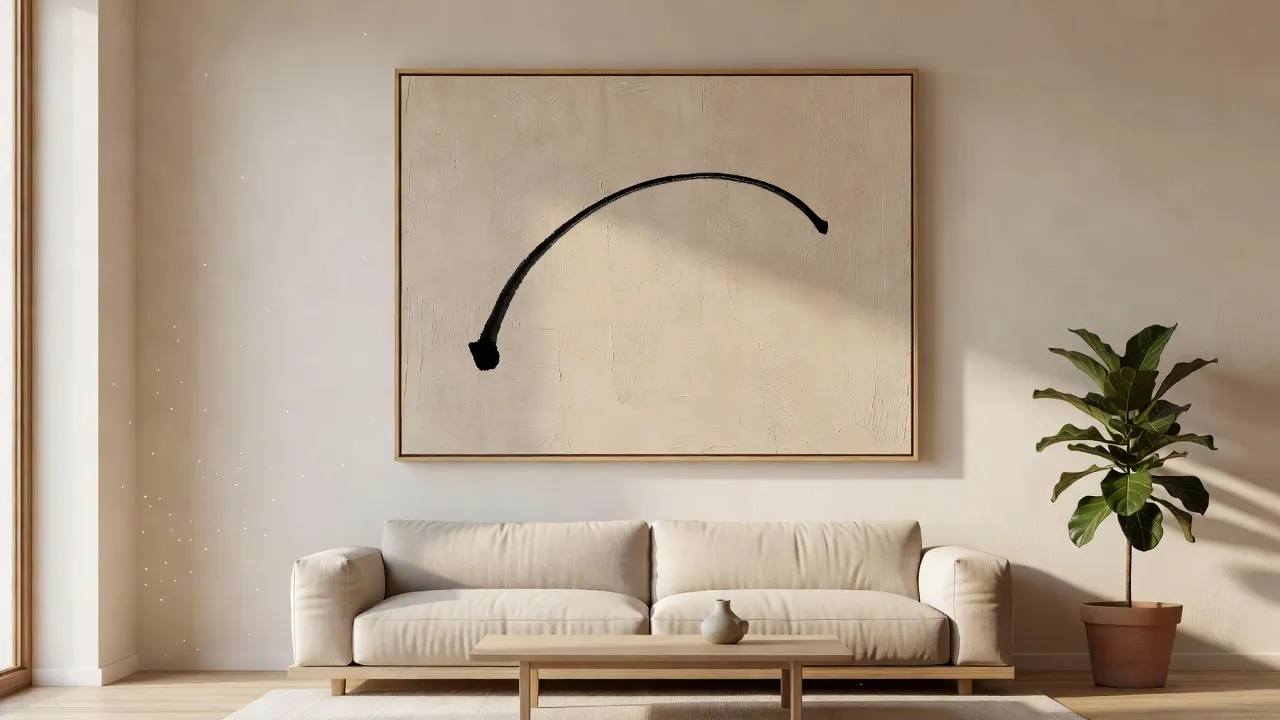
Best Japandi art for small minimalist living rooms
For small minimalist living rooms, the best Japandi art consists of a single large focal print (24x36 inches or larger) featuring low-contrast, open white space. Packing multiple small frames onto a compact wall creates visual noise, which defeats the relaxing purpose of Scandinavian-Japanese design.
In compact quarters, art must breathe. A oversized print with a off-white canvas background visually pushes the wall outward, making the ceiling feel higher.
- Subject Matter: Abstract limestone shapes, soft watercolor wash circles (enso), or single-stem botanical line drawings.
- Color Palette: Warm cream, light gray, soft oat, and muted slate.
- Framing Choice: A thin 0.5-inch light oak frame without a heavy glass glare sheet.
Pairing minimalist art with understated accent decor like a single unglazed ceramic vase or a low-profile linen couch maintains balance across tight room footprints.
Best Japandi wall art for high-contrast dining spaces
In high-contrast dining spaces with dark wood furniture or charcoal accents, choose Japandi art featuring bold black sumi ink strokes paired with unbleached linen matting. High-contrast dining rooms need artwork that holds its ground without clashing against heavy wood tables or dark metal light fixtures.
| Decor Scenario | Key Visual Requirement | Frame & Matting Setup | Recommended Solution / Workflow |
|---|---|---|---|
| Compact Living Room | Light, low-contrast canvas space | 0.5" Thin Light Ash Frame | Single oversized focal print |
| Pre-Purchase Room Preview | Photorealistic visual rendering | N/A (Digital Visualization) | Renova AI photo upload & style test |
| High-Contrast Dining Space | Bold sumi ink on natural raw linen | Dark walnut or black wood | Triptych set of 3 brushstroke prints |
| Bedroom Headboard Wall | Muted horizon lines & stone textures | Unframed canvas or floating | Horizontal canvas stretched 40" wide |
Using tools like Renova AI's iOS app makes it simple to snap a photo of your dining space and test different frame finishes instantly before purchasing expensive physical frames.
To anchor a dining room wall effectively:
- Hang a triptych (a set of three matched prints) spaced exactly 2 to 3 inches apart.
- Ensure the bottom edge of the frame sits 8 to 10 inches above the top of your dining table or sideboard.
- Match the frame timber to the darkest tone present in the room's furniture legs.
Best Japandi artwork options for peaceful bedroom sanctuaries
The best Japandi artwork for bedrooms features horizontal landscape abstractions, soft wave lines, or textured plaster panels rendered in gentle sage, sand, and taupe. Bedrooms require low visual stimulation to promote sleep, making high-contrast black prints less desirable near the headboard.
Plaster art—created by layering joint compound on wood boards to produce raised, wave-like ridges—adds physical texture to plain walls without introducing distracting colors.
- Textured Plaster / Canvas Artwork
- Position 6 to 8 Inches Above Headboard
- Woven Linen Bedding & Neutral Walls
When building a quiet bedroom environment, explore how modern digital design tools work. Experimenting with ai room design software lets you swap out headboard styles and wall textures in seconds so your chosen canvas matches your furniture scale perfectly.
Best Japandi art setup for entryway visual focal points
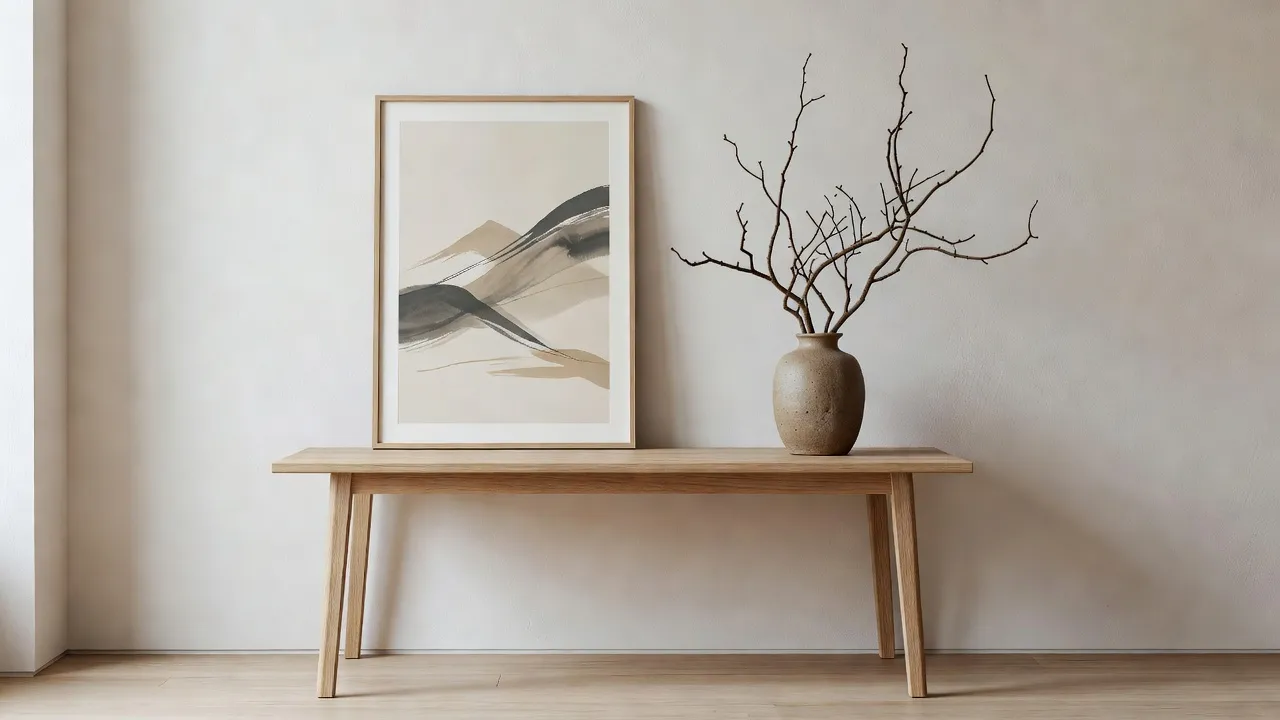
For entryways, the ideal Japandi art setup combines an asymmetric vertical print (18x24 inches) with a low wood console table and dried botanical arrangements. The entryway sets the tone for the rest of your home, requiring an uncluttered layout that draws the eye upward immediately upon entering.
- Asymmetric Placement: Place the art print off-center on the wall, offset by a low ceramic lamp or dried pampas branch on the opposite side of the console.
- Natural Texture Pairings: Use raw clay, woven jute floor runners, and untreated wood frames to complement the paper grain of the print.
- Lighting: Position a soft, warm 2700K wall sconce or tabletop lamp to cast gentle side lighting across the print, accentuating canvas surface texture.
How to test Japandi art in your home before buying
You can test how Japandi art fits your home's layout by taking a picture of your room and running it through visual design apps like Renova AI. Seeing scale, color harmony, and frame weight in your actual space eliminates guesswork and prevents buying prints that look too small or washed out on your walls.
- Snap photo of your target wall
- Upload to Renova AI
- Preview Japandi styles & frames
Step 1: Capture clean wall photos under natural daylight
Take a straight-on photo of the wall you intend to decorate during peak daytime light. Turn off artificial overhead lights to prevent yellow color casts from muddying your wall paint representation.
Step 2: Select Japandi design parameters
Upload your photo directly into Renova AI to visualize Japandi decor presets instantly. The platform's automated engine reinterprets your space, placing Japandi wall art, neutral furniture, and light timber accents into your photo without requiring manual editing or masking tools.
Step 3: Evaluate canvas proportion and timber frame matching
Check the rendered image to see whether an oversized single frame or a dual-print set looks better against your wall height. Take note of how light wood frames contrast against your current wall paint before placing physical orders on Etsy or Society6.
Frequently Asked Questions
What makes art specifically Japandi style?
Japandi art blends Japanese minimalism and wabi-sabi philosophy with Scandinavian functionality. It features earth-toned palettes, organic textures, simple geometric shapes, sumi ink strokes, and open negative space.
What are the main colors used in Japandi art?
The primary colors are warm off-white, beige, oat, sage green, terracottas, muted ochre, charcoal gray, and matte black sumi ink.
How high should I hang a Japandi art print?
Hang Japandi prints so the center of the artwork sits roughly 57 to 60 inches from the floor, which represents standard eye level. Over furniture, leave 6 to 10 inches of space between the top of the furniture and the bottom of the frame.
Is glass or acrylic better for framing Japandi prints?
Anti-glare museum glass or non-reflective acrylic is best because Japandi design avoids shiny, highly reflective surfaces. Many design enthusiasts opt for unframed stretched canvas or floating wood frames to eliminate glass reflections entirely.
What wood frame finishes work best for Japandi artwork?
Unfinished light oak, natural ash, pale maple, and matte black pine are the most common frame finishes. Avoid polished mahogany, chrome, or shiny gold metallic frames.
Can I create DIY Japandi wall art at home?
Yes, you can easily make DIY Japandi art by applying joint compound to a wood panel with a notched trowel to create arch textures, or by painting abstract sumi ink lines onto raw watercolor paper.