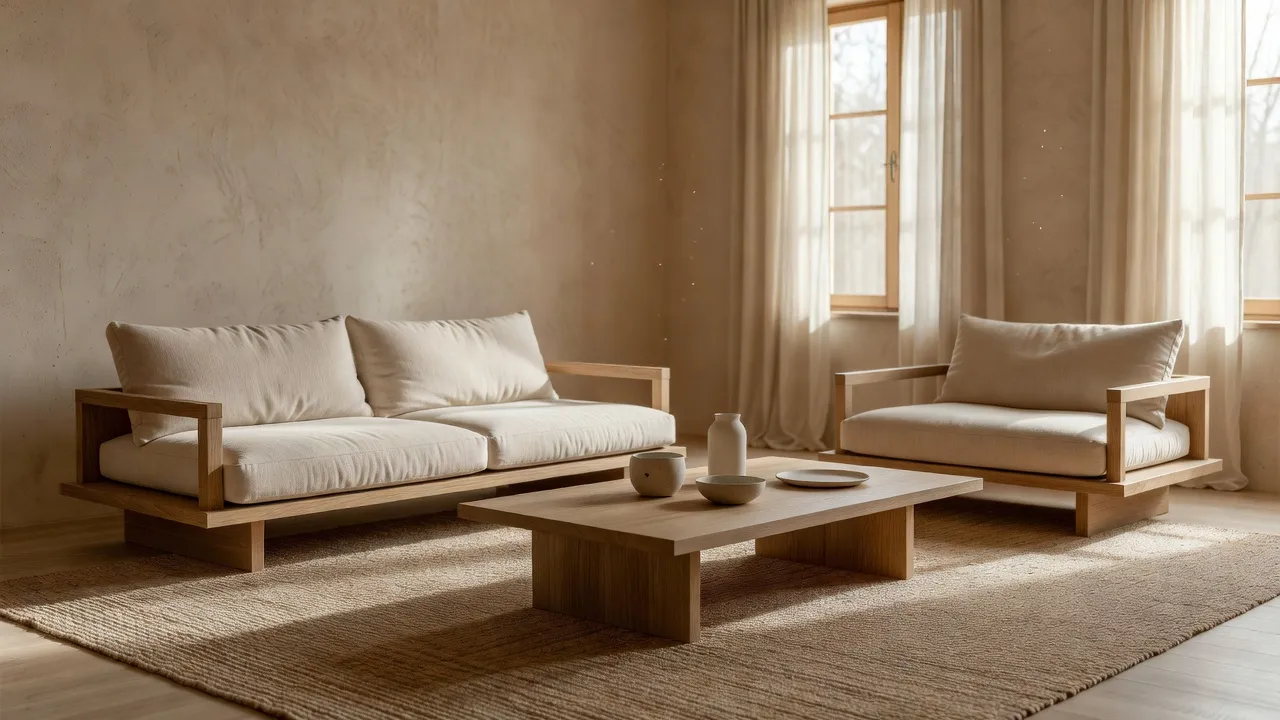
A Japandi style living room fuses Scandinavian functionality with Japanese minimalist wabi-sabi aesthetics to create a calm, uncluttered space grounded in natural materials. This hybrid design balances warm muted earth tones, low-profile oak or walnut furniture, and tactile textiles like washed linen and bouclé to eliminate visual noise without feeling sterile.
In my experience, people fall in love with photos of Japandi spaces because they look serene. But when you try to recreate one in a standard home, things can fall flat fast. If you just buy a low beige couch and strip away all your belongings, the room ends up looking unfinished rather than intentionally designed.
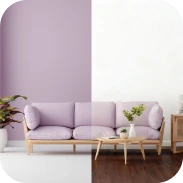
The secret is balancing Scandinavian comfort (hygge) with the Japanese appreciation for handmade imperfection (wabi-sabi). Before spending thousands on low-slung oak furniture, testing layout ideas digitally saves time and costly returns. Using an AI-powered interior tool like Renova AI lets you snap a photo of your existing room and visualize different Japandi layouts in seconds without shifting a single heavy cabinet.
What materials, colors, and textures define Japandi style (wood tones, wabi-sabi)?
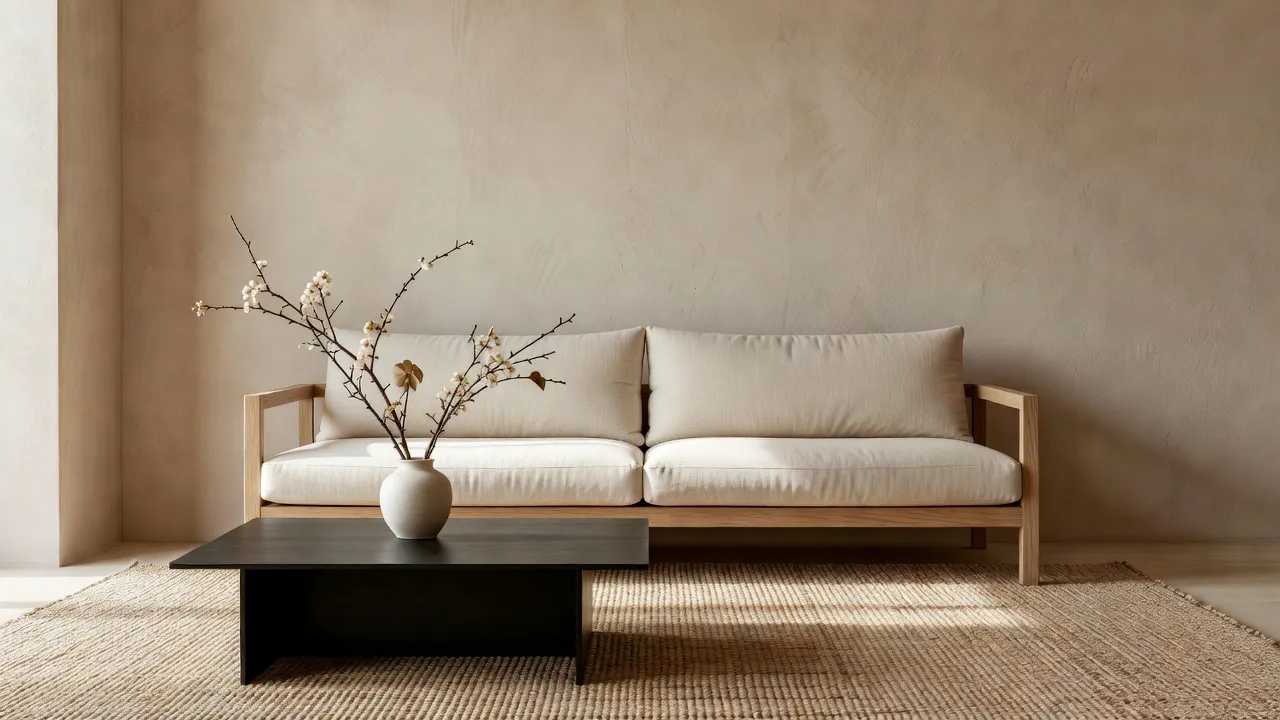
Japandi style is defined by natural wood tones, neutral warm paint palettes, organic tactile fabrics, and the wabi-sabi philosophy of celebrating natural imperfections. Red oak, light ash, and deep walnut form the core structural base, paired with slubby linen, raw wool, matte ceramics, and low-VOC paints in warm stone, taupe, or soft sage.
To get the look right, you have to understand how these four foundational elements work together:
- Wood tones: Mix light Scandinavian woods (ash, white oak, birch) with darker Japanese accents (walnut, black-stained oak, bamboo). Avoid reddish cherry or orange pine stains.
- Color palette: Shift away from bright cool whites. Stick to warm ivory, mushroom, warm beige, soft olive, and muted charcoal.
- Tactile textures: Layer slubby linen curtains, raw wool throws, unglazed clay pottery, and woven jute or sisal rugs.
- Wabi-sabi details: Incorporate hand-thrown ceramics with subtle asymmetry, visible wood grain, and patinated brass elements.
For wall artwork, keep frames slim and artwork simple. You can read my complete breakdown on selecting minimalist wall pieces in our guide to japandi art.
Japandi Material Palette:
[Light Oak / Birch Base] + [Warm Taupe / Plaster Wall] + [Linen & Raw Wool Textiles] + [Black/Walnut Accents]
What are the 2026 interior design trends for Japandi living rooms?
The 2026 trends for Japandi living rooms prioritize deeper timber tones, earthy olive accents, textured clay wall finishes, and integrated soft lighting. While earlier iterations favored stark beige walls and pale pine, current designs incorporate darker smoked oak, subtle vintage patina, and organic plaster surfaces to create deeper warmth.
As of late 2026, design preferences have shifted away from matchy-matchy furniture sets toward intentional contrast. Here are the main shifts happening right now:
- Smoked and charred wood: Shou sugi ban (charred timber) and dark walnut accents are replacing light pine to ground airy rooms.
- Limewash and Roman clay: Flat acrylic paint is being swapped for textured plaster walls that catch natural light gently.
- Warm green and terracotta undertones: Designers are introducing subtle moss greens and muted rust shades through cushions and ceramics rather than relying solely on beige.
- Concealed architectural lighting: Overhead recessed spots are giving way to indirect LED strips hidden behind floating timber baffles and soft paper pendant lamps.
If you are planning a broader house update this year, reviewing overall room design concepts helps maintain a cohesive flow from the entryway into your main lounge.
What are the best furniture brands for a Japandi style living room?
The best furniture brands for a Japandi style living room include Muuto, HAY, West Elm, Ethnicraft, and IKEA. These brands cover a broad price spectrum while consistently delivering clean wood framing, low-slung profiles, and sustainable materials suited to Scandinavian-Japanese fusion spaces.
When evaluating furniture options, consider how well each brand balances structural simplicity with daily comfort and build quality.
| Furniture Source | Primary Constraint Removed | Average Cost Range | Best Suited For |
|---|---|---|---|
| Renova AI | Removes manual floorplan drafting and staging guesswork | First 3 renders free, then $6.99/wk | Visualizing furniture layouts on real room photos before buying |
| IKEA | Removes high cost barriers for solid wood and modular storage | $40 - $900 per piece | Budget-conscious setups and renters needing modular wall units |
| West Elm | Removes long custom lead times for FSC-certified wood pieces | $300 - $2,800 per piece | Mid-range buyers seeking low platform sofas and walnut coffee tables |
| HAY | Removes bulky visual weight with slender Scandinavian engineering | $150 - $3,200 per piece | Modern minimalists looking for statement seating and paper lighting |
| Ethnicraft | Removes synthetic materials with solid oak and teak craftsmanship | $600 - $4,500 per piece | Investment buyers wanting solid timber furniture built to last decades |
What does IKEA's Japandi collection include?
IKEA features several Japandi-friendly lines, including the solid oak STOCKHOLM sofa series, the modular SVALNÄS wall shelving, and minimalist lighting like the SÄVSTA shadow box displays. Paired with ash veneer cabinets like the BESTÅ series, these accessible pieces capture Scandinavian utility and Japanese visual balance at low price points.
Specific IKEA lines that fit this aesthetic particularly well include:
- STOCKHOLM 2017 series: Features natural rattan armchairs, light ash side tables, and deep-seated fabric sofas designed by Ola Wihlborg.
- SVALNÄS and ELVARLI storage: Wall-hung bamboo and powder-coated steel units that keep floor spaces completely clear.
- SÄVSTA and REGOLIT lighting: Low-cost paper shade pendants that mimic traditional Japanese shoji lanterns.
- LISTERBY coffee tables: Dark wood veneer and beech options with built-in slatted storage shelves beneath the tabletop.
Official product specifications on IKEA confirm that many of these series utilize renewable wood veneers and natural rattan fibers, making them easy to mix with higher-end artisan pottery.
What does West Elm's Japandi collection include?
West Elm offers Japandi living room essentials through low-profile platform sofas, washed linen upholstery, and FSC-certified solid wood coffee tables. Popular options like the Harmony sofa paired with oak slat media consoles give living rooms grounded texture without requiring heavy decorative flourishes.
Key West Elm pieces worth considering include:
- The Harmony and Andes Sofas: Deep, low-slung seating available in Belgian flax linen and neutral performance weaves.
- Anton Solid Wood Coffee Table: Crafted from kiln-dried, FSC-certified mango wood with a rustic, slab-like profile.
- Slatted Media Consoles: Feature narrow vertical timber slats that conceal electronics while allowing remote signals through.
- Volume Round Dining and Side Tables: Blocky, drum-shaped accent tables that add geometric weight to empty corners.
Product care guides on West Elm highlight that their solid wood collections meet strict international sustainability criteria, making them solid long-term purchases for eco-conscious homes.
What does HAY offer for Japandi style furniture?
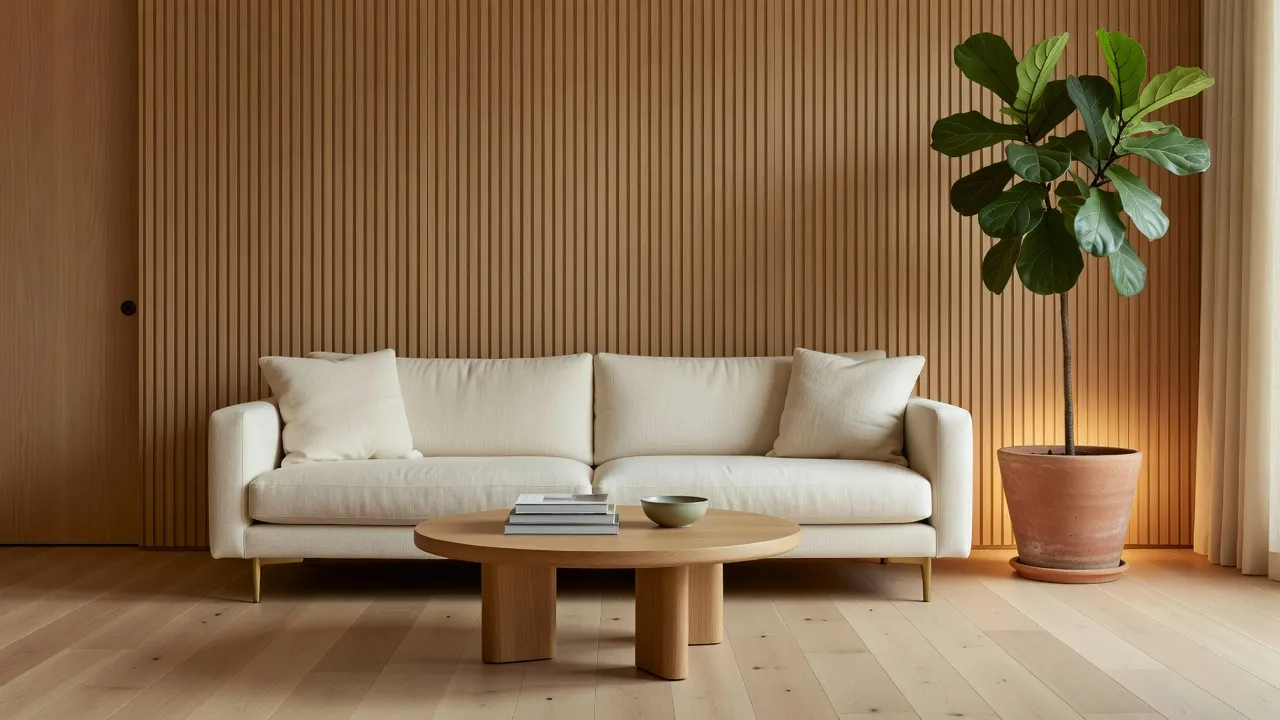
HAY supplies minimalist furniture designed by contemporary Japanese and Nordic creators, featuring steam-bent wood chairs, paper lamps, and slim coffee tables. Standouts include the Neu chair series, Rice Paper Shade pendants, and slatted oak benches that emphasize geometric restraint.
The Danish design brand collaborates directly with leading international designers. Notable Japandi-relevant offerings on HAY include:
- Rice Paper Shade Series: Classic spherical lamps made from lightweight paper and bamboo ribs that cast an even shadowless glow.
- Koyori and Result Chairs: Slender plywood and steel-framed seating options designed for multi-functional living spaces.
- Slit Table Collection: Geometric metal and wood accent tables inspired by Japanese paper origami folds.
- Rey Chair Collection: Iconic bentwood designs updated with rich lacquer finishes like dark walnut and warm cream.
Japandi Living Room Scenarios: Picking the Right Setup
Every living room comes with architectural constraints. A floorplan that works for a open-concept loft will feel cramped inside an apartment. Here is how to apply Japandi design principles across four real-world living situations.
Scenario 1: Japandi layout for small apartment living rooms
In a small apartment living room, prioritize wall-mounted shelving, low furniture legs, and clear floor sightlines to maximize the perception of space. Raising furniture off the floor on thin wood legs allows light to pass underneath, making compact footprints feel larger.
- Choose a 2-seater low couch with exposed wood framing instead of a skirted overstuffed sofa.
- Install floating oak ledges rather than heavy bookcase towers.
- Use a single large wool rug (at least 8x10 feet) to anchor the room rather than several small accent mats that fragment floor area.
If you are working with tight room dimensions, studying smart living room space planning techniques prevents you from blocking doorways or walkways with oversized coffee tables.
Small Room Layout Rule:
[Floating Wall Shelf] + [Legged Low Sofa] + [Single Large Rug] = Maximum Unbroken Floor Area
Scenario 2: High-traffic family living rooms needing durable wabi-sabi elements
For family living rooms, use stain-treated performance linen blends, rounded solid oak tables without sharp corners, and deep woven storage baskets for fast toy cleanup. Wabi-sabi aesthetics are naturally forgiving of everyday wear because minor wood scratches and distressed finishes fit the style.
- Select high-performance fabrics (like Crypton or stain-resistant linen) in mid-tone stone or oatmeal shades rather than stark white.
- Choose drum coffee tables made from solid white oak; scratches can easily be sanded and re-oiled.
- Replace fragile glass vases with durable matte stoneware or hand-woven seagrass baskets.
Scenario 3: Low-light or northern-facing living spaces
In low-light living rooms, use warm yellow-based neutral paints, light birch furniture, and layered paper lamp fixtures to brighten the atmosphere. Cool light in north-facing rooms can make grey or stark white paint look cold and depressing.
- Paint walls in warm plaster colors like Sherwin-Williams Shoji White or Alabaster.
- Pair light ash or birch timber with pale yellow or cream cushion covers.
- Place floor lamp paper lanterns in dark corners to scatter soft, warm ambient light upwards.
Scenario 4: Budget-friendly Japandi living room transformations
You can transform a living room on a budget by decluttering visual surfaces, painting walls a warm mineral neutral, and styling second-hand solid wood pieces. You do not need expensive brand-name furniture to achieve a high-end Japandi look.
- Paint existing dark trim or dated walls in a chalky matte warm beige.
- Sand down thrifted pine or oak coffee tables to raw wood, finishing them with a clear matte sealer.
- Prune outdoor branches and place them in plain ceramic jugs instead of purchasing synthetic plastic foliage.
How to Test Japandi Concepts in Your Room with AI
Before ordering a $2,500 sofa or painting your walls stone taupe, seeing how the materials interact inside your actual living space prevents expensive mistakes.
The traditional way to test room concepts involved mood boards or hiring a designer to produce 3D renders. Today, app technology simplifies this process down to a few taps.
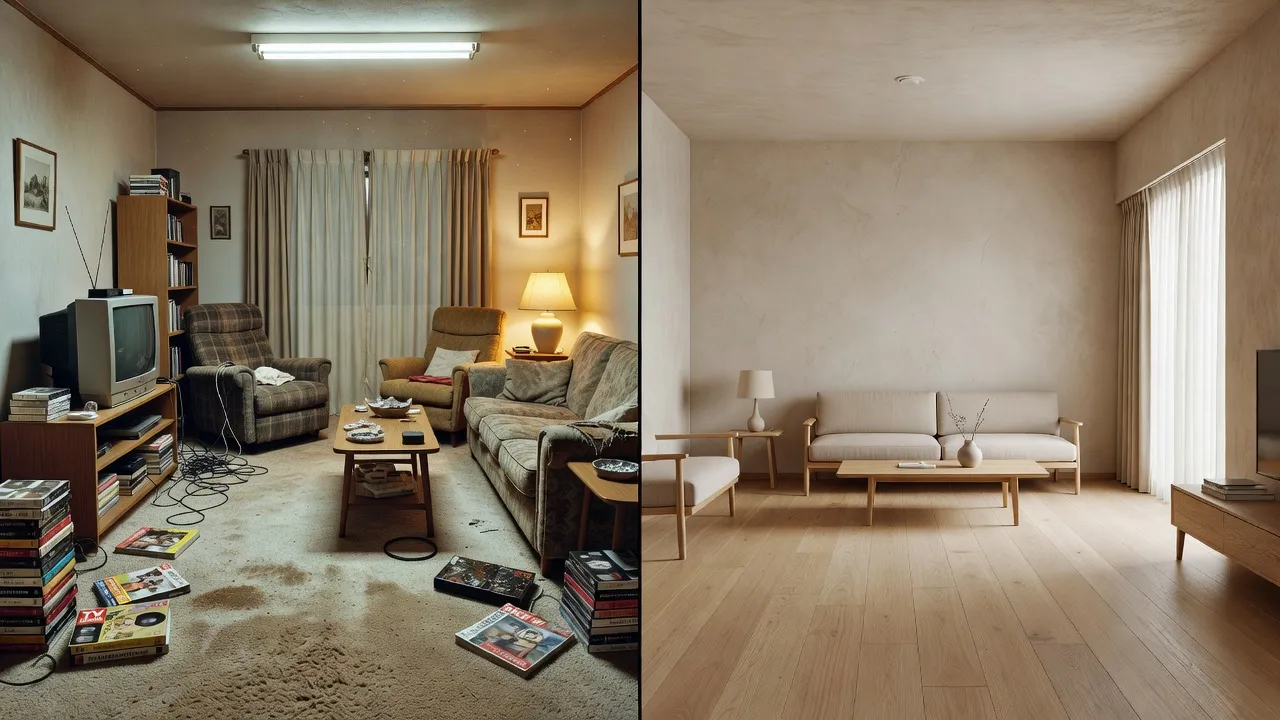
Using Renova AI, you simply take a photo of your existing room on your phone. Select the "Japandi" style filter, and the app generates a fully rendered vision of your room in seconds. It swaps out dark carpets, heavy curtains, or cluttered shelving with light wood flooring, low-profile seating, and warm neutral paint tones without requiring manual editing.
If you want to keep your existing coffee table but change the walls and floor, the custom prompt feature lets you specify exactly what elements to transform. Trying out different options virtually ensures every piece you buy works in your space.
Step-by-Step: Styling Your Japandi Living Room
If you are ready to execute your design plan, follow this order of operations to avoid rework.
- Clear out non-essential items: Remove plastic storage, excess throw pillows, small decorative knick-knacks, and loud patterned textiles.
- Apply warm neutral wall finishes: Paint walls and ceilings in a matte or limewash warm beige, mushroom, or muted cream.
- Anchor the floor with a natural fiber rug: Lay down an un-dyed wool, jute, or low-pile woven carpet sized appropriately for your seating area.
- Position primary low-profile seating: Place your low-slung sofa facing a focal point (such as a fireplace or simple wood media console), keeping pathways wide and open.
- Add natural wood and stone accents: Introduce an oak coffee table, a dark walnut side chair, or a stone side pedestal.
- Style with minimalist wabi-sabi decor: Display two to three hand-thrown ceramic vessels, a linen throw blanket, and a single paper lantern lamp.
Frequently Asked Questions
What is the main difference between Scandinavian and Japandi style?
Scandinavian design focuses on hygge, emphasizing cozy textures, light pine wood, and bright functional spaces. Japandi blends this Scandinavian practicality with Japanese minimalist philosophy, incorporating darker timber accents, wabi-sabi handmade textures, and low-profile furniture grounding.
What paint colors work best for a Japandi living room?
Warm plaster shades, beige, ivory, mushroom, warm taupe, and pale stone work best. Avoid cool bluish-whites or vibrant bright colors on primary walls, relying instead on muted moss greens or dark charcoal for subtle contrast.
How do I make my Japandi living room feel cozy instead of cold?
Layer tactile natural textiles like slub linen, raw wool throws, and bouclé cushions alongside warm wood grain. Soft indirect lighting from paper lamps or dimmable warm bulbs (around 2700K color temperature) also adds immediate warmth.
Can I mix dark and light wood in a Japandi living room?
Yes, mixing light oak or ash with dark walnut or black-stained wood is a core feature of Japandi design. The contrast between pale Nordic woods and rich Japanese timber creates depth and visual balance.
Is Japandi style expensive to implement?
No, Japandi style relies heavily on decluttering, simple natural materials, and unvarnished raw wood rather than ornate luxury items. You can easily achieve the look using budget-friendly flat-pack furniture from retailers like IKEA combined with second-hand wood pieces.
What kind of rug should I buy for a Japandi living room?
Select plain un-dyed wool, flat-weave cotton, sisal, or jute rugs in cream, beige, or pale grey tones. Avoid busy geometric patterns, high-gloss synthetic pile, or vibrant colors that distract from natural furniture materials.
How do I store clutter in a minimalist Japandi living room?
Use hidden closed storage solutions like slatted oak sideboards, ash veneer cabinets with push-to-open doors, and deep woven seagrass storage baskets to keep everyday items out of sight.
Final Checklist for Your Japandi Living Room
Building a peaceful Japandi living room is about restraint and material quality rather than cluttering your space with decorative objects. Stick to low profiles, natural timber, and earthy textures that calm the eye.
Before buying any new furniture or paint:
- Measure your room clearances to ensure low-slung sofas won't block walkways.
- Double-check paint swatches under natural morning and warm evening light.
- Preview your ideas digitally using Renova AI to test wall shades, wood finishes, and layout arrangements on your actual room photo.
Taking time to plan layout flow and color contrast up front guarantees a serene space you will enjoy coming home to every day.