
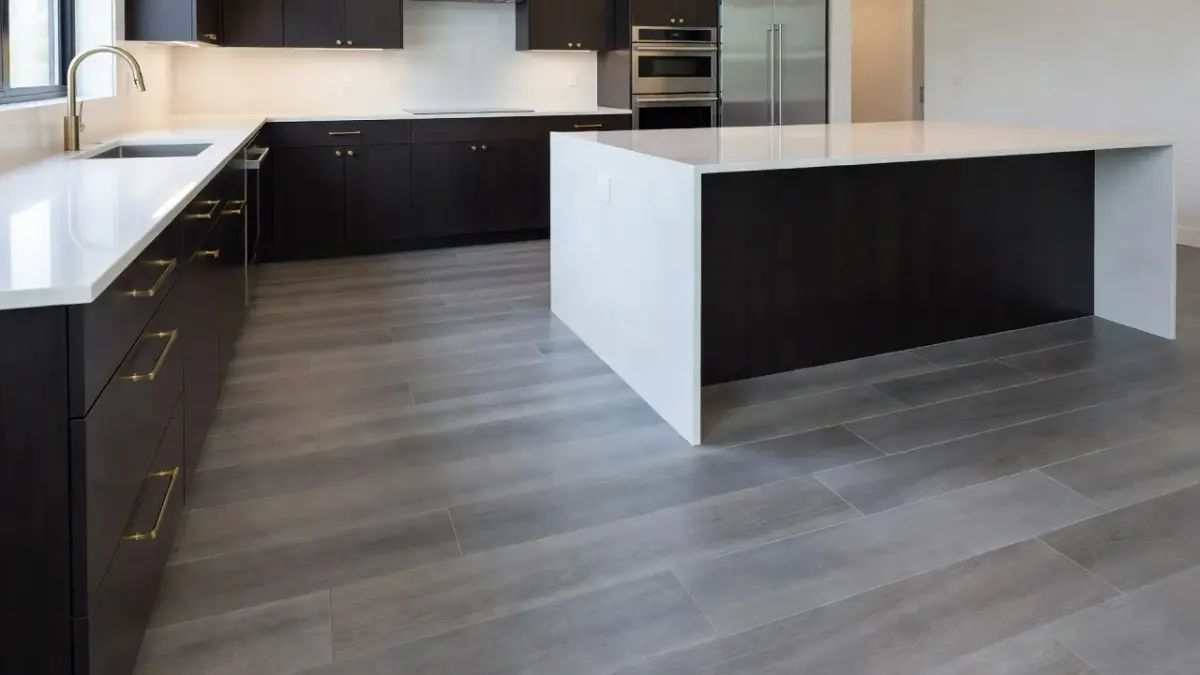
Tile look laminate flooring delivers the visual depth of natural stone, slate, or concrete at a fraction of the material and installation cost, typically ranging from $2.00 to $5.50 per square foot. Unlike genuine ceramic or porcelain tile, stone-pattern laminate uses a click-lock installation system that floats over your subfloor without requiring mortar or wet saws.
Before committing to a specific stone style or board dimension, homeowners often struggle to envision how large-format faux tiles will mesh with their cabinetry and lighting. Our Renova AI app for iPhone allows you to photograph your room and swap out flooring surfaces in seconds to see exactly how different stone textures look in your space before buying materials.
What Most Buyers Get Wrong About Faux-Tile Laminate
The biggest mistake homeowners make with tile look laminate is confusing surface water resistance with absolute waterproofing, which leads to ruined subfloors and warped plank edges. Standard laminate planks use a High-Density Fiberboard (HDF) core made from compressed wood fibers. If standing water sits in the joints of lower-tier products for more than a few hours, the wood core swells and pushes up the surface image layer. Fixing a buckled floor in a 120-square-foot kitchen often requires replacing the entire layout, costing over $1,200 in lost materials and labor.
Another frequent error is ignoring subfloor flatness tolerances. Tile look laminate planks are wider than standard wood-strip planks, usually sold in 12-inch by 24-inch or 15-inch by 47-inch formats. If your subfloor dips more than 3/16 of an inch over a 10-foot span, these wide boards flex under foot traffic, put excessive stress on the click joints, and eventually crack at the locking seams.
Finally, buyers often choose deep, micro-beveled grout lines for visual realism without considering cleaning maintenance. Deep bevel grooves trap fine dust, pet hair, and floor cleaner residue. Over time, aggressive mopping pushes liquid into those unsealed bevel crevices, swelling the board edges. Selecting pressed bevels or shallow painted bevels solves this issue while preserving the realistic appearance of stone.
Best Tile Look Laminate Flooring Options Compared
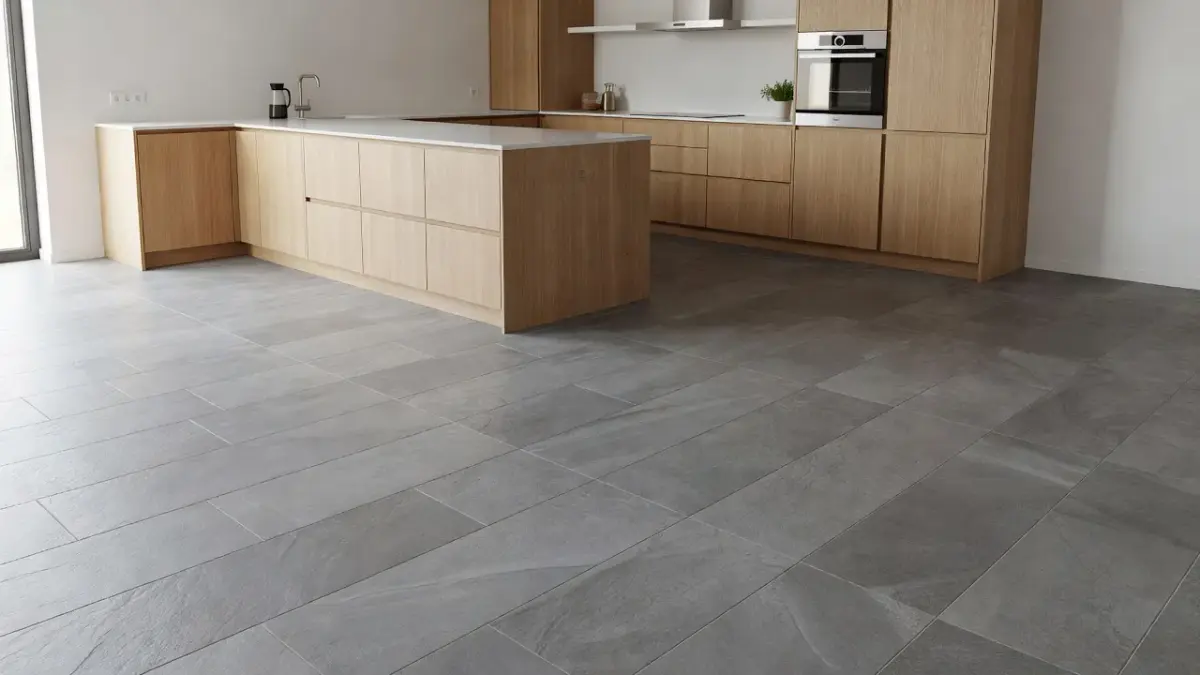
Choosing the right stone-pattern laminate requires balancing AC wear ratings, water resistance guarantees, and plank thickness. The table below breaks down top-tier tile look laminate brands available in 2026:
| Brand & Series | Primary Stone Visual | AC Wear Rating | Thickness | Approx. Cost / Sq. Ft. | Best Suited For |
|---|---|---|---|---|---|
| Mohawk RevWood | Travertine, Slate, Concrete | AC4 / AC5 | 10mm - 12mm | $3.50 - $5.25 | Active homes with pets and heavy foot traffic |
| Pergo Outlast Pro | Marble, Limestone | AC5 | 10mm + 2mm pad | $3.20 - $4.80 | Kitchens and mudrooms needing wet-mop protection |
| Quick-Step | Sandstone, Modern Slate | AC4 | 8mm - 12mm | $2.80 - $4.20 | Quick DIY installations over flat subfloors |
| Kronotex | Concrete, Polished Stone | AC4 | 8mm | $2.20 - $3.50 | Budget-conscious whole-house renovations |
| Armstrong | Classic Marble, Terracotta | AC3 / AC4 | 8mm - 10mm | $2.50 - $3.90 | Low-moisture living spaces and dining rooms |
Is Mohawk tile look laminate worth buying?
Yes, Mohawk tile look laminate is worth buying if you want industry-leading scratch resistance and water protection backed by an AC4 or AC5 wear layer. Mohawk builds its stone visual collections under the RevWood lineup, which pairs high-definition inkjet imagery with Embossed-In-Register (EIR) surface textures. This means the surface texture directly matches the stone grain and mineral veining visible on the plank.
Mohawk uses a proprietary Hydroseal coating on the plank joints that repels water before it reaches the fiberboard core. According to technical specifications on the official Mohawk Flooring site, RevWood products feature a splash warranty that permits wet mopping when using approved cleaners. For homeowners comparing premium options, our guide on dream home laminate flooring options covers how Mohawk stacks up against competing wood and stone patterns.
The main trade-off with Mohawk is cost. Expect to pay between $3.50 and $5.25 per square foot for material alone, putting it at the higher end of the laminate price spectrum. However, its rigidity hides minor subfloor imperfections far better than thinner 8mm economy products.
What are the reviews of Pergo Outlast Pro tile look laminate?
Reviews of Pergo Outlast Pro tile look laminate consistently highlight its extreme surface durability and 24-hour spill protection, though installers note the rigid locking joints demand careful handling during assembly. Pergo uses a surface density layer called TitanX, which resists scuffs from dragging furniture, dog claws, and dropped items better than standard melamine coatings.
As detailed on Wikipedia's laminate flooring overview, laminate relies on a durable outer surface wear layer made of synthetic resin bonded to an inner fiber core. Pergo Outlast Pro maximizes this structure by offering an AC5 commercial wear rating. Homeowners regularly report that spills left overnight do not cause seam swelling, provided the perimeter of the room was sealed with silicone caulking during installation.
The primary drawback mentioned in customer feedback involves the tongue-and-groove joint profile. Because the boards are thick and rigid, forcing the click-lock joint at an incorrect angle can chip the decorative edge. Taking time to clear dust out of the locking grooves during installation prevents seam gaps.
Visualizing Faux-Tile Laminate in Your Home Before Installation
Swapping out flooring is a major commitment, and choosing between light marble tiles or dark slate boards drastically alters a room's light balance. Sample boards measure only a few inches wide, making it tough to judge how a full floor of 12x24 faux-stone tiles will look against your existing walls, cabinets, and appliances.
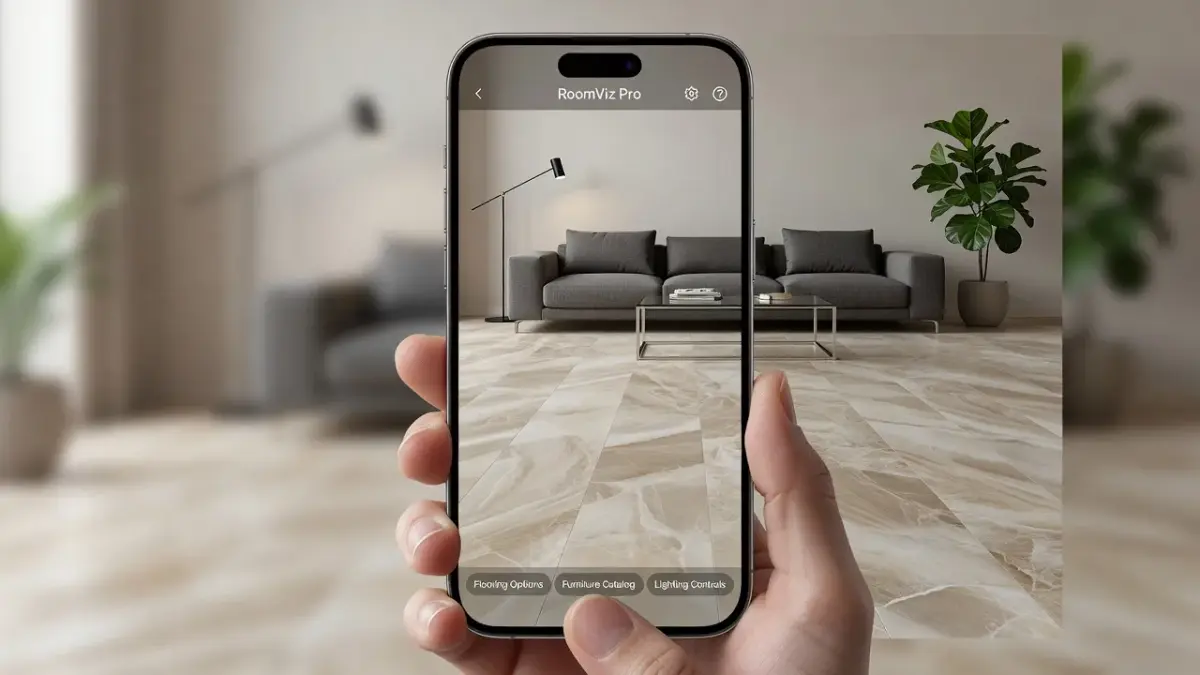
This is where digital visualizers streamline the planning process. Using Renova AI, you can snap a photo of your room on your iPhone or iPad and immediately view completely restyled concepts. The app lets you test over 100 selectable design styles or type specific visual changes to swap flooring and update surrounding elements while preserving your room's structural layout.
The app offers your first 3 room redesigns for free with no watermarks. If you need to visualize multiple rooms throughout a whole-house remodel, unlimited visual updates cost $6.99 per week or between $40 and $60 for an annual plan.
How does Quick-Step tile look laminate perform?
Quick-Step tile look laminate performs exceptionally well in high-traffic residential areas thanks to its ScratchGuard surface treatment and patented Uniclic locking mechanism. Uniclic is widely regarded by flooring professionals as one of the tightest click systems in the industry. It permits two installation methods: angling the planks together or tapping them flat horizontally, which is useful when sliding boards under door jambs.
Quick-Step tile visuals feature micro-beveled edges that mimic clean grout lines without creating deep channels where grime settles. The floor holds up well against foot traffic and rolling chairs, making it a reliable pick for home offices and hallways.
The compromise with Quick-Step comes down to water exposure limits. While surface spills wiped up within a few hours won't harm the boards, Quick-Step tile laminates generally lack the multi-day standing water resistance found in premium Pergo or Mohawk lines. Installing it in full bathrooms with soaking tubs is not recommended.
Is Kronotex tile look laminate any good?
Yes, Kronotex tile look laminate is a dependable mid-range flooring choice that offers authentic European stone aesthetics and strong AC4 durability at an accessible price point. Manufactured in Germany, Kronotex specializes in large-format stone and concrete prints that fit modern, industrial, and minimalist design schemes.
Kronotex boards are typically 8mm thick, which keeps material costs down to roughly $2.20 to $3.50 per square foot. Despite the thinner profile, the HDF core remains dense and stable. The surface texture uses realistic matte finishes rather than high-gloss coatings, which helps conceal dust and footprints in brightly lit rooms.
The trade-off for the lower price point is underfoot feel and sound transmission. Because 8mm boards have less mass than 12mm boards, they can produce a hollow click-clack sound when walked on with hard shoes. Using a high-density acoustic underlayment pad is necessary to dampen sound and improve foot comfort.
Is Armstrong tile look laminate any good?
Armstrong tile look laminate delivers attractive classic marble and terracotta visuals, but long-term availability is limited as the manufacturer has shifted focus toward luxury vinyl products. For decades, Armstrong was a primary supplier of stone-pattern laminate, renowned for traditional patterns that fit classic and country-style interiors.
Where you can still purchase Armstrong laminate stock through specialty distributors, the performance remains solid. Most collections feature AC3 or AC4 wear layers that handle standard household traffic without dulling. The printed visuals reproduce natural color variations found in genuine stone, preventing repeating pattern spots across large rooms.
The central risk with buying Armstrong laminate today is sourcing matching repair planks in the future. Because product lines are shrinking, finding extra boxes for future damage repairs can be difficult. If you select Armstrong, buy 15% to 20% extra material to keep in storage for future patch jobs.
Is luxury vinyl better than laminate that looks like tile?
Luxury Vinyl Tile (LVT) is better than tile look laminate for areas exposed to constant moisture, whereas laminate offers superior scratch protection and a more rigid, solid feel underfoot. Deciding between these two resilient flooring categories requires matching the material's core composition to your room's environmental conditions.
The table below outlines how these two tile-look alternatives stack up:
| Feature | Tile Look Laminate Flooring | Luxury Vinyl Tile (LVT / LVP) |
|---|---|---|
| Core Material | High-Density Fiberboard (wood fibers) | Stone Plastic Composite (SPC) or PVC |
| Waterproof Capability | Water-resistant surface; vulnerable at seams | 100% waterproof throughout core |
| Scratch Resistance | Superior (Melamine resin / Aluminum oxide) | Moderate to High (Polyurethane wear layer) |
| Plank Rigidity | High (Hides minor subfloor dips) | Flexible (Telegraphes subfloor flaws) |
| Temperature Stability | Expands/contracts with humidity changes | Highly stable in direct sunlight |
| Average Cost | $2.00 - $5.50 / sq. ft. | $2.50 - $6.50 / sq. ft. |
Laminate uses a wood-fiber core that creates a rigid board. This rigidity allows laminate to span slight uneven spots in a subfloor without telegraphing flaws to the surface. However, if water penetrates laminate seams, the HDF core swells permanently. For details on moisture-proof alternatives, read our guide on the best waterproof flooring options.
Luxury vinyl tile uses a plastic and limestone core that cannot absorb water, making it the safer option for full bathrooms, basements, and laundry rooms. However, vinyl is more pliable than laminate. If your subfloor has small bumps or grit, vinyl planks conform to those flaws over time, creating visible telegraphing on the surface. For kitchen remodels where both spills and dropped utensils occur, our overview of kitchen flooring options and pricing breaks down which surface holds up best.
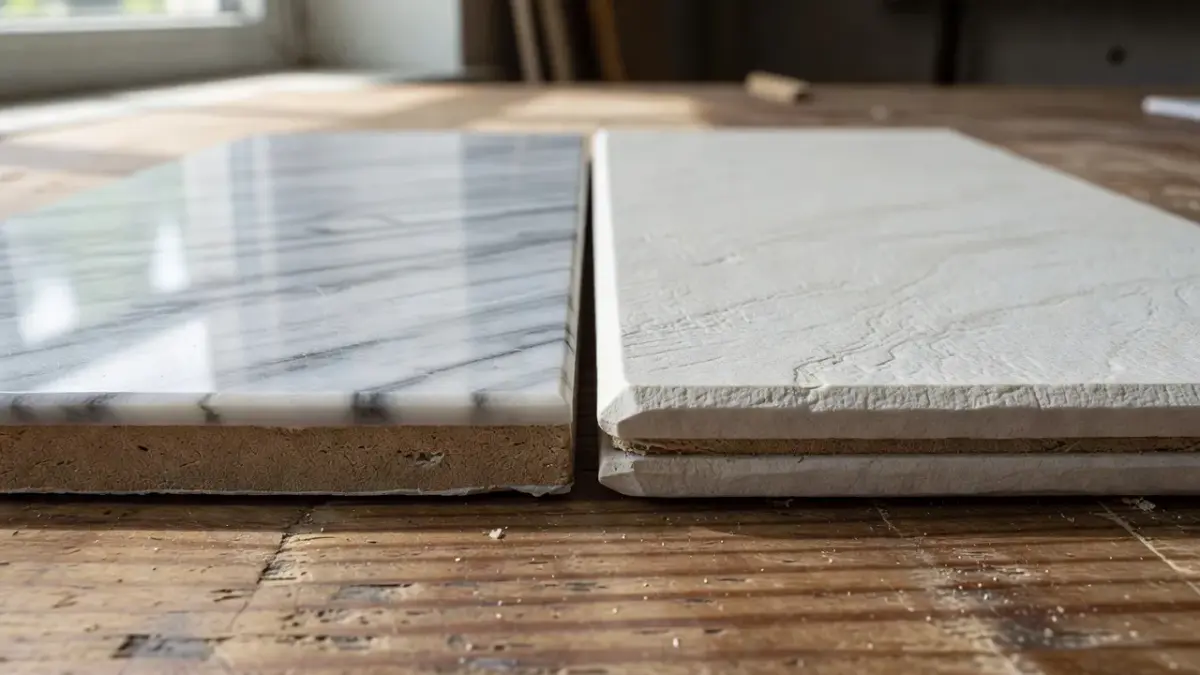
How to Choose the Right Faux-Tile Pattern and Grout Style
Selecting the right tile look laminate pattern requires matching board dimensions and edge bevels to your room's layout. Manufacturers design stone laminate in three main visual structures:
- Large-Format Rectangles (12" x 24"): These boards recreate modern slate, concrete, or travertine tiles. They work best in open-concept kitchens, living rooms, and large hallways, reducing visual seam clutter.
- Square Multi-Tile Planks: Some planks are manufactured in 15" x 47" boards that contain graphics for two or three square tiles separated by pre-printed grout lines. These planks install quickly, but you must stagger end joints carefully to prevent repeating tile grids.
- Square Single Tiles (15" x 15"): Designed to mimic hand-laid ceramic, these individual squares create an authentic tiled appearance but require more time to lock together cleanly.
Pay close attention to bevel styles. Pressed bevels curve the image layer downward into the joint groove, creating a realistic grout appearance that remains fully sealed. Painted bevels apply a moisture-resistant acrylic paint into the joint notch to match grout colors. Avoid unpainted, sharp square-edge tile laminates, as microscopic swelling along unsealed edges will cause the pattern to look chipped within a few months.
Installation Requirements: Avoiding Subfloor Failure
Successful installation of tile look laminate depends on proper subfloor preparation, moisture testing, and correct underlayment selection. Skipping these foundational steps will ruin even top-rated laminate floors.
First, test subfloor moisture. If installing over a concrete slab, perform a calcium chloride test or use a pinless moisture meter. Concrete subfloors must emit no more than 3 pounds of moisture vapor per 1,000 square feet over 24 hours. Always lay down a 6-mil polyethylene vapor barrier over concrete before placing your underlayment pad.
Second, check flat tolerances. Use a 10-foot straightedge across the subfloor. Fill low spots with a cementitious self-leveling compound and sand down high spots on wood subfloors. Laminate click joints will pop open or squeak continuously if installed over uneven hollows.
Finally, preserve perimeter expansion gaps. As ambient humidity shifts throughout the year, laminate floors expand and contract. Leave a 3/8-inch gap between the floor edges and all vertical structures, including walls, door frames, and cabinetry baseboards. Conceal this expansion gap with baseboards or quarter-round molding anchored to the wall - never to the floor planks.
Frequently Asked Questions
Can tile look laminate flooring be installed in a bathroom?
Yes, tile look laminate can be installed in half-bathrooms or powder rooms where standing water is minimal. However, it is not recommended for full bathrooms with showers or tubs unless the manufacturer explicitly warrants the line for full-wet environments and all board edges and room perimeters are fully sealed with 100% silicone sealant.
Does tile look laminate feel cold underfoot like real ceramic tile?
No, tile look laminate feels noticeably warmer underfoot than real stone or ceramic tile. Because laminate relies on a wood-fiber core rather than dense clay or natural mineral stone, it does not draw heat away from bare feet as rapidly as ceramic tile does.
How long does tile look laminate flooring typically last?
High-quality tile look laminate rated AC4 or AC5 typically lasts between 15 and 25 years in residential settings. Longevity depends on maintaining proper indoor humidity levels (30% to 50%), cleaning up liquid spills promptly, and avoiding abrasive mops.
Can you repair a chipped tile look laminate plank?
Minor chips can be repaired using color-matched laminate putty or wax repair sticks designed for floor surfaces. However, if a plank suffers deep structural cracking or joint failure, the board must be disengaged from the nearest wall or cut out directly using a plunge saw and replaced with a spare plank.
Does tile look laminate require real grout during installation?
No, tile look laminate does not use liquid mortar or cement grout. The grout lines are manufactured directly onto the surface image layer or formed by pre-colored, recessed bevel joints along the click-lock edges of each plank.
Is tile look laminate noisy to walk on?
Tile look laminate can produce a hollow sound when walked on with hard-soled shoes if installed over a thin or poor-quality underlayment. Installing a high-density acoustic foam or cork underlayment pad significantly reduces footstep noise and improves sound absorption.
Can you clean tile look laminate with a steam mop?
No, you should never use a steam mop on laminate flooring. The combination of intense heat and pressurized moisture forces water vapor deep into the click joints, which causes the High-Density Fiberboard core to swell, warp, and delaminate permanently. Use a damp micro-fiber mop with a pH-neutral laminate cleaner instead.