
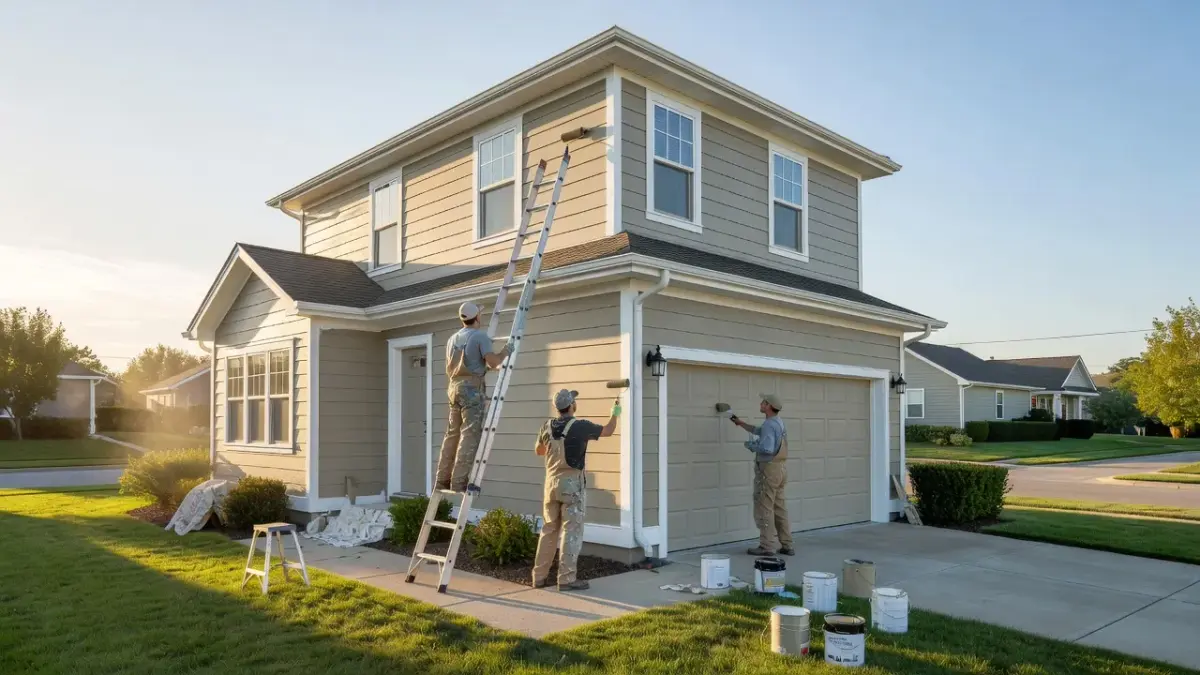
Curb appeal painting yields a 100% to 150% return on investment at resale while protecting your exterior walls from moisture damage. Executing a full exterior repaint takes 3 to 5 days for a standard 2,000-square-foot house, with professional costs ranging between $3,500 and $6,500 and DIY material costs averaging $600 to $1,200.
Selecting the right curb appeal paint colors requires balancing architectural style, neighborhood context, and light reflectivity. Before picking up a brush, establishing a realistic schedule and cost breakdown prevents mid-project budget overruns.
| Project Stage | Time Required | Average DIY Cost | Average Pro Cost | Essential Tools & Materials |
|---|---|---|---|---|
| 1. Inspection & Visuals | 2–4 Hours | $0–$15 | $0 | Photo app like Renova AI, tape measure |
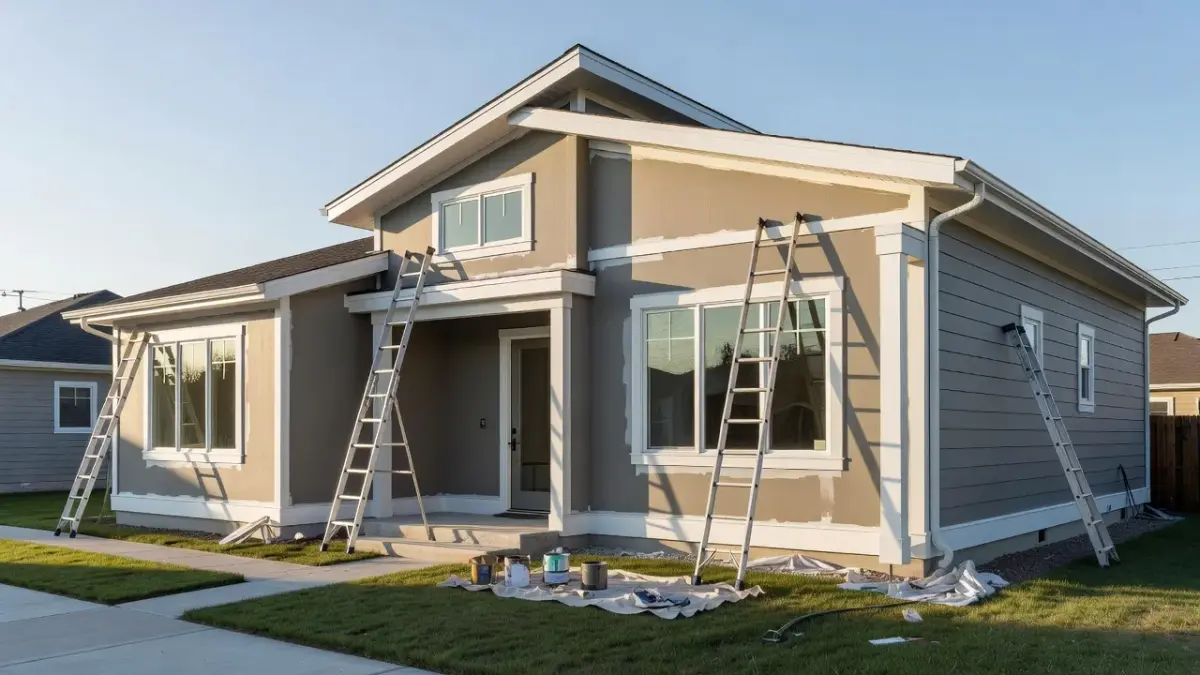
| 2. Surface Prep & Washing | 1–2 Days | $70–$150 | $500–$1,200 | Pressure washer, scraping knife, 80-grit sandpaper |
| 3. Masking & Priming | 1 Day | $120–$250 | $600–$1,400 | Painter’s tape, plastic sheeting, acrylic primer, caulk |
| 4. Siding Painting | 1–2 Days | $300–$600 | $1,800–$3,000 | Airless sprayer, 3/8-inch nap rollers, exterior acrylic |
| 5. Trim & Accent Painting | 1 Day | $100–$200 | $600–$1,000 | 2.5-inch angled sash brush, step ladder, drop cloths |
Which exterior paint colors do real estate agents recommend for curb appeal?
Real estate agents consistently recommend warm neutrals, greiges, off-whites, and subtle earthy greens to maximize exterior appeal and buyer engagement. According to home staging guidelines published by the National Association of Realtors, neutral exterior palettes allow buyers to project their preferences onto the home while making the structure appear larger and well-maintained.
Agent surveys indicate that off-white body shades paired with dark trim create contrast without overwhelming nearby properties. Contrast builds visual depth.
- Warm Off-Whites: Create an inviting entry without the blinding glare of pure stark white under direct sunlight.
- Greige (Gray-Beige): Bridges traditional and contemporary architecture, hiding surface dust better than light gray.
- Sage and Olive Greens: Connect the house visually to front-yard landscaping and natural greenery.
- Charcoal Accent Doors: Provide a focal point that draws the eye toward the front entrance.
What exterior paint colors does Realtor.com recommend for curb appeal?
Realtor.com highlights soft greige, slate blue, warm off-white, and deep navy as top paint color selections for boosting property valuation. Analysis shared on Realtor.com's design guides emphasizes that high-contrast front doors - such as black, crimson, or navy - generate a strong first impression in listing photos.
Homes painted in overly bright primary shades or washed-out beige often sit longer on the market. Photogenic exterior paint options drive online click-through rates.
- Body Colors: Creamy alabaster, mushroom taupe, and mid-tone warm gray.
- Trim Colors: Bright white or soft ivory for crisp definition along eaves and window frames.
- Front Door Accents: Deep navy blue, forest pine green, or matte black for immediate entrance recognition.
What are Sherwin-Williams' trending exterior paint colors?
Sherwin-Williams highlights SW 7008 Alabaster, SW 7015 Repose Gray, SW 9130 Evergreen Fog, and SW 6258 Tricorn Black as leading exterior colors. Choosing options from established palettes ensures correct Light Reflectance Value (LRV) performance under intense sunlight exposure.
Property owners frequently select SW 7036 Accessible Beige for exterior walls because its warm undertones prevent siding from appearing washed out in high midday light. For detailed palette combinations, review our guide to Sherwin-Williams exterior paint color combinations.
| Color Code | Color Name | Application | Description | LRV |
|---|---|---|---|---|
| SW 7008 | Alabaster | Body | Soft Warm White | 82 |
| SW 7036 | Accessible Beige | Body | Versatile Greige | 58 |
| SW 9130 | Evergreen Fog | Accent | Muted Sage Green | 30 |
| SW 6258 | Tricorn Black | Trim & Door | High-Contrast | 3 |
When evaluating siding options, balance dark body tones with higher LRV trim colors. If you prefer muted off-white body setups, review the specifications in our breakdown of SW Accessible Beige exterior applications.
What are Benjamin Moore's trending exterior paint colors?
Benjamin Moore features OC-117 Simply White, HC-172 Revere Pewter, OC-17 White Dove, and HC-154 Hale Navy as top exterior curb appeal shades. These historical and classic selections maintain undertone integrity even under extreme ultraviolet exposure.
Revere Pewter remains a standard option for brick and fiber cement siding, adapting smoothly across changing seasonal light conditions.
- OC-17 White Dove: A creamy off-white that softens harsh exterior angles without yellowing.
- HC-154 Hale Navy: A bold body or door shade that pairs cleanly with natural stone foundations.
- BM 1565 Mount Saint Anne: A blue-gray tone recommended for cottage and coastal facade styles.
- HC-166 Kendall Charcoal: A rich dark gray ideal for modern trim lines and garage doors.
Which neutral colors (greige, navy, black, white) are trending for exterior curb appeal?
Greige and soft off-whites dominate exterior body areas, while navy and black serve as high-impact accent tones for doors, shutters, and railings. Incorporating neutrals prevents architectural clashes while permitting seasonal curb appeal landscaping adjustments.
| Color | Application Area | Key Advantage |
|---|---|---|
| Greige | Main Exterior Body | Conceals dirt, fits any neighborhood |
| Soft White | Main Body / Trim | Maximizes home's visual footprint |
| Deep Navy | Front Door / Trim | Adds depth without looking harsh |
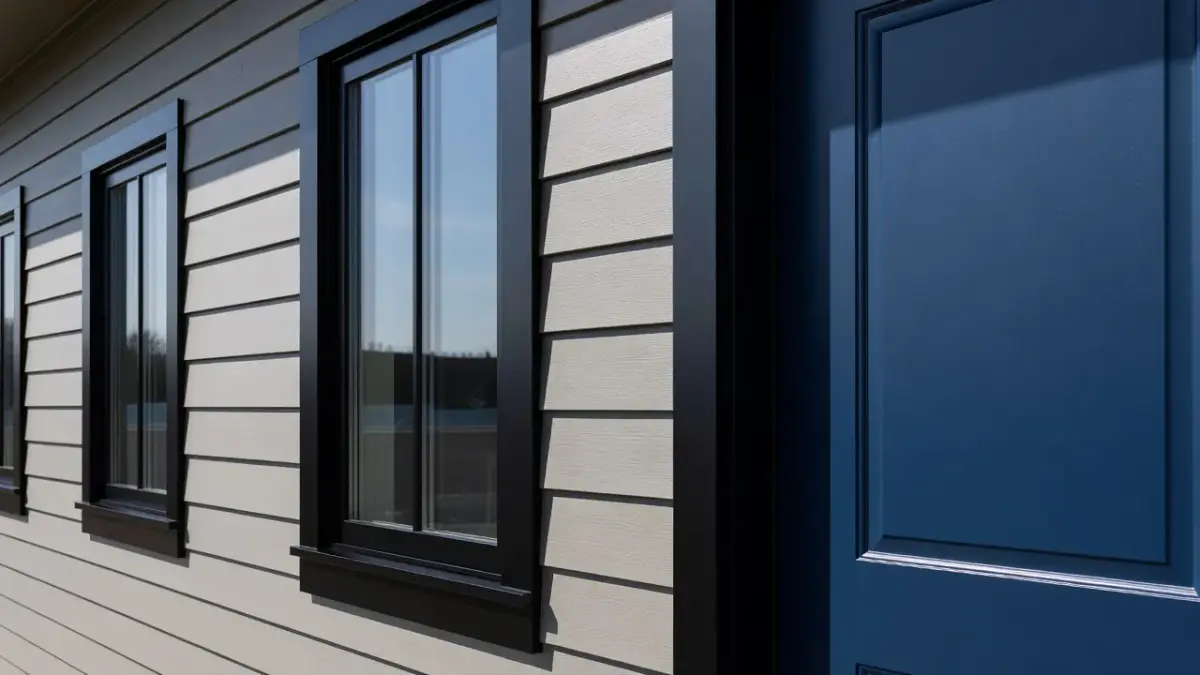
| Black | Window Trim / Doors | Creates modern architectural framing |
As of November 2026, homeowners are shifting away from stark cool gray bodies in favor of complex greiges with olive or beige undertones. Warm neutrals age better against weather-induced fading.
Step 1: Inspect Exterior Surfaces and Calculate Paint Quantities
Before buying supplies, inspect siding substrates for wood rot, peeling paint, and open caulk seams to establish exact square footage. Paint applied over failing substrates or trapped moisture will blister within 6 to 12 months, destroying your investment.
Calculate total body paint required using standard coverage equations. One gallon of exterior acrylic covers roughly 350 to 400 square feet per coat.
- Measure Wall Dimensions: Multiply house perimeter height by total width, then subtract window and door surface openings.
- Account for Surface Texture: Add 10% to 15% more paint for rough-sawn wood, stucco, or textured masonry substrates.
- Factor In Two Coats: Multiply your single-coat square footage calculation by two for full coverage and long-term UV protection.
- Check Substrate Soundness: Press a flathead screwdriver into window sills and bottom lap siding boards to test for concealed soft rot.
Step 2: Test Color Combinations Using AI Visualization Tools
Preview color schemes on real photos of your home before purchasing gallons of custom-mixed paint. Exterior paint looks 20% lighter outdoors under direct solar light than on a small swatch card indoors.
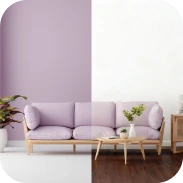
Instead of painting dozens of physical color patches on your siding, upload a photo to an visualizer tool to test combinations instanty. Using Renova AI allows you to swap exterior colors, test 100+ design themes, and evaluate dark versus light body shades without manual photo editing. The app provides 3 free generations before offering flexible plans ($6.99 per week or $59 per year), making it easy to spot palette mistakes before buying paint.
- Snap Exterior Photo in Natural Morning Light
- Load Photo into Renova AI App
- Apply Wall Repaint Styles (Greige, White, Dark Accent)
- Compare High-Contrast Trim vs. Monochromatic Schemes
- Finalize Palette & Buy Paint Samples
For an analysis of software platforms, explore our list of the best exterior AI visualizer tools for curb appeal.
Step 3: Wash, Scrape, and Repair Siding Substrates
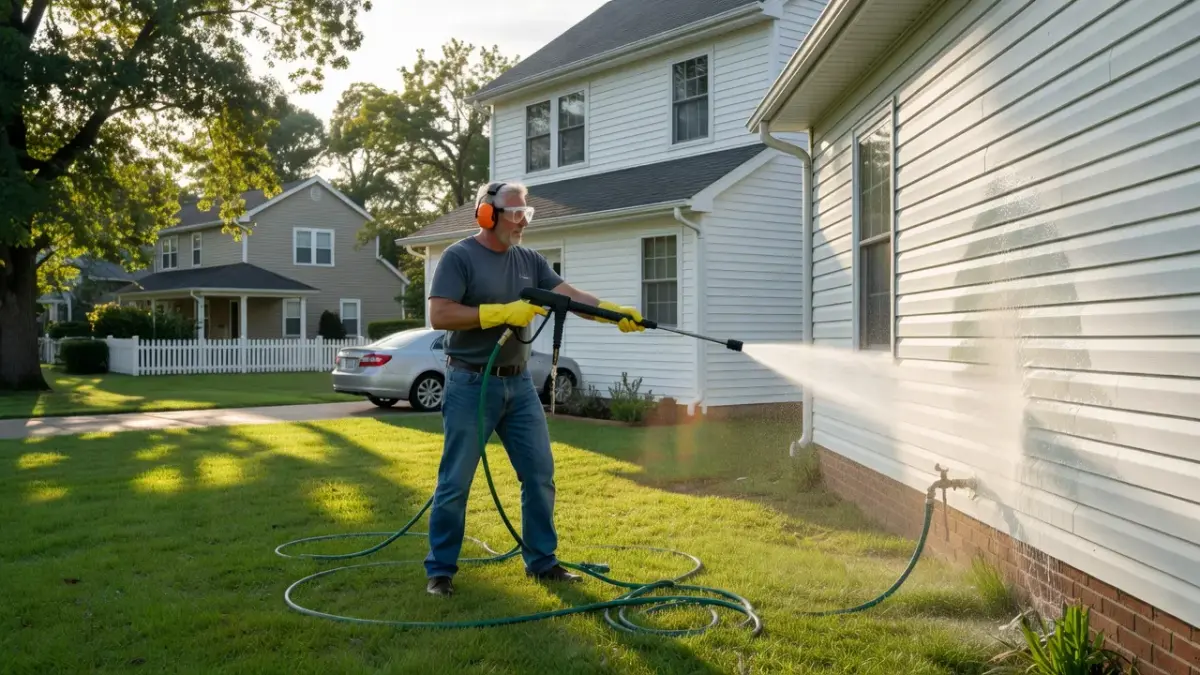
Thoroughly pressure wash all exterior walls to remove chalked paint, mildew, dirt, and spider webs. Painting over dirty surfaces guarantees adhesion failure and flaking.
Keep pressure settings below 1,500 PSI on wood siding to prevent gouging fiber bundles or forcing water behind overlapping lap joints.
- Apply Exterior Cleaner: Spray a mixture of detergent and diluted bleach onto mildew-prone north-facing walls.
- Pressure Wash: Hold the spray wand angled downward at least 12 to 18 inches away from siding surface boards.
- Allow Drying Time: Wait at least 24 to 48 sunny hours until wood substrate moisture content drops below 12%.
- Scrape Flaking Paint: Use a rigid carbide scraper to lift away loose paint edges back to sound, solid layers.
- Sand Bare Edges: Smooth rough transitions between bare wood and remaining paint using 80-grit sandpaper.
Step 4: Mask Windows, Prime Bare Surfaces, and Seal Gaps
Apply high-grade exterior acrylic primer to all exposed raw wood and masonry, then seal trim seams with exterior elastomeric caulk. Skipping spot-priming leads to uneven sheen flashing across your finished coat.
Select caulking engineered specifically for exterior expansion joints to prevent cold-weather air leaks.
- Masking Glass and Fixtures: Cover outdoor light fixtures, windows, and bushes with painter's tape and 0.7 mil plastic sheeting.
- Spot Priming: Brush oil-based or high-hide acrylic exterior primer over sap knots and bare wood zones.
- Caulking Joints: Inject exterior elastomeric caulk along window trim joints, corner boards, and fascia overlaps.
- Smoothing Caulk Lines: Wipe wet caulk beads flat using a damp rag or wet finger to build seamless moisture barriers.
Step 5: Paint Siding, Trim, and Accent Doors in Order
Paint your home starting from top to bottom: roof soffits first, followed by main body siding, trim boards, and finally the front door. Working top-down prevents paint drips from landing on freshly completed lower surfaces.
Apply paint when ambient temperatures remain strictly between 50°F and 85°F over a full 24-hour drying window.
- Spray or Roll Main Body Siding: Work across horizontal sections in 4-foot strips to maintain wet paint edges and avoid lap marks.
- Back-Roll Sprayed Areas: Follow airless spraying immediately with a 3/8-inch roller to force wet paint deeply into textured pores.
- Detail Exterior Trim: Paint eaves, corner boards, and fascia boxes using a 2.5-inch angled synthetic sash brush.
- Coat Accent Front Doors: Remove door hardware and paint door panels flat on sawhorses using a high-gloss exterior enamel.
Common Exterior Painting Budget Traps and How to Avoid Them
Underestimating prep work and selecting cheap low-tier paint are the two main causes of unexpected exterior painting costs. Bargain exterior paints lack sufficient solid acrylic resins, requiring three or four coats instead of two.
Planning material choices prevents emergency trips to the hardware store mid-project.
- Buying Low-Solid Paints: Cheaper paints contain higher water volume; specify 100% acrylic formulations with at least 35% solids by volume.
- Ignoring Surface Temperature: Direct sunlight bakes wet paint faster than it can bond, leading to premature cracking and brush drag.
- Inadequate Scraping: Painting over loose paint causes new topcoats to peel away within one season.
- Forgetting Scaffolding Hire: Heights above two stories require renting professional extension ladders or baker scaffolding ($70 to $150 per day).
If you are evaluating digital tools to stage exterior transformations before purchasing materials, download the Renova AI app on iOS to preview paints, garden changes, and front door options directly on your smartphone.
Frequently Asked Questions
What is the best time of year to paint a house exterior?
Late spring and early fall offer the best conditions for exterior painting due to moderate temperatures and lower relative humidity. Avoid painting when temperatures drop below 50°F overnight or during direct summer heat exceeding 90°F.
How much does it cost to repaint a house for curb appeal?
Professional exterior painting costs between $3,500 and $6,500 for a standard 2,000-square-foot home. DIY material costs generally range from $600 to $1,200 depending on paint grade, surface repairs, and ladder rentals.
Should exterior trim be lighter or darker than the main body paint?
Lighter trim creates a classic look that defines architectural outlines and makes homes appear larger. Darker trim offers a modern, high-contrast aesthetic that works well with modern, farmhouse, and craftsman styles.
How many coats of exterior paint are necessary for long-term durability?
Two full coats of exterior acrylic paint over a primed surface are necessary for full UV protection and weather resistance. Single-coat applications wear through quickly under direct rain and sun exposure.
Does painting a front door increase overall curb appeal?
Painting a front door in a contrasting color offers one of the highest returns on investment for home curb appeal. High-contrast colors like deep red, black, or navy blue attract buyer interest and serve as a focal point.
What is the average lifespan of a quality exterior paint job?
High-quality 100% acrylic exterior paint lasts between 7 and 10 years on wood siding, and up to 15 years on fiber cement or masonry surfaces, provided proper washing and surface prep were performed.
How do I choose an exterior paint color that matches my brick or stone?
Identify the undertones in your unpainted brick or stone - such as gray, red, brown, or cream - and select a paint color with matching warm or cool undertones to ensure architectural harmony.